My Cart: 0 item(s)

Extreme Corals News and Updates
Coral Symbiosis Explained: How Zooxanthellae, Light and Nutrients Help Reef Corals Thrive
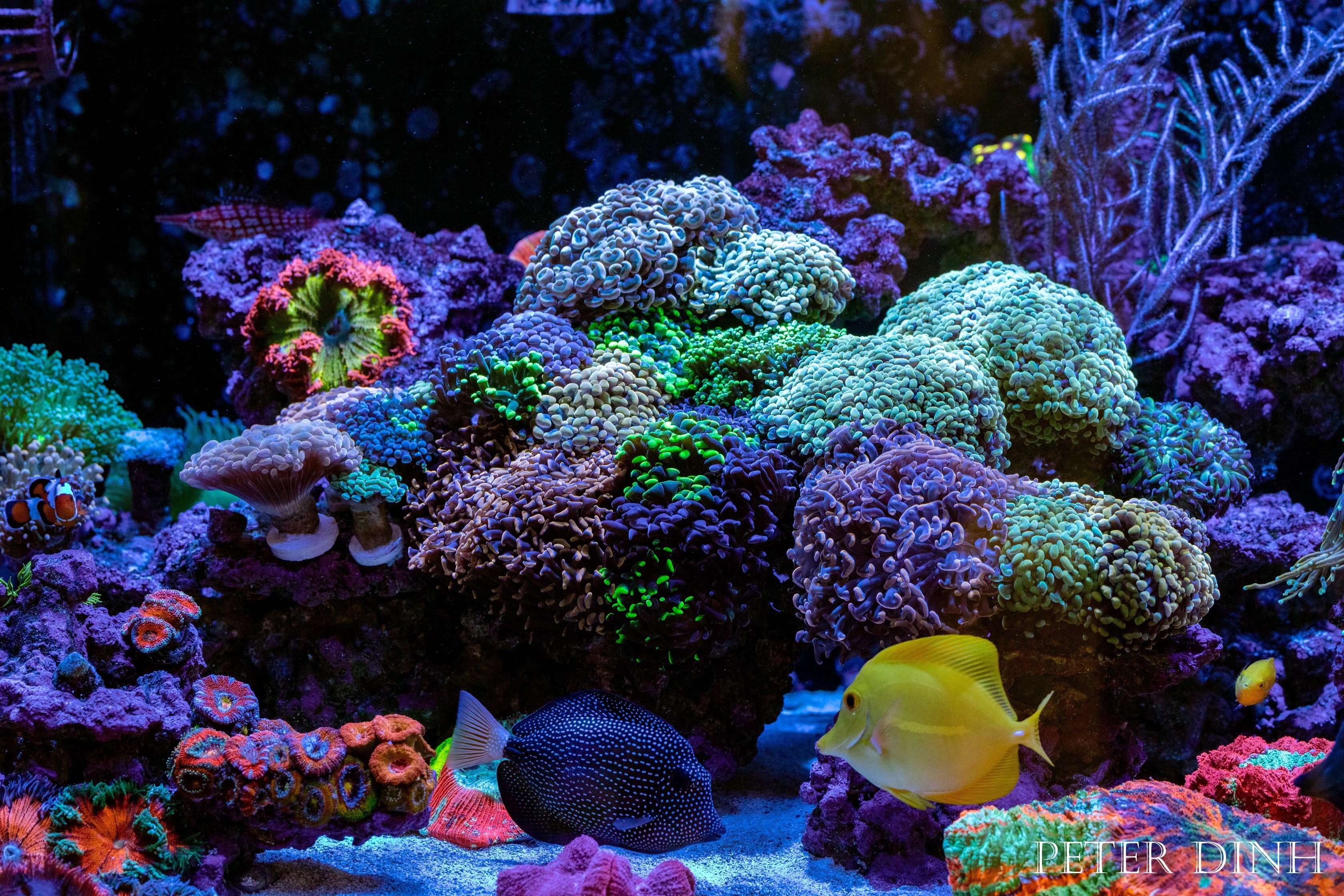
A comprehensive Extreme Corals guide explaining coral symbiosis, zooxanthellae, reef lighting, nutrients, flow, bleaching, coral color, water chemistry, and long-term coral health.
Learn coral symbiosis in reef tanks, including zooxanthellae, lighting, nutrients, water flow, bleaching, coral color, water chemistry and long-term coral health.
by Scott Shiles • May 01, 2026
Coral symbiosis is one of the most important subjects in reef keeping because it explains why corals need the right light, the right nutrients, the right flow, and stable water to thrive. Many reef keepers look at corals from the outside: color, polyp extension, growth, and whether the coral looks open or closed. But a lot of what determines coral health is happening inside the coral tissue, where the coral animal lives in partnership with microscopic algae that help power its survival.
Here at Extreme Corals, we have spent decades working with live corals, selecting them, photographing them, shipping them, and helping customers understand why some corals thrive while others struggle. In our experience, reef keepers become much better at coral care once they understand symbiosis. It changes the way you think about lighting, nutrient balance, coral placement, stress, bleaching, feeding, and stability.
This guide explains coral symbiosis in a practical reef aquarium way. We will cover what coral symbiosis means, how corals and zooxanthellae work together, why light matters so much, why corals still need nutrients and feeding, how bleaching happens, what stress signs to watch for, and how reef keepers can protect this relationship in a home aquarium. If you are building a reef tank or adding new corals, start with our coral care guide, browse our new arrival corals, and explore Scott's Handpicked Corals.
What Is Coral Symbiosis?
Coral symbiosis is the close biological relationship between coral animals and microscopic algae that live inside coral tissue. These algae are commonly called zooxanthellae. In many reef-building corals, this relationship is one of the main reasons the coral can grow, build skeleton, hold color, and survive in bright shallow reef environments.
The coral provides the algae with a protected place to live, access to carbon dioxide, and nutrients from the coral’s waste. The algae use light to perform photosynthesis and produce energy-rich compounds that help feed the coral. This is a mutual relationship because both sides benefit when conditions are right.
In simple terms:
- The coral gives the algae shelter and nutrients.
- The algae use light to create energy.
- The coral receives a major energy benefit from that photosynthesis.
- The relationship supports color, growth, tissue health, and resilience.
This is why coral care is not just about keeping saltwater clean. Reef keeping is about protecting a living partnership inside the coral.
Why Coral Symbiosis Matters in Reef Tanks
In a reef aquarium, coral symbiosis affects almost everything the hobbyist cares about: color, growth, extension, feeding response, stress tolerance, and long-term survival. When the relationship between the coral and its zooxanthellae is strong, many corals look fuller, brighter, and more stable. When that relationship is disrupted, corals may fade, bleach, shrink, stop growing, or begin to decline.
Many common reef tank problems are connected to symbiosis, including:
- Bleaching after sudden light increases
- Pale corals in ultra-low nutrient systems
- Brown corals in high nutrient or low light conditions
- Poor growth from unstable alkalinity or weak lighting
- Reduced polyp extension from stress
- Color loss after temperature or salinity swings
Once you understand symbiosis, coral care becomes more logical. You stop chasing random fixes and start protecting the conditions that allow the coral and algae to work together.
Corals Are Animals, Not Plants
One of the biggest misunderstandings in reef keeping is thinking of coral as if it were a plant. Corals are animals. They have tissue, mouths, feeding responses, waste production, stress reactions, and biological needs. The reason people often confuse them with plants is because many corals depend heavily on photosynthesis through the algae living inside them.
This distinction matters. A coral is not simply “getting light like a plant.” The coral animal is hosting symbiotic algae and managing a complex relationship. If light, nutrients, temperature, salinity, or chemistry become stressful, that relationship can break down.
Healthy coral care must support both sides:
- The coral animal needs stable water, minerals, food opportunities, flow, and protection from damage.
- The zooxanthellae need appropriate light and balanced nutrients to photosynthesize without overwhelming the coral.
A reef tank succeeds when both parts of that partnership are supported.
What Are Zooxanthellae?
Zooxanthellae are microscopic photosynthetic algae that live inside the tissue of many corals. They use light to create sugars and other compounds through photosynthesis. Much of that energy can be shared with the coral, helping support metabolism, tissue maintenance, and skeletal growth.
Zooxanthellae also influence coral color. Some coral color comes from the algae themselves, while other colors come from pigments and fluorescent proteins produced by the coral. That is why lighting, nutrients, and stress can change coral appearance so dramatically.
When zooxanthellae are balanced, the coral may look rich, healthy, and full. When the algae population is too dense or the coral is stressed, the coral may look brown. When the algae are lost or reduced too far, the coral may look pale or bleached.
How Light Powers Coral Symbiosis
Light is one of the main drivers of coral symbiosis because zooxanthellae need light to photosynthesize. Without enough appropriate light, many photosynthetic corals cannot get enough energy to maintain strong tissue and growth. But too much light too quickly can be just as dangerous.
In reef tanks, light must be matched to the coral type. SPS corals, many LPS corals, soft corals, mushrooms, Zoanthids, and fleshy open brain corals do not all want the same intensity. A coral that thrives under higher PAR may bleach if placed there too quickly. A lower-light coral may shrink or fade if forced into harsh lighting.
Good reef lighting habits include:
- Start new corals lower or use light acclimation when needed.
- Match light intensity to the coral type.
- Avoid sudden large changes in fixture intensity or photoperiod.
- Watch coral color and extension after lighting changes.
- Remember that brighter is not always better.
For a complete breakdown of PAR, spectrum, and coral response, read our reef tank lighting guide.
Too Much Light Can Damage the Coral-Algae Relationship
Many reef keepers assume more light means more growth, but that is not always true. If a coral receives more light than it can safely process, the zooxanthellae can create stress inside the coral tissue. This can contribute to bleaching, fading, retraction, or tissue damage.
Too much light may show up as:
- Pale or washed-out color
- Bleaching
- Reduced polyp extension during peak light
- LPS corals pulling tight against the skeleton
- Mushrooms shrinking or detaching
- Corals looking better in shaded periods
In our experience, light shock is common when new corals are placed too high under strong LEDs. The coral may look fine at first, then fade or retract over the next several days or weeks. Slow acclimation is much safer than trying to force fast color.
Too Little Light Can Also Weaken Corals
Too little light can reduce photosynthetic support and cause corals to lose energy over time. Some corals may stretch, brown, dull out, grow slowly, or fail to maintain strong tissue if lighting is too weak for their needs.
Too little light may show up as:
- Dull coloration
- Slow or no growth
- Stretching toward light
- Reduced skeletal growth in stony corals
- Poor long-term fullness
The goal is not maximum light. The goal is correct light. Matching coral placement to lighting zones is one of the most important skills in reef keeping.
Why Corals Still Need Nutrients
Because photosynthesis is so important, some reef keepers assume light alone is enough. That is a mistake. Corals still need nutrients. Zooxanthellae need nitrogen and phosphorus in controlled amounts, and the coral animal benefits from feeding opportunities, fish waste, dissolved nutrients, and stable biological activity.
In our experience, many corals look poor when reef tanks are stripped too clean. LPS corals may lose fullness, Zoanthids may shrink, mushrooms may look flat, and SPS corals may become pale or sensitive under strong light. Ultra-low nutrients can weaken the coral-algae relationship just as excessive nutrients can create problems.
Balanced nutrients support:
- Coral tissue fullness
- Healthy zooxanthellae function
- Color stability
- Feeding response
- Biological balance
- Resistance to starvation stress
For many mixed reefs, measurable nitrate and phosphate are healthier than zero nutrients. Learn more in our guide to nitrates in reef tanks.
Nutrients, Brown Corals, and Pale Corals
Coral color is complex, but nutrient balance plays a major role. When nutrients are too high and light is not balanced, some corals may brown out because zooxanthellae density increases. When nutrients are too low, corals may become pale, thin, or washed out because the coral and algae are underfed or stressed.
Brown coral does not always mean the coral is dying. Pale coral does not always mean the coral is healthy. The better question is whether the coral has stable tissue, good extension, appropriate color for that species, and normal growth.
Color should always be interpreted along with:
- Polyp extension
- Tissue thickness
- Growth edge or new heads
- Light intensity
- Nitrate and phosphate
- Recent changes
- Flow and placement
At Extreme Corals, we look for health first. Bright color matters, but strong tissue and stable behavior matter even more.
Water Flow Supports Coral Symbiosis
Flow may not seem directly connected to photosynthesis, but it is essential for coral health. Good water movement helps deliver oxygen, carbon dioxide, nutrients, and trace elements while removing waste and preventing detritus from settling on coral tissue.
Flow also helps corals manage the byproducts of photosynthesis. During the day, oxygen production can increase around coral tissue. Proper flow helps exchange water around the coral surface and prevents localized stress.
Good flow helps support:
- Gas exchange
- Nutrient delivery
- Waste removal
- Cleaner tissue surfaces
- Better polyp extension
- Reduced detritus buildup
- Healthier coral-algae balance
The right flow depends on the coral. SPS corals often need stronger turbulent flow. Fleshy LPS corals need moderate indirect flow. Mushrooms and some soft corals prefer lower to moderate flow. For more detail, read our water flow and coral health guide.
Water Chemistry and Symbiosis
Stable water chemistry is one of the most important ways to protect coral symbiosis. Corals can often adapt to a reasonable range of parameters, but they do not respond well to constant swings. Salinity, temperature, alkalinity, calcium, magnesium, nitrate, phosphate, and pH all matter because they affect the coral animal and the algae inside it.
| Parameter | General Reef Tank Range |
|---|---|
| Temperature | 76-80°F |
| Salinity | 1.024-1.026 specific gravity |
| pH | 8.1-8.4 |
| Alkalinity | 8-10 dKH for many mixed reefs |
| Calcium | 400-450 ppm |
| Magnesium | 1250-1350 ppm |
| Nitrate | 2-10 ppm for many mixed reefs |
| Phosphate | 0.03-0.07 ppm for many mixed reefs |
These numbers are useful guidelines, but stability is the bigger lesson. A reef tank with steady parameters often does better than one constantly being adjusted in search of perfect numbers. For more detail, review our reef tank water parameters guide.
Temperature Stress and Coral Bleaching
Temperature is one of the fastest ways to disrupt coral symbiosis. When corals are exposed to heat stress, the relationship between coral and zooxanthellae can break down. The coral may expel algae or lose pigment, creating the pale or white appearance known as bleaching.
Bleaching does not always mean the coral is dead, but it is a serious warning sign. A bleached coral has lost part of the relationship that helps feed it. Recovery depends on how severe the stress was, how quickly conditions stabilize, and whether the coral still has enough energy and tissue health to recover.
To reduce bleaching risk:
- Keep temperature stable.
- Avoid heat spikes in summer.
- Use reliable heaters and controllers when possible.
- Do not combine heat stress with sudden light increases.
- Watch corals closely during seasonal temperature changes.
In reef keeping, preventing bleaching is much easier than recovering from it.
What Coral Bleaching Really Means
Bleaching happens when coral loses too many of its symbiotic algae or the pigments associated with them. Because zooxanthellae contribute much of the coral’s visible color and energy production, the coral can look white, pale, or translucent when this relationship breaks down.
Common bleaching triggers include:
- Excessive light
- Rapid lighting increases
- Heat stress
- Low nutrient stress
- Salinity swings
- Alkalinity instability
- Shipping stress
- Poor acclimation
If a coral bleaches, do not panic and make drastic changes. Stabilize temperature, salinity, alkalinity, nutrients, lighting, and flow. Reduce stress and give the coral a chance to recover.
Coral Feeding and Symbiosis
Even photosynthetic corals can benefit from feeding. Some corals get most of their energy from symbiotic algae, while others rely more heavily on capturing food, dissolved nutrients, or particulate matter. LPS corals, Zoanthids, mushrooms, soft corals, and SPS corals all feed differently.
Feeding can support symbiosis by providing nutrients the coral and algae need, but overfeeding can create water quality problems. The goal is balanced input and export.
Good feeding practices include:
- Feed fish appropriately and consistently.
- Target feed LPS corals when suitable.
- Use fine coral foods carefully for SPS and filter-feeding corals.
- Avoid heavy feeding that causes nutrient spikes.
- Watch nitrate and phosphate trends.
- Adjust export as feeding changes.
A coral that is properly lit but starved may still struggle. A coral that is fed heavily in poor water may also struggle. Balance matters.
Different Coral Types Depend on Symbiosis Differently
Not every coral depends on symbiosis in the same way. Many common reef aquarium corals are photosynthetic, but their light tolerance, feeding response, nutrient preference, and stress behavior vary.
SPS Corals
SPS corals often rely strongly on light, stable alkalinity, strong flow, and balanced nutrients. If nutrients bottom out under strong light, SPS corals may become pale and stressed. Browse our SPS corals and read our SPS coral buying and care guide.
LPS Corals
LPS corals often benefit from photosynthesis and occasional feeding. Many fleshy LPS corals look better in clean but not sterile water. Browse our LPS corals for reef tanks.
Soft Corals
Many soft corals are more forgiving and may tolerate slightly higher nutrients than sensitive SPS corals. They still need appropriate light, flow, and stability. Browse our soft corals.
Zoanthids and Mushrooms
Zoanthids and mushroom corals often do well in lower to moderate light with stable nutrients. They can suffer when tanks are stripped too clean or blasted with too much light. Browse our Zoanthids and Ricordea mushrooms.
How Symbiosis Affects Coral Color
Coral color comes from a combination of zooxanthellae density, coral pigments, fluorescent proteins, lighting spectrum, nutrient balance, genetics, and overall health. This is why the same coral can look different under different lights or in different tanks.
Color can change when:
- Lighting intensity changes
- Spectrum changes
- Nitrate or phosphate rises or falls
- Alkalinity becomes unstable
- The coral is moved to a new placement
- The coral is stressed by shipping or dipping
- The coral adapts to a new tank
In our experience, stable color is usually a better sign than sudden dramatic color change. Fast changes often mean stress. Good color should come from long-term health, not shock.
How to Tell if Coral Symbiosis Is Healthy
You cannot see zooxanthellae working with the naked eye, but you can observe the coral’s outward signs. A coral with healthy symbiosis usually looks stable and consistent over time.
Healthy signs include:
- Stable color
- Normal polyp extension for that coral type
- Good tissue fullness
- Visible growth or encrusting over time
- Normal feeding response when appropriate
- No bleaching
- No ongoing tissue recession
- Good response to normal light cycle
A coral does not need to look the same every hour of the day. Many corals open and close naturally. The key is long-term stability and recovery after normal changes.
Warning Signs That Symbiosis Is Under Stress
When the coral-algae relationship is stressed, the coral often gives visual warnings. These signs do not always identify the exact cause, but they tell you the coral needs attention.
Warning signs include:
- Fading color
- Bleaching
- Sudden browning
- Reduced polyp extension
- Thin or shrinking tissue
- LPS corals pulling tight against the skeleton
- Zoanthids staying closed
- Mushrooms shrinking or detaching
- SPS tissue recession
When these signs appear, check recent changes first. Lighting, temperature, salinity, alkalinity, nutrient levels, flow changes, new livestock, and pest irritation are common triggers.
Protecting Symbiosis When Adding New Corals
New corals are most vulnerable during the transition from one system to another. Shipping, handling, dips, different lighting, different nutrients, and different flow can all stress the coral-algae relationship.
When adding new corals:
- Temperature acclimate carefully.
- Inspect for pests and tissue damage.
- Dip only when appropriate and follow directions.
- Start with conservative lighting.
- Place the coral in appropriate flow.
- Avoid moving it repeatedly.
- Watch for changes over days and weeks.
New corals need time to adapt. If the coral is slowly improving, do not keep changing everything. Stability helps the coral rebuild balance.
Common Mistakes That Disrupt Coral Symbiosis
Most reef keepers do not damage coral symbiosis on purpose. It usually happens through sudden changes or misunderstanding what the coral needs.
Common mistakes include:
- Increasing light too quickly
- Running nutrients at zero
- Letting nitrate and phosphate climb unchecked
- Allowing salinity to swing
- Chasing alkalinity numbers aggressively
- Moving corals repeatedly
- Ignoring flow problems
- Overfeeding without export
- Adding corals before the tank is stable
In our experience, the best reef keepers make slow corrections. They observe, test, and adjust carefully instead of reacting emotionally to every change.
Our Practical Approach at Extreme Corals
At Extreme Corals, we view coral symbiosis as the reason stable husbandry matters. Lighting, nutrients, flow, and chemistry are not separate topics. They all affect the relationship inside the coral. When that relationship is protected, corals have a better chance to hold color, grow, and recover from normal stress.
Our practical advice is:
- Buy healthy corals from a trusted source.
- Match each coral to the right light and flow zone.
- Keep salinity and alkalinity stable.
- Do not strip nutrients to zero.
- Do not let nutrients become excessive.
- Acclimate lighting slowly.
- Observe coral tissue, not just test numbers.
- Make changes gradually.
Corals are living animals with a living partnership inside them. The more you protect that partnership, the better your reef tank will perform.
Related Coral Care Guides
If you want to build a healthier reef tank by understanding coral biology and husbandry, these guides and coral categories can help:
- Coral Care Guide - Learn the basics of keeping corals healthy in reef tanks.
- Reef Tank Lighting Guide - Understand PAR, spectrum, and light acclimation.
- Water Flow and Coral Health - Learn how flow affects coral tissue and growth.
- Reef Tank Water Parameters Guide - Keep chemistry stable for coral health.
- Nitrates in Reef Tanks - Learn why measurable nutrients can help corals.
- LPS Corals - Browse fleshy stony corals for reef tanks.
- SPS Corals - Browse reef-building small polyp stony corals.
- New Arrival Corals - See recently added corals for your aquarium.
Shop Healthy Corals for Your Reef Tank
Understanding coral symbiosis helps you make better choices as a reef keeper. It explains why corals need proper lighting, stable water, balanced nutrients, good flow, and careful acclimation. When those pieces work together, corals have a better chance to stay colorful, grow, and thrive long term.
Browse new arrival corals, new coral frags, new coral colonies, LPS corals, SPS corals, and Scott's Handpicked Corals at ExtremeCorals.com to find healthy WYSIWYG corals for your reef aquarium.
Frequently Asked Questions About Coral Symbiosis
What is coral symbiosis?
Coral symbiosis is the beneficial relationship between coral animals and microscopic algae called zooxanthellae. The algae live inside coral tissue and use light to create energy that helps support the coral.
Why is coral symbiosis important in reef tanks?
Coral symbiosis affects coral color, growth, tissue health, energy production, bleaching risk, and stress tolerance. Protecting this relationship is one of the keys to long-term reef success.
What are zooxanthellae?
Zooxanthellae are microscopic photosynthetic algae that live inside many coral tissues. They use light to produce energy-rich compounds that support coral health and growth.
Can too much light hurt coral symbiosis?
Yes, too much light or rapid lighting increases can overwhelm the coral-algae relationship and contribute to stress, bleaching, fading, or tissue damage.
Can too little light hurt corals?
Yes, too little light can reduce photosynthetic energy and lead to slow growth, dull color, poor tissue fullness, or long-term decline in photosynthetic corals.
Do corals still need nutrients if they have zooxanthellae?
Yes, corals still need nutrients. Zooxanthellae and coral tissue both benefit from balanced nitrate, phosphate, feeding opportunities, and stable biological activity.
What causes coral bleaching?
Bleaching can be caused by stress such as excessive light, heat, low nutrients, salinity swings, alkalinity instability, shipping stress, or rapid environmental changes.
How does water flow support coral symbiosis?
Flow supports gas exchange, nutrient delivery, waste removal, tissue cleanliness, and oxygen balance around the coral, all of which help the coral function better.
How can reef keepers protect coral symbiosis?
Reef keepers can protect coral symbiosis by maintaining stable salinity, temperature, alkalinity, nutrients, proper light, good flow, careful acclimation, and slow changes.
Are all corals equally dependent on symbiosis?
No, different coral groups depend on photosynthesis and feeding differently. SPS, LPS, soft corals, Zoanthids, and mushrooms all respond differently to light, nutrients, flow, and feeding.
About the Author
Scott Shiles is the owner of ExtremeCorals.com, which he has operated for over 25 years and is recognized as one of the early dedicated live coral websites on the internet. A lifelong reef keeper since 1984, Scott has decades of hands-on experience maintaining marine aquariums and previously owned and operated a brick and mortar aquarium retail store for 10 years, including five years alongside Extreme Corals. He holds a degree in Marine Biology and has personally selected and sold hundreds of thousands of live corals. An avid scuba diver who has explored reef systems around the world, Scott shares practical coral care and husbandry knowledge based on real world reef experience.
overall rating:
my rating:
log in to rate
Please log in to leave a comment.
For more information visit: additional resources