My Cart: 0 item(s)

Extreme Corals News and Updates
SPS Corals for Sale: Complete Care, Buying and Reef Tank Success Guide
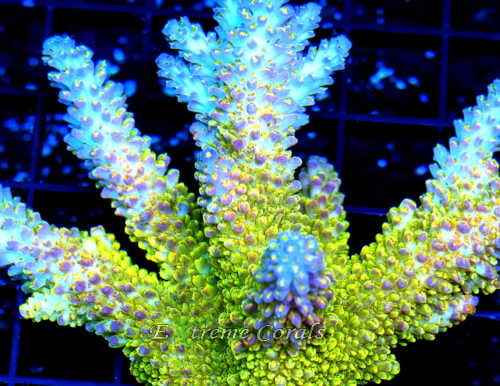
Learn how to choose, place, and care for SPS corals in a reef tank, including Acropora, Montipora, lighting, flow, water parameters, stability, pests, and online coral buying tips.
Shop SPS corals for reef tanks and learn how to care for Acropora, Montipora, and other small polyp stony corals with lighting, flow, placement, and stability tips.
by Scott Shiles • May 14, 2026
SPS corals are some of the most rewarding corals in the reef aquarium hobby, but they are also the corals that expose weak husbandry the fastest. When an SPS reef is healthy, the tank has structure, color, growth, and a true reef-building look that few other coral groups can match. When conditions are unstable, SPS corals can lose color, stop growing, recede, or fail quickly. That is why choosing the right SPS corals, understanding their care requirements, and buying healthy pieces from a trusted source matters so much.
Here at Extreme Corals, we have handled, photographed, selected, shipped, and sold SPS corals for decades. In our experience, SPS success is not about chasing one magic number or buying the most expensive frag first. It is about building a stable reef system with the right lighting, strong indirect flow, consistent alkalinity, balanced nutrients, and enough patience to let corals adapt and grow.
This SPS coral buying and care guide is built to help reef keepers choose better corals and keep them alive long term. Instead of turning this article into a photo-dependent list of individual species, this guide focuses on what actually helps your reef tank succeed: what SPS corals are, how Acropora and Montipora differ, which SPS growth forms matter, what lighting and flow they need, how to identify healthy SPS corals online, how to avoid common mistakes, and how to build a reef tank that can support SPS growth.
If you are ready to shop, browse our SPS corals for sale, new arrival corals, and Scott's Handpicked Corals. If you are still preparing your tank, start with our coral care guide, reef tank lighting guide, and water flow guide.
What Are SPS Corals?
SPS stands for small polyp stony coral. These corals build calcium carbonate skeletons and usually have smaller polyps than large polyp stony corals. In reef tanks, SPS corals are loved for their branching, plating, tabling, encrusting, and reef-building growth forms.
SPS corals are often associated with high-energy reef environments where light is strong, water movement is active, and chemistry is stable. In home aquariums, they can be incredibly beautiful, but they usually require more precision than many soft corals and LPS corals.
SPS corals are popular because they offer:
- Reef-building structure and growth
- Branching, plating, tabling, and encrusting shapes
- High color potential under proper lighting
- Long-term growth into impressive colonies
- Excellent aquascaping value in mature reef tanks
- Collector appeal for Acropora, Montipora, and other premium SPS pieces
In our experience, SPS corals are best for reef keepers who already understand basic stability. They are not impossible, but they do not forgive neglect the way many beginner corals might.
Why SPS Corals Are Considered Advanced
SPS corals are considered advanced because they react quickly to instability. They need stable alkalinity, consistent salinity, appropriate nutrients, strong indirect flow, and lighting that is powerful enough without shocking the coral. A tank can look fine to the eye while still being unstable enough to stress SPS corals.
SPS corals often struggle when:
- Alkalinity swings sharply
- Salinity drifts from evaporation or poor top-off habits
- Lighting is increased too quickly
- Flow is too weak or too direct
- Nitrate and phosphate are stripped too low
- Nutrients climb too high and fuel algae or browning
- The tank is too new or biologically unstable
- Pests enter the system without quarantine or inspection
The reef keepers who do best with SPS are usually the ones who test regularly, make slow changes, keep equipment consistent, and observe coral response closely. SPS corals reward discipline.
SPS Corals for Sale: What You Should Know Before Buying
Buying SPS corals online can be a great way to access better color, variety, and WYSIWYG pieces than many local options provide. But before you buy SPS corals, your tank should be ready for them. A healthy SPS frag still needs the right environment after it arrives.
Before buying SPS corals, ask yourself:
- Is my reef tank mature and stable?
- Do I know my alkalinity, calcium, magnesium, nitrate, phosphate, salinity, and temperature?
- Can I keep alkalinity stable from week to week?
- Do I have strong enough lighting for SPS corals?
- Do I have enough indirect, random flow?
- Do I have a quarantine or inspection process?
- Can I place the coral where it will not be shaded, stung, or blasted?
If the answer is no, it may be better to prepare the system first. SPS corals can be extremely rewarding, but rushing into them before the tank is ready is one of the most common reasons hobbyists fail with them.
Acropora vs Montipora: The Two SPS Groups Most Reef Keepers Compare
When reef keepers talk about SPS corals, Acropora and Montipora usually dominate the conversation. Both are small polyp stony corals, but they do not always behave the same way in reef tanks.
Acropora Corals
Acropora corals are some of the most sought-after SPS corals in the hobby. They can show incredible colors, branching structure, tabling growth, and collector value. However, Acropora usually demands very stable reef conditions. It is often less forgiving than Montipora and many other SPS corals.
Acropora usually needs:
- Strong reef lighting
- Strong indirect, turbulent flow
- Stable alkalinity
- Controlled but measurable nutrients
- Clean tissue with no pests
- A mature reef tank with consistent maintenance
In our experience, Acropora is best added after your tank has already proven it can support SPS. If you are still learning how your tank handles alkalinity and nutrient swings, start slower.
Montipora Corals
Montipora corals are often considered more forgiving than many Acropora, although they still require stable water and good lighting. Montipora can grow in plating, encrusting, branching, and scrolling forms, making it very useful for aquascaping.
Montipora is popular because it can offer:
- Plating and scrolling growth forms
- Encrusting color on rockwork
- Branching forms such as digitata-style growth
- Good SPS experience before moving into harder Acropora
- Bright colors under proper lighting
For many reef keepers, Montipora is a better first SPS coral group than high-end Acropora. It still needs stability, but it often gives newer SPS keepers a more forgiving starting point.
Common SPS Growth Forms
Instead of thinking only in terms of species names, it is often more useful to understand SPS growth forms. Growth form affects placement, flow, shading, fragging, and how the coral will change the aquascape over time.
Branching SPS Corals
Branching SPS corals grow upward and outward into branch-like structures. Acropora, Birdsnest-style corals, Stylophora, Pocillopora, and some Montipora can all form branching growth. These corals need enough flow to move through the branches and prevent detritus from collecting.
Plating SPS Corals
Plating SPS corals grow outward in plate-like structures. Montipora caps are the classic example. Plating corals can create dramatic shapes, but they can also shade corals below them as they grow.
Encrusting SPS Corals
Encrusting SPS corals grow across rock surfaces. They can add color to rockwork and create strong visual coverage. Encrusting growth can also compete with neighboring corals, so spacing matters.
Tabling SPS Corals
Tabling SPS corals grow outward into table-like structures. These can be beautiful in mature reef tanks, but they need room, strong flow, and careful placement so they do not shade or crowd other corals.
When buying SPS corals, think about what the coral will become, not just what the frag looks like today.
Best SPS Corals for Newer SPS Keepers
If you are new to SPS corals, start with hardier choices rather than the most expensive collector Acropora you can find. Your goal should be to prove that your tank can support SPS growth before adding more sensitive or expensive pieces.
Good SPS starting points often include:
- Montipora capricornis-style plating corals
- Montipora digitata-style branching corals
- Encrusting Montipora varieties
- Birdsnest-style SPS corals
- Stylophora
- Pocillopora in appropriate systems
These corals are not “easy” in the same way beginner soft corals are easy, but they can be more forgiving than many high-end Acropora pieces. If they grow and hold color, you are building the foundation for more demanding SPS corals later.
Best SPS Corals for Advanced Reef Keepers
Advanced reef keepers often enjoy Acropora because of the color potential, growth forms, and challenge. Acropora can produce some of the most impressive reef tank displays in the hobby, but it requires consistent husbandry.
Advanced SPS reef keepers often look for:
- High-color Acropora frags
- Tabling Acropora growth forms
- Branching collector Acropora
- Premium Montipora varieties
- Color contrast between branching, plating, and encrusting SPS
- WYSIWYG SPS pieces with visible health and color
High-end SPS corals should be added to tanks that are already stable. A beautiful coral cannot overcome an unstable environment.
Water Parameters for SPS Corals
SPS corals need stable reef chemistry. The exact target numbers can vary from tank to tank, but sudden swings are the real danger. Alkalinity stability is especially important.
| Parameter | Recommended SPS Range |
|---|---|
| Temperature | 76-80°F |
| Salinity | 1.024-1.026 specific gravity |
| pH | 8.1-8.4 |
| Alkalinity | 7.5-9 dKH for many SPS systems, kept stable |
| Calcium | 400-450 ppm |
| Magnesium | 1250-1350 ppm |
| Nitrate | 1-10 ppm depending on system and coral response |
| Phosphate | 0.03-0.08 ppm in many balanced SPS systems |
Some SPS reef keepers run slightly different numbers successfully, but they usually succeed because the tank is stable and the corals are adapted. A stable alkalinity of 8 dKH is usually better than a tank bouncing between 7 and 10 dKH.
For deeper chemistry help, read our reef tank water parameters guide.
Alkalinity Stability Is Critical for SPS Corals
If there is one reef chemistry lesson that matters most for SPS corals, it is alkalinity stability. SPS corals build skeleton quickly, and alkalinity swings can stress tissue, slow growth, reduce color, or contribute to rapid tissue loss in sensitive corals.
Alkalinity can swing because of:
- Inconsistent dosing
- Growing coral demand
- Large water changes with different alkalinity
- Equipment failure
- Manual dosing mistakes
- Sudden changes in nutrient levels
- Too many new stony corals added at once
In our experience, successful SPS keepers test alkalinity regularly and make dosing changes slowly. They do not chase numbers aggressively. They watch trends and correct carefully.
Lighting Requirements for SPS Corals
SPS corals generally require stronger lighting than most soft corals and many LPS corals. However, stronger lighting must be introduced carefully. New SPS corals can bleach or lose color if placed too high too quickly under powerful LEDs.
Many SPS corals do well in moderate to high PAR zones, depending on the coral type and the system. Acropora often needs stronger lighting than many Montipora varieties, but acclimation still matters.
Good SPS lighting practices include:
- Use a quality reef light with strong spectrum control.
- Measure or estimate PAR when possible.
- Start new SPS lower or in reduced intensity if unsure.
- Increase light slowly over days or weeks.
- Watch for bleaching, paling, browning, or poor polyp extension.
- Match coral placement to light needs, not just appearance.
Too much light too fast can be just as damaging as too little light. Our reef tank lighting guide explains PAR, spectrum, acclimation, and coral response in more detail.
Water Flow for SPS Corals
SPS corals need strong, indirect, random water flow. Flow delivers oxygen and nutrients, removes waste, prevents detritus from settling, and supports healthy tissue. Weak flow can cause dead spots and poor growth. Harsh direct flow can damage tissue or create one-sided stress.
Good SPS flow should be:
- Strong but not blasting directly at the coral
- Random or turbulent rather than a single narrow stream
- Strong enough to move around branches and plates
- Able to prevent detritus from settling on or inside colonies
- Adjusted as colonies grow and block water movement
As SPS colonies grow, flow needs change. A small frag may have good flow at first, but a larger colony can block flow inside its own branches. Mature SPS systems often require pump adjustment as corals grow.
For more detail, read our water flow and coral health guide.
Nutrients for SPS Corals: Do Not Strip the Tank Too Clean
Many reef keepers used to believe SPS corals needed ultra-clean water with nitrate and phosphate near zero. Today, many successful SPS keepers understand that SPS corals need controlled nutrients, not starvation. If nitrate and phosphate bottom out, SPS corals may become pale, lose tissue, or become more sensitive to lighting and alkalinity stress.
Balanced SPS nutrient management means:
- Nitrate is measurable but not excessive.
- Phosphate is measurable but controlled.
- Feeding and export are balanced.
- Corals are not starved under strong light.
- Algae is managed through overall balance, not panic nutrient crashes.
For many systems, low but measurable nutrients are healthier than zero nutrients. Read our guide to nitrates in reef tanks for more detail.
SPS Coral Placement in a Reef Tank
SPS corals are usually placed in the middle to upper areas of the reef tank where lighting and flow are stronger. Placement should also account for growth form, shading, aggression, and access to water movement.
Good SPS placement considerations include:
- Place high-light Acropora in stronger light zones after acclimation.
- Give plating Montipora room so it does not shade corals below.
- Place encrusting SPS where it can grow without covering unwanted areas.
- Keep SPS away from aggressive LPS sweepers.
- Leave room for colonies to grow outward and upward.
- Avoid placing SPS in dead spots behind rockwork.
A small SPS frag may look harmless, but mature SPS colonies can shade, crowd, and change the flow pattern of the tank. For more placement planning, review our coral placement guide.
How to Choose Healthy SPS Corals Online
When buying SPS corals online, look beyond the name. Color matters, but tissue health, pest-free condition, growth edge, and overall stability matter more. A famous SPS frag that is pale, receding, or freshly stressed is not a better buy than a healthy coral that fits your tank.
Look for healthy SPS signs such as:
- Good tissue coverage
- No exposed white skeleton from recession
- Stable color for that coral type
- No obvious bite marks or pest damage
- Clean base or plug when visible
- Visible growth edge or encrusting when applicable
- Normal polyp extension for the coral type
Be cautious with SPS corals that show:
- Receding tissue from the base
- Fresh white skeleton
- Pale or bleached tissue
- Algae growing on exposed skeleton
- Possible flatworm or red bug damage
- Freshly cut frags that do not look healed
At Extreme Corals, we want customers to choose SPS corals that have a strong chance of success, not just pieces with exciting names. Healthy coral tissue is the foundation.
SPS Pests and Why Quarantine Matters
SPS corals can carry pests that are difficult to manage once they enter a display tank. Acropora-eating flatworms, red bugs, nudibranchs, eggs, algae, and other hitchhikers can create serious problems in SPS systems.
Quarantine or inspection helps you:
- Find pests before they enter the display
- Observe new SPS frags after shipping
- Dip corals when appropriate
- Remove questionable plugs or bases
- Watch for bite marks or tissue loss
- Protect established SPS colonies
Not every reef keeper has a full quarantine system, but every SPS keeper should at least inspect carefully and understand pest risks. Our coral quarantine guide and coral pests and predators guide can help.
Acclimating SPS Corals After Shipping
SPS corals can be stressed by shipping, temperature changes, salinity differences, dips, lighting changes, and handling. A new SPS coral should be moved into stable conditions without unnecessary delay, but it should not be shocked by extreme light or flow.
Good SPS acclimation practices include:
- Temperature acclimate before transfer.
- Inspect the coral, plug, and base carefully.
- Dip when appropriate and follow product directions.
- Rinse in clean saltwater after dipping.
- Start in moderate light or use light acclimation mode.
- Provide strong but indirect flow.
- Avoid moving the coral repeatedly after placement.
Some SPS corals show stress after shipping and take time to regain color and extension. Stability is better than constant adjustment.
Common SPS Coral Problems
SPS problems often show up as color loss, tissue recession, poor extension, browning, bleaching, or sudden tissue loss. The challenge is that several different causes can look similar.
SPS Coral Browning
Browning may be caused by excess nutrients, lower light, stress, or changes in zooxanthellae density. Check lighting, nitrate, phosphate, and overall stability before making big changes.
SPS Coral Bleaching
Bleaching can happen from excessive light, heat stress, nutrient starvation, sudden parameter changes, or poor acclimation. Reduce stress and avoid aggressive corrections.
SPS Tissue Recession From the Base
Base recession may come from alkalinity instability, pests, shading, detritus, poor flow, or stress from recent changes. Inspect the base and plug carefully.
Rapid Tissue Loss
Rapid tissue loss can be caused by severe stress, alkalinity swings, temperature events, pests, disease, or major instability. Act quickly, check parameters, and consider saving healthy frags if appropriate.
Poor Polyp Extension
Poor extension may come from pests, fish nipping, excessive flow directly hitting the coral, low flow, light stress, or water chemistry issues.
When SPS corals decline, do not change five things at once. Test, inspect, identify recent changes, and correct carefully.
SPS Coral Feeding
SPS corals receive much of their energy from light through zooxanthellae, but they also benefit from dissolved nutrients, fish waste, amino acids used carefully, and fine particulate foods. Feeding SPS is not about dumping heavy food into the tank. It is about maintaining balanced nutrition in a clean, stable system.
SPS nutrition may come from:
- Fish feeding and fish waste
- Fine coral foods
- Zooplankton-sized particles
- Amino acids used carefully
- Stable nitrate and phosphate availability
- Strong lighting and photosynthesis
Overfeeding can create algae and nutrient problems. Underfeeding or over-filtering can starve corals. The best SPS systems usually balance input and export rather than chasing extremes.
SPS Coral Growth and What to Expect
SPS growth depends on coral type, light, flow, water chemistry, nutrients, stability, and how long the coral has been settled. Some SPS frags encrust first before growing upward. Others branch quickly once adapted. Montipora may plate or encrust rapidly in good conditions, while some Acropora take longer to settle before showing strong growth.
Signs of good SPS growth include:
- Encrusting onto the plug or rock
- New growth tips
- Stable or improving color
- Good polyp extension
- No exposed skeleton
- Increasing branch or plate size
Do not judge SPS success only by growth speed in the first week. A new SPS frag may need time to adapt. Consistent stability creates growth over time.
Should Beginners Buy SPS Corals?
Beginners can eventually keep SPS corals, but SPS should not usually be the first coral added to a brand-new reef tank. New systems often experience nutrient swings, algae phases, salinity drift, bacterial instability, and equipment adjustments. SPS corals do better after the tank matures.
A newer reef keeper should consider SPS when:
- The tank has been stable for several months or longer.
- Alkalinity is being tested and controlled.
- Lighting and flow are appropriate.
- Nitrate and phosphate are measurable and stable.
- Other corals are doing well.
- The reef keeper understands acclimation and pest inspection.
If you are newer, start with hardier SPS such as Montipora or Birdsnest-style corals before moving into premium Acropora.
Building an SPS-Dominant Reef Tank
An SPS-dominant reef tank is built around stability, light, flow, and long-term growth. It should be designed differently than a low-flow LPS tank or a soft coral garden. SPS colonies need space, open flow paths, and strong lighting zones.
A strong SPS system usually includes:
- Quality reef lighting with enough PAR
- Multiple flow pumps or strong random flow
- Stable dosing for alkalinity, calcium, and magnesium
- Reliable auto top-off for salinity stability
- Regular testing and logging
- Controlled nitrate and phosphate
- Quarantine or inspection habits
- Room for colonies to grow without crowding
SPS tanks can be stunning, but they are built through patience. Do not pack the tank with frags before you understand how the system responds.
Our Practical SPS Advice at Extreme Corals
Here at Extreme Corals, our SPS advice is simple: buy healthy corals, match them to the right tank, and keep conditions stable. Do not chase every trend, do not change parameters constantly, and do not buy SPS just because the color looks good if your tank is not ready.
Our practical SPS rules are:
- Start with hardier SPS before premium Acropora.
- Keep alkalinity stable above all else.
- Use strong indirect flow, not direct blasting.
- Light acclimate new SPS corals.
- Keep nutrients measurable but controlled.
- Inspect and quarantine when possible.
- Give colonies room to grow.
- Watch coral tissue, not just test numbers.
SPS success is not about shortcuts. It is about consistent reef keeping.
Related SPS Coral and Reef Tank Guides
If you are buying or preparing for SPS corals, these related guides and coral categories can help:
- SPS Corals for Sale - Browse small polyp stony corals for reef tanks.
- Acropora Coral Care Guide - Learn care for one of the most popular SPS coral groups.
- Montipora Coral Care Guide - Compare one of the best SPS starting points.
- Coral Placement Guide - Plan SPS placement based on light, flow, spacing, and growth.
- Reef Tank Lighting Guide - Understand PAR, spectrum, and SPS light acclimation.
- Water Flow and Coral Health - Improve flow for SPS coral growth.
- Coral Quarantine Guide - Protect your display from SPS pests.
- New Arrival Corals - See recently added corals for your reef tank.
Shop SPS Corals at Extreme Corals
SPS corals can become some of the most impressive corals in a reef aquarium when they are placed in the right system. With stable alkalinity, strong indirect flow, proper lighting, balanced nutrients, pest prevention, and patient care, SPS frags can grow into beautiful reef-building colonies.
Browse our SPS corals for sale, new arrival corals, new arrival coral frags, and Scott's Handpicked Corals at ExtremeCorals.com to find healthy SPS corals that fit your reef tank.
Frequently Asked Questions About SPS Corals
What are SPS corals?
SPS corals are small polyp stony corals that build calcium carbonate skeletons. They include popular reef aquarium groups such as Acropora, Montipora, Birdsnest-style corals, Stylophora, and Pocillopora.
Are SPS corals hard to keep?
SPS corals are more demanding than many soft corals and LPS corals because they require stable alkalinity, strong indirect flow, proper lighting, controlled nutrients, and mature reef conditions.
What SPS coral is best for beginners?
Many reef keepers start with hardier SPS such as Montipora, Birdsnest-style corals, Stylophora, or other forgiving SPS before moving into more sensitive Acropora.
How much light do SPS corals need?
SPS corals generally need moderate to high reef lighting, but new SPS should be light acclimated carefully to avoid bleaching or stress.
What flow is best for SPS corals?
SPS corals usually need strong, indirect, random flow. The flow should move around the coral without blasting tissue directly in one narrow stream.
Do SPS corals need nitrate and phosphate?
Yes, SPS corals usually need low but measurable nutrients. Zero nitrate and zero phosphate can lead to pale color, poor growth, and stress in many SPS systems.
Why is my SPS coral turning brown?
SPS corals may brown from excess nutrients, lower light, stress, or changes in zooxanthellae density. Check lighting, nitrate, phosphate, flow, and overall stability.
Why is my SPS coral bleaching?
SPS bleaching may be caused by excessive light, heat stress, nutrient starvation, rapid parameter changes, or poor acclimation. Reduce stress and avoid sudden corrections.
Should I quarantine SPS corals?
Yes, quarantine or careful inspection is strongly recommended because SPS corals can carry pests such as flatworms, red bugs, nudibranchs, eggs, and nuisance algae.
When should I buy SPS corals?
You should buy SPS corals when your tank is mature, stable, properly lit, has strong indirect flow, and you can maintain consistent alkalinity, salinity, nitrate, and phosphate.
About the Author
Scott Shiles is the owner of ExtremeCorals.com, which he has operated for over 25 years and is recognized as one of the early dedicated live coral websites on the internet. A lifelong reef keeper since 1984, Scott has decades of hands-on experience maintaining marine aquariums and previously owned and operated a brick and mortar aquarium retail store for 10 years, including five years alongside Extreme Corals. He holds a degree in Marine Biology and has personally selected and sold hundreds of thousands of live corals. An avid scuba diver who has explored reef systems around the world, Scott shares practical coral care and husbandry knowledge based on real world reef experience.
overall rating:
my rating:
log in to rate
Please log in to leave a comment.
For more information visit: additional resources