My Cart: 0 item(s)

Extreme Corals News and Updates
Euphyllia Coral Care Guide: Torch, Hammer and Frogspawn Reef Tank Tips
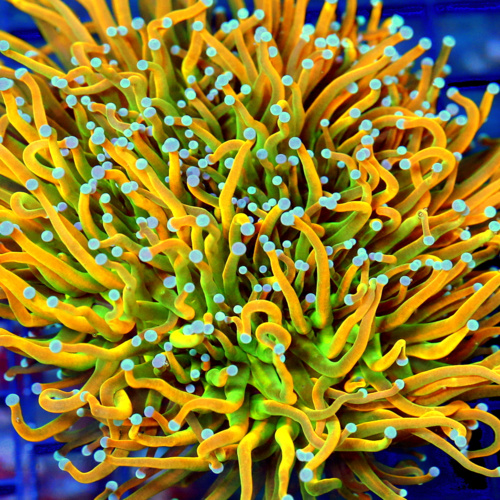
Learn how to care for Euphyllia corals in a home reef aquarium with practical guidance on torch, hammer, frogspawn, and grape coral lighting, flow, feeding, placement, water parameters, spacing, and long-term health.
Learn Euphyllia coral care for reef tanks, including torch, hammer, frogspawn, and grape coral lighting, flow, feeding, placement, water parameters, spacing, and stress signs.
by Scott Shiles • April 28, 2026
Euphyllia corals are some of the most popular LPS corals in the reef aquarium hobby because they bring color, movement, and personality to a home reef tank. This group includes many hobby favorites such as torch corals, hammer corals, frogspawn corals, and grape corals. Their long flowing tentacles, bright fluorescence, and soft movement can make them a major focal point in mixed reef aquariums.
Even though Euphyllia corals are extremely popular, they are not corals to place randomly and hope for the best. They need stable water parameters, moderate lighting, indirect flow, enough spacing, and careful handling. Their fleshy tissue can be damaged by strong current, sharp rock, aggressive neighbors, or sudden swings in water chemistry.
At Extreme Corals, Euphyllia corals are some of the most requested LPS corals because they offer the movement many reef keepers want without needing the extreme lighting and flow demands of many SPS corals. This guide covers Euphyllia care in home reef aquariums, including torch, hammer, frogspawn, and grape coral care tips, lighting, feeding, flow, placement, compatibility, stress signs, and long-term success.
What Is Euphyllia Coral?
Euphyllia is a group of large polyp stony corals known for fleshy tissue, long tentacles, and strong movement in the reef tank. In the aquarium hobby, the name Euphyllia is commonly used for several closely related corals, including torch corals, hammer corals, frogspawn corals, and grape corals.
These corals grow over a hard calcium carbonate skeleton while extending soft, fleshy polyps into the water column. Healthy Euphyllia should show full extension, stable color, no exposed skeleton, and a natural swaying motion in indirect flow.
Because Euphyllia corals are semi-aggressive, they should be placed with care. Many varieties can extend sweeper tentacles that sting nearby corals. A beautiful Euphyllia garden can be one of the most striking areas of a reef tank, but spacing and compatibility must be planned from the beginning.
Common Types of Euphyllia Coral
Understanding the different types of Euphyllia helps with placement, spacing, and care. While they share many general requirements, each type has a slightly different growth form and appearance.
Torch Coral
Torch corals are known for long, flowing tentacles that often end in bright tips. They create strong movement and are popular as centerpiece corals. Torch corals can be more aggressive than some other Euphyllia and need generous spacing from nearby corals.
Hammer Coral
Hammer corals have tentacles with hammer-shaped or anchor-shaped tips. They add movement and texture without always extending as far as some torch corals. Branching hammer corals are often easier to place and frag than wall varieties.
Frogspawn Coral
Frogspawn corals have branching tentacle tips that look like clusters of small bubbles or frog eggs. They create a softer, bushier movement and can make excellent additions to LPS-focused reef aquariums.
Grape Coral
Grape coral has rounded, grape-like tentacle tips and a compact flowing look. It can be a beautiful choice for reef keepers who like Euphyllia movement but want a slightly different texture from torch, hammer, or frogspawn varieties.
Natural Habitat of Euphyllia Corals
Euphyllia corals are associated with Indo-Pacific reef environments, including areas around Australia, Indonesia, Fiji, the Philippines, and the Great Barrier Reef. In the wild, they are often found in sheltered reef slopes, lagoonal areas, reef crests, and deeper reef zones where they receive moderate light and steady but not destructive water movement.
Their natural habitat helps explain their aquarium care needs. Euphyllia corals generally do best when given moderate light, indirect flow, clean but not sterile water, and stable chemistry. They are not designed to be blasted by a direct powerhead or placed in rapidly changing conditions.
In a home reef aquarium, the goal is to create a stable version of those natural conditions: enough light for color and photosynthesis, enough flow for oxygen and waste removal, and enough space for tentacle extension.
Why Euphyllia Corals Are So Popular
Euphyllia corals are popular because they offer the movement many reef keepers want from a living coral display. Their tentacles sway in the current, creating a reef tank that feels alive and natural. They also come in many color forms, including green, gold, purple, blue, orange, and high-contrast tip varieties.
Reef keepers often choose Euphyllia because they offer:
- Strong movement from long flowing tentacles
- Bright fluorescence under reef lighting
- Moderate care level in stable aquariums
- Excellent focal point potential in mixed reefs and LPS tanks
- Different growth forms including branching and wall varieties
- Good variety across torch, hammer, frogspawn, and grape coral types
They are especially appealing for hobbyists who want color and motion without building an SPS-dominant system. With that said, Euphyllia corals require more attention to spacing, flow, and tissue health than many beginner soft corals.
Best Water Parameters for Euphyllia Coral
Stable water chemistry is one of the most important parts of Euphyllia care. These corals can tolerate normal reef ranges, but they do not respond well to sudden changes in alkalinity, salinity, temperature, or nutrients.
| Parameter | Recommended Range |
|---|---|
| Temperature | 76-80°F |
| Salinity | 1.024-1.026 specific gravity |
| pH | 8.1-8.4 |
| Alkalinity | 8-10 dKH |
| Calcium | 400-450 ppm |
| Magnesium | 1250-1350 ppm |
| Nitrate | 5-10 ppm |
| Phosphate | 0.03-0.07 ppm |
Euphyllia corals often look best in water that is clean but not stripped completely of nutrients. Very low nutrients can contribute to pale color, weaker extension, and reduced resilience. Excess nutrients can fuel algae, bacterial problems, and tissue irritation. Regular testing and consistent maintenance are more important than chasing perfect numbers.
Tank Size and Setup
A tank of 30 gallons or larger is a practical starting point for many Euphyllia corals. Smaller tanks can work, but they require careful planning because Euphyllia need space for tentacle extension and stable water conditions.
In most reef aquariums, Euphyllia corals do best in the middle to lower areas of the tank where lighting is moderate and flow is indirect. They are usually placed on stable rockwork where their skeleton can sit securely and their tissue can expand without rubbing against sharp surfaces.
Branching varieties are often easier to position because each head grows on a branch. Wall Euphyllia varieties can be more sensitive to damage because one continuous tissue band may cover a larger skeleton. If wall varieties are injured, tissue problems can sometimes spread more easily across the colony.
Lighting Requirements for Euphyllia
Euphyllia corals generally prefer moderate reef lighting. They need enough light to support photosynthesis and color, but too much intensity can cause bleaching, shrinking, or reduced polyp extension.
A practical range for many Euphyllia corals is around 100-200 PAR, depending on the coral type, tank depth, lighting fixture, and the coral’s previous environment. New Euphyllia should be acclimated slowly rather than moved directly into intense lighting.
If the coral is fading, shrinking, or failing to extend after being placed high in the tank, the light may be too strong. If it stretches excessively or loses color in a shaded area, it may need slightly more light. Make changes gradually and watch the coral’s response over several days or weeks.
Water Flow for Euphyllia Coral
Flow is one of the biggest factors in Euphyllia success. These corals need enough movement to bring oxygen and nutrients across the tissue while carrying waste away, but they do not like strong direct current.
The best flow is moderate, indirect, and somewhat random. The tentacles should sway naturally rather than being blasted in one direction. If the flesh is being pushed hard against the skeleton, the flow is too strong. If detritus settles around the base and the coral stays dull or closed, the flow may be too weak.
Good Euphyllia flow should create motion without causing tissue damage. A coral that looks like it is being whipped, folded, or torn by flow should be moved or the pump direction should be adjusted.
Placement and Spacing for Torch, Hammer and Frogspawn Corals
Placement is where many Euphyllia problems begin. These corals may look soft and peaceful, but they are semi-aggressive and can sting nearby corals. Torch corals especially need extra room because their tentacles can extend farther than many other Euphyllia types.
A good placement plan should include:
- Moderate lighting
- Moderate indirect flow
- Stable rockwork
- Several inches of spacing from other corals
- No sharp rock rubbing the fleshy tissue
- Room for tentacles to extend without touching neighbors
When building a Euphyllia garden, keep similar corals together only when you know they are compatible and have enough space. Even within Euphyllia-type corals, torch corals can be more aggressive and may not always be safe touching hammers or frogspawn.
Feeding Euphyllia Corals
Euphyllia corals are photosynthetic, but supplemental feeding can support growth, color, and polyp extension. They do not need heavy daily feeding, but small, controlled feedings can be helpful in many reef tanks.
Good food options include:
- Mysis shrimp
- Brine shrimp
- Finely chopped marine seafood
- Small particle LPS coral foods
- Zooplankton-based coral foods
- Amino acid supplements used carefully
- Powdered coral foods used lightly
Target feeding one to two times per week is a good starting point for most systems. Some tanks may support slightly more feeding, but water quality should guide the routine. If nitrate and phosphate begin rising quickly, reduce feeding and improve nutrient export.
The best time to feed is often when tentacles are extended and the coral is showing a feeding response. Use a coral feeding tool or turkey baster and avoid blasting food into the coral tissue. Food should be offered gently so the coral can capture it without being irritated.
Euphyllia Compatibility With Fish and Other Corals
Euphyllia corals can do well in mixed reef aquariums, but they must be protected from coral nippers, aggressive neighbors, and poor spacing. Their long tentacles can sting other corals, and aggressive corals can also damage Euphyllia tissue if placed too close.
Good tank mates often include:
- Clownfish
- Gobies
- Blennies
- Peaceful wrasses
- Snails
- Most reef-safe shrimp with caution during feeding
Use caution with angelfish, butterflyfish, and any fish known to nip fleshy coral tissue. Also watch shrimp during feeding, because they may steal food and irritate the coral if they climb over the tentacles repeatedly.
Branching vs Wall Euphyllia Care
One of the most important distinctions in Euphyllia care is the difference between branching and wall growth forms. Branching Euphyllia grows individual heads on separate branches. Wall Euphyllia grows along a more continuous skeleton with connected tissue.
Branching varieties are generally easier to manage, place, and frag. If one head is damaged, the problem may stay more localized. Wall varieties can be more delicate because damage to one area may affect a larger continuous section of tissue.
For beginners, branching hammer, branching frogspawn, and branching torch corals are usually more forgiving than wall varieties. Wall Euphyllia can still be beautiful, but they should be handled carefully and kept in especially stable conditions.
Growth Rate and Propagation
Euphyllia corals usually have a moderate growth rate when lighting, flow, feeding, and water chemistry are stable. Branching varieties may slowly add new heads, while wall varieties expand differently along their skeleton.
Branching Euphyllia can often be propagated by cutting the skeleton below the fleshy tissue with a coral saw or bone cutter. The cut should be made through clean skeleton, not through living tissue. Wall varieties are much more difficult to frag and are not ideal for inexperienced propagation.
Growth should not be rushed. A Euphyllia coral that maintains full extension, stable color, and healthy tissue is doing well even if it grows slowly. Consistency is more important than forcing fast growth.
Common Euphyllia Problems and Stress Signs
Euphyllia corals show stress through changes in extension, color, and tissue condition. Catching problems early can prevent long-term damage.
Common stress signs include:
- Retracted tentacles: May indicate poor water quality, direct flow, fish nipping, or recent stress.
- Faded or bleached color: Often caused by excessive light, sudden lighting changes, or low nutrients.
- Tissue recession: Can result from unstable parameters, strong flow, coral aggression, or damage.
- Brown jelly disease: A fast-moving bacterial issue that requires quick action and improved water quality.
- Algae near the skeleton: Often linked to exposed skeleton, excess nutrients, or detritus buildup.
- Slow growth: May be connected to low feeding, unstable alkalinity, weak mineral balance, or poor placement.
If a Euphyllia coral begins declining, check salinity, temperature, alkalinity, nitrate, phosphate, lighting, and flow before making several changes at once. Repeated moving can make a stressed coral worse.
Brown Jelly Disease in Euphyllia
Brown jelly disease is one of the most serious issues associated with Euphyllia corals. It can appear as brown, slimy tissue decay and may move quickly through a coral if not addressed. It is often associated with tissue damage, poor water quality, shipping stress, or bacterial imbalance.
If brown jelly is suspected, isolate the affected coral when possible, improve water quality, remove decaying material carefully, and consider an appropriate coral dip based on the situation. Fast action is important because the infection can spread quickly, especially in tightly grouped Euphyllia gardens.
Prevention is better than rescue. Avoid tissue damage, keep flow indirect, maintain stable parameters, quarantine or inspect new corals when possible, and do not allow unhealthy tissue to remain in contact with healthy colonies.
Handling and Acclimation
Euphyllia corals should be handled gently because their fleshy tissue can tear against the skeleton. Avoid touching or squeezing the polyps. Handle the skeleton or frag plug whenever possible.
When adding a new Euphyllia coral, temperature acclimate first and then adjust gradually to your tank conditions. If using a coral dip, follow the product directions carefully and avoid overexposure. After dipping, place the coral in a moderate light, indirect flow area and give it time to settle.
A newly added Euphyllia may take time to fully extend. As long as the tissue is intact and water conditions are stable, patience is usually better than constantly moving it around the tank.
How to Tell If Euphyllia Is Healthy
A healthy Euphyllia coral should show full tentacle extension, stable color, and tissue that covers the skeleton cleanly. The tentacles should move naturally in the flow without being whipped or flattened.
Positive signs include:
- Full tentacle extension during the day
- Stable coloration without sudden fading
- No exposed skeleton or receding tissue
- Natural swaying movement in indirect flow
- Feeding response when food is offered
- New heads forming on branching varieties over time
Minor changes in extension are normal, but a coral that stays closed, fades, or begins losing tissue needs attention.
Related Corals You May Also Like
If you are interested in Euphyllia corals, these related coral groups and guides can help you build a colorful, movement-rich reef tank:
- Large Polyp Stony Corals - Explore colorful LPS corals with movement, feeding response, and showpiece appeal.
- Torch Coral Care Guide - Learn detailed lighting, flow, feeding, and placement tips for torch corals.
- Hammer Coral Care Guide - Review care requirements for hammer Euphyllia corals.
- Frogspawn Coral Care Guide - Learn how to care for frogspawn coral in reef aquariums.
- Coral Care Guides - Browse more coral care resources for LPS, SPS, soft corals, and zoanthids.
- New Arrival Corals - View recently added WYSIWYG corals for your reef tank.
Shop Euphyllia and LPS Corals
Euphyllia corals are excellent choices for reef keepers who want movement, color, and strong visual presence in a stable reef aquarium. Once your tank is ready, choosing healthy LPS corals from a trusted source gives your reef a better start.
Browse LPS corals, new arrival corals, and Scott's Handpicked Corals at ExtremeCorals.com to find pieces that match your lighting, flow, placement, and reefkeeping goals.
Frequently Asked Questions About Euphyllia Coral Care
Is Euphyllia coral beginner-friendly?
Euphyllia can be beginner-friendly for reef keepers with stable aquariums, but it is not the easiest coral for brand-new tanks. It needs stable water parameters, moderate lighting, indirect flow, and enough space from neighboring corals.
What corals are considered Euphyllia?
In the reef hobby, Euphyllia commonly refers to torch corals, hammer corals, frogspawn corals, and grape corals. These corals are popular LPS corals known for flowing tentacles and bright fluorescence.
Where should I place Euphyllia in my reef tank?
Euphyllia usually does best in the middle to lower areas of the tank with moderate lighting and moderate indirect flow. Place it where the tentacles can extend without touching nearby corals.
How much flow does Euphyllia need?
Euphyllia prefers moderate, indirect flow. The tentacles should sway naturally, but they should not be blasted, flattened, or forced hard against the skeleton.
Does Euphyllia need to be fed?
Euphyllia receives energy from photosynthesis, but supplemental feeding can support growth, color, and extension. Small meaty foods and LPS coral foods offered one to two times per week can be helpful.
Can Euphyllia touch other corals?
Euphyllia should be given space from other corals because it can extend sweeper tentacles and sting neighbors. Torch corals in particular often need generous spacing from other corals.
Why is my Euphyllia coral not opening?
A Euphyllia coral may stay closed because of strong direct flow, excessive light, unstable water parameters, fish nipping, coral aggression, recent shipping stress, or tissue irritation.
About the Author
Scott Shiles is the owner of ExtremeCorals.com, which he has operated for over 25 years and is recognized as one of the early dedicated live coral websites on the internet. A lifelong reef keeper since 1984, Scott has decades of hands-on experience maintaining marine aquariums and previously owned and operated a brick and mortar aquarium retail store for 10 years, including five years alongside Extreme Corals. He holds a degree in Marine Biology and has personally selected and sold hundreds of thousands of live corals. An avid scuba diver who has explored reef systems around the world, Scott shares practical coral care and husbandry knowledge based on real world reef experience.
overall rating:
my rating:
log in to rate
Please log in to leave a comment.
For more information visit: additional resources