My Cart: 0 item(s)

Extreme Corals News and Updates
Scuba Diving and Reef Tank Keeping: How My Love for Coral Reefs Connects Both Worlds
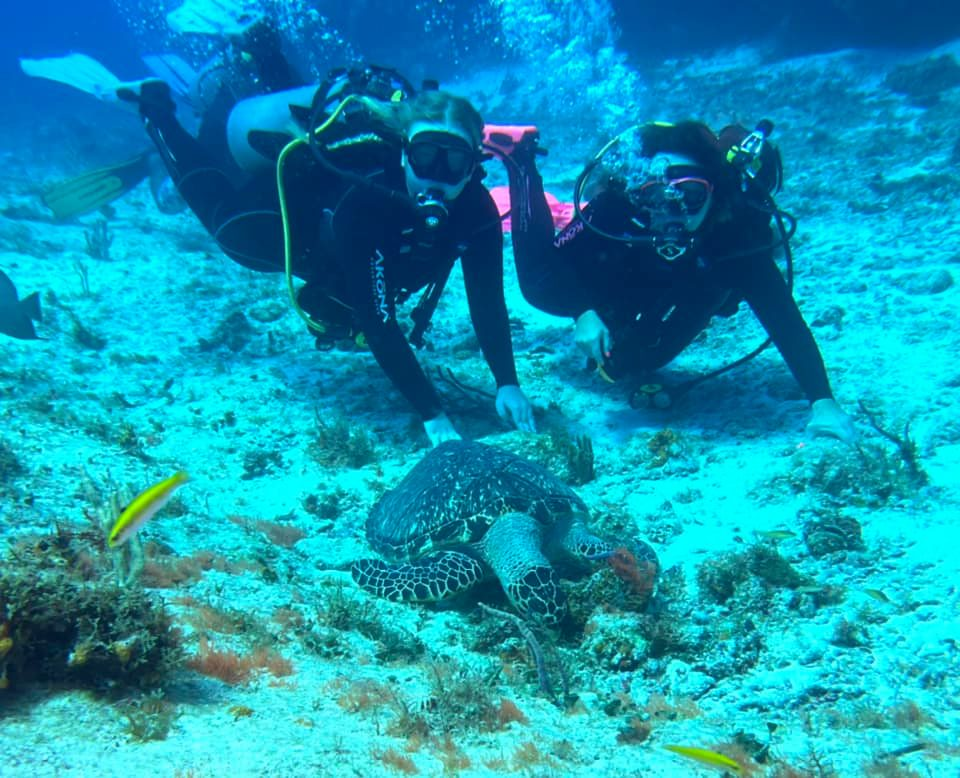
Scott Shiles of Extreme Corals shares how scuba diving and reef tank keeping are connected through coral care, reef observation, ocean appreciation and a lifelong love of marine life.
Scott Shiles of Extreme Corals shares how scuba diving and reef tank keeping are connected through coral care, ocean appreciation, reef observation and a lifelong love of marine life.
by Scott Shiles • May 14, 2026
Scuba diving and reef tank keeping have always been deeply connected for me. One lets me experience the reef in its natural world, and the other lets me bring a small piece of that wonder into a home aquarium where it can be cared for, studied, and enjoyed every day. At first glance, scuba diving and keeping a reef tank may look like two different hobbies, but in my life they have always fed the same passion: a love for coral reefs, marine life, and the incredible details most people never get to see up close.
Here at Extreme Corals, that connection is a big part of who we are. I have been a reef keeper since 1984, and I have also been fortunate enough to scuba dive reef systems around the world. Diving changed the way I look at coral. It helped me understand flow, light, spacing, fish behavior, coral competition, reef structure, and the natural balance that makes reefs so fascinating. Reef keeping gave me a way to stay connected to that same world even when I was not underwater.
This article is not meant to be a basic coral care sheet. It is about the relationship between scuba diving and reef tank keeping, why so many divers become reef keepers, and why reef aquariums can become a daily reminder of the ocean. For me, the two hobbies are not separate. Diving is where the love of reefs becomes unforgettable, and reef keeping is where that love becomes part of everyday life.
If you are building a reef aquarium because you love the ocean, you may also enjoy our coral care guide, our new arrival corals, and our Scott's Handpicked Corals.
Why Scuba Diving and Reef Keeping Feel So Connected
When you scuba dive on a healthy reef, you see things that are almost impossible to fully explain to someone who has never been there. You see fish moving through coral heads with purpose. You see currents carrying food across the reef. You see corals placed in different zones depending on light, depth, flow, and competition. You see how everything is connected.
That experience changes how you look at a reef tank. A reef aquarium is not just a glass box with colorful corals. It is an attempt, on a small scale, to respect and recreate some of the same relationships that exist in the ocean. The flow, the rockwork, the lighting, the fish, the cleanup crew, the coral placement, and the maintenance routine all work together.
In my experience, divers often become strong reef keepers because they already understand that a reef is not random. Natural reefs have structure. There are high-flow zones, shaded areas, open sand patches, protected crevices, coral colonies competing for space, and fish using every part of the habitat. Once you have seen that underwater, it becomes easier to understand why coral placement matters so much in an aquarium.
The Ocean Teaches You What a Reef Tank Is Trying to Become
One of the greatest things scuba diving teaches is humility. The ocean is bigger, more complex, and more balanced than anything we can create at home. A reef tank will never be the ocean, but it can be inspired by it.
When I dive, I pay attention to things many people might swim past:
- How corals grow in relation to water movement
- Where fleshy LPS-style corals are protected from harsh current
- How branching corals use flow and light
- How fish use coral heads for shelter
- How sand, rubble, rock, and coral all create habitat
- How much empty space exists between many natural coral colonies
- How different the reef looks in high-energy and low-energy zones
Those observations matter in reef keeping. They remind me not to overcrowd corals, not to blast fleshy corals with direct flow, not to assume every coral wants maximum light, and not to treat an aquarium like a display shelf. A reef tank is a living system.
Seeing Corals in the Wild Changes How You Care for Them
Seeing corals underwater gives you a different level of respect for them. In a store or online photo, a coral can look like a product. On a reef, it is clearly a living animal within a larger ecosystem. It has neighbors, predators, competitors, flow patterns, light exposure, and relationships with fish and invertebrates.
That is one reason I care so much about how corals are selected, shipped, placed, and maintained. At Extreme Corals, we are not just selling color. We are selling living animals that deserve proper care. When someone buys a coral from us, I want that coral to have the best chance to thrive in their reef tank.
Diving has helped me appreciate corals such as LPS corals, SPS corals, soft corals, Zoanthids, and Ricordea mushrooms not just as aquarium pieces, but as parts of reef life. That changes the way you care for them.
Why Divers Are Drawn to Reef Aquariums
Many scuba divers become reef keepers because diving creates a kind of connection that does not go away after the trip ends. Once you have hovered over a reef and watched the life moving around you, it is hard not to want that connection closer to home.
A reef tank gives divers a way to stay connected to the ocean between dives. It becomes a daily reminder of what we love underwater. You can watch coral polyps open, fish interact, snails clean the rock, and corals respond to light and flow. It is not the same as diving, but it keeps the same part of your mind alive.
Reef aquariums appeal to divers because they offer:
- A daily connection to marine life
- A way to observe coral behavior up close
- A creative outlet for building a miniature reef structure
- A deeper appreciation for ocean ecosystems
- A reminder of favorite dive trips and reef encounters
- A way to share the beauty of reefs with family and friends
For me, reef keeping has always been more than owning an aquarium. It is a continuation of the same love that made me want to dive in the first place.
How Reef Keeping Makes You a Better Diver
Reef keeping can also make someone a better diver. When you keep corals, you learn to slow down and notice details. You start recognizing coral shapes, fish behavior, feeding responses, stress signs, and environmental patterns. That carries over underwater.
A reef keeper who dives may notice:
- Different coral growth forms on reef slopes
- How fish use coral branches for protection
- How current affects polyp extension and feeding
- How some corals dominate space while others grow in protected areas
- How light changes with depth and water clarity
- How fragile reef structure really is
When you understand how much effort it takes to keep a small reef tank stable, you gain even more respect for natural reefs. You become more careful with your fins, more aware of your buoyancy, and more appreciative of the coral colonies you are seeing in the wild.
What Scuba Diving Taught Me About Coral Placement
One of the biggest lessons diving reinforces is that corals are not all found in the same conditions. Some corals thrive in stronger flow and brighter light. Others live in calmer, lower-light areas. Some grow on reef faces. Others are found closer to sand, rubble, or protected slopes.
That matters in a reef tank. You cannot place every coral in the same light and flow and expect success. A fleshy open brain coral does not want the same placement as an Acropora. A mushroom coral does not need the same light as a high-energy SPS coral. A torch coral needs room for movement and aggression. A chalice needs space to avoid stinging neighbors.
That is why we talk so much about placement in our coral guides. Reef keeping is not just about buying healthy coral. It is about putting that coral where it belongs. Our coral placement guide goes deeper into how lighting, flow, spacing, and aggression should shape your aquascape.
What Scuba Diving Taught Me About Water Flow
When you dive, you quickly realize that water movement is not optional on a reef. Current brings food, oxygen, and exchange. It removes waste. It shapes where corals grow and how fish move. The reef is alive partly because the water is always moving.
In aquariums, flow is just as important, but it has to be controlled. Too little flow creates dead spots and detritus buildup. Too much direct flow can damage coral tissue. The goal is not simply more flow. The goal is the right kind of flow for the coral.
In our systems and customer tanks, we often see flow problems show up as:
- LPS corals retracting on the side facing a pump
- Mushrooms detaching from rock
- Soft corals staying closed
- SPS corals collecting detritus in low-flow zones
- Fleshy corals developing tissue damage near the skeleton
- Food and waste settling behind rockwork
Diving teaches you that flow should feel natural, not violent. In a reef tank, that usually means broad, indirect, random movement rather than narrow streams blasting coral tissue. Our water flow and coral health guide explains this in more detail.
What Scuba Diving Taught Me About Light
Light changes dramatically underwater. The deeper you go, the more the spectrum changes. Colors shift. Blues dominate. Shadows matter. Coral placement is shaped by depth, clarity, angle, and surrounding structure.
That is one reason I do not believe in treating reef lighting like a simple brightness contest. Corals need appropriate light, not always maximum light. Some corals color up beautifully under strong lighting, while others become stressed, pale, or retracted.
In reef tanks, lighting should be matched to the coral:
- Many SPS corals need stronger lighting and careful acclimation.
- Many LPS corals do best under moderate lighting.
- Many fleshy open brain corals prefer lower to moderate light.
- Mushrooms and some soft corals often thrive in lower-light zones.
- New corals should be light acclimated instead of shocked.
When I look at a tank, I think about where the coral would be comfortable, not just where it looks brightest. That mindset comes directly from seeing reefs underwater. For more help, read our reef tank lighting guide.
The Emotional Side of Diving and Reef Keeping
There is also an emotional side to both hobbies that is hard to explain unless you have lived it. Diving gives you moments you never forget. A reef wall disappearing into blue water. A turtle passing by slowly. Fish moving through coral branches. The quiet sound of breathing underwater. The feeling of being a visitor in a world that is not yours, but that you deeply respect.
Reef keeping gives a different kind of reward. It is quieter and more daily. You walk past the tank and notice a coral is more open than yesterday. A new head is forming. A fish has settled into its territory. A coral you cared for after shipping is finally fully inflated. Those small moments matter.
For me, both hobbies come from the same place. I love reefs. I love the life around them. I love the challenge of understanding them. I love that a reef tank can bring some of that beauty into everyday life, and I love that diving reminds me where that beauty comes from.
Sharing the Ocean With Family
Some of my best memories around the ocean are not just about the dives themselves, but about sharing those experiences with family. Diving with people you care about makes the ocean even more meaningful. It turns a hobby into a memory that stays with you.
Those experiences also connect back to reef keeping. A reef tank at home becomes a conversation. It gives family and friends a way to see part of what makes the ocean special. Someone who has never been on a reef can still watch a coral open, see fish interact, and begin to understand why reef ecosystems matter.
That is one reason I believe reef tanks can inspire people. A well-kept reef aquarium can create curiosity. It can make someone ask questions about coral reefs, marine biology, conservation, and the ocean. That curiosity matters.
Reef Tanks as a Daily Reminder of the Ocean
Not every day can be a dive day. Most of us cannot live underwater or travel to reefs whenever we want. A reef tank gives us a daily connection to that world. It is not a replacement for the ocean, but it is a reminder of it.
A reef aquarium can remind you of:
- The colors seen under blue water
- The movement of coral polyps in current
- The relationship between fish and structure
- The importance of balance and patience
- The beauty of small details
- The responsibility that comes with keeping marine life
For scuba divers, that daily reminder can be powerful. It keeps the connection alive between trips. It turns the home into a place where the ocean is still present in a small but meaningful way.
How Diving Builds Respect for Coral Conservation
When you see reefs in person, you understand why they are worth protecting. Coral reefs are not just pretty backgrounds for dive trips. They are living ecosystems that support fish, invertebrates, coastal protection, tourism, science, and biodiversity.
Reef keeping should increase respect for that, not reduce it. Keeping corals at home should make us more careful, more educated, and more committed to responsible choices. That includes buying from reputable sources, learning care requirements before purchase, avoiding unnecessary coral losses, and supporting sustainable practices whenever possible.
Responsible reef keeping includes:
- Choosing healthy corals that fit your tank
- Learning care requirements before buying
- Keeping stable water conditions
- Quarantining or inspecting new arrivals
- Avoiding impulse purchases of corals you cannot support
- Respecting natural reefs when diving
- Maintaining excellent buoyancy and never touching coral underwater
Diving and reef keeping both come with responsibility. The more you love reefs, the more seriously you should take their care.
Why Reef Keeping Takes Patience, Just Like Diving
Both scuba diving and reef keeping reward patience. A diver has to slow down, breathe, observe, and let the reef reveal itself. A reef keeper has to test, wait, adjust slowly, and give corals time to settle.
Nothing good in reef keeping happens by rushing. A tank needs time to mature. Corals need time to adjust. Water chemistry needs time to stabilize. Growth takes time. The same patience that makes a good diver also makes a good reef keeper.
In our experience, the reef keepers who succeed long term are usually the ones who observe before reacting. They do not move a coral five times in one week. They do not chase numbers wildly. They do not add too much too fast. They learn the system, make careful changes, and let the reef develop.
The Difference Between Seeing a Reef and Caring for One
Scuba diving lets you see a reef. Reef keeping makes you responsible for one, even if it is only a small aquarium version. That responsibility changes the relationship.
When you care for corals at home, you learn how sensitive marine life can be. You learn that salinity matters. Alkalinity matters. Flow matters. Light matters. Spacing matters. A mistake can show up in living tissue. That makes you appreciate natural reefs even more because they balance countless variables at a scale we can only try to understand.
That is one of the reasons I love both hobbies. Diving gives awe. Reef keeping gives responsibility. Together, they create a deeper respect for marine life.
How to Bring a Diver’s Eye Into Reef Tank Keeping
A diver’s eye can make a reef tank better. Instead of thinking only about filling empty space, think about how a reef actually functions. Create zones. Give corals room. Think about flow patterns. Think about how fish move through structure. Think about how the tank will look as corals grow.
Ways to bring a diver’s eye into reef keeping include:
- Build open swimming areas for fish.
- Create ledges, caves, and protected coral zones.
- Use flow that moves around the reef, not just at one coral.
- Place corals based on their needs, not just color.
- Leave room for growth and aggression.
- Use lower-light areas intentionally instead of treating them as wasted space.
- Think of the tank as a habitat, not a display shelf.
That approach creates healthier aquariums and more natural-looking displays. It also makes reef keeping more satisfying because the tank begins to feel like a living system instead of a collection of pieces.
Choosing Corals That Reflect Your Love of the Reef
Every reef keeper has certain corals that speak to them. Some people love the movement of Euphyllia. Some love the structure of SPS. Some love the color of Zoanthids. Some love fleshy LPS corals that look like living art. There is no single right style of reef tank.
The best coral choices are the ones that match both your taste and your ability to care for them. A diver may be drawn to corals that remind them of favorite reef scenes. A beginner may start with hardy corals and grow from there. An experienced reef keeper may build a tank around rare LPS, SPS, or soft coral gardens.
At Extreme Corals, we want customers to choose corals that fit their tanks, not just corals that look good for a quick photo. Browse new arrival corals, LPS corals, SPS corals, soft corals, and Zoanthids with both beauty and long-term care in mind.
What Both Hobbies Have Given Me
Scuba diving has given me unforgettable experiences. Reef keeping has given me a lifelong connection to marine life. Extreme Corals grew out of that connection. This business is not just about selling coral. It is about sharing the same fascination that started for me decades ago: the beauty of reef life and the challenge of caring for it well.
Both hobbies have taught me patience, observation, responsibility, and respect. Diving reminds me how incredible natural reefs are. Reef keeping reminds me how much daily care goes into maintaining even a small piece of that world. Together, they have shaped how I see coral, how I choose coral, and how I talk to customers about coral care.
For anyone who loves scuba diving and is thinking about reef keeping, I understand the pull completely. A reef tank gives you a way to keep that connection alive. For anyone who keeps reef tanks and has never been diving, I hope you get the chance one day. Seeing the reef in person can change the way you look at every coral in your aquarium.
Related Reef Keeping Topics You May Also Like
If your love of scuba diving has led you toward reef keeping, these guides and coral categories can help you build a stronger aquarium:
- Coral Care Guide - Start with the basics of coral care, placement, lighting, and water quality.
- Coral Placement Guide - Learn how to place corals based on light, flow, spacing, and aggression.
- Water Flow and Coral Health - Understand why flow matters so much in reef tanks.
- Reef Tank Lighting Guide - Learn how light affects coral growth, color, and health.
- Corals for Sale Guide - Choose healthy corals that fit your aquarium.
- New Arrival Corals - Browse recently added corals for your reef tank.
- Scott's Handpicked Corals - Explore corals selected for color and quality.
- LPS Corals - Browse fleshy and movement-focused large polyp stony corals.
Bring the Reef Home With Extreme Corals
For me, scuba diving and reef keeping will always be connected. Diving lets me experience the ocean in person, and reef keeping lets me carry that love into everyday life. Both hobbies are built on curiosity, patience, respect, and a deep appreciation for marine life.
If you share that love for reefs, we invite you to browse new arrival corals, Scott's Handpicked Corals, LPS corals, SPS corals, soft corals, and Zoanthids at ExtremeCorals.com. A reef tank is not the ocean, but when it is built with care, it can become a meaningful daily connection to the reefs we love.
Frequently Asked Questions About Scuba Diving and Reef Tank Keeping
Why do many scuba divers become reef tank keepers?
Many scuba divers become reef tank keepers because diving creates a deep connection to coral reefs. A reef aquarium allows divers to stay connected to marine life at home between dive trips.
How does scuba diving help with reef keeping?
Scuba diving helps reef keepers understand natural coral placement, water movement, fish behavior, light zones, reef structure, and the importance of respecting coral as living animals.
Can a reef tank recreate the ocean?
A reef tank cannot fully recreate the ocean, but it can be inspired by natural reef systems. A well-maintained reef aquarium can reflect the beauty, balance, and relationships seen on natural reefs.
Does reef keeping make someone a better diver?
Reef keeping can make someone a more observant and careful diver. It teaches patience, coral awareness, respect for fragile reef life, and attention to small details underwater.
What can divers learn from reef aquariums?
Divers can learn how coral responds to light, flow, water chemistry, spacing, aggression, feeding, and stress. This can make natural reefs even more interesting to observe while diving.
What can reef keepers learn from scuba diving?
Reef keepers can learn how corals grow in different zones, how fish use reef structure, how water movement shapes coral health, and why natural reef ecosystems deserve respect and protection.
Is reef keeping a good hobby for scuba divers?
Yes, reef keeping can be a great hobby for scuba divers because it provides a daily connection to coral reefs and marine life, even when they are not able to dive.
What corals are good for someone inspired by diving?
Good choices depend on the tank, but many divers enjoy LPS corals for movement, SPS corals for reef structure, soft corals for natural motion, Zoanthids for color, and mushrooms for lower-light reef zones.
How can reef keepers support reef conservation?
Reef keepers can support conservation by buying healthy corals responsibly, researching care before purchase, maintaining stable aquariums, reducing unnecessary coral losses, and respecting natural reefs while diving.
Why are scuba diving and reef keeping so rewarding?
Scuba diving provides unforgettable experiences in the ocean, while reef keeping provides a daily connection to marine life at home. Together, they deepen appreciation for coral reefs and the animals that live there.
About the Author
Scott Shiles is the owner of ExtremeCorals.com, which he has operated for over 25 years and is recognized as one of the early dedicated live coral websites on the internet. A lifelong reef keeper since 1984, Scott has decades of hands-on experience maintaining marine aquariums and previously owned and operated a brick and mortar aquarium retail store for 10 years, including five years alongside Extreme Corals. He holds a degree in Marine Biology and has personally selected and sold hundreds of thousands of live corals. An avid scuba diver who has explored reef systems around the world, Scott shares practical coral care and husbandry knowledge based on real world reef experience.
overall rating:
my rating:
log in to rate
Please log in to leave a comment.
For more information visit: additional resources