My Cart: 0 item(s)

Extreme Corals News and Updates
Bubble Coral Care Guide: Lighting, Feeding, Placement and Stability Tips for Reef Tanks
Learn how to care for bubble coral in a home reef aquarium with practical guidance on lighting, flow, feeding, placement, water parameters, common problems, and long-term health.
Learn how to care for bubble coral in a home reef aquarium with practical guidance on lighting, flow, feeding, placement, water parameters, common problems, and long-term health.
by Scott Shiles • April 24, 2026
Bubble Coral Care Guide: Lighting, Flow, Feeding and Placement in Home Reef Aquariums
Bubble coral is one of the most visually distinctive fleshy LPS corals in reef aquariums because its inflated daytime vesicles create a look that almost no other coral can match. For hobbyists who want a coral that adds movement, texture, and a softer fleshy presence to the lower reef, bubble coral can be a very rewarding choice. In our experience, healthy bubble coral gives a tank a more mature and natural look almost immediately. But despite being relatively hardy, it still depends on correct placement, moderate conditions, and careful handling. This guide covers the care requirements of bubble coral in home reef aquariums, including lighting, flow, feeding, placement, compatibility, and how to avoid the most common problems that can cause stress or tissue damage.
A common mistake hobbyists make is treating bubble coral like a generic fleshy LPS coral and placing it too close to aggressive neighbors or in direct flow. Bubble coral usually tolerates stable reef conditions well, but it does not tolerate rough placement decisions nearly as well as many hobbyists expect.
If you are looking for healthy, fully conditioned fleshy LPS corals, browse our WYSIWYG LPS corals to compare healthy examples.
Introduction to Bubble Coral
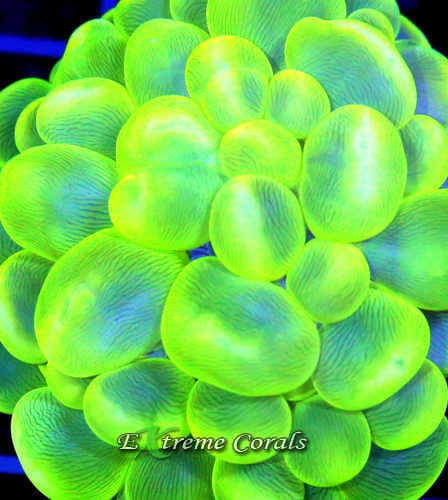
Bubble Coral is a large, fleshy LPS coral known for its bubble-like vesicles that expand during the day. These “bubbles” can be white, green, or tan, creating a unique and captivating display in reef tanks. At night, the bubbles retract and the coral extends its long sweeper tentacles, which it uses to capture food and defend itself. Bubble Coral is often considered a beginner-friendly coral because it is fairly hardy and adaptable when basic reef stability is present.
In our experience, bubble coral is one of the better fleshy LPS corals for hobbyists who want something that looks unusual without immediately stepping into very delicate territory. It is visually dramatic, but it still rewards simple, stable reefkeeping more than complicated intervention.
Natural Habitat and Location in the Wild
Bubble Coral is native to the Indo-Pacific region, including Australia, Indonesia, Fiji, the Philippines, and the Great Barrier Reef. It is commonly found in sheltered lagoons and reef slopes, where it grows in low-light environments with moderate water flow. In the wild, it often attaches to rocky crevices or sandy areas, allowing it to expand freely without obstruction.
That natural habitat explains a lot about how bubble coral behaves in captivity. In our experience, these corals usually do best when they are given a calmer, more protected placement rather than a high-energy spotlight position in the tank.
Why Choose Bubble Coral for Your Reef Tank?
- Unique Bubble-Like Appearance – Creates a visually striking display unlike most other corals.
- Low Maintenance and Beginner Friendly – Hardy and adaptable when basic reef conditions are stable.
- Moderate Growth Rate – Expands steadily without usually overwhelming the tank.
- Non-Demanding Light Requirements – Thrives in low to moderate lighting.
We’ve found that bubble coral is especially useful for reef keepers who want to add fleshy visual weight and soft contrast to a tank that is otherwise dominated by rigid structure. A common mistake hobbyists make is focusing only on bright color and forgetting how much shape and tissue texture can improve a reef’s overall look.
Optimal Water Parameters
Maintaining stable conditions is crucial for bubble coral’s health. While it is not among the most sensitive LPS corals, it still responds poorly to repeated swings in key chemistry.
| Parameter | Ideal Range |
|---|---|
| Temperature | 76-80°F (24-27°C) |
| Salinity | 1.024-1.026 SG |
| pH | 8.1-8.4 |
| Alkalinity | 8-10 dKH |
| Calcium | 400-450 ppm |
| Magnesium | 1250-1350 ppm |
| Nitrate | 5-10 ppm |
| Phosphate | 0.03-0.07 ppm |
Regular water testing and weekly water changes of 10-15% help maintain stability. In our experience, bubble coral usually tolerates slightly imperfect but stable conditions much better than “perfect” numbers that swing constantly. A common mistake hobbyists make is correcting multiple parameters too fast after seeing temporary stress, which can make the coral look worse instead of better.
If you are working on chemistry stability, read our pH and alkalinity guide and our reef tank maintenance guide.
Tank Size and Setup
- Minimum Tank Size: 30 gallons or larger.
- Placement: Prefers lower areas of the tank with moderate flow and indirect lighting.
- Substrate Considerations: Best placed on rock ledges or sandy areas, with enough room for full expansion.
In our experience, bubble coral needs more personal space than many hobbyists first assume. During the day, the inflated tissue takes up visual room, and at night the coral can extend long sweeper tentacles. A common mistake hobbyists make is judging space needs only by the daytime bubble appearance and forgetting what happens after lights go out.
Lighting Requirements
Bubble Coral prefers low to moderate lighting, which makes it suitable for a wide variety of reef setups.
- PAR Range: 50-150 PAR
- Lighting Type: LED, T5, or hybrid lighting setups
- Lighting Schedule: 8-10 hours per day, with gradual transitions to reduce stress
We’ve found that bubble coral often looks fuller and calmer under moderate light than it does under very intense lighting. A common mistake hobbyists make is assuming that because the coral is fleshy and attractive, it should be placed where it gets more visual emphasis from stronger light. In many systems, that just leads to stress and poorer inflation.
For a better understanding of coral light placement, read our reef tank lighting guide.
Water Flow and Circulation
- Moderate, indirect water flow ensures proper expansion of the bubbles.
- Avoid strong, direct flow, which can tear the coral’s delicate tissue.
- Randomized flow patterns mimic natural conditions and help prevent detritus buildup.
In our experience, this is one of the most important points for bubble coral care. A common mistake hobbyists make is putting it in a direct flow path where the inflated tissue is repeatedly pushed or folded. Bubble coral usually wants enough movement to stay clean, but not the kind of current that makes the flesh fight the environment all day.
For a better understanding of reef circulation, read our water flow and coral health guide.
Feeding and Nutrition
Bubble Coral is both photosynthetic and a carnivorous feeder, which means it benefits from both light and direct nutrition.
- Preferred Foods: Mysis shrimp, brine shrimp, plankton, and reef foods such as reef roids.
- Feeding Frequency: 2-3 times per week can promote better growth and stronger coloration.
- Best Feeding Method: Target feeding at night when the coral extends its sweeper tentacles.
We’ve found that bubble coral usually responds best to moderate, consistent feeding instead of excessive feeding. A common mistake hobbyists make is overfeeding fleshy corals and lowering water quality in the process. Better results usually come from controlled feeding and cleaner overall tank conditions.
Tank Mates and Compatibility
- Safe Companions: Clownfish, gobies, blennies, shrimp, and snails.
- Caution With: Bubble Coral has long, stinging sweeper tentacles, so it should be kept away from other corals.
- Avoid: Aggressive fish such as certain angelfish and butterflyfish that may nip at its fleshy tissue.
In many reef tanks, the biggest compatibility issue with bubble coral is not fish. It is coral spacing. We’ve found that bubble coral should be treated as an aggressive fleshy coral with real nighttime reach, not just a peaceful decorative piece. If you crowd it, eventually something around it usually pays for that decision.
Growth Rate and Propagation
- Moderate growth rate, with the coral expanding gradually as it absorbs nutrients and grows its skeleton.
- Fragging Method: Use a bone cutter or coral saw to carefully separate sections of the skeleton.
In our experience, bubble coral is not usually the first coral hobbyists should choose for propagation practice because the tissue is delicate and handling mistakes can be costly. Healthy, stable colonies handle intervention much better than stressed ones, so patience matters before attempting fragging.
How to Tell a Healthy Bubble Coral Before Buying
One of the best ways to succeed with bubble coral is to start with a healthy specimen. When selecting one, look beyond just the inflated daytime appearance.
- Look for full, inflated bubbles without obvious damage
- Choose stable coloration rather than faded or washed-out tissue
- Avoid visible recession around the skeleton
- Look for a coral that appears settled rather than freshly stressed
- Check for clean tissue without nuisance algae or obvious tears
In our experience, tissue condition matters far more than hype. A common mistake hobbyists make is buying purely by color tone or bubble size while ignoring damaged flesh or recession. If you are looking for a healthy, fully acclimated specimen, look for strong tissue, good inflation, and a coral that appears stable rather than reactive.
Common Diseases and How to Prevent Them
- Brown Jelly Disease – A bacterial problem that may require iodine dips and improved water quality.
- Tissue Recession – Often caused by aggressive tank mates, unstable parameters, or excessive flow.
- Algae Overgrowth – Can suffocate the coral if excess nutrients and poor maintenance allow algae to settle around the tissue.
We’ve found that most bubble coral issues begin with stress, not mystery disease. A common mistake hobbyists make is looking for an exotic answer before checking the basics like flow, lighting, aggression, and stability. When bubble coral is unhappy, those fundamentals are usually the first place to look.
Handling and Acclimation
- Drip acclimation is recommended to gradually introduce the coral to new water conditions.
- Minimize handling, as the fleshy bubbles are delicate and easily damaged.
In our experience, hobbyists often underestimate how easy it is to damage bubble coral through rough handling. A common mistake is touching or repositioning the inflated tissue too casually. Bubble coral usually does better when it is handled as little as possible and given time to settle after introduction.
Maintenance and Cleaning
- Perform weekly water changes of 10-15% to maintain water quality.
- Remove detritus buildup to help prevent bacterial issues and reduce irritation around the base.
Bubble coral is not especially demanding, but it still benefits from a clean environment. In our experience, these corals usually remain healthier when the surrounding area is free of trapped debris and the reefer notices changes in inflation early rather than waiting for visible recession.
Signs of Stress and How to Address Them
- Shrunken or deflated bubbles – May indicate poor water quality, excessive flow, or lighting issues.
- Faded or bleached coloration – Reduce light intensity and improve stability.
- Receding tissue or damage – Ensure stable water conditions and avoid aggressive tank mates.
One pattern we often see is that bubble coral gives clear warnings before major decline sets in. If the coral stays deflated, loses fullness, or begins to recede, review what changed recently. In our experience, catching placement and flow mistakes early makes recovery much more likely.
Troubleshooting Common Issues
- Bleaching – Usually caused by excessive light exposure; relocate to a lower-light area.
- Pest Infestation – Inspect regularly for flatworms, nudibranchs, or parasitic snails.
- Slow Growth – Increase target feeding moderately and ensure stable alkalinity and calcium levels.
We’ve found that bubble coral responds better to improved basics than to complicated fixes. A common mistake hobbyists make is changing too many things at once after seeing stress. In most cases, more deliberate and slower corrections produce better results.
Why Bubble Coral Is Valuable in a Mixed Reef
Bubble coral adds a type of visual contrast that many mixed reefs need. It brings soft, inflated flesh and unusual daytime structure into tanks that might otherwise feel dominated by rigid branches, flat encrusting surfaces, or long tentacle motion. In our experience, bubble coral works especially well as a lower reef showpiece because it gives the aquascape a softer, more mature appearance without looking repetitive next to other fleshy LPS corals.
It is also one of those corals that makes hobby
overall rating:
my rating:
log in to rate
Please log in to leave a comment.
For more information visit: additional resources