My Cart: 0 item(s)

Extreme Corals News and Updates
Acropora Coral Guide: Why This SPS Coral Defines Advanced Reef Tanks
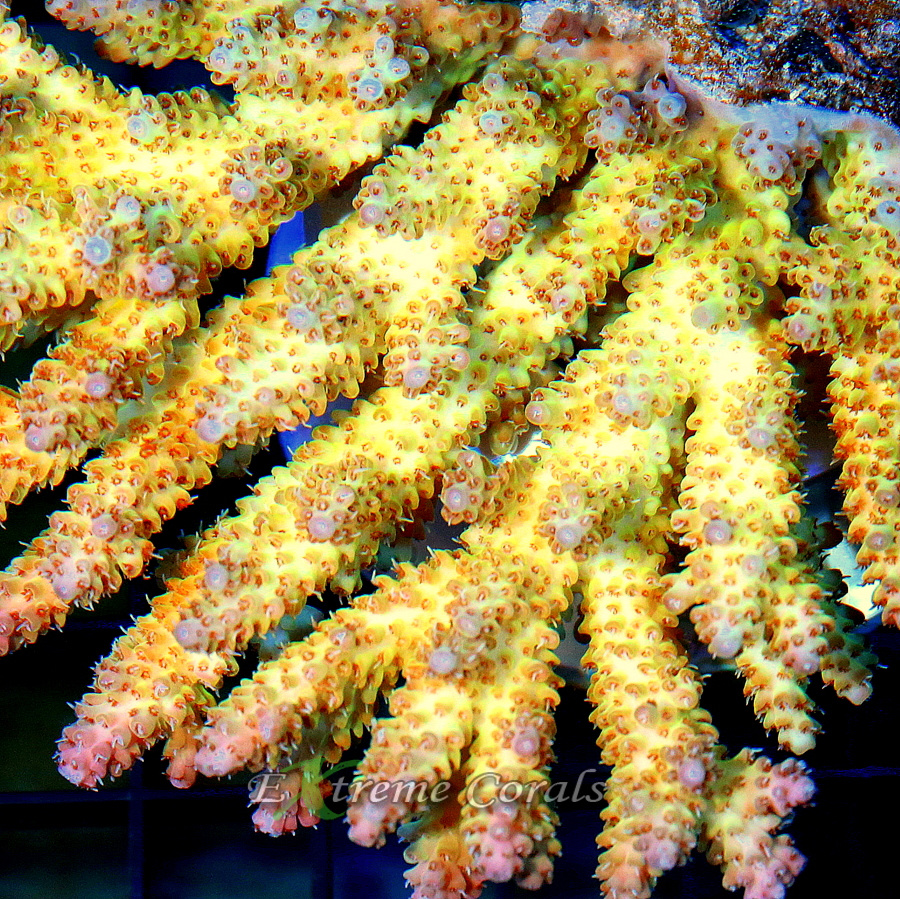
Learn why Acropora coral is one of the most prized SPS corals, including its color, growth forms, reef structure, lighting, flow, stability needs, and advanced care requirements.
Learn why Acropora coral stands out in reef tanks, including SPS care needs, lighting, flow, growth forms, reef structure, water stability, color, and advanced reef aquarium tips
by Scott Shiles • April 21, 2026
Acropora coral is one of the most iconic and sought-after SPS corals in reef aquariums because it combines intricate growth, vivid coloration, and unmatched reef-building character. For many experienced reef keepers, Acropora represents the coral that transforms a good tank into a serious reef display. Its branching forms, tabling structures, encrusting bases, and striking colors create the natural reef look that many hobbyists spend years trying to achieve.
Acropora is not usually the first coral a beginner adds to a tank, but it is often one of the most rewarding for aquarists who are ready for SPS coral care. When the environment is stable and the system is mature, Acropora can become the defining coral group in an advanced reef aquarium. Its beauty is obvious, but its value goes beyond appearance. Acropora adds structure, habitat, growth complexity, and biological depth to a reef system in a way few other corals can match.
At Extreme Corals, Acropora is valued because it represents the high-performance side of reefkeeping. This guide explains why Acropora coral stands out, what it adds to a reef tank, how it grows, what conditions it needs, and what reef keepers should understand before adding this advanced SPS coral to their aquarium.
What Is Acropora Coral?
Acropora coral is a small polyp stony coral widely recognized for its complex skeleton, small polyps, fast growth potential, and bright coloration. It is one of the most important coral groups in natural reefs and one of the most admired coral types in reef aquariums.
In reef tanks, Acropora is often associated with advanced SPS systems because it responds strongly to stable parameters, strong reef lighting, high water flow, and consistent husbandry. It is a coral that rewards precision. When conditions are right, Acropora can grow into branching, tabling, encrusting, or plating structures that give the aquarium a mature reef-crest appearance.
Acropora is popular because it offers:
- Classic branching SPS reef structure
- Bright colors under strong reef lighting
- Fast growth potential in stable systems
- Several different growth forms for aquascaping
- A true advanced reef aquarium look
- Fragging and propagation potential
Why Acropora Stands Out in a Reef Aquarium
Acropora stands out because it creates the type of reef structure many hobbyists associate with wild coral reefs. Soft corals add movement, LPS corals add fleshy color and feeding response, but Acropora adds branching architecture, layered growth, and a high-energy SPS look.
For many reef keepers, Acropora becomes the coral that changes the entire visual identity of the tank. A few well-placed colonies can turn upper rockwork into a realistic reef crest. As colonies mature, they create shadows, branch patterns, fish shelter, and depth that smaller frags cannot provide.
Acropora is especially valued because:
- It creates the classic branching reef look many hobbyists want.
- It comes in a wide range of striking colors.
- It offers multiple growth forms for aquascaping depth.
- It helps create natural habitat for fish and invertebrates.
- It gives an aquarium the look of a mature, advanced reef system.
The Visual Appeal of Acropora
One of the biggest reasons reef keepers pursue Acropora is its incredible range of colors and growth patterns. These corals can appear in shades of blue, green, pink, purple, yellow, cream, red, teal, and multicolor combinations that become especially vivid under strong reef lighting.
Acropora color is influenced by lighting, nutrients, flow, trace elements, coral genetics, and overall stability. A coral that looks dull in one system may become more colorful in another when lighting and water chemistry are more stable. At the same time, unstable tanks can cause Acropora to brown out, fade, pale, or lose tissue quickly.
Different species and strains can produce very different looks in the aquarium. Some grow as tight upright branches. Others form tables, plates, or encrusting bases before growing upward. This diversity gives reef keepers tremendous freedom when designing an SPS display.
Different Types of Acropora Growth Forms
Acropora does not come in just one shape. That variety is one of the reasons it is so desirable in advanced reef tanks. Different growth forms can be used to create height, shade, shelves, branching thickets, and natural reef structure.
- Branching Acropora: Grows vertically with many arms and creates the classic staghorn-style reef look.
- Tabling Acropora: Forms broad horizontal plates that create layered reef structure.
- Encrusting Acropora: Spreads across surfaces and can form dense bases before branching.
- Plating Acropora: Develops outward growth that adds width, layering, and contrast.
- Bushy Acropora: Forms compact dense branches that add texture and complexity.
This range of growth forms allows reef keepers to create much more depth and variety than they could with one coral shape repeated throughout the tank. A carefully planned SPS aquascape often uses different Acropora forms together to create a more natural reef appearance.
How Acropora Benefits the Reef Tank Environment
Acropora is not valuable only because it looks impressive. As colonies grow, they contribute to the broader aquarium environment by creating structure, surface area, shelter, and natural reef complexity.
In a mature reef tank, Acropora can:
- Provide shelter and structure for fish and invertebrates
- Create natural hiding and resting zones
- Add vertical and horizontal complexity to the aquascape
- Contribute to the mature reef appearance of the system
- Provide propagation opportunities through healthy frag growth
Acropora often becomes more than a coral colony. It becomes part of the architecture of the aquarium itself. That is one of the biggest reasons serious SPS keepers value it so highly.
Is Acropora Coral Beginner Friendly?
Acropora is generally not considered a beginner coral. It is usually better for intermediate and advanced reef keepers who already understand water chemistry, lighting, flow, coral placement, nutrient balance, and stable maintenance routines.
This does not mean Acropora is impossible. It means the tank should be ready before the coral is added. New aquariums often go through algae phases, nutrient swings, bacterial changes, and unstable alkalinity. Those conditions can be hard on Acropora.
Before adding Acropora, a reef tank should usually have:
- Stable alkalinity over time
- Reliable calcium and magnesium levels
- Strong SPS-capable lighting
- Strong, broad, random water flow
- Controlled nitrate and phosphate
- No major ongoing algae or pest problems
- A mature biological foundation
Reef keepers who are still learning coral care often do better starting with soft corals, mushrooms, zoanthids, beginner LPS corals, and more forgiving SPS corals before moving into Acropora.
Best Water Parameters for Acropora Coral
Acropora thrives best in stable, mature reef tanks with consistent chemistry. These corals generally do not tolerate swings well, which is why stability is more important than chasing one perfect number.
| Parameter | Recommended Range |
|---|---|
| Temperature | 76-80°F |
| Salinity | 1.024-1.026 specific gravity |
| pH | 8.1-8.4 |
| Alkalinity | 7.5-9 dKH |
| Calcium | 400-450 ppm |
| Magnesium | 1250-1350 ppm |
| Nitrate | 2-10 ppm |
| Phosphate | 0.03-0.08 ppm |
Acropora usually responds best when conditions stay stable rather than fluctuating. In many cases, it is not that one number is slightly off that causes problems. It is the swing from one condition to another that creates stress.
If you are working on chemistry stability, read our guide on pH and alkalinity in reef tanks.
Lighting Requirements for Acropora
Acropora is strongly associated with high light because proper lighting supports photosynthesis, color, and skeletal growth. Most Acropora corals are placed in the upper half of the aquarium where they can receive stronger light than many LPS or soft corals prefer.
A practical lighting range for many Acropora corals is often around 200-350 PAR, depending on the species, color form, tank depth, fixture type, nutrient level, and acclimation history. Some pieces may adapt outside that range, but sudden light changes should be avoided.
Signs that Acropora may be receiving too much light include:
- Pale or washed-out tissue
- Bleaching
- Reduced polyp extension
- Burned tips after sudden increases
- Tissue stress following lighting changes
Signs that Acropora may need more light include brown coloration, slow growth, weak color development, or poor overall SPS performance when water chemistry and flow are otherwise stable.
If you want to understand reef lighting better, read our guide on reef tank lighting.
Flow Requirements for Acropora Coral
Strong water flow is one of the most important parts of Acropora care. These corals have small polyps and dense skeletal structures that need constant water movement to deliver oxygen, move nutrients, remove waste, and prevent detritus from settling inside the colony.
Good Acropora flow should be:
- Strong
- Broad
- Random or alternating
- Strong enough to prevent debris buildup
- Not a narrow direct blast that damages tissue
Weak flow can lead to detritus buildup, poor gas exchange, reduced polyp extension, algae growth around the base, and long-term stress. As Acropora colonies grow, flow needs often increase because larger branches block water movement more than small frags.
If you want to learn more about circulation, read our guide on water flow and coral health.
Feeding Acropora Coral
Acropora corals rely heavily on photosynthesis from symbiotic algae, but they can still benefit from dissolved nutrients, fish waste, fine suspended foods, and a healthy reef tank food web. Unlike many LPS corals, Acropora does not need large meaty foods.
Acropora may benefit from:
- Stable fish feeding that supports natural nutrients
- Fine particle SPS coral foods used carefully
- Amino acids used sparingly in appropriate systems
- Phytoplankton or zooplankton-style foods used lightly
- Natural dissolved and suspended organics in a mature reef tank
In most successful SPS systems, feeding is supportive rather than excessive. The goal is to support coral health without creating nutrient instability that hurts coloration or growth. Overfeeding can raise nitrate and phosphate, fuel algae, and reduce SPS health if export cannot keep up.
Why Acropora Is Often Considered an Advanced Coral
Acropora has a reputation for difficulty because it is sensitive to changes in its environment. These corals usually demand more precision than many soft corals or LPS species.
Acropora is considered advanced because:
- It is sensitive to unstable water chemistry.
- It does not tolerate poor lighting or weak flow well.
- It can react quickly to stress through tissue loss or color loss.
- It often requires mature tank conditions.
- It consumes alkalinity and calcium as colonies grow.
- It can be vulnerable to SPS pests and rapid tissue problems.
For experienced reef keepers, that sensitivity is part of the appeal. A thriving Acropora system is often seen as a sign of a truly stable and well-managed reef aquarium.
Common Issues With Acropora Coral
Although beautiful, Acropora comes with common risks and challenges. Many problems develop quickly, so routine observation is important.
Bleaching
Bleaching may be caused by excessive light, sudden lighting changes, temperature stress, nutrient imbalance, or poor acclimation. Avoid drastic changes and review recent adjustments before moving or changing multiple things at once.
Browning Out
Brown coloration can happen when nutrients are too high, light is too low, or the coral is adjusting to new conditions. Improving stability, lighting, and nutrient control may help color return over time.
Tissue Loss
Rapid or slow tissue loss may be caused by alkalinity swings, pests, bacterial stress, poor flow, salinity instability, or general system stress. Acropora can decline quickly once tissue loss begins.
Algae Around the Base
Algae can grow around Acropora bases when flow is weak, nutrients are elevated, or tissue has receded. Improve flow and nutrient control, and remove algae carefully without damaging coral tissue.
Pests
Acropora can be affected by pests such as Acropora-eating flatworms and red bugs. Inspection, dipping, quarantine, and careful observation are important when adding new SPS corals.
Propagation and Growth
Acropora coral is highly valued because it can be propagated through fragmentation. Healthy branches can be cut from a colony and mounted to plugs or rock, where they can grow into new colonies over time.
Acropora propagation usually involves:
- Cutting healthy branches from a stable colony
- Mounting frags to plugs, disks, or live rock
- Providing strong flow for healing
- Maintaining stable alkalinity and calcium
- Keeping frags free from algae and pests
This growth and fragging potential are part of what makes Acropora so desirable. A single thriving colony can eventually become multiple frags, helping build out an SPS reef in a more sustainable way.
If you want to learn more about propagation, read our guide on how to frag corals.
Best Tank Setup for Acropora
Acropora usually does best in reef tanks built around stability, strong equipment, and consistent maintenance. A tank does not need to be complicated, but it does need to be reliable.
A strong Acropora setup usually includes:
- Strong and stable reef lighting
- High, well-distributed water flow
- Stable alkalinity, calcium, and magnesium
- Controlled but measurable nutrients
- Reliable top-off for salinity stability
- Regular testing and consistent maintenance
- A mature biological foundation
- Careful inspection of new SPS additions
This makes Acropora one of the strongest choices for advanced reef keepers who want to build a tank with real structure, complexity, and long-term growth potential.
Placement Tips for Acropora Coral
Acropora is usually placed in the upper to middle areas of the reef aquarium where lighting and flow are strongest. Placement should give the coral room to grow upward and outward without shading or being shaded by neighboring corals.
Good placement should provide:
- Strong light with gradual acclimation
- Strong random or alternating flow
- Stable rockwork for encrusting
- Room for future branch growth
- Distance from aggressive LPS coral sweepers
- Access for observation and maintenance
A small Acropora frag may not look like it needs much space, but healthy colonies can grow quickly in stable systems. Plan placement based on the mature colony, not only the frag size.
Related Corals You May Also Like
If you are interested in Acropora coral, these SPS coral categories and reef tank guides can help you build a stronger advanced reef aquarium:
- SPS Corals - Browse small polyp stony corals for mature reef aquariums.
- Acropora Care Requirements Guide - Review deeper Acropora husbandry information.
- SPS Coral Care Guide - Learn more about SPS coral diversity, placement, and long-term success.
- Montipora Care Guide - Compare a more approachable SPS coral group.
- LPS vs SPS Coral Guide - Understand the major differences between stony coral groups.
- Coral Care Guides - Browse care resources for SPS, LPS, soft corals, mushrooms, and zoanthids.
Shop Acropora and SPS Corals
Acropora coral stands out because it offers everything many serious reef keepers want in one coral group: stunning colors, beautiful growth forms, strong visual structure, and a direct connection to the look of a real coral reef. It is not the easiest coral to keep, but when the tank is stable and the husbandry is strong, Acropora becomes much more than just a coral. It becomes the framework of an advanced reef display.
Browse SPS corals, new arrival corals, and featured corals at ExtremeCorals.com to find healthy corals that match your reef tank, lighting, flow, and long-term goals.
Frequently Asked Questions About Acropora Coral
Why do reef keepers like Acropora so much?
Reef keepers like Acropora because it combines vivid color, complex growth, and real reef structure in a way few other corals can match. It can become the defining coral group in an advanced SPS reef tank.
Is Acropora beginner friendly?
Acropora is usually not beginner friendly. It is generally better suited to intermediate and advanced reef keepers with mature, stable systems, strong lighting, strong flow, and consistent water chemistry.
What lighting does Acropora need?
Acropora usually needs strong reef lighting to maintain growth and color. Many pieces do well around 200-350 PAR, depending on species, tank conditions, and acclimation.
What flow is best for Acropora?
Strong, broad, random water flow is usually best for Acropora. Good flow keeps the coral clean, supports gas exchange, removes waste, and helps prevent detritus buildup inside branches.
Does Acropora help the reef tank ecosystem?
Yes. Acropora adds habitat, structure, shade, shelter, and biological complexity to the aquarium as colonies grow and mature.
Why does Acropora lose tissue?
Acropora may lose tissue because of alkalinity swings, unstable salinity, poor flow, pests, bacterial stress, lighting shock, nutrient imbalance, or overall system instability.
Can Acropora be fragged?
Yes, healthy Acropora can be propagated by cutting branches and mounting them to plugs or rock. Stable water, strong flow, and pest-free conditions help new frags heal and grow.
Where should Acropora be placed in a reef tank?
Acropora is usually placed in the upper to middle areas of the aquarium where it receives strong light and strong random flow. It should have room to grow without being crowded or shaded.
About the Author
Scott Shiles is the owner of ExtremeCorals.com, which he has operated for over 25 years and is recognized as one of the early dedicated live coral websites on the internet. A lifelong reef keeper since 1984, Scott has decades of hands-on experience maintaining marine aquariums and previously owned and operated a brick and mortar aquarium retail store for 10 years, including five years alongside Extreme Corals. He holds a degree in Marine Biology and has personally selected and sold hundreds of thousands of live corals. An avid scuba diver who has explored reef systems around the world, Scott shares practical coral care and husbandry knowledge based on real world reef experience.
overall rating:
my rating:
log in to rate
-3 Comments
Please log in to leave a comment.
For more information visit: additional resources