
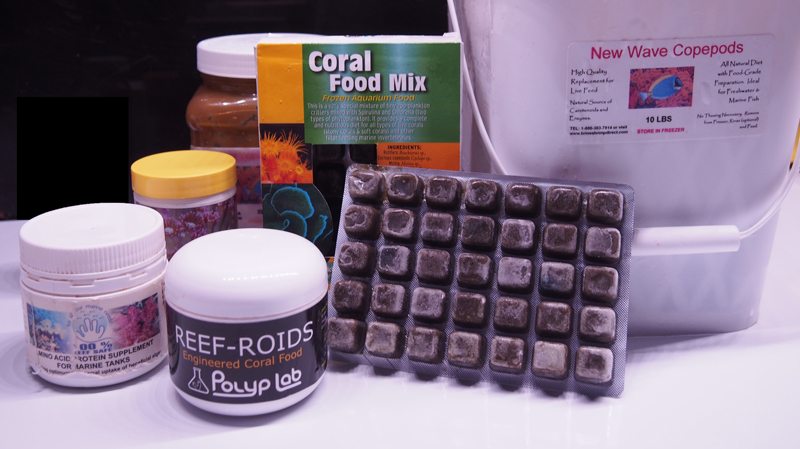
Feeding corals in a reef tank is one of those topics that seems simple at first, but gets more complicated the deeper you go. Most reef hobbyists quickly learn that corals are not all fed the same way, and that is exactly where many avoidable mistakes begin. Some corals are highly photosynthetic and do fine with very little direct feeding. Others respond strongly to meaty foods and can benefit from regular target feeding. Some corals prefer fine planktonic foods in the water column, while others are much more likely to grab larger food items directly.
The most important thing to understand is that coral feeding should support the reef, not overwhelm it. A lot of hobbyists get excited about feeding because they want faster growth, better color, or stronger expansion. Those are reasonable goals, but feeding more is not always feeding better. In many tanks, excess food creates water quality problems much faster than it creates healthier corals. Good coral feeding is about matching the right food style to the coral you keep, then using enough restraint that the tank stays stable.
This is especially important because coral categories behave differently. Soft corals, LPS corals, SPS corals, zoanthids, and clams all interact with food in different ways. That is why a blanket feeding routine rarely works as well as hobbyists hope. If your reef has mixed coral types, the best approach is usually a balanced system that supports all of them without trying to force every coral into the same feeding schedule.
If you are still working on the basics of coral placement, lighting, and water stability, our main coral care guide and our article on how to maintain your saltwater aquarium are strong supporting reads before you start increasing feeding.
Do Corals Need to Be Fed?
The short answer is that many corals benefit from feeding, but not all corals need to be fed in the same way, and some do not need direct feeding nearly as much as hobbyists think. Most corals rely at least in part on photosynthesis through their symbiotic zooxanthellae. That means light is already a major part of their energy budget. Feeding becomes more important depending on coral type, tank nutrient levels, overall health, and what goals you have for growth and coloration.
In practical reefkeeping terms, feeding is usually best viewed as support rather than a substitute for stable conditions. A stressed coral in poor lighting, bad flow, or unstable water chemistry will not be fixed by more food. In fact, overfeeding often makes the whole system worse by raising nutrients and reducing water quality. The best results usually come when feeding is layered on top of a stable reef, not used as a rescue tool for weak husbandry.
Soft Corals and Feeding
Most soft corals do not require heavy direct feeding. Many derive the majority of their energy from photosynthesis and whatever dissolved or particulate nutrients are already present in the tank. That is one reason soft corals are often recommended to newer reef keepers. In a reasonably stable system, many of them do very well without a strict target-feeding routine.
That said, soft corals can still benefit from the tank having available nutrients and suspended food in moderation. Some reef keepers use occasional fine coral foods, broadcast foods, or very small meaty particles, especially in mixed reefs where other animals are also being fed. The key is keeping expectations realistic. You usually do not need to aggressively feed soft corals to keep them healthy.
This is especially true for soft corals like pulsing Xenia and Discosoma mushrooms, which often respond more to overall tank stability and nutrient balance than to direct target feeding. If you overload a tank trying to “feed the corals,” you may end up hurting the very soft corals you were trying to help.
LPS Corals and Feeding
LPS corals are where feeding becomes much more visibly useful. Many large-polyp stony corals will actively accept food, show a strong feeding response, and clearly benefit from well-timed supplemental feeding. This is one reason so many hobbyists enjoy LPS corals. They do not just sit there under the lights. Many of them interact with food in a way that feels much more obvious and rewarding.
Common foods for LPS corals include small meaty foods, finely chopped seafood, Mysis shrimp, brine shrimp, and specialized coral foods. Many hobbyists target-feed LPS with a pipette, baster, or feeding tool so the food reaches the coral directly instead of just drifting through the tank. Corals like Acanthophyllia, Trachyphyllia, Symphyllia wilsoni, Lobophyllia and Symphyllia, and Micromussa can all benefit when feeding is done carefully.
Still, even with LPS, more food is not always better. Heavy feeding can quickly lead to nutrient spikes, algae issues, and stress across the rest of the reef. A measured routine usually works best. Our article on keeping LPS corals successfully is a strong companion piece if your reef revolves around this coral group.
SPS Corals and Feeding
SPS corals are usually thought of as primarily photosynthetic, and that is true to a large extent, but they can still benefit from feeding. The difference is that SPS corals generally do not feed the same way fleshy LPS corals do. Instead of grabbing larger meaty foods, many SPS corals respond better to fine suspended foods in the water column, such as phytoplankton, zooplankton, and other small particulate foods.
For SPS-heavy systems, broadcast feeding is often more appropriate than direct target feeding. The goal is usually to create access to fine food particles without overloading the tank. This requires balance, because many SPS systems are run with strong export and tighter nutrient control. If feeding is increased too aggressively without adjusting export, the system can shift out of balance fast.
This is one reason coral feeding cannot really be separated from overall tank design. A soft coral or mixed reef can often tolerate a different feeding style than an SPS-dominant system. The same food routine that works in one tank can be excessive in another.
Zoanthids and Feeding
Zoanthids usually rely heavily on photosynthesis, but many hobbyists report improved growth or extension when the tank receives regular suspended food, amino acids, or occasional fine meaty food. Zoanthids are not usually the first coral most reef keepers think of when planning feeding routines, but they can still benefit from a healthy, nutrient-balanced system with some available food in the water.
Direct feeding of zoanthids is possible in some cases, but it is often less important than maintaining stable conditions, appropriate light, and reasonable nutrient availability. For many hobbyists, zoanthid success is more about overall reef balance than about intensive feeding. If you enjoy fast-spreading, colorful corals, they also pair well in mixed systems with corals like Xenia and mushrooms, though placement and growth control still matter.
Feeding Clams in a Reef Tank
Clams are a different kind of animal than corals, but they still come up in reef feeding conversations because they rely on a mix of photosynthesis and filter feeding. Smaller clams and certain setups may benefit from fine planktonic foods such as phytoplankton, particularly if the tank is nutrient-poor or the clam is not yet large and established enough to rely mainly on light.
At the same time, clams are another good example of why the answer is not simply “feed more.” Water quality, light, calcium, alkalinity, and overall reef stability matter greatly. Just like corals, clams do not thrive because food was dumped in the tank. They thrive when the entire environment supports them.
Choosing the Right Foods for Corals
When choosing foods for corals, quality matters as much as type. High-quality frozen foods, live foods, phytoplankton products, zooplankton products, and specialty coral foods are all commonly used depending on the tank and the animals being kept. In general, foods that match the feeding style of the coral work better than random “reef foods” added without a plan.
Small meaty foods work well for many LPS corals. Fine suspended foods are often more useful for SPS systems, filter feeders, and tanks where broadcast feeding is part of the strategy. Soft corals and zoanthids often benefit more indirectly through the overall nutrient profile of the tank than through aggressive target feeding. Clams may benefit from very fine foods, but only in the right context.
The most practical rule is simple: match food size and feeding method to the animal. Do not try to feed a coral something physically larger or denser than it naturally handles well. Do not assume a food is good just because it is marketed for reefs. Watch how your corals actually respond.
Target Feeding vs Broadcast Feeding
Target feeding means delivering food directly to a coral using a pipette, baster, or feeding tool. This is often effective for LPS corals that visibly grab and retain food. It helps reduce waste and gives the hobbyist more control over which coral gets fed.
Broadcast feeding means distributing fine food into the water column for corals and filter feeders to capture naturally. This approach often makes more sense for SPS corals, clams, and mixed reefs where many animals benefit from suspended food rather than a direct food item placed on the polyp.
Neither method is automatically better. The best choice depends on the reef you have built. In many mixed reefs, a hybrid approach works best: occasional target feeding for fleshy LPS and light broadcast feeding for the rest of the system, all while monitoring nutrient levels and export.
How Often Should You Feed Corals?
There is no perfect universal schedule, but most hobbyists do better when they avoid extremes. Feeding too rarely can limit response or growth in some corals, especially fleshy LPS. Feeding too often can quickly raise nutrients, create nuisance algae, and reduce water quality. A moderate schedule that fits the export capacity of the tank is usually the smartest starting point.
For many mixed reefs, occasional feeding several times per week is more than enough. Some tanks do well with lighter daily suspended feeding. Others do better with one or two more deliberate feedings each week. The right answer depends on coral type, fish load, filtration, nutrient levels, and how the reef is responding.
When in doubt, start lighter than you think you need. It is much easier to increase feeding gradually than to undo the consequences of overfeeding a reef tank.
Common Coral Feeding Mistakes
Overfeeding the Entire Tank
This is the most common problem. Excess food drives up nutrients and can hurt water quality much faster than it improves coral health.
Treating All Corals the Same
Soft corals, LPS, SPS, zoanthids, and clams do not all benefit from the same foods or feeding style.
Using Food to Compensate for Weak Husbandry
Feeding cannot fix unstable alkalinity, poor lighting, bad flow, or poor placement.
Offering the Wrong Food Size
Many corals do best when food particle size matches what they can realistically capture and process.
Ignoring Nutrient Export
If feeding increases, filtration and export often need to keep up. Otherwise the tank drifts out of balance.
How to Tell If Feeding Is Helping
Good feeding usually shows up as stronger feeding response, healthier tissue, steadier growth, and a more stable, full appearance in corals that benefit from food directly. In fleshy LPS, you may see better inflation or more reliable feeding response. In SPS-heavy systems, improvement may be more subtle and tied to general health and coloration rather than obvious food capture.
But feeding is only helping if the tank stays stable while those improvements happen. If corals are fed more but nuisance algae rises, nutrients spike, or tissue quality starts slipping elsewhere, the routine is not actually working as well as it looks on the surface.
Feeding and Water Quality Go Together
This is the part many hobbyists learn the hard way. Coral feeding is never just about food. It is about the whole system. Every feeding decision affects nutrient input, bacterial activity, filtration demand, and water quality. That is why good reefkeepers think about feeding together with skimming, filtration, water changes, and nutrient export.
If you are increasing feeding, it makes sense to also review your tank maintenance and chemistry management. Our articles on saltwater aquarium maintenance and reef tank water parameters are both helpful supporting reads.
Frequently Asked Questions About Feeding Corals
Do all corals need direct feeding?
No. Many corals get much of their energy from photosynthesis, and some benefit only modestly from direct feeding compared to stable overall tank conditions.
What corals benefit most from target feeding?
Many fleshy LPS corals benefit the most visibly from target feeding with appropriately sized meaty foods.
Are frozen foods better than dry foods for corals?
In many cases, high-quality frozen foods are preferred for LPS corals because they are often more natural and less likely to create unnecessary waste when used correctly.
Can overfeeding hurt corals?
Yes. Overfeeding can harm the whole reef by degrading water quality, increasing nutrients, and creating algae or bacterial issues.
Should I feed corals every day?
Not always. Some tanks do well with light frequent feeding, but many mixed reefs do better with moderate feeding a few times per week instead of constant heavy input.
Related Corals and Reef Topics You May Also Like
If you are interested in coral feeding, these related articles can help you build a healthier reef and better understand how nutrition fits into overall coral success:
- Read our full coral care guide
- Learn how to maintain your saltwater aquarium
- Improve reef tank water parameters
- See our full LPS coral guide
- Read our Acanthophyllia care guide
- Explore Trachyphyllia care
- Learn more about Micromussa care
- See how Xenia differs from hungry LPS corals
- Compare feeding needs with Discosoma mushrooms
- Browse new arrival corals
Ready to build a healthier feeding routine for your reef? The best coral feeding plan is not the most aggressive one. It is the one that matches your corals, supports growth and color, and keeps the whole system stable over time. When feeding, filtration, and water quality work together, your reef usually shows it.
Shop Corals for Your Reef Tank
Explore our new arrival corals and find healthy additions for your reef system.
About the Author
Scott Shiles is the owner of ExtremeCorals.com, which he has operated for over 25 years and is recognized as one of the early dedicated live coral websites on the internet. A lifelong reef keeper since 1984, Scott has decades of hands-on experience maintaining marine aquariums and previously owned and operated a brick and mortar aquarium retail store for 10 years, including five years alongside Extreme Corals. He holds a degree in Marine Biology and has personally selected and sold hundreds of thousands of live corals. An avid scuba diver who has explored reef systems around the world, Scott shares practical coral care and husbandry knowledge based on real world reef experience.