My Cart: 0 item(s)

Extreme Corals News and Updates
Reef Tank Lighting Guide: How Light Affects Coral Growth, Color and Health
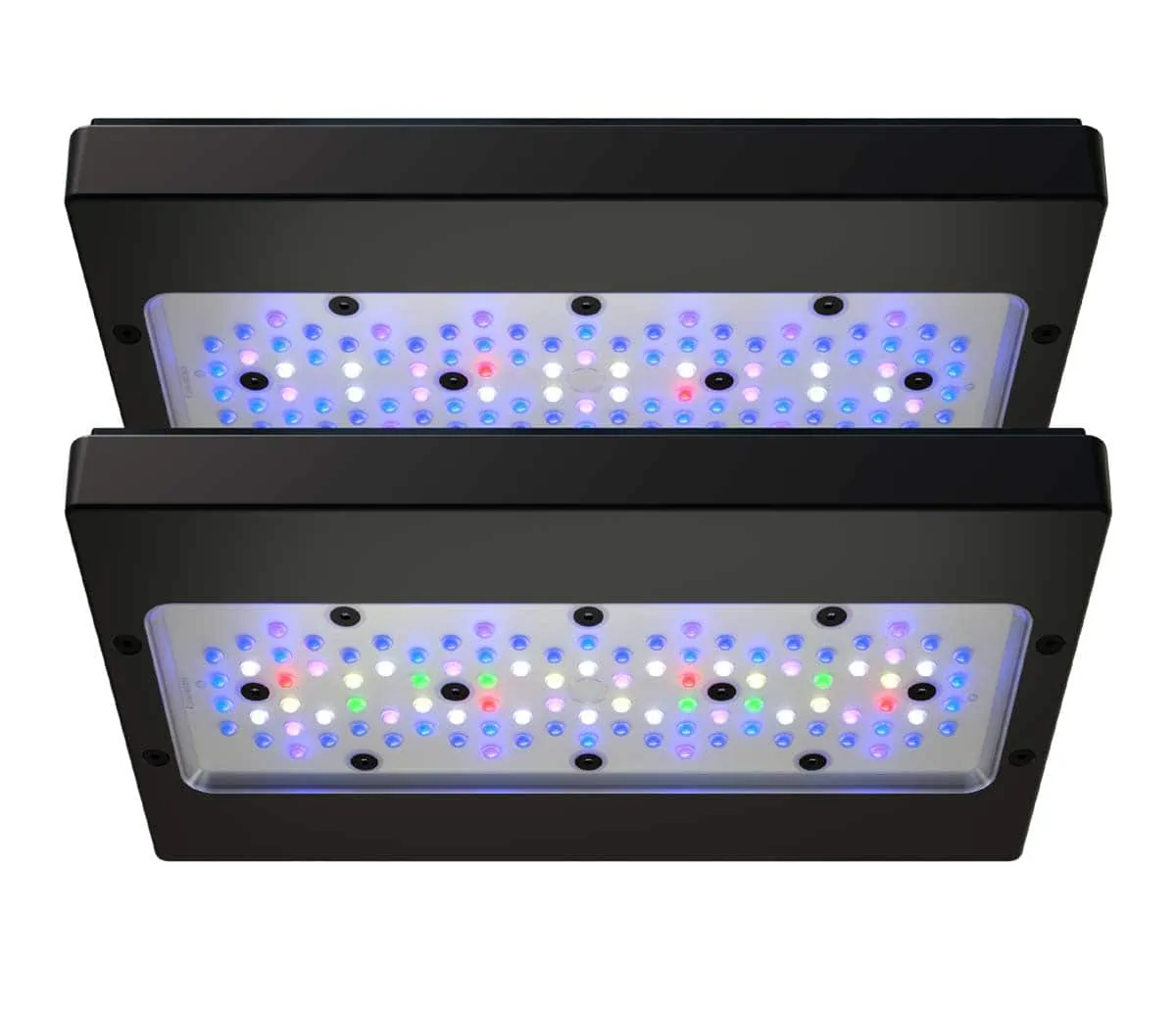
Learn how reef tank lighting affects coral growth, color, photosynthesis, PAR, spectrum, placement, lighting schedules, and coral health for soft corals, LPS, and SPS corals.
Learn how reef tank lighting affects coral growth, color and health, including PAR, spectrum, lighting schedules, coral placement, bleaching risks, and beginner reef lighting tips.
by Scott Shiles • May 12, 2026
Reef tank lighting is one of the most important parts of coral care because light directly affects coral growth, color, energy, and long-term health. In the ocean, sunlight powers coral reefs. In a home aquarium, reef lighting must provide the right intensity, spectrum, coverage, and schedule so corals can photosynthesize, adapt, and grow without being stressed.
Many beginner reef keepers think lighting is simply about making the aquarium look bright. In reality, lighting is part of the coral’s energy system. Too little light can lead to poor growth, faded color, stretching, and weak coral response. Too much light too quickly can bleach corals, shrink tissue, and cause long-term stress. The goal is not maximum brightness. The goal is appropriate, stable, coral-specific lighting.
At Extreme Corals, we work with soft corals, LPS corals, SPS corals, zoanthids, mushrooms, and WYSIWYG coral pieces every day, and lighting is always part of long-term success. This guide explains how reef tank lighting affects coral growth and color, what PAR and spectrum mean, how different coral types use light, how to build a safer lighting schedule, and how to recognize when your corals need lighting adjustments.
Why Lighting Matters in Reef Tanks
Most reef-building corals have a close relationship with microscopic algae called zooxanthellae that live within their tissue. These algae use light for photosynthesis and produce energy that helps support the coral. This is one reason reef tank lighting has such a major effect on coral color, growth, tissue health, and overall vitality.
When lighting is appropriate, corals can maintain better energy balance, show stronger color, grow more consistently, and recover more easily from normal stress. When lighting is poor, corals may struggle even if water parameters look acceptable.
Lighting affects:
- Photosynthesis
- Coral color and fluorescence
- Skeletal growth in stony corals
- Polyp extension and daily behavior
- Bleaching risk
- Placement options in the aquarium
- Compatibility between soft corals, LPS, and SPS corals
Strong reef lighting can help corals thrive, but only when it is matched with proper acclimation, stable water quality, good flow, and the needs of the coral being kept.
How Corals Use Light for Photosynthesis
Many corals receive a large part of their energy from zooxanthellae. These algae use light to create energy through photosynthesis. The coral benefits from that energy, while the algae benefit from living inside the coral’s protected tissue.
This relationship is one reason corals react so visibly to lighting changes. If light is too weak, the coral may not receive enough energy to maintain strong growth and color. If light is too intense or increased too quickly, the coral can become stressed and may expel zooxanthellae, resulting in bleaching.
A simple way to think about reef lighting:
- Too little light: weak color, slow growth, stretching, and poor energy balance
- Too much light: bleaching, paling, tissue stress, and reduced expansion
- Stable appropriate light: better color, stronger growth, and healthier coral response
Corals need light, but they also need time to adapt. Sudden changes are one of the most common lighting mistakes in reef aquariums.
Understanding PAR in Reef Aquariums
PAR stands for photosynthetically active radiation. In reef keeping, PAR is used to describe the amount of usable light reaching a coral. PAR readings help hobbyists understand how much light is actually reaching different areas of the aquarium, not just how bright the tank looks to the eye.
The same light fixture can create very different PAR levels depending on tank depth, water clarity, lens spread, rockwork, surface movement, and coral placement. A coral near the top of the tank may receive much more light than a coral on the sandbed.
General PAR guidance for many reef tanks:
| Coral Type | Common PAR Range |
|---|---|
| Mushroom Corals | 50-100 PAR |
| Soft Corals | 50-150 PAR |
| Zoanthids | 75-150 PAR |
| Many LPS Corals | 75-175 PAR |
| Many SPS Corals | 200-350 PAR |
These are practical starting ranges, not fixed rules. Some corals adapt outside these ranges, while others are more sensitive. Coral response matters just as much as the number.
What Is PUR and Why Does Spectrum Matter?
PUR stands for photosynthetically usable radiation. While PAR measures usable light within a broad range, PUR focuses more on the portion of light that corals and their symbiotic algae can use efficiently. In practical reefkeeping, this is why spectrum matters.
Two lights may produce similar PAR numbers but affect corals differently if their spectrum is different. Reef corals often respond strongly to blue and violet wavelengths because those wavelengths support photosynthesis and fluorescence in many coral types.
Important reef lighting spectrum ranges include:
- Violet and near-UV range: Can influence pigment expression and fluorescence when used carefully.
- Blue spectrum: Important for coral photosynthesis, fluorescence, and the classic reef tank glow.
- White spectrum: Helps the aquarium look natural to the eye and improves visual balance.
- Red and green channels: Should usually be used carefully because too much can encourage algae or create unnatural color balance.
A good reef light is not just bright. It provides the correct spectrum, good spread, and stable intensity for the corals being kept.
Blue Light and Coral Color
Blue lighting is one of the reasons reef aquariums look so vivid. Many corals fluoresce under blue-spectrum light, which makes orange, green, yellow, pink, and red pigments appear more intense. This is especially noticeable in zoanthids, chalices, acans, mushrooms, LPS corals, and many SPS corals.
Blue light does more than make corals look attractive. It also supports photosynthesis in many corals. That is why many modern reef lighting schedules use a blue-heavy spectrum during the strongest part of the day.
However, visual glow should not be confused with coral health. A coral can look bright under blue light but still be stressed if lighting, nutrients, flow, or water chemistry are wrong. Use coral color, polyp extension, growth, and tissue health together when judging lighting success.
Lighting Needs for Soft Corals
Soft corals are often more forgiving than many stony corals and usually do not require extremely intense lighting. Many soft corals thrive under low to moderate or moderate reef lighting, especially when water quality and flow are stable.
Common soft coral lighting needs:
- Leather corals: Often do well under moderate lighting with good flow.
- Green Star Polyps: Can adapt to a wide lighting range but often show strong growth under moderate light.
- Clove polyps: Usually do well in moderate light and gentle to moderate flow.
- Xenia: Often adapts to moderate lighting and stable nutrients.
Soft corals can stretch upward if light is too weak. If lighting is too strong, some may close, shrink, or look irritated. Start new soft corals lower or in moderate zones and adjust only after observing their response.
Lighting Needs for Zoanthids and Mushrooms
Zoanthids and mushroom corals are popular because they are colorful, adaptable, and useful in many reef tank layouts. They are also good examples of why not all colorful corals need intense light.
Many zoanthids do well in moderate lighting, although some varieties can adapt to brighter areas. If zoanthids stretch upward, they may need more light. If they stay closed, fade, or shrink under peak lighting, they may be receiving too much light or too much sudden intensity.
Mushroom corals often prefer lower to moderate lighting. Discosoma, Rhodactis, and Ricordia mushrooms can look best when they are not blasted with intense reef light. Too much light can cause mushrooms to shrink, move, detach, or lose fullness.
Good placement options include:
- Lower rockwork
- Partially shaded zones
- Sandbed rubble islands
- Moderate-light zoa garden areas
- Lower-flow areas for mushrooms
Lighting Needs for LPS Corals
LPS corals usually prefer moderate lighting, although exact needs vary by species. Many fleshy LPS corals can become stressed under intense lighting, especially if they are moved upward too quickly.
Popular LPS corals and general lighting preferences:
- Torch Coral: Moderate lighting with indirect flow.
- Hammer Coral: Moderate lighting and careful acclimation.
- Frogspawn Coral: Moderate lighting that supports color without shrinking tissue.
- Duncan Coral: Moderate lighting and stable placement.
- Blastomussa: Often prefers lower to moderate lighting.
- Scolymia and Trachyphyllia: Often do well on the sandbed in moderate or lower light.
- Favia and Favites: Moderate lighting with space from neighboring corals.
LPS corals should be watched carefully after lighting changes. If tissue pulls tight to the skeleton, color fades, or the coral stays retracted during peak light, the placement may be too bright or the change may have happened too quickly.
Lighting Needs for SPS Corals
SPS corals generally need stronger lighting than soft corals and many LPS corals. Acropora, Montipora, Birdsnest, Stylophora, and Pocillopora often do best in brighter areas with strong flow and stable water chemistry.
SPS lighting success depends on:
- Strong reef-capable lighting
- Good spread across the colony
- Gradual acclimation to high intensity
- Stable alkalinity and nutrients
- Strong flow to support gas exchange and waste removal
SPS corals can brown out when light is too weak, nutrients are too high, or the system is unstable. They can bleach or pale when light is too intense, nutrients are too low, or lighting is increased too quickly. Strong lighting works best only when the rest of the reef system is stable enough to support it.
How to Create a Reef Tank Lighting Schedule
A consistent lighting schedule helps corals settle into a daily rhythm. Most reef tanks do well with a gradual ramp-up, a stable peak period, and a gradual ramp-down. This is easier on corals than instantly switching from darkness to full intensity.
A practical reef lighting schedule may include:
- Ramp up: 1-2 hours of gradually increasing light
- Peak period: 5-8 hours of stable reef lighting
- Ramp down: 1-2 hours of gradually decreasing light
- Low evening blues: Optional short viewing period if intensity is low
Avoid running strong light for too many hours. More light is not always better. Corals need enough light to grow, but too long of a photoperiod can increase algae, stress corals, or create problems when nutrients and flow are not balanced.
Signs Your Reef Lighting Is Too Weak
Lighting that is too weak can affect coral growth, color, and shape. Some corals may stretch toward the light, while others become dull or grow slowly.
Signs of insufficient light may include:
- Dull or faded color
- Slow growth despite stable parameters
- Zoanthids stretching upward
- SPS corals browning out
- Weak polyp extension in some corals
- Corals leaning or expanding toward brighter areas
Do not fix low light by suddenly increasing intensity dramatically. Increase lighting gradually and watch coral response over days and weeks.
Signs Your Reef Lighting Is Too Strong
Too much light can stress corals quickly, especially when new corals are placed high in the tank without acclimation. Bleaching is one of the most obvious signs, but there are earlier warning signals.
Signs of excessive light may include:
- Bleaching or pale tissue
- LPS corals shrinking during peak light
- Mushrooms staying small or moving away
- Zoanthids closing during high intensity
- SPS corals developing burned tips after lighting changes
- Corals looking better in shaded areas than exposed areas
If corals show signs of light stress, reduce intensity gradually or move the coral to a lower-light zone. Avoid making several major changes at once unless the coral is clearly being damaged.
How to Acclimate Corals to New Lighting
Light acclimation is one of the most important reef tank habits. New corals may come from different lighting systems, different PAR levels, different depths, and different photoperiods. Even a healthy coral can bleach if moved directly into much stronger lighting.
Good light acclimation practices include:
- Start new corals lower in the tank when unsure.
- Use your light’s acclimation mode if available.
- Increase intensity slowly over one to several weeks.
- Move corals upward gradually instead of all at once.
- Watch color, tissue expansion, and polyp response.
- Avoid changing lighting and water chemistry at the same time when possible.
A coral that is adapting well should gradually open, hold color, and show normal tissue behavior. A coral that shrinks, pales, or stays closed may need less light or more time.
Coverage and Shadowing Matter
Reef lighting is not only about intensity. Coverage matters just as much. A strong light with poor spread can create hot spots directly under the fixture and shadowed areas elsewhere in the tank.
Shadowing becomes more important as corals grow. Branching SPS corals can shade their own lower branches. Large LPS corals can block light from nearby corals. Rockwork can create shaded areas where some lower-light corals may do well, but high-light corals may struggle.
Good lighting coverage helps:
- Reduce harsh hot spots
- Improve coral color from multiple viewing angles
- Prevent shaded bases on SPS colonies
- Support more even growth
- Create better placement options throughout the tank
For larger or SPS-heavy tanks, multiple lights or hybrid lighting may be useful to improve spread and reduce shadowing.
LED, T5 and Hybrid Reef Lighting
Modern reef keepers have several effective lighting options. The best choice depends on tank size, coral goals, budget, mounting height, coverage needs, and control preferences.
LED Reef Lights
LED lights are popular because they are adjustable, efficient, controllable, and capable of supporting many coral types. They allow reef keepers to adjust spectrum, intensity, and schedule. The main challenge is avoiding hot spots and overly aggressive settings.
T5 Reef Lighting
T5 lighting provides broad, even coverage and has been successful over reef tanks for many years. T5 fixtures can reduce shadowing and create consistent light distribution. The tradeoff is bulb replacement and less individual channel control compared with many LEDs.
Hybrid Lighting
Hybrid LED and T5 systems combine LED control and shimmer with T5 spread. These systems can work especially well for SPS-heavy tanks or larger aquariums where shadowing is a concern.
No lighting system is perfect by itself. The setup must match the tank, coral types, and maintenance style.
Common Reef Lighting Mistakes
Most reef lighting problems come from changing too much too quickly or using light intensity that does not match the coral.
Common mistakes include:
- Running lights too intense for new corals
- Increasing PAR too quickly
- Using long high-intensity photoperiods
- Placing mushrooms or fleshy LPS corals too high
- Keeping SPS corals in shaded or low-flow areas
- Changing spectrum repeatedly without giving corals time to adapt
- Ignoring shadowing as colonies grow
- Judging lighting only by how bright it looks to human eyes
The best lighting plan is stable, gradual, and based on coral response. Corals usually do better with a consistent schedule than with constant adjustments.
Lighting Works With Flow, Nutrients and Water Stability
Lighting should never be managed alone. Coral response to light depends heavily on flow, nutrients, alkalinity, temperature, and overall system stability. A coral under strong light needs enough flow and nutrients to support metabolism and waste removal. A coral in low nutrients may bleach more easily under intense light.
Strong lighting works best when:
- Alkalinity is stable
- Nutrients are measurable but controlled
- Flow is appropriate for the coral type
- Temperature and salinity are stable
- Corals are acclimated gradually
- Placement matches the coral’s needs
This is why two tanks can use the same light and get different results. Lighting success comes from the whole reef system, not the fixture alone.
Related Corals You May Also Like
If you are learning reef tank lighting, these coral categories and care resources can help you choose corals that match your lighting and placement zones:
- Soft Corals - Explore beginner-friendly corals that often do well under low to moderate or moderate lighting.
- Zoanthids - Browse colorful zoanthids for moderate-light reef zones and zoa gardens.
- Mushroom Corals - Find mushroom corals that often prefer lower to moderate lighting.
- LPS Corals - Shop colorful LPS corals that typically prefer moderate lighting and careful acclimation.
- SPS Corals - Browse SPS corals for mature reef tanks with stronger lighting and flow.
- Water Flow and Coral Health - Learn how flow works with lighting to support coral growth.
- pH and Alkalinity in Reef Tanks - Understand why chemistry stability matters under reef lighting.
- Coral Care Guides - Browse care resources for soft corals, LPS, SPS, mushrooms, and zoanthids.
Shop Corals That Match Your Reef Lighting
The best coral choice is one that matches your reef tank’s lighting, flow, stability, and experience level. A coral that fits your system will usually look better, adapt faster, and grow more reliably than a coral forced into conditions it does not prefer.
Browse new arrival corals, soft corals, LPS corals, SPS corals, mushroom corals, and zoanthids at ExtremeCorals.com to find healthy corals for your reef tank.
Frequently Asked Questions About Reef Tank Lighting
Why is lighting important for coral growth?
Lighting supports photosynthesis in the symbiotic algae living inside many corals. This energy helps support coral growth, color, tissue health, and long-term survival.
What is PAR in a reef tank?
PAR measures the amount of photosynthetically active light reaching a coral. Reef keepers use PAR to understand how much usable light reaches different areas of the aquarium.
Do all corals need high light?
No. SPS corals usually need stronger lighting, while mushrooms, many soft corals, zoanthids, and many LPS corals often do well under lower to moderate or moderate lighting.
Can too much light hurt corals?
Yes. Too much light or sudden increases in intensity can bleach corals, shrink tissue, reduce polyp extension, and cause stress. Lighting changes should be gradual.
What light spectrum is best for corals?
Many corals respond well to blue and violet-heavy reef lighting because these wavelengths support photosynthesis and fluorescence. Balanced white light can help the tank look more natural.
How long should reef tank lights be on?
Many reef tanks do well with a gradual ramp-up, 5-8 hours of peak lighting, and a gradual ramp-down. Extremely long high-intensity photoperiods can stress corals or fuel algae.
How do I know if my coral needs more light?
Signs may include dull color, slow growth, zoanthids stretching upward, SPS corals browning out, or corals leaning toward brighter areas. Increase light gradually if needed.
How do I know if my coral is getting too much light?
Signs may include bleaching, pale tissue, shrinking LPS corals, closed zoanthids during peak light, mushrooms moving away, or SPS burned tips after a lighting change.
About the Author
Scott Shiles is the owner of ExtremeCorals.com, which he has operated for over 25 years and is recognized as one of the early dedicated live coral websites on the internet. A lifelong reef keeper since 1984, Scott has decades of hands-on experience maintaining marine aquariums and previously owned and operated a brick and mortar aquarium retail store for 10 years, including five years alongside Extreme Corals. He holds a degree in Marine Biology and has personally selected and sold hundreds of thousands of live corals. An avid scuba diver who has explored reef systems around the world, Scott shares practical coral care and husbandry knowledge based on real world reef experience.
overall rating:
my rating:
log in to rate
Please log in to leave a comment.
For more information visit: additional resources