My Cart: 0 item(s)

Extreme Corals News and Updates
Why Zoanthids Stay Closed: 12 Common Causes and How to Fix Them
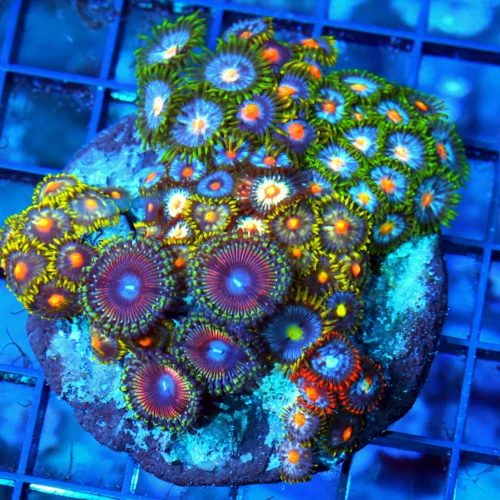
Learn why zoanthids stay closed in reef tanks, including lighting changes, flow problems, pests, unstable parameters, algae, fish nipping, shipping stress and zoa pox.
Find out why zoanthids stay closed and how to fix common reef tank problems like lighting changes, poor flow, pests, algae, unstable parameters and stress.
by Scott Shiles • May 13, 2026
Few things frustrate reef keepers more than watching healthy zoanthids suddenly close, shrink, or refuse to open. Zoanthids are known for being colorful, adaptable, and fairly hardy, so when a zoa colony stays closed, it usually means something in the aquarium is irritating the polyps or stressing the coral.
The good news is that closed zoanthids are often fixable when you work through the problem carefully. Lighting changes, flow issues, pests, water parameter swings, algae, fish nipping, shipping stress, and detritus buildup can all cause zoas to stay shut. The key is to avoid guessing and instead inspect the coral, review recent changes, and correct the most likely cause.
At Extreme Corals, zoanthids remain one of the most popular coral groups because they offer incredible color and strong colony-building potential. This guide explains the most common reasons zoanthids stay closed, how to identify each issue, and what to do to help your zoas reopen and recover.
How Long Can Zoanthids Stay Closed?
Zoanthids can close temporarily for many normal reasons, including shipping, handling, dipping, cleaning, water changes, feeding response, or nearby disturbance. A colony that closes for a few hours or a day after a minor disturbance is not always a serious problem.
General timing guidelines:
- Minor irritation: Zoanthids may reopen within several hours to 1-2 days.
- Shipping or new placement: Zoanthids may stay closed for 2-4 days while adjusting.
- Major stress, pests, or infection: Zoanthids may remain closed longer and need intervention.
- Closed longer than one week: Inspect closely for pests, algae, poor flow, water instability, or disease.
If only one zoanthid colony is closed while the rest of the reef looks good, focus on local causes such as pests, algae, flow, nearby coral aggression, or detritus. If many corals look stressed, test the water first.
1. Sudden Changes in Lighting
Zoanthids can react strongly to abrupt changes in PAR, spectrum, or photoperiod. A colony moved from lower light to intense lighting may stay tightly closed or fade. A colony placed in too little light may stretch upward or lose color over time.
Signs of a lighting problem include:
- Polyps staying tight during peak lighting
- Washed-out or faded color
- Zoanthids stretching toward the light
- Polyps opening better in shaded periods
- Recent light intensity or spectrum changes
Fix lighting problems by making gradual changes. Lower intensity slightly if the colony looks light-stressed, shorten the strongest part of the photoperiod temporarily if needed, and use a one to two week light ramp when moving zoanthids into brighter areas.
2. Too Much Flow
Zoanthids need water movement, but direct blasts from powerheads can irritate the polyps and keep them closed. The goal is gentle to moderate movement that keeps debris off the colony without whipping the polyps.
Signs of too much flow include:
- Polyps being pushed hard in one direction
- Zoanthids closing when pumps are at full speed
- Flesh looking irritated or unable to expand
- The colony opening better when flow is reduced
Redirect the flow so it moves around the colony instead of blasting it directly. Zoanthids should show a soft, natural movement, not constant whipping.
3. Not Enough Flow
Too little flow can also cause zoanthids to close. Dead spots allow detritus, sand, algae, and bacterial film to settle between polyps. Over time, this irritates the colony and can lead to closed polyps or tissue problems.
Signs of low flow include:
- Detritus collecting between polyps
- Film algae or debris on the colony
- Polyps staying closed after feeding or maintenance
- Only the shaded or low-flow side of the colony staying closed
Improve flow gradually and use a turkey baster during water changes to blow debris off the colony. Avoid overcorrecting by turning a dead spot into a direct blast zone.
4. Zoanthid Pests
Zoanthid pests are one of the most important causes to rule out when a colony stays closed. Pests may hide between polyps, under the frag plug, or around the base of the colony. Some are active at night and hard to see during the day.
Common zoanthid pests include:
- Zoanthid-eating nudibranchs
- Zoanthid spiders
- Sundial snails
- Flatworms
- Egg clusters on plugs or colony bases
Inspect the colony under white light and after the lights have been off. Remove visible pests manually. Dip the coral when appropriate, follow dip directions carefully, and repeat inspection over the next several days because eggs may survive a single dip.
5. Water Parameter Instability
Zoanthids are hardy, but they still prefer stability. They usually tolerate a range of reef conditions better than many delicate corals, but rapid swings in salinity, alkalinity, temperature, nitrate, or phosphate can cause them to close.
Common instability issues include:
- Alkalinity swings
- Salinity changes from evaporation or water changes
- Temperature swings
- Nitrate or phosphate bottoming out
- Sudden nutrient spikes after overfeeding
A good starting range for many zoanthid reef tanks is:
| Parameter | Recommended Range |
|---|---|
| Temperature | 76-80°F |
| Salinity | 1.024-1.026 specific gravity |
| Alkalinity | 8-10 dKH |
| Nitrate | 5-15 ppm |
| Phosphate | 0.03-0.10 ppm |
| pH | 8.1-8.4 |
Correct parameter issues slowly. Sudden large corrections can stress zoanthids more than the original problem.
6. Aggressive Neighboring Corals
Zoanthids can close when they are too close to aggressive corals. LPS corals such as torches, hammers, frogspawn, chalices, galaxea, candy cane corals, and some brain corals can sting nearby colonies or irritate them through chemical competition.
Signs of coral aggression include:
- Only the side closest to another coral stays closed
- Polyps near the neighbor shrink first
- Visible sting marks or tissue irritation
- Zoanthids closing more at night when sweepers extend
Move the zoanthids farther from aggressive neighbors, run fresh activated carbon if chemical irritation is suspected, and perform a water change if multiple soft corals or zoanthids appear irritated.
7. Zoa Pox and Bacterial Infections
Bacterial infections can cause zoanthids to stay closed, shrink, or develop spots on the stalks or polyps. Zoa pox is commonly described as small white or yellowish spots on zoanthid stalks, often with persistent closure.
Warning signs include:
- Small white or yellow dots on stalks
- Polyps shrinking instead of simply closing
- Decline spreading through the colony
- Closed polyps with poor tissue appearance
Improve water quality, increase gentle flow around the colony, remove severely declining polyps if needed, and use appropriate dips only when the coral can tolerate them. Avoid harsh treatments unless the issue is clearly progressing.
8. Algae Overgrowth
Hair algae, turf algae, bubble algae, film algae, and cyanobacteria can all irritate or smother zoanthids. Algae growing between polyps can keep them from opening even when water parameters look acceptable.
Algae problems around zoanthids are often caused by:
- Excess nutrients
- Weak flow around the colony
- Old frag plugs with algae growth
- Too much light in one area
- Detritus trapped between polyps
Manually remove algae carefully, improve flow, keep nitrate and phosphate controlled, and add appropriate cleanup crew animals when needed. Do not rip algae aggressively if it will tear zoanthid tissue.
9. Vermetid Snails, Bristleworms, and Irritating Hitchhikers
Some reef hitchhikers do not directly eat zoanthids but can irritate them enough to keep polyps closed. Vermetid snails cast mucus webs that can irritate nearby corals. Large bristleworms or other scavengers may disturb polyps when food is present.
Look for:
- Mucus webs crossing the colony
- Small hard tubes near the zoanthids
- Worms or hitchhikers crawling through the polyps
- Polyps closing after feeding or after lights out
Remove or crush vermetid tubes carefully when possible, relocate the frag if needed, and keep food from settling directly into the colony.
10. Predatory Fish or Invertebrates
Some fish and invertebrates may nip, pick at, or walk across zoanthids until they stay closed. This can be difficult to catch because some animals only bother corals when you are not watching.
Potential problem animals include:
- Some angelfish, especially dwarf angels
- Certain wrasses
- Large hermit crabs
- Coral-bothering shrimp
- Unidentified hitchhiker crabs
Observe the tank during feeding time and after lights out. If a fish or invertebrate repeatedly picks at the colony, it may need to be removed, relocated, or separated from the coral.
11. Shipping, Dipping, or Fragging Stress
Newly shipped, dipped, or freshly fragged zoanthids often stay closed while they recover. This is common and does not always mean something is wrong. The key is to give them stable conditions and avoid repeated handling.
For stressed new zoanthids:
- Keep lighting moderate at first.
- Use gentle to moderate indirect flow.
- Avoid moving the frag repeatedly.
- Inspect for pests without excessive handling.
- Give the colony several days to adjust.
If the colony stays closed beyond several days and begins shrinking, inspect for pests, algae, infection, or water quality issues.
12. Sand, Detritus, or Physical Irritation
Sand and detritus can settle on zoanthids and keep them closed for days. This is common when colonies are placed too low, near sand-blowing flow patterns, or in dead spots.
Fix physical irritation by:
- Blowing debris off gently with a turkey baster
- Adjusting flow so sand does not blow onto the colony
- Moving the frag slightly higher if needed
- Keeping the area around the colony clean
Do not scrub zoanthids aggressively. Gentle cleaning and better placement are usually safer.
How to Prevent Future Zoanthid Problems
The best way to keep zoanthids open and healthy is to create a stable, clean, pest-conscious reef environment. Most zoanthid problems are easier to prevent than fix after the colony is declining.
Good prevention habits include:
- Dip and inspect new corals when appropriate.
- Check frag plugs and colony bases for pests and eggs.
- Keep salinity and alkalinity stable.
- Maintain measurable nitrate and phosphate.
- Use moderate lighting and gradual acclimation.
- Provide gentle to moderate indirect flow.
- Keep algae and detritus from growing between polyps.
- Leave space from aggressive neighboring corals.
A stable tank is usually a happy zoanthid tank. When zoas are placed well, kept clean, and protected from pests, they can become some of the most rewarding corals in a reef aquarium.
Related Corals You May Also Like
If you are troubleshooting zoanthids or building a zoa garden, these coral categories and care resources can help:
- Zoanthids - Browse colorful zoa colonies and frags for reef tanks.
- New Coral Frags - Shop recently added coral frags for growing reef displays.
- Mushroom Corals - Explore hardy mushrooms for lower-light reef zones.
- Soft Corals - Browse beginner-friendly soft corals with color and movement.
- Zoanthid Coral Care Guide - Learn more about zoanthid placement, lighting, flow, and growth.
- Coral Pests and Predators - Identify pests that can cause zoanthids to close.
- Reef Tank Lighting Guide - Understand lighting changes that affect coral behavior.
- Coral Care Guides - Browse coral care resources for soft corals, LPS, SPS, mushrooms, and zoanthids.
Shop Healthy Zoanthids
Zoanthids are some of the best corals for adding color, variety, and colony growth to a reef aquarium. When they stay closed, the cause is usually connected to lighting, flow, pests, water quality, algae, or irritation. Once the problem is corrected, many zoanthid colonies can recover and reopen.
Browse zoanthids for sale, new coral frags, new arrival corals, and Scott's Handpicked Corals at ExtremeCorals.com to find healthy corals for your reef tank.
Frequently Asked Questions About Closed Zoanthids
Why are my zoanthids closed?
Zoanthids may close because of lighting changes, too much or too little flow, pests, unstable water parameters, algae, coral aggression, fish nipping, infection, or shipping stress.
How long can zoanthids stay closed before I should worry?
Zoanthids may close for a day or two after minor irritation and several days after shipping. If they remain closed longer than a week or begin shrinking, inspect for pests, algae, water instability, and disease.
Can too much light make zoanthids close?
Yes. Too much light or sudden increases in PAR can cause zoanthids to stay tight, fade, or bleach. Reduce intensity gradually and acclimate them over one to two weeks.
Can low flow make zoanthids close?
Yes. Low flow can allow detritus, sand, and algae to settle between polyps. Zoanthids usually do best with gentle to moderate indirect flow that keeps the colony clean.
What pests make zoanthids close?
Common pests include zoanthid-eating nudibranchs, sundial snails, zoanthid spiders, flatworms, and egg clusters hidden around plugs or colony bases.
Should I dip closed zoanthids?
A coral dip can help when pests are suspected, but dipping can also stress zoanthids. Inspect first, follow dip directions carefully, and avoid repeated harsh dips unless needed.
Do zoanthids like dirty water?
Zoanthids usually prefer measurable but controlled nutrients. Water that is too stripped can stress them, while very dirty water can fuel algae and irritate polyps.
Can zoanthids recover after staying closed?
Yes, many zoanthids recover once the cause is corrected. Stable water, proper lighting, clean flow, pest control, and patience give them the best chance to reopen.
About the Author
Scott Shiles is the owner of ExtremeCorals.com, which he has operated for over 25 years and is recognized as one of the early dedicated live coral websites on the internet. A lifelong reef keeper since 1984, Scott has decades of hands-on experience maintaining marine aquariums and previously owned and operated a brick and mortar aquarium retail store for 10 years, including five years alongside Extreme Corals. He holds a degree in Marine Biology and has personally selected and sold hundreds of thousands of live corals. An avid scuba diver who has explored reef systems around the world, Scott shares practical coral care and husbandry knowledge based on real world reef experience.
overall rating:
my rating:
log in to rate
Please log in to leave a comment.
For more information visit: additional resources