My Cart: 0 item(s)

Extreme Corals News and Updates
Ricordea vs. Other Coral Types: Understanding the Differences
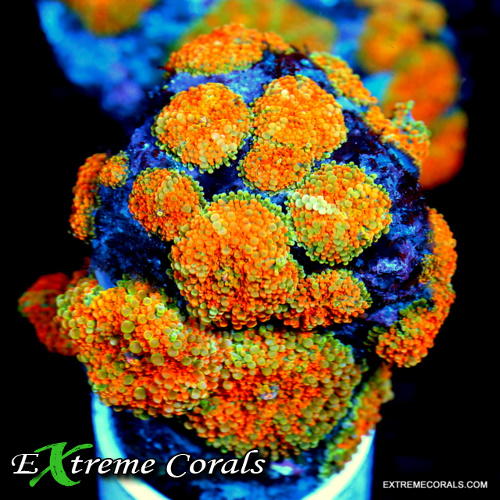
Learn how Ricordea corals compare with mushroom corals, soft corals, LPS corals, SPS corals, zoanthids, and other reef aquarium favorites, including differences in lighting, flow, feeding, placement, growth, hardiness, color, and beginner care.
Compare Ricordea coral vs other corals, including mushrooms, soft corals, LPS, SPS, and zoanthids, with care tips for lighting, flow, feeding, placement, and growth.
by Scott Shiles • April 30, 2026
Ricordea corals are some of the most colorful and beginner-friendly corals for home reef aquariums. With their rounded mushroom-like shape, bubble-textured surface, bright colors, and manageable care needs, Ricordea can add strong visual impact without requiring the same level of difficulty as many SPS corals or delicate LPS showpieces.
When reef keepers compare Ricordea coral to other coral types, the biggest differences usually come down to shape, lighting needs, water flow, feeding style, growth pattern, aggression, and overall care difficulty. Ricordea behaves more like a mushroom-style coral than a branching stony coral. It can be hardy, colorful, and forgiving, but it still needs stable water, proper placement, moderate lighting, and gentle to moderate flow.
At Extreme Corals, Ricordea corals are popular because they fit many reef tank styles, from beginner aquariums to colorful mushroom gardens and mixed reef displays. This guide explains how Ricordea compares with mushroom corals, soft corals, LPS corals, SPS corals, zoanthids, and other popular reef aquarium corals so you can choose the best pieces for your tank.
What Is Ricordea Coral?
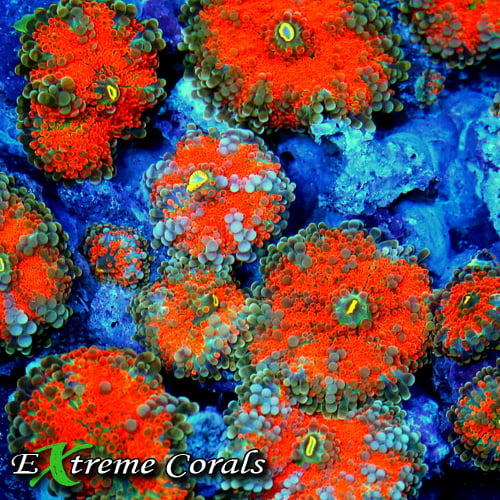
Ricordea coral is a colorful corallimorph often grouped with mushroom corals in the reef aquarium hobby. It has a soft, round body, a central mouth, and a textured surface that often looks bubbly, bumpy, or beaded. These corals are prized for intense colors such as orange, green, blue, purple, pink, yellow, red, and rainbow combinations.
Ricordea is commonly called Ricordea mushroom coral because it shares many practical care similarities with other mushroom corals. It does not grow a hard skeleton like LPS or SPS corals. Instead, it attaches to rock, rubble, or plugs and expands as a soft, fleshy disc.
Ricordea corals are popular because they offer:
- Bright color under reef lighting
- Compact size for nano and larger reef tanks
- Lower to moderate lighting needs
- Gentle to moderate flow tolerance
- Beginner-friendly care in stable aquariums
- Strong display value without aggressive stinging tentacles
Ricordea Florida vs Ricordea Yuma
Before comparing Ricordea to other coral types, it helps to understand the two main Ricordea forms commonly discussed in the reef hobby: Ricordea florida and Ricordea yuma.
Ricordea Florida
Ricordea florida is often considered the more beginner-friendly type. It usually has a compact shape, bright colors, and a bubbly surface that does not extend as heavily over the mouth. It often adapts well to moderate lighting, gentle flow, and stable reef conditions.
Ricordea Yuma
Ricordea yuma can be larger, more dramatic, and sometimes more sensitive. Yuma varieties often have a bumpy texture that extends closer to the mouth, and some specimens can react more strongly to shipping stress, lighting changes, or unstable water conditions.
Both can be beautiful reef corals, but beginners often do better starting with Ricordea florida before moving into more sensitive Yuma varieties.
Ricordea Coral vs Mushroom Corals
Ricordea is most often compared with other mushroom corals such as Discosoma and Rhodactis. All three are corallimorph-style corals that usually prefer lower to moderate lighting, gentle to moderate flow, and stable water quality.
Appearance
Ricordea usually has a bubbly or bead-like surface texture. Discosoma mushrooms are often smoother and flatter, while Rhodactis mushrooms may have a more textured, fuzzy, or folded appearance. Ricordea often looks brighter and more jewel-like in many reef tanks.
Care Level
Discosoma mushrooms are often the easiest and most forgiving. Ricordea florida is also very manageable, while some Ricordea yuma varieties may be more sensitive. Rhodactis can be hardy but may grow larger or show stronger contact irritation in some cases.
Growth
Many mushroom corals can multiply or spread over time. Ricordea usually grows slowly to moderately by splitting or forming new individuals. Discosoma may spread faster in some systems, while Rhodactis can become larger and more dominant depending on the variety.
Best Choice
Choose Ricordea if you want bright color, a compact mushroom-style coral, and a textured surface that stands out. Choose Discosoma if you want very hardy beginner mushrooms. Choose Rhodactis if you want larger, more dramatic mushroom forms.
Ricordea Coral vs Soft Corals
Soft corals include leather corals, sinularia, clove polyps, xenia, green star polyps, and many other flexible corals that do not build a hard stony skeleton. Ricordea is often discussed near soft corals because it has soft tissue and easier care, but it is technically a corallimorph rather than a true soft coral.
Appearance
Soft corals often add movement, height, or mat-like growth to a reef tank. Ricordea usually adds compact color and texture in smaller areas. A leather coral may become a large centerpiece, while Ricordea is more often used in mushroom gardens, lower rockwork, rubble areas, or colorful accent zones.
Growth Pattern
Some soft corals can spread quickly or grow large. Green star polyps, xenia, and clove polyps may cover rockwork if not managed. Ricordea is usually easier to control because it spreads more slowly and stays more compact.
Care Level
Both Ricordea and many soft corals are good options for beginners. Soft corals can be very forgiving, but some may release chemical compounds or spread aggressively. Ricordea is usually less invasive than many fast-growing soft corals.
Best Choice
Choose Ricordea if you want compact color and a mushroom-style coral that is easier to contain. Choose soft corals if you want more movement, height, and natural flow in the reef tank.
Ricordea Coral vs LPS Corals
LPS corals, or large polyp stony corals, include hammer corals, frogspawn, torches, acans, scolymia, lobophyllia, blastomussa, favia, favites, bubble corals, and many other fleshy stony corals. Ricordea differs from LPS corals because it does not build a hard skeleton.
Structure
LPS corals grow over hard calcium carbonate skeletons. Ricordea has soft tissue and attaches directly to rock or rubble. This makes Ricordea more flexible in placement, but it can also detach if flow is too strong or if it is stressed.
Lighting and Flow
Many LPS corals need moderate lighting and low to moderate or moderate indirect flow. Ricordea usually prefers lower to moderate lighting and gentle to moderate indirect flow. Strong direct current is a problem for both Ricordea and fleshy LPS corals.
Feeding
Many LPS corals show strong feeding responses and may benefit from meaty foods. Ricordea is photosynthetic and may accept very small foods, but it usually does not need the same regular target feeding as many fleshy LPS corals.
Aggression
Many LPS corals can sting neighboring corals with sweeper tentacles or aggressive tissue contact. Ricordea is generally less aggressive, but it can still irritate nearby corals if placed too close.
Best Choice
Choose Ricordea if you want colorful, lower-maintenance coral for lower to moderate light zones. Choose LPS corals if you want larger showpieces, feeding response, movement, or fleshy stony coral structure.
Ricordea Coral vs SPS Corals
SPS corals, or small polyp stony corals, include Acropora, Montipora, Birdsnest, Stylophora, and Pocillopora. These corals are very different from Ricordea in both structure and care needs.
Care Difficulty
SPS corals usually require stronger lighting, stronger random flow, very stable alkalinity, and more precise water chemistry. Ricordea is much more forgiving and is usually a better choice for beginner or intermediate reef keepers.
Appearance
SPS corals add branching, plating, encrusting, and reef-crest structure. Ricordea adds soft, rounded color and texture. SPS corals build the skeleton-heavy upper reef look, while Ricordea is better for lower rockwork, mushroom gardens, and accent areas.
Nutrient Preference
Many SPS systems run cleaner and more controlled, though nutrients should still be present. Ricordea often does well in tanks with moderate, balanced nutrients. Water that is stripped too clean can sometimes leave mushroom-style corals less full or less colorful.
Best Choice
Choose Ricordea if you want colorful, forgiving, lower-to-moderate-light coral. Choose SPS corals if you want branching reef structure and are prepared for stronger lighting, high flow, dosing, and tighter stability.
Ricordea Coral vs Zoanthids
Zoanthids and Ricordea are both popular choices for reef keepers who want bright color in manageable spaces. Both can work well on lower to middle rockwork, but they look and grow differently.
Appearance
Zoanthids grow as colonies of small polyps. Ricordea grows as larger individual mushroom-like discs. A zoanthid garden creates a field of many small colorful polyps, while a Ricordea garden creates larger glowing discs with more texture.
Growth
Zoanthids can spread across rockwork by adding new polyps. Ricordea may split or produce new individuals more slowly. Zoanthids can sometimes spread faster, depending on variety and conditions.
Care
Both can be beginner-friendly in stable reef tanks. Zoanthids often prefer moderate flow to keep debris from settling between polyps. Ricordea usually prefers gentler flow and may detach if blasted.
Safety
Zoanthids should be handled carefully because some varieties may contain palytoxin. Ricordea does not carry the same common palytoxin concern, but it should still be handled gently to avoid tissue damage.
Best Choice
Choose Ricordea if you want larger, soft, colorful mushroom-style accents. Choose zoanthids if you want a polyp garden with many small colorful heads and collectible varieties.
Quick Comparison: Ricordea vs Other Coral Types
| Coral Type | Main Look | Care Level | Lighting | Flow | Best Use |
|---|---|---|---|---|---|
| Ricordea | Bright bubbly mushroom disc | Beginner to moderate | Low to moderate | Gentle to moderate | Color accents, mushroom gardens, lower reef zones |
| Discosoma Mushrooms | Smooth mushroom disc | Beginner | Low to moderate | Gentle to moderate | Beginner coral, lower-light color |
| Rhodactis Mushrooms | Textured larger mushroom | Beginner to moderate | Low to moderate | Gentle to moderate | Showy mushroom gardens |
| Soft Corals | Flexible, flowing, or mat-forming | Beginner to moderate | Low to moderate | Gentle to moderate | Movement, texture, beginner reef tanks |
| LPS Corals | Fleshy stony corals | Beginner to advanced | Low to moderate or moderate | Low to moderate indirect | Showpieces, feeding response, LPS gardens |
| SPS Corals | Branching, plating, encrusting | Moderate to advanced | Moderate to high | Strong random flow | Advanced reef structure |
| Zoanthids | Small colorful polyps | Beginner to moderate | Low to moderate or moderate | Moderate | Polyp gardens, collectible color |
Best Water Parameters for Ricordea Coral
Ricordea is hardy compared with many corals, but stable water still matters. Sudden changes in salinity, alkalinity, temperature, or nutrients can cause Ricordea to shrink, detach, fade, or stop expanding.
| Parameter | Recommended Range |
|---|---|
| Temperature | 76-80°F |
| Salinity | 1.024-1.026 specific gravity |
| pH | 8.1-8.4 |
| Alkalinity | 8-10 dKH |
| Calcium | 400-450 ppm |
| Magnesium | 1250-1350 ppm |
| Nitrate | 5-15 ppm |
| Phosphate | 0.03-0.10 ppm |
Ricordea usually does well in water that is clean but not stripped completely of nutrients. Very low nutrients can reduce fullness or color, while excessive nutrients can fuel algae that irritates the coral.
Lighting Differences: Ricordea vs Other Corals
Ricordea usually prefers low to moderate or moderate lighting. It is photosynthetic and needs light, but it does not need the intense light required by many SPS corals.
General lighting comparison:
- Ricordea: Low to moderate or moderate lighting, often around 50-120 PAR
- Mushroom corals: Usually low to moderate lighting
- Soft corals: Low to moderate or moderate lighting depending on type
- LPS corals: Low to moderate or moderate lighting depending on species
- SPS corals: Moderate to high lighting in most systems
- Zoanthids: Low to moderate or moderate lighting depending on variety
Too much light can cause Ricordea to shrink, fade, bleach, or detach. Too little light can lead to dull color or poor expansion. The safest approach is to start Ricordea in lower to moderate light and move it gradually if needed.
Flow Differences: Ricordea vs Other Corals
Ricordea prefers gentle to moderate indirect flow. Strong direct flow can cause the coral to fold, curl, lift from the rock, or detach. This makes flow one of the biggest differences between Ricordea and higher-energy corals like SPS.
General flow comparison:
- Ricordea: Gentle to moderate indirect flow
- Discosoma mushrooms: Gentle to moderate flow
- Rhodactis mushrooms: Gentle to moderate flow
- Soft corals: Gentle to moderate, depending on type
- LPS corals: Low to moderate or moderate indirect flow
- SPS corals: Strong random flow
- Zoanthids: Moderate flow to keep debris from settling
A healthy Ricordea should stay open and relaxed. If it looks folded, curled, or loose, the flow may be too strong or too direct.
Feeding Ricordea Compared With Other Coral Types
Ricordea gets much of its energy from light through photosynthesis, but it may also benefit from occasional small feedings. It does not need heavy target feeding like many fleshy LPS corals.
Good Ricordea feeding options include:
- Very small pieces of mysis shrimp
- Small pieces of brine shrimp
- Fine particle coral foods
- Zooplankton-based foods used lightly
- Natural nutrients from fish feeding and reef biodiversity
Compared with other corals, Ricordea feeding is simple. SPS corals rely heavily on light, flow, and fine nutrients. Many LPS corals respond strongly to meaty target feeding. Soft corals and zoanthids often benefit from balanced nutrients and fine suspended foods. Ricordea sits in the middle: it can eat small foods, but it usually does not require aggressive feeding.
Ricordea Growth and Reproduction Compared With Other Corals
Ricordea usually grows slowly to moderately. It may split, form new individuals, or gradually spread from its original placement. Growth speed depends on lighting, nutrients, flow, feeding, species, and overall tank stability.
Compared with other coral types:
- Ricordea: Splits or forms new individuals slowly to moderately.
- Discosoma mushrooms: May spread faster in many systems.
- Soft corals: Some grow very quickly and may need control.
- LPS corals: Growth depends heavily on species and skeleton formation.
- SPS corals: Can grow quickly in mature high-stability systems.
- Zoanthids: Can add new polyps steadily and form colonies.
Ricordea is usually easier to manage than fast-spreading soft corals or aggressive LPS corals. It adds color without usually taking over the aquascape quickly.
Placement: Where Ricordea Fits Best in a Reef Tank
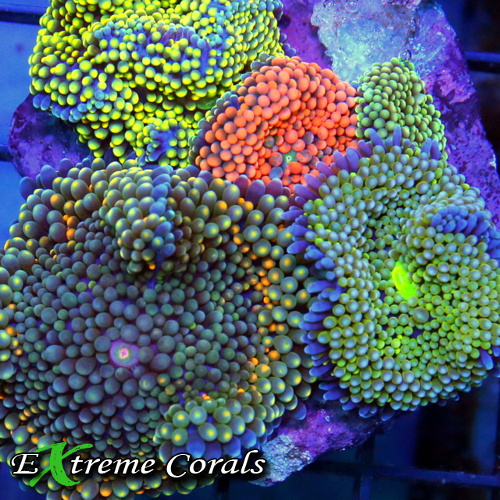
Ricordea usually fits best in lower to middle areas of the aquarium where lighting is not too intense and flow is not too direct. It can be placed on rock, rubble, plugs, or a dedicated mushroom island.
Good Ricordea placement options include:
- Lower rockwork with moderate light
- Rubble islands on the sandbed
- Mushroom gardens
- Protected areas away from direct powerhead flow
- Spaces away from aggressive LPS corals
- Color accent zones near but not touching zoanthids or soft corals
Avoid placing Ricordea next to torch corals, hammer corals, frogspawn, galaxea, aggressive chalices, or other corals that may sting it. Ricordea is generally peaceful and can be damaged by stronger neighbors.
Hardiness: Is Ricordea Easier Than Other Corals?
Ricordea is easier than many corals, but it is not impossible to stress. It is generally easier than SPS corals, many delicate LPS corals, and some sensitive Goniopora varieties. It is usually similar in difficulty to many mushroom corals and some soft corals.
Ricordea is easier because it usually:
- Does not need intense lighting
- Does not need strong flow
- Does not require daily target feeding
- Does not build a skeleton that demands heavy calcium and alkalinity uptake
- Can adapt well to stable beginner reef tanks
Ricordea can still struggle if it is blasted with flow, exposed to intense light too quickly, placed next to aggressive corals, or kept in unstable water. Easy coral care still depends on stability.
Common Problems With Ricordea Corals
Most Ricordea problems are related to lighting, flow, placement, water stability, pests, or algae growth. The coral usually gives visual warning signs before serious decline.
Ricordea Shrinking
Shrinking may be caused by too much light, strong direct flow, recent handling, unstable salinity, poor water quality, nearby coral aggression, or pests.
Ricordea Detaching
Detaching often happens when the coral is stressed, poorly attached, or sitting in too much flow. Place it in a protected low-flow rubble area so it can reattach.
Ricordea Losing Color
Color loss can come from excessive lighting, sudden lighting changes, low nutrients, poor acclimation, or general stress. Adjust lighting slowly and keep the tank stable.
Algae Growing Around Ricordea
Algae can irritate or shade the coral. Improve nutrient control, increase gentle flow, and remove algae carefully without damaging the Ricordea tissue.
Ricordea Not Eating
Ricordea does not always show a dramatic feeding response. If the coral is otherwise open, colorful, and stable, it may not need frequent direct feeding.
Beginner Mistakes When Comparing Ricordea to Other Corals
A common mistake is assuming all colorful corals need the same care. Ricordea, zoanthids, LPS corals, soft corals, and SPS corals all behave differently.
Avoid these mistakes:
- Calling Ricordea an LPS coral and placing it like a fleshy stony coral
- Putting Ricordea under intense light without acclimation
- Blasting Ricordea with SPS-level flow
- Feeding large food pieces that sit too long on the coral
- Placing it beside aggressive LPS corals
- Moving it repeatedly before it has time to settle
- Assuming all mushroom corals grow at the same speed
- Letting algae grow over the base or around the tissue
The best approach is simple: place Ricordea in moderate to lower light, gentle to moderate indirect flow, and stable water. Then give it time to settle.
Which Coral Type Should You Choose?
Choose Ricordea if you want a colorful, compact, beginner-friendly coral for lower to moderate light zones. It is especially good for mushroom gardens, nano reefs, mixed reefs, and tanks where you want bright color without demanding care.
Choose soft corals if you want more movement and fast-growing natural texture. Choose LPS corals if you want larger showpieces, fleshy tissue, and feeding response. Choose SPS corals if you want branching reef structure and are ready for advanced stability. Choose zoanthids if you want small-polyp color gardens and collectible varieties.
There is no single best coral for every reef tank. The best coral is the one that matches your lighting, flow, nutrient level, aquascape, experience, and long-term goals.
Related Corals You May Also Like
If you are comparing Ricordea with other coral types, these coral categories and care resources can help you choose the best pieces for your reef aquarium:
- Ricordia Mushrooms - Browse colorful Ricordea mushrooms for reef aquariums.
- Mushroom Corals - Explore Discosoma, Rhodactis, Ricordea, and other mushroom-style corals.
- Soft Corals - Add hardy movement, texture, and beginner-friendly reef color.
- Large Polyp Stony Corals - Compare Ricordea with colorful LPS corals and showpiece pieces.
- SPS Corals - Explore branching and encrusting corals for mature reef systems.
- Zoanthids - Build colorful polyp gardens with collectible zoanthid varieties.
- Ricordia Mushroom Coral Care Guide - Review quick care requirements for Ricordea and Ricordia mushroom corals.
- Coral Care Guides - Browse coral care resources for LPS, SPS, soft corals, mushrooms, and zoanthids.
Shop Ricordea and Other Reef Aquarium Corals
Ricordea corals are excellent choices for reef keepers who want bright color, manageable care, and a coral that fits well in lower to moderate light areas. They pair beautifully with mushroom corals, soft corals, zoanthids, and selected LPS corals when spacing and placement are planned carefully.
Browse Ricordia mushrooms, mushroom corals, soft corals, LPS corals, SPS corals, and new arrival corals at ExtremeCorals.com to find healthy corals that match your reef tank, lighting, flow, and experience level.
Frequently Asked Questions About Ricordea vs Other Corals
Is Ricordea a mushroom coral?
Ricordea is a corallimorph and is commonly grouped with mushroom corals in the reef aquarium hobby. It is often called Ricordea mushroom coral because its care and appearance are similar to other mushroom-style corals.
Is Ricordea an LPS coral?
No. Ricordea does not build a hard calcium carbonate skeleton like LPS corals. It is a soft-bodied corallimorph, although hobbyists sometimes compare it with LPS corals because both can be colorful reef aquarium showpieces.
Is Ricordea easier than LPS coral?
Ricordea is usually easier than many LPS corals because it does not need strong feeding, intense lighting, or skeletal growth support. However, it still needs stable water, gentle flow, and proper placement.
Is Ricordea easier than SPS coral?
Yes. Ricordea is much easier than most SPS corals. SPS corals usually require stronger lighting, stronger flow, and very stable alkalinity, while Ricordea usually prefers lower to moderate lighting and gentler flow.
What is the difference between Ricordea and Discosoma mushrooms?
Ricordea usually has a bubbly or beaded surface texture, while Discosoma mushrooms are often smoother and flatter. Discosoma may be slightly easier and faster spreading, while Ricordea is often chosen for brighter texture and color.
Can Ricordea grow near zoanthids?
Ricordea can often be kept near zoanthids with careful spacing, but they should not crowd each other. Good flow and placement help prevent irritation, algae buildup, and competition for space.
Where should Ricordea be placed in a reef tank?
Ricordea usually does best in the lower to middle areas of the tank with low to moderate or moderate lighting and gentle to moderate indirect flow. It can be placed on rock, rubble, plugs, or a mushroom island.
Does Ricordea need to be fed?
Ricordea is photosynthetic and does not need heavy feeding, but it may benefit from occasional small foods such as fine coral foods, zooplankton-based foods, or very small pieces of mysis or brine shrimp.
About the Author
Scott Shiles is the owner of ExtremeCorals.com, which he has operated for over 25 years and is recognized as one of the early dedicated live coral websites on the internet. A lifelong reef keeper since 1984, Scott has decades of hands-on experience maintaining marine aquariums and previously owned and operated a brick and mortar aquarium retail store for 10 years, including five years alongside Extreme Corals. He holds a degree in Marine Biology and has personally selected and sold hundreds of thousands of live corals. An avid scuba diver who has explored reef systems around the world, Scott shares practical coral care and husbandry knowledge based on real world reef experience.
overall rating:
my rating:
log in to rate
Please log in to leave a comment.
For more information visit: additional resources