My Cart: 0 item(s)

Extreme Corals News and Updates
Protein Skimmer Guide for Reef Tanks: Best Types, Benefits and How to Choose One
Learn what a protein skimmer does in a reef tank, the main skimmer types available, how they work, and how to choose the right one for your aquarium.
Learn what a protein skimmer is, how it works in a reef tank, the best skimmer types available, and how to choose one for better water quality and reef stability.
by Scott Shiles • March 13, 2023
A protein skimmer is one of the most important filtration tools in a reef tank because it helps remove dissolved organic waste before that waste breaks down and creates bigger water quality problems. Also called a foam fractionator, a protein skimmer uses bubbles to collect organic compounds from aquarium water and remove them from the system. This guide explains what a protein skimmer is, how it works, the main types of skimmers available, and why they are so useful in a reef tank.
For many reef hobbyists, a good skimmer becomes one of the most valuable pieces of equipment in the entire system. Fish waste, uneaten food, coral feeding residue, and other organic material can all add up quickly in a saltwater aquarium. A properly sized protein skimmer helps reduce that burden and supports cleaner, more stable reef conditions over time.
Building a cleaner and healthier reef tank? Browse our new arrival corals and support them with strong filtration and stable water quality.
What Is a Protein Skimmer?
A protein skimmer is a device used in marine and reef aquariums to remove dissolved organic compounds from the water. These compounds come from fish waste, uneaten food, coral feeding, and other organic matter inside the tank.
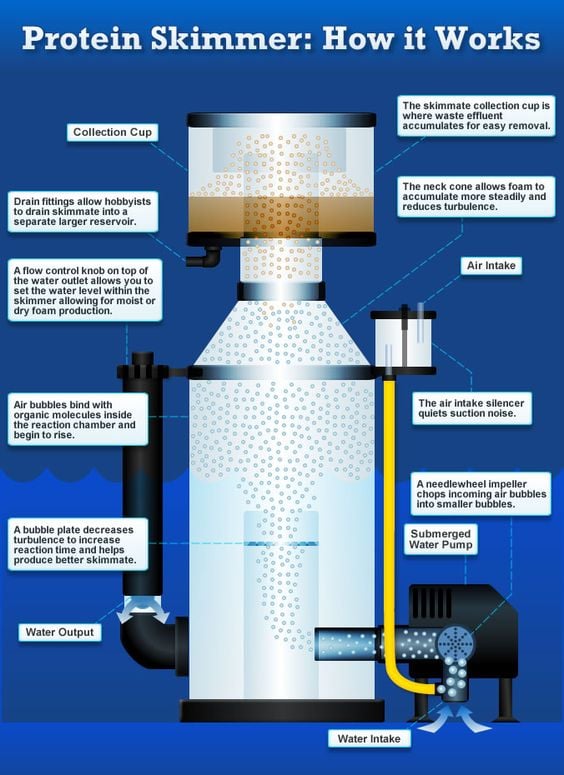
The skimmer works by producing a dense column of bubbles. Organic molecules attach to the surface of those bubbles, which rise upward and form foam. That foam is pushed into a collection cup, where it can be removed from the system before it breaks down further.
This process is one of the reasons reef tanks often stay cleaner and more stable when a skimmer is working properly.
How a Protein Skimmer Works
The basic function of a skimmer is simple:
- It mixes air and water together
- It creates many fine bubbles
- Organic waste sticks to the bubbles
- The bubbles rise into a foam
- The foam collects in the cup for removal
This is why protein skimmers are often called foam fractionators. They use foam to separate unwanted dissolved organics from the water before those compounds fully decompose into nitrate and phosphate.
Why Protein Skimmers Matter in a Reef Tank
In a reef tank, water quality is everything. Corals, fish, and invertebrates all do better when waste is removed consistently instead of being allowed to build up.
A protein skimmer helps by:
- Removing dissolved organic waste before it breaks down
- Helping reduce long-term nutrient buildup
- Supporting cleaner water conditions
- Improving oxygen exchange in the system
- Reducing the burden on the rest of the filtration setup
By removing organics early, skimmers can help reduce the conditions that often encourage nuisance algae and other water quality problems.
Best Types of Protein Skimmers Available
There are several types of protein skimmers commonly used in the hobby. Each one works on the same basic principle, but the way bubbles are created and how the skimmer is installed can vary.
1. Air-Driven Skimmers
Air-driven skimmers use an air pump to generate bubbles, which rise through a column of water and create foam.
- Simple design
- Often used in smaller or more basic systems
- Can be less powerful than more modern skimmer designs
These are more traditional skimmers and are not as common in advanced reef systems today, but they still have a place in some small or simple setups.
2. Pump-Driven Skimmers
Pump-driven skimmers use a water pump to create flow through the skimmer body. This movement helps generate the air-water mix needed for foam production.
- Common in modern reef tanks
- Usually more efficient than simple air-driven models
- Good choice for many medium and large systems
These skimmers are widely used because they can provide stronger and more consistent performance for reef hobbyists.
3. Venturi Skimmers
Venturi skimmers use a venturi valve to pull air into the water stream, creating fine bubbles. This method is effective and has been a popular design in reefkeeping for many years.
- Uses suction from a venturi to draw in air
- Can create good foam production
- Works well in many saltwater systems
Venturi-based skimmers helped shape modern protein skimmer design and are still an important skimmer style to understand.
4. Recirculating Skimmers
Recirculating skimmers use a pump to continuously recirculate water through the skimmer body. This gives the water more contact time with bubbles and can improve waste removal efficiency.
- Often used for more efficient skimming
- Can perform very well on larger or more demanding systems
- Often preferred by advanced hobbyists
Because recirculating skimmers increase contact time, they are often valued in systems where strong nutrient export is important.
How to Choose the Right Protein Skimmer
When choosing a skimmer for a reef tank, a few factors matter more than anything else:
- The total size of the aquarium
- The bioload, including fish size and quantity
- How heavily the system is fed
- Whether the tank uses a sump
- The type of skimmer that fits your setup best
A lightly stocked reef tank may not need the same skimmer size or style as a heavily stocked fish-and-coral system. Matching the skimmer to the real demands of the tank is one of the smartest things a hobbyist can do.
How Protein Skimmers Help Prevent Reef Tank Problems
Protein skimmers are valuable because they help stop some common reef tank problems before they get worse.
- They reduce the buildup of dissolved waste
- They help lower the nutrient load entering the system
- They can support lower algae pressure over time
- They help maintain more stable reef water quality
Skimmers do not solve every reef problem, but they are one of the best tools for improving nutrient control and supporting a healthier aquarium environment.
Proper Protein Skimmer Maintenance
Even the best skimmer will not perform well if it is not maintained. Regular cleaning is important if you want consistent skimming performance.
- Clean the collection cup regularly
- Remove buildup from the neck of the skimmer
- Inspect the pump and airline for blockages
- Make sure the skimmer is operating consistently
A neglected skimmer usually becomes less efficient over time, which means less waste is being removed from the system.
Do All Reef Tanks Need a Protein Skimmer?
Not every reef tank absolutely requires a skimmer, but many benefit from one, especially as the system grows more complex or heavily stocked. In larger systems, tanks with more fish, or reef tanks with heavier feeding, a skimmer can be extremely helpful.
Smaller or lightly stocked tanks may sometimes run successfully without one if maintenance is excellent, but many hobbyists still prefer to use a skimmer because of the added stability it can provide.
Common Protein Skimmer Mistakes
- Choosing a skimmer too small for the bioload
- Failing to clean the skimmer regularly
- Ignoring inconsistent foam production
- Not matching the skimmer to the tank setup
- Assuming a skimmer replaces all other maintenance
A skimmer is a powerful filtration tool, but it works best as part of a complete reefkeeping strategy that also includes water changes, testing, and good overall husbandry.
Best Reef Tank Setups for Using a Protein Skimmer
Protein skimmers are especially useful in:
- Medium to large reef tanks
- Systems with higher fish loads
- Tanks where corals are fed regularly
- Reef systems focused on long-term nutrient control
When used correctly, a good skimmer can make reefkeeping easier by helping the system stay cleaner and more stable between maintenance routines.
Related Reef Tank Topics You May Also Like
If you are working on reef filtration and equipment, these related guides may also help:
- Reef tank equipment guide
- How to maintain your saltwater aquarium
- Must-have reef tank tools and accessories
- pH and alkalinity in reef tanks
- Browse new arrival corals
Ready to support a cleaner and healthier reef tank? Browse our new arrival corals and build a stable reef system around strong filtration and better water quality.
Final Thoughts
A protein skimmer is one of the most useful pieces of reef tank equipment because it helps remove dissolved organic waste before that waste becomes a larger water quality problem. Whether you choose an air-driven model, a pump-driven skimmer, a venturi design, or a recirculating skimmer, understanding how it works and choosing the right one for your tank can make a major difference in reef stability and long-term success.
Frequently Asked Questions
Q: What does a protein skimmer do?
A: It removes dissolved organic waste from saltwater aquarium water before that waste fully breaks down.
Q: Why is a protein skimmer important in a reef tank?
A: It helps maintain better water quality by exporting organic material that would otherwise contribute to nutrient buildup.
Q: What are the main types of protein skimmers?
A: Air-driven, pump-driven, venturi, and recirculating skimmers are some of the most common types.
Q: Do all reef tanks need a protein skimmer?
A: Not always, but many benefit from one, especially tanks with heavier bioloads or more demanding reef conditions.
Q: How often should a protein skimmer be cleaned?
A: Regularly. The cup, neck, and pump components should be checked and cleaned often enough to keep the skimmer performing well.
About the Author
Scott Shiles is the owner of ExtremeCorals.com, which he has operated for over 25 years and is recognized as one of the early dedicated live coral websites on the internet. A lifelong reef keeper since 1984, Scott has decades of hands-on experience maintaining marine aquariums and previously owned and operated a brick and mortar aquarium retail store for 10 years, including five years alongside Extreme Corals. He holds a degree in Marine Biology and has personally selected and sold hundreds of thousands of live corals. An avid scuba diver who has explored reef systems around the world, Scott shares practical coral care and husbandry knowledge based on real world reef experience.
overall rating:
my rating:
log in to rate
Please log in to leave a comment.
For more information visit: additional resources