My Cart: 0 item(s)

Extreme Corals News and Updates
Seriatopora Coral Care Guide: Lighting, Flow, Growth and Placement in Reef Tanks
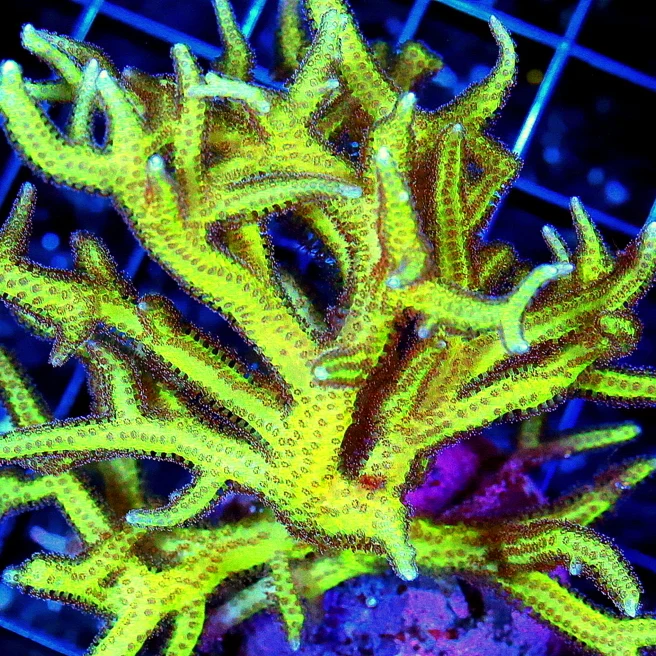
Learn how to care for Seriatopora coral in a home reef aquarium with the right lighting, flow, feeding, placement, and stable water conditions for long-term SPS success.
Learn how to care for Seriatopora coral in a reef tank with tips on lighting, flow, feeding, placement, water stability, pest prevention, and long-term SPS success.
by Scott Shiles • April 15, 2026
Seriatopora, commonly known as Bird’s Nest coral, is one of the most attractive SPS corals in the reef hobby because of its fine branching structure, fast growth, and bright fluorescent color. Available in shades of green, pink, yellow, purple, and orange, Seriatopora adds a delicate but dramatic look to reef aquariums. This guide explains the care requirements of Seriatopora in home reef aquariums, including lighting, water flow, feeding, placement, water stability, propagation, pest prevention, and the most common stress signs to watch for over time.
For many reef keepers, Seriatopora is a rewarding coral because it can grow quickly and form dense, bush-like colonies that give the tank a mature SPS look. At the same time, it is not a coral that tolerates instability well. Strong lighting, high turbulent flow, and stable parameters all matter if you want Seriatopora to hold color, keep tissue healthy, and branch consistently over the long term.
Looking to add colorful SPS corals to your reef tank? Browse our SPS corals for sale and explore healthy corals for your aquarium.
Introduction to Seriatopora
Seriatopora is a small polyp stony coral admired for its intricate branching growth and bright coloration. It is commonly called Bird’s Nest coral because of the way its branches interweave into tight, bushy clusters that resemble a nest-like structure.
As an SPS coral, Seriatopora is best suited for reef keepers who can provide strong lighting, high random flow, and steady chemistry. When those conditions are met, it grows quickly and becomes one of the most visually rewarding branching corals in the aquarium.
Natural Habitat and Why It Matters
Seriatopora is found throughout the Indo-Pacific, including Australia, Indonesia, Fiji, the Red Sea, and the Great Barrier Reef. In the wild, it is commonly found on shallow reef slopes and upper reef crests, where it receives strong sunlight and powerful water movement.
That natural habitat explains why Seriatopora typically needs more energy than lower-light corals. In a reef tank, it usually performs best when placed where lighting is strong and flow is turbulent but indirect.
Why Choose Seriatopora for Your Reef Tank?
- Intricate branching growth that creates a delicate SPS look
- Fast growth rate that fills out reefscape areas quickly
- Strong fluorescent colors under blue and actinic lighting
- Rewarding SPS coral for reef keepers who can maintain stable conditions
Seriatopora is especially appealing for hobbyists who want a coral that gives strong visual structure and can turn into a beautiful colony in the right system.
Optimal Water Parameters
Maintaining stable water chemistry is one of the most important parts of Seriatopora care. Like many SPS corals, it reacts quickly to instability in alkalinity, nutrients, and overall water quality.
- Temperature: 76-80°F
- Salinity: 1.024-1.026 SG
- pH: 8.1-8.4
- Alkalinity: 8-10 dKH
- Calcium: 400-450 ppm
- Magnesium: 1250-1350 ppm
- Nitrate: 2-10 ppm
- Phosphate: 0.03-0.07 ppm
Weekly water changes of about 10-15% help maintain stability and prevent nutrient imbalance. Consistency matters more than chasing constant corrections.
If you are working on chemistry stability, read our guide on reef tank water parameters.
Tank Size and Setup
Seriatopora can be kept in reef tanks starting around 30 gallons, but the more important factor is not just size. It is the system’s ability to stay stable and provide enough high-energy flow and lighting.
- Minimum tank size: 30 gallons or larger
- Placement zone: upper to mid-level areas
- Best base: stable rock structures that allow firm attachment
Because Seriatopora branches outward as it grows, it is smart to leave room around the colony for future expansion and to avoid shading issues later.
Lighting Requirements
Seriatopora thrives under moderate to high lighting, which helps support both growth and vibrant coloration. In most reef tanks, it should be placed where it can receive strong, stable light without abrupt intensity changes.
- PAR range: 250-400 PAR
- Lighting type: LED, T5, or hybrid systems work well
- Lighting schedule: about 8-10 hours per day with gradual transitions
Good lighting helps Bird’s Nest coral maintain its brightest coloration, but sudden increases can still cause stress or bleaching, so gradual acclimation is best.
If you want to understand reef lighting better, read our guide on reef tank lighting.
Water Flow and Circulation
High, turbulent water flow is essential for Seriatopora. Strong random movement helps carry nutrients to the coral, remove waste, and prevent dead spots from developing between branches.
- High random flow is usually ideal
- Avoid stagnant areas around the colony
- Position near wavemakers or powerheads for indirect turbulent movement
- Avoid harsh laminar blasting in one fixed direction
Seriatopora usually does best when flow is strong and chaotic enough to keep the branches active without damaging tissue.
If you want to learn more about circulation, read our guide on water flow and coral health.
Feeding and Nutrition
Seriatopora mainly relies on photosynthesis, but occasional feeding can help improve growth, health, and color vibrancy in a stable reef system.
- Preferred foods: phytoplankton, amino acids, and liquid coral foods
- Feeding frequency: 1-2 times per week
- Best method: broadcast feeding for even nutrient distribution
Feeding is supportive rather than mandatory, but many reef keepers notice better polyp extension and stronger growth when light nutrient support is provided consistently.
Tank Mates and Compatibility
Seriatopora is generally compatible with peaceful reef fish and invertebrates, but spacing still matters because SPS corals can be shaded or damaged by nearby growth and aggressive neighbors.
- Safe companions: clownfish, gobies, blennies, shrimp, and snails
- Use caution with: larger SPS corals that may shade the colony
- Avoid: angelfish and butterflyfish known to nip at coral polyps
Bird’s Nest coral should be placed where it has enough room to branch outward without being crowded or shadowed by surrounding colonies.
Growth Rate and Propagation
Seriatopora is known for its fast growth rate when kept in stable SPS conditions. Healthy colonies can quickly fill out and become dense branching structures.
- Fast growth under stable conditions
- Forms dense, bush-like branching colonies
- Can be propagated fairly easily by fragging branches
Fragging is simple:
- Use bone cutters or a coral saw
- Break off small healthy branches carefully
- Mount frags securely to plugs or rockwork
Because the branches are relatively delicate, clean cuts and gentle handling are important during propagation.
If you want to learn more about fragging, read our guide on how to frag corals.
Common Diseases and How to Prevent Them
Seriatopora can be affected by several common SPS issues if the tank becomes unstable or pests are introduced.
- Tissue necrosis (RTN/STN): often linked to unstable water parameters
- Algae overgrowth: can smother the coral if nutrients rise too high
- Seriatopora-eating nudibranchs: require manual removal or dip treatment if found
Stable water quality, regular inspection, and careful quarantine of new additions are some of the best ways to prevent major problems.
Handling and Acclimation
Seriatopora is sensitive to stress, so careful acclimation matters when introducing a new specimen.
- Use drip acclimation to transition into new water conditions
- Minimize direct handling of the coral
- Acclimate to lighting gradually rather than placing it under full intensity immediately
Even though Bird’s Nest coral can grow quickly once settled, it often needs a calm, stable introduction to do well from the start.
Maintenance and Cleaning
Seriatopora benefits from steady maintenance routines rather than reactive corrections after stress appears.
- Perform weekly water changes of about 10-15%
- Inspect regularly for nudibranchs and other pests
- Monitor alkalinity, calcium, and magnesium consistently
- Keep nutrients controlled without stripping the tank too aggressively
Strong maintenance routines are one of the biggest differences between struggling and thriving SPS systems.
Signs of Stress and How to Address Them
Seriatopora often shows visible warning signs when something in the environment is off.
- Shrunken or faded tissue: may indicate poor water quality, weak lighting, or excessive flow stress
- Bleaching: reduce light intensity and improve stability
- Tissue necrosis: review alkalinity, calcium, nutrients, and overall water quality immediately
The earlier these signs are noticed, the better the chances of correcting the issue before major tissue loss occurs.
Troubleshooting Common Issues
Bleaching
Often caused by too much light too quickly. Move the coral to a slightly lower-light area and allow it to recover gradually.
Pest Infestation
Inspect regularly for Seriatopora-eating nudibranchs and remove them quickly if found.
Slow Growth
Check alkalinity and calcium stability and consider light broadcast feeding support in a stable system.
Best Placement Strategy for Long-Term Success
One of the smartest ways to keep Seriatopora successfully is to place it where it gets strong light and strong chaotic flow without allowing it to be blasted or shaded.
- Use upper to middle tank placement
- Provide high random flow
- Keep enough room around the colony for branching growth
- Avoid shade from larger nearby SPS colonies
When placed thoughtfully, Bird’s Nest coral can quickly become one of the most visually striking branching corals in the tank.
Related Corals You May Also Like
If you are interested in Seriatopora coral, you may also want to explore other SPS corals and related reef tank guides:
- Browse SPS corals for sale
- Acropora care guide
- Montipora care guide
- Leptoseris coral care guide
- LPS vs SPS coral guide
Ready to add a fast-growing branching SPS coral to your reef tank? Browse our SPS corals for sale and explore healthy additions for your aquarium.
Shop Seriatopora and SPS Corals
Explore our WYSIWYG SPS corals, new arrival corals, and featured corals to build a more colorful reef tank.
Final Thoughts
Seriatopora is a beautiful and rewarding SPS coral that can thrive in a reef aquarium when strong lighting, high turbulent flow, stable water chemistry, and careful placement all come together. With the right care, it grows quickly, holds bright color, and becomes one of the most elegant branching corals in the entire tank.
Frequently Asked Questions
Q: How fast does Seriatopora grow?
A: It grows quickly. In stable conditions, Seriatopora can form dense branching colonies at a fast rate.
Q: Can Seriatopora be kept in a nano tank?
A: Yes, but stability is critical. Small tanks can work if water parameters stay consistent and placement is handled carefully.
Q: Does Seriatopora require direct feeding?
A: Not necessarily. It relies mainly on photosynthesis, though occasional feeding can improve growth and color vibrancy.
Q: How can I tell if my Seriatopora is unhealthy?
A: Watch for tissue recession, faded color, bleaching, or slowed growth.
Q: Can Seriatopora be placed near other corals?
A: Yes, but it should be spaced carefully. Avoid aggressive corals and prevent larger colonies from shading it.
About the Author
Scott Shiles is the owner of ExtremeCorals.com, which he has operated for over 25 years and is recognized as one of the early dedicated live coral websites on the internet. A lifelong reef keeper since 1984, Scott has decades of hands-on experience maintaining marine aquariums and previously owned and operated a brick and mortar aquarium retail store for 10 years, including five years alongside Extreme Corals. He holds a degree in Marine Biology and has personally selected and sold hundreds of thousands of live corals. An avid scuba diver who has explored reef systems around the world, Scott shares practical coral care and husbandry knowledge based on real world reef experience.
overall rating:
my rating:
log in to rate
Please log in to leave a comment.
For more information visit: additional resources