
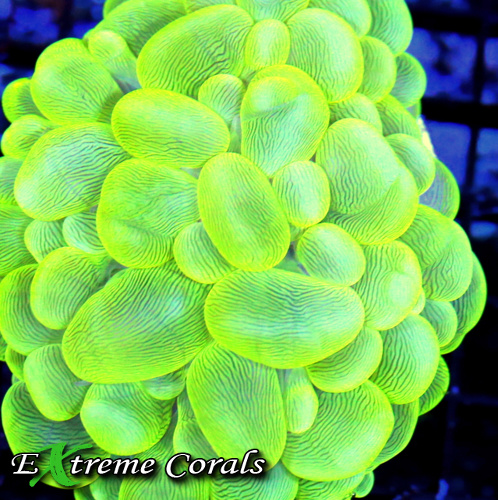
Bubble Coral has been a favorite among reef hobbyists for a long time, and it is easy to understand why. When healthy, it has a very different look from most other corals in the tank. Its inflated bubble-like vesicles create movement, texture, and visual mass that make it stand out even in a reef full of bright corals. A good specimen can become an instant focal point, especially in a tank that needs a larger, fleshy coral to break up a rock-heavy aquascape.
Bubble Coral is also popular because it gives hobbyists that dramatic LPS look without requiring the most difficult care in the hobby. It does, however, have a few traits that make proper placement and compatibility important. Like many fleshy large-polyp stony corals, it can be damaged by poor flow, rough placement, or nearby aggressive tankmates. It can also become aggressive itself once its feeding tentacles and sweepers extend, especially at night.
If you enjoy large fleshy corals with strong visual impact, Bubble Coral fits naturally alongside other pieces in our LPS corals collection. It is one of those corals that can add a softer, more inflated look to the reef and balance out the sharper shapes of branching stony corals.
What Is Bubble Coral?
Bubble Coral is most commonly associated with the genus Plerogyra, including corals such as Plerogyra sinuosa and Plerogyra simplex. These corals are known for their inflated vesicles during the day and their feeding tentacles at other times, especially after lights begin to dim. Those inflated bubbles are what give the coral its unmistakable look and make it one of the most recognizable LPS corals in the hobby.
Different specimens can vary in bubble size, body shape, and coloration. Some have larger and more dramatic inflation, while others have tighter bubble formation or a slightly different skeletal structure. In practical reefkeeping terms, though, their care approach is very similar. They should all be treated like delicate fleshy LPS corals that need stable parameters, thoughtful placement, and enough room from neighboring corals.
Why Bubble Coral Is So Popular
Bubble Coral earns its popularity for a few good reasons. It offers a unique look that many corals simply do not have. It also works well as a centerpiece coral in tanks where the goal is visual balance rather than packing every surface with frags. For many hobbyists, it delivers a lot of visual reward without demanding the kind of specialized care that some more sensitive corals require.
It is also a coral that complements a wide range of reef styles. In mixed reefs, it adds texture and contrast. In LPS-dominant tanks, it contributes fullness and motion. In systems built around a few larger statement corals, it can serve as one of the main focal points.
Is Bubble Coral Easy to Keep?
In a stable reef tank, Bubble Coral is generally considered moderate in care level. It is not usually one of the hardest corals to keep, but it is also not something you want to place carelessly and ignore. The biggest issues hobbyists run into are almost always related to placement, aggression, and tissue damage rather than anything overly complicated.
If your tank already supports fleshy LPS corals well, Bubble Coral is usually very reasonable to keep. If your system has unstable salinity, poor flow design, or aggressive coral crowding, you will likely need to address those issues first. For broader husbandry basics, our coral care guide is a helpful starting point.
Best Placement for Bubble Coral
Placement matters a lot with Bubble Coral. In most tanks, it does best in the lower to middle areas of the aquarium where the light is not overly intense and the flow is moderate to gentle. The key is making sure the tissue has room to expand fully without rubbing against rock, glass, or neighboring corals.
Bubble Coral may look manageable when first placed, but many hobbyists underestimate how much space it really needs. During the day, the inflated bubbles can expand significantly. At night, feeder and sweeper tentacles may extend farther than expected. That means giving it personal space is not optional. It is part of keeping the coral healthy and preventing coral warfare.
- Place it low to mid-level in most reef tanks
- Give it enough room for daytime inflation
- Keep it away from aggressive neighboring corals
- Avoid sharp rock where tissue can be damaged
- Do not wedge it into tight gaps in the aquascape
Bubble Coral is often happiest in an area where it can expand naturally without constant contact from anything around it. A secure, stable position with open space is usually much better than a dramatic placement that looks good at first but becomes risky once the coral inflates fully.
Lighting for Bubble Coral
Bubble Coral generally does best in low to moderate lighting, though many established systems can keep it successfully in moderate light if it is acclimated carefully. The most important thing is not to shock the coral with excessive intensity right away. Its inflated tissue can show stress if placed under stronger light than it is ready for.
A healthy Bubble Coral should inflate well and hold color without looking bleached, pinched, or chronically retracted. If it fails to expand, lighting is one factor to evaluate along with flow and nearby irritation. As with many LPS corals, starting more conservatively and adjusting slowly is usually safer than starting too bright.
If you want a better understanding of how reef lighting affects coral health and appearance, our article on understanding LED lighting is worth reading.
Water Flow: Enough to Keep It Clean, Not Enough to Beat It Up
Bubble Coral likes enough flow to keep detritus from settling on the tissue, but it does not want to be blasted. Strong direct flow can keep the bubbles from expanding normally, create tissue irritation, and lead to a generally stressed appearance. The coral should look gently animated, not pushed over or whipped around.
Broad, indirect, moderate flow is usually ideal. You want water movement that supports oxygen exchange and cleanliness without repeatedly collapsing or folding the fleshy tissue. If the bubbles look compressed or the coral stays withdrawn, the flow pattern is worth reviewing.
Water Parameters for Bubble Coral
Bubble Coral does best in stable reef conditions. Like other fleshy LPS corals, it often reacts more to instability than to minor deviation from a target number. The goal is to maintain a mature, predictable environment rather than chasing constant adjustments.
Focus on the following:
- Stable salinity
- Stable alkalinity
- Reasonable calcium and magnesium
- Consistent pH
- Low ammonia and nitrite
- Controlled nitrate and phosphate
- Consistent temperature
If your reef is swinging from one correction to the next, Bubble Coral will often show stress through reduced expansion or tissue problems. Stable systems almost always produce better long-term results with fleshy corals.
For a more detailed look at reef chemistry fundamentals, our reef tank water parameters guide is a useful supporting read.
Feeding Bubble Coral
Bubble Coral can benefit from occasional target feeding, especially in systems where you want to encourage strong tissue condition and maintain a healthy feeding response. It is a mixotrophic coral, meaning it gains nutrition from both light and captured food. Small meaty foods are typically the best option.
Good feeding practices include:
- Offer small meaty foods such as Mysis shrimp or similar appropriately sized foods
- Feed when feeding tentacles are visible or when the coral is receptive
- Reduce flow during feeding when practical
- Avoid oversized food that the coral struggles to handle
- Do not overfeed to the point that water quality declines
A moderate feeding schedule usually works better than excessive feeding. Healthy Bubble Coral does not need to be force-fed constantly. Steady reef conditions and occasional sensible feedings are usually enough to support good long-term health.
Compatibility and Aggression
This is one of the most important care points with Bubble Coral. While it can look soft and peaceful during the day, it should not be underestimated. Bubble Coral can extend sweeper tentacles and sting neighboring corals, especially at night. At the same time, its own fleshy tissue can be damaged by nearby aggressive corals if it is placed too close.
This makes spacing extremely important. Give Bubble Coral more room than you think it needs. That protects both the Bubble Coral and the corals around it. It also reduces the risk of waking up to unexpected tissue damage after nighttime aggression.
It is also wise to watch fish, crabs, and other tank inhabitants that may pick at fleshy LPS corals. Repeated irritation can keep the coral withdrawn and stressed.
Acclimation and Coral Dipping
As with most new coral additions, Bubble Coral should be acclimated thoughtfully. Temperature match carefully, light acclimate conservatively, and avoid excessive handling. Fleshy corals do not benefit from repeated repositioning in the first few days. Choose a safe spot and give the coral time to settle.
Using an appropriate coral dip as part of your normal introduction process is also a smart step. Coral dips can help reduce the risk of introducing pests or unwanted hitchhikers into the system. Just make sure any dip is used properly and according to its directions.
Common Mistakes with Bubble Coral
Giving It Too Little Space
Bubble Coral needs room for both its daytime expansion and nighttime sweeper extension. Crowding it is one of the fastest ways to create problems.
Using Too Much Direct Flow
Strong current can keep the coral from inflating properly and may lead to tissue irritation over time.
Placing It in Harsh Light Too Quickly
A rapid jump into stronger light can cause stress, especially right after introduction.
Letting Tissue Rub Against Rock
Because Bubble Coral expands so much, nearby rock or coral skeleton can become an abrasion point even if the placement seemed safe at first.
Ignoring Nighttime Aggression
Many hobbyists judge spacing by daytime appearance only. That can be a mistake with a coral that sends out sweepers after dark.
How to Tell if Bubble Coral Is Healthy
A healthy Bubble Coral usually has good daytime inflation, stable coloration, and a full fleshy appearance. It should look comfortably expanded and not constantly pinched or collapsed. The tissue should appear intact, with no obvious tears or recession.
Good signs include:
- Consistent daytime inflation
- Normal feeding response
- Healthy color
- No obvious tissue damage
- A generally stable appearance over time
Warning Signs to Watch Closely
If Bubble Coral starts to decline, the first things to review are usually flow, placement, neighboring coral aggression, and recent parameter instability. Common warning signs include reduced inflation, visible tissue recession, fading color, injury from contact, or repeated retraction.
Ask yourself:
- Is the flow too direct?
- Did the coral get moved into brighter light too fast?
- Is another coral reaching it at night?
- Is the tissue rubbing on rock or skeleton?
- Have salinity, alkalinity, or temperature changed recently?
Correcting the basics early is usually much more effective than waiting for major tissue loss before taking action.
Bubble Coral in Mixed Reefs
Bubble Coral can do very well in mixed reefs, but it needs intentional placement. It is not a coral you casually drop into a crowded garden. It is better treated like a showpiece fleshy LPS that deserves its own safe zone. If you build that space into the aquascape from the beginning, Bubble Coral can be a very rewarding addition.
It also combines nicely with other fleshy LPS corals when the tank is planned with spacing in mind. If you enjoy this style of reef, you may also want to explore our LPS corals for sale to compare other standout options.
Frequently Asked Questions About Bubble Coral
Is Bubble Coral a good beginner coral?
It can be a reasonable choice for a hobbyist with a stable reef tank, but it is not completely foolproof. Proper spacing, flow, and placement matter.
Does Bubble Coral need to be fed?
It can benefit from occasional feeding with small meaty foods, especially if you want to support strong tissue condition and feeding response.
Can Bubble Coral sting other corals?
Yes. Bubble Coral can extend sweeper tentacles, especially at night, so it should be given adequate space from neighbors.
Where should Bubble Coral be placed in the tank?
In most systems, low to mid placement with moderate to gentle indirect flow and low to moderate light works best.
Why is my Bubble Coral not inflating?
Common causes include too much direct flow, excessive light, nearby coral aggression, recent stress from handling, or unstable water chemistry.
Related Corals and Reef Topics You May Also Like
If you are interested in Bubble Coral, you may also want to explore a few related corals and reef care resources that help with compatibility, reef chemistry, and long-term LPS success:
- Browse Bubble Corals
- Shop LPS corals
- Read our full coral care guide
- Learn how to maintain your saltwater aquarium
- Improve your reef tank water parameters
- See new coral arrivals
Ready to add a coral with real texture, movement, and presence to your reef? A healthy Bubble Coral can bring a completely different look to the tank and become one of the most memorable corals in the system when it is placed and cared for properly.
Shop Bubble Coral
Explore available pieces here: Shop Bubble Corals
About the Author
Scott Shiles is the owner of ExtremeCorals.com, which he has operated for over 25 years and is recognized as one of the early dedicated live coral websites on the internet. A lifelong reef keeper since 1984, Scott has decades of hands-on experience maintaining marine aquariums and previously owned and operated a brick and mortar aquarium retail store for 10 years, including five years alongside Extreme Corals. He holds a degree in Marine Biology and has personally selected and sold hundreds of thousands of live corals. An avid scuba diver who has explored reef systems around the world, Scott shares practical coral care and husbandry knowledge based on real world reef experience.