
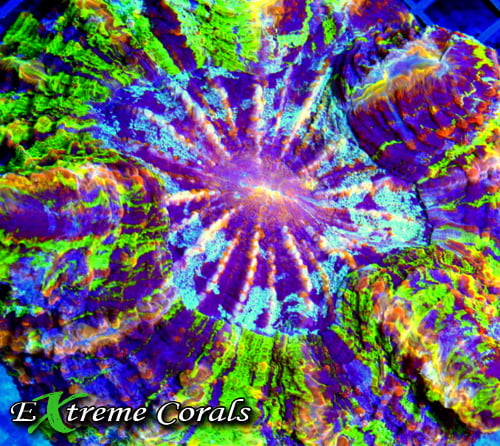
Acanthophyllia is one of those corals that can completely change the look of a reef tank. A great specimen has size, color, texture, and that unmistakable fleshy inflation that makes it feel more like a living centerpiece than just another coral on the sand bed. When it is healthy, it commands attention. When it is stressed, it shows it quickly. That is why success with Acanthophyllia usually comes down to avoiding a few very specific mistakes rather than trying to do too much.
If you are building a reef around eye-catching fleshy LPS corals, Acanthophyllia belongs on that shortlist. It pairs naturally with other standout pieces from our LPS corals collection, and it fits especially well in tanks designed around movement, color contrast, and a few larger focal specimens instead of a crowded rockscape.
The biggest thing to understand is that Acanthophyllia is not a coral you wedge into a random open spot and hope for the best. It does best when you deliberately plan for its tissue expansion, protect it from abrasion, and keep it in stable conditions. Hobbyists who treat it gently usually do very well with it. Hobbyists who blast it with flow, set it on sharp rock, or keep moving it around often struggle.
What Makes Acanthophyllia Different?
Acanthophyllia is a solitary large-polyp stony coral valued for its oversized fleshy body, bold striping, dramatic color combinations, and strong expansion. In practical reefkeeping terms, it behaves like a premium display coral. It is not something most hobbyists buy for fast growth or fragging potential. They buy it because one beautiful specimen can anchor an entire section of the tank.
That also means its strengths come with a few responsibilities. Because the tissue is thick and fleshy, it can be damaged by rough handling, sharp contact points, hermits or fish constantly irritating it, or excessive flow that keeps it from inflating naturally. If you think of it as a “place it carefully and leave it alone” coral, you are already on the right track.
Is Acanthophyllia Hard to Keep?
In a stable reef tank, Acanthophyllia is generally a moderate-care coral rather than a difficult one. It is far less about chasing complicated tricks and far more about good fundamentals. If your reef already supports fleshy LPS corals well, Acanthophyllia is usually very manageable. If your tank tends to swing in salinity, alkalinity, or nutrient levels, this coral will often tell you before other corals do.
For hobbyists who already keep Micromussa, Trachyphyllia, Wellsophyllia, or similar fleshy LPS, the care style will feel familiar. If you want to compare care approaches across coral groups, our broader coral care guide is a good supporting resource.
Best Tank Placement for Acanthophyllia
Placement is where many people either set this coral up for success or create problems right away. In most reef aquariums, Acanthophyllia does best on the sand bed or on a very stable, smooth, low-positioned platform where the tissue cannot rub against anything sharp.
The safest rule is simple: give it a soft, stable place with room around it. Do not crowd it against rock. Do not let it slump against rubble. Do not place it where snails or flow can repeatedly roll it into hard surfaces. The coral may look compact when first introduced, but once it settles and inflates, the tissue can expand significantly.
- Place it low in the aquarium in most systems
- Use sand or a smooth, stable base
- Leave room around the coral for full inflation
- Avoid sharp rock edges and unstable ledges
- Keep it away from aggressive neighbors with sweeper reach
If your tank is built mainly around rock shelves, resist the urge to perch an expensive Acanthophyllia where it looks good for the moment. These corals almost always look better long term when they are comfortable enough to stay inflated, rather than squeezed into a dramatic but risky position.
Lighting for Acanthophyllia
Acanthophyllia generally prefers lower to moderate light rather than intense top-of-the-reef exposure. Many reefkeepers run into trouble when they assume all colorful LPS should be pushed into brighter light to “bring out color.” In reality, too much light is one of the faster ways to cause stress, fading, failure to expand, or a generally irritated look.
A good starting approach is to place the coral in a lower-light area and let its behavior guide you. A healthy specimen should inflate well, hold color, and respond normally to feeding. If it stays retracted, pales, or looks irritated after introduction, lighting is one of the first things to review along with flow and recent parameter swings.
When in doubt, start lower and acclimate gradually. Acanthophyllia usually responds better to a conservative lighting approach than an aggressive one.
Flow: Gentle Is Usually Better
If there is one care point worth repeating, it is this: Acanthophyllia does not want to be blasted. Strong direct flow can keep it from inflating, whip the tissue around, and eventually create damage where the flesh repeatedly folds or contacts skeleton. What you want is enough movement to keep detritus from settling without forcing the coral to fight the current all day.
The best flow is typically gentle, indirect, and broad. You want the coral to look calm and comfortably expanded, not compressed or flapping. If you see the flesh being pushed hard in one direction, the flow is likely too much.
Water Parameters That Matter Most
Acanthophyllia is much more forgiving of imperfect “numbers” than it is of instability. Stable reef chemistry matters more than constantly adjusting the tank in search of a theoretical perfect target. Like most LPS corals, it tends to do best when salinity, alkalinity, calcium, magnesium, and temperature are kept steady and nutrient levels are not swinging wildly from ultra-clean to overfed.
Focus on consistency in these areas:
- Stable salinity
- Stable alkalinity
- Reasonable calcium and magnesium for skeletal support
- Low ammonia and nitrite
- Manageable nitrate and phosphate without harsh stripping
- Consistent temperature
Many hobbyists see better inflation and feeding response when the tank is mature and stable rather than aggressively stripped. This coral usually appreciates a reef that feels established, not one that is constantly being corrected.
Feeding Acanthophyllia the Right Way
Acanthophyllia can benefit from direct feeding, especially in systems where you want to encourage fullness, support recovery after shipping or stress, or simply maintain stronger tissue condition. Small meaty foods are usually the best fit. The key is to feed appropriately sized portions and not overwhelm the coral.
Good feeding practices include:
- Offer small meaty foods rather than oversized chunks
- Feed when tentacles or feeding response are visible
- Use pumps-off target feeding when practical
- Allow the coral time to close over food
- Do not overfeed to the point that water quality suffers
Most problems related to feeding come from excess, not from too little. A moderate, consistent feeding routine is usually more effective than infrequent heavy feedings. If the coral is healthy, inflated, and colorful, you do not need to treat every feeding like a rescue mission.
Acclimation Tips That Prevent Early Setbacks
A lot of Acanthophyllia losses start in the first week, and most of them trace back to rushed acclimation or rough placement. After arrival, temperature match carefully, avoid exposing the coral to unnecessary handling, and inspect the tissue before deciding where it will live. Once placed, give it time. Constantly moving it to “find a better spot” often creates more stress than the original placement.
Light acclimation matters too. Even if the coral came from a bright system, your light spectrum, intensity, and daily schedule may be different. Starting it lower and observing its response is usually the safer path.
Common Mistakes That Damage Acanthophyllia
Most failed Acanthophyllia stories sound very similar. The coral gets placed too high, blasted with flow, rubbed on rock, irritated by tankmates, or bounced through unstable chemistry. None of those are mysterious problems, but they happen often because hobbyists underestimate how delicate fleshy solitary corals can be.
1. Putting It on Sharp Rock
Even if the skeleton seems supported, the tissue often expands far beyond what you expect. Once that inflated flesh rubs a hard edge, damage can start.
2. Using Too Much Direct Flow
Strong flow may keep detritus off the coral, but it can also prevent normal inflation and cause ongoing tissue irritation.
3. Crowding It Near Aggressive Corals
Acanthophyllia needs space. Nearby sweepers, nighttime stinging, or constant contact can create recession that hobbyists sometimes misdiagnose as a chemistry issue.
4. Overreacting and Moving It Repeatedly
This is a classic mistake. A newly introduced coral may stay irritated for a bit. Repeatedly shifting it around the tank can make the adjustment period longer.
5. Treating It Like a Fast-Growing Utility Coral
This is a showpiece animal. It deserves deliberate placement and steady care, not a leftover spot chosen for convenience.
Signs of a Healthy Acanthophyllia
When this coral is happy, it usually tells you clearly. Healthy specimens tend to show good inflation, rich color, a full fleshy appearance, and a normal feeding response. The tissue should look substantial and secure over the skeleton rather than thin, pinched, or receding.
Positive signs include:
- Consistent expansion during the day or evening
- Good color saturation
- No visible tissue tearing
- Normal response to food
- Stable appearance from day to day
Warning Signs to Address Quickly
If an Acanthophyllia starts declining, you usually want to review lighting, flow, placement, and stability before reaching for more complicated explanations. Tissue recession, failure to inflate, repeated deflation, faded color, or visible abrasion points are all worth investigating early.
Ask yourself:
- Is it getting hit with too much flow?
- Has it been moved too often?
- Is the tissue contacting sharp surfaces?
- Has alkalinity or salinity shifted recently?
- Is another coral or tank inhabitant irritating it?
Small corrections made early are far more effective than waiting until the coral has obvious tissue loss.
Acanthophyllia vs. Other Fleshy LPS Corals
Many hobbyists shopping for Acanthophyllia are also drawn to Trachyphyllia, Wellsophyllia, Scolymia-type showpieces, and other fleshy LPS corals. The overlap makes sense. They all bring bold color and a larger visual footprint than many branching corals. The difference is that Acanthophyllia often feels especially dramatic because of its sheer inflation and presence.
If you enjoy this style of coral, you may also want to read our Trachyphyllia care guide and our Micromussa care guide for comparison with other popular LPS choices.
Who Should Buy Acanthophyllia?
Acanthophyllia is an excellent choice for reef hobbyists who want a premium display coral and already understand the value of stable parameters and deliberate placement. It is especially appealing for tanks that need a centerpiece on the lower portion of the aquascape. If you prefer corals with movement, mass, and visible individuality, this is the kind of coral that can become one of your favorite pieces in the tank.
It is not the best coral for careless placement, rough aquascapes, or tanks where fish, crabs, or unstable rockwork constantly disturb fleshy LPS. But in a stable setup, it can be one of the most rewarding corals you own.
Frequently Asked Questions About Acanthophyllia
Does Acanthophyllia belong on sand or rock?
In most reef tanks, sand is the safer choice. The main goal is protecting the tissue from sharp contact points and giving the coral room to inflate fully.
How much light does Acanthophyllia need?
Usually lower to moderate light works best. Starting conservatively and acclimating slowly is safer than exposing it to strong light right away.
Should I target feed Acanthophyllia?
Yes, it can benefit from occasional target feeding with small meaty foods, especially during acclimation or recovery, but overfeeding should be avoided.
Why is my Acanthophyllia not inflating?
The most common causes are excessive flow, too much light, recent stress from shipping or relocation, irritation from neighboring corals, or unstable water chemistry.
Is Acanthophyllia a good beginner coral?
It is not usually the first coral we would suggest for a brand-new reef keeper, but it is very realistic for hobbyists with a stable tank and some experience with fleshy LPS corals.
Related Corals and Reef Topics You May Also Like
If you are interested in Acanthophyllia, you may also want to explore a few related coral groups and educational resources that help with placement, compatibility, and overall LPS success:
- Browse LPS corals for sale
- Read our full coral care guide
- Learn about Trachyphyllia care
- Compare care needs with Micromussa
- See new coral arrivals
Ready to add a true showpiece coral to your reef? A healthy Acanthophyllia can bring instant impact, rich color, and real visual weight to the lower half of your aquascape. If your tank is stable and you give it the right placement, it can become one of the most impressive corals in the system.
Shop Acanthophyllia
Explore available pieces here: Shop Acanthophyllia corals
About the Author
Scott Shiles is the owner of ExtremeCorals.com, which he has operated for over 25 years and is recognized as one of the early dedicated live coral websites on the internet. A lifelong reef keeper since 1984, Scott has decades of hands-on experience maintaining marine aquariums and previously owned and operated a brick and mortar aquarium retail store for 10 years, including five years alongside Extreme Corals. He holds a degree in Marine Biology and has personally selected and sold hundreds of thousands of live corals. An avid scuba diver who has explored reef systems around the world, Scott shares practical coral care and husbandry knowledge based on real world reef experience.