My Cart: 0 item(s)

Extreme Corals News and Updates
Acropora Care Guide for Reef Tanks: Lighting, Flow, Growth and Water Stability
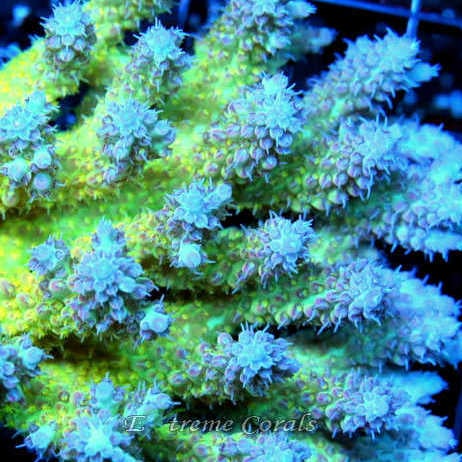
Learn how to care for Acropora in a home reef aquarium with the right lighting, flow, feeding, placement, water chemistry, and disease prevention strategies.
Learn how to care for Acropora in a home reef aquarium with the right lighting, flow, feeding, placement, water chemistry, and disease prevention strategies.
by Scott Shiles • March 24, 2025
Acropora is one of the most admired SPS corals in the reef hobby because of its branching growth, vibrant colors, and ability to create dramatic reef structure in a mature aquarium. It is also one of the more demanding corals to keep successfully. Acropora needs stable water chemistry, strong lighting, high turbulent flow, and close attention to detail if it is going to thrive long term. This guide explains the care requirements of Acropora in home reef aquariums, including water parameters, lighting, flow, feeding, tank mates, fragging, disease prevention, and how to recognize signs of trouble early.
For many reef keepers, Acropora represents the transition from a mixed beginner reef into a true SPS-focused system. Healthy Acropora colonies can create incredible height, color, and texture in an aquarium, but they usually do not tolerate instability well. That is why success with Acropora depends less on luck and more on disciplined reefkeeping habits repeated consistently over time.
Looking to build a stronger SPS reef? Browse our SPS corals for sale and explore healthy corals for your aquarium.
Introduction to Acropora
Acropora is one of the most popular and diverse genera of SPS corals. It is known for branching, plating, and tabling growth forms, along with some of the most sought-after colors in the reef hobby. Blue, green, pink, purple, and yellow Acropora varieties are especially popular among serious reef keepers.
While beautiful, Acropora is more demanding than many LPS corals and soft corals. It usually does best in stable, mature systems designed specifically to meet SPS requirements.
Natural Habitat and Why That Matters
In the wild, Acropora is commonly found in shallow reef crests and reef slopes where sunlight is intense and water movement is strong. That natural environment explains why Acropora generally needs more light and more flow than many other corals in a home aquarium.
Reef hobbyists usually get the best results when they build their Acropora care around those same natural principles:
- Strong reef lighting
- High, turbulent water movement
- Stable chemistry
- Low but controlled nutrients
Why Reef Keepers Choose Acropora
- It offers branching, plating, and tabling growth forms
- It comes in some of the most desirable colors in reefkeeping
- It can grow quickly under ideal conditions
- It helps create a mature, high-end SPS reef look
- It is a favorite challenge coral for advanced aquarists
For hobbyists who want a true SPS-dominant reef, Acropora is often one of the central corals around which the whole tank is designed.
Optimal Water Parameters
Acropora is highly sensitive to instability, so water chemistry needs to stay consistent. Stable parameters are often even more important than hitting an exact perfect number.
- Temperature: 76-80°F
- Salinity: 1.025-1.026 SG
- pH: 8.1-8.4
- Alkalinity: 8-10 dKH
- Calcium: 400-450 ppm
- Magnesium: 1300-1400 ppm
- Nitrate: below 5 ppm
- Phosphate: below 0.03 ppm
Acropora can be prone to RTN and STN when water conditions swing too quickly. That is why regular testing and careful correction are so important in SPS systems.
If you are working on chemistry stability, read our guide on pH and alkalinity in reef tanks.
Tank Size and Setup
Acropora can be kept in smaller tanks, but it usually performs best in systems large enough to provide stable water parameters and enough space for growth.
- Minimum tank size: 40 gallons or larger is a more practical starting point
- Placement: high, well-lit areas with strong flow
- Rockwork: stable structures that can support long-term colony growth
Even though some hobbyists keep Acropora in smaller systems, the challenge is much higher because small tanks experience faster parameter swings.
Lighting Requirements
Acropora requires strong lighting to maintain color and support healthy skeletal growth. In most reef tanks, it is placed in the brightest areas of the aquarium.
- PAR range: about 250-400 PAR
- Lighting type: high-output LED, metal halide, or T5 hybrid systems
- Photoperiod: around 10-12 hours with gradual ramping when possible
Strong lighting helps Acropora maintain its coloration and grow steadily, but even SPS corals should still be acclimated carefully when moved into brighter areas.
If you want to learn more about reef lighting, read our guide on reef tank lighting.
Water Flow and Circulation
Acropora needs strong, turbulent water movement. Flow is one of the most important parts of SPS husbandry because it helps remove waste, deliver oxygen and nutrients, and prevent dead spots around branches.
- Use strong, turbulent flow
- Create randomized patterns with wave makers or gyres
- Avoid narrow direct laminar blasts
- Keep detritus from settling around the colony
A healthy Acropora colony usually benefits from broad, changing movement rather than a fixed stream pointed at one side of the coral.
If you want to learn more about circulation, read our guide on water flow and coral health.
Feeding and Nutrition
Acropora gets much of its energy from photosynthesis through zooxanthellae, but it can also benefit from supplemental nutrition in a stable reef system.
- Preferred foods: phytoplankton, amino acids, zooplankton, and liquid coral foods
- Feeding frequency: about 2-3 times per week can support color and polyp extension
- Best method: broadcast feeding often works well for even distribution
Feeding should always be balanced against water quality. In Acropora systems, stability and cleanliness still matter more than aggressive feeding.
Tank Mates and Compatibility
Acropora usually works well with peaceful reef-safe fish and invertebrates, but placement near other corals should be planned carefully.
- Generally safe companions: clownfish, tangs, gobies, wrasses, and peaceful reef-safe invertebrates
- Use caution with: other SPS corals if spacing is too tight
- Avoid close placement near: LPS corals with long sweeper tentacles such as Torch, Hammer, and Frogspawn
Because Acropora grows quickly under good conditions, it also needs room so that it does not shade or outcompete nearby corals later.
Growth Rate and Propagation
Under ideal conditions, Acropora can be one of the fastest-growing SPS corals in the reef tank. Many varieties can extend branches several inches per year in well-run systems.
- Fast growth under stable conditions
- Often branches outward and upward aggressively
- Needs future space planned in advance
Fragging Acropora is common in the hobby:
- Use coral cutters or a bandsaw when appropriate
- Frag small healthy branches
- Glue pieces to frag plugs or stable rockwork
If you want to learn more about propagation, read our guide on how to frag corals.
Common Diseases and How to Prevent Them
Acropora can be vulnerable to several common SPS problems, which is why prevention and regular inspection matter so much.
- RTN (Rapid Tissue Necrosis): often linked to sudden parameter swings
- STN (Slow Tissue Necrosis): may be connected to low nutrients or alkalinity instability
- Acropora Eating Flatworms (AEFW): dip and inspect new frags carefully before adding them to the tank
Quarantine, coral dips, and stable husbandry are some of the best defenses against these problems.
Handling and Acclimation
Acropora is sensitive to environmental change, so acclimation should be done carefully.
- Drip acclimation is often a good approach
- Minimize unnecessary air exposure when moving the coral
- Acclimate to light gradually
- Avoid repeated repositioning after introduction
A careful acclimation process usually reduces stress and gives the coral a better chance of settling in successfully.
Maintenance and Cleaning
Acropora tanks usually reward strict maintenance routines.
- Perform regular water changes, often around 10-15% weekly
- Keep pumps and wave makers clean
- Test alkalinity, calcium, and magnesium frequently
- Watch for nutrient drift before it becomes a larger issue
SPS success often comes down to routine. Tanks that are maintained consistently usually outperform tanks that are always reacting after problems appear.
Signs of Stress and What They Mean
Acropora often shows early warning signs before major decline happens. Knowing how to read them is a big part of successful care.
- Faded or browned-out coloration: may suggest low light, excess nutrients, or imbalance
- White branch tips: can mean healthy growth or the early start of RTN/STN depending on context
- Receding tissue: check for pests, chemistry swings, or irritation from nearby corals
- Weak polyp extension: may indicate flow, lighting, or water quality issues
The earlier you catch these changes, the easier it usually is to correct the root problem.
Troubleshooting Common Issues
Color Fading
Often tied to insufficient light or excess nutrients. Review both before making large adjustments.
Sudden Tissue Loss
Check for parameter swings, frag stress, bacterial issues, or other sudden stress events.
Algae Growth on the Colony
This often suggests phosphate and nitrate control need improvement, along with stronger overall filtration or maintenance.
Related Corals You May Also Like
If you are interested in Acropora, you may also want to explore other SPS corals and related reef tank guides:
- Browse SPS corals for sale
- Montipora care guide
- Bird’s Nest coral care guide
- Pocillopora coral care guide
- LPS vs SPS corals
Ready to build a stronger SPS reef? Browse our SPS corals for sale and explore healthy Acropora for your aquarium.
Shop Acropora and SPS Corals
Explore our WYSIWYG SPS corals, new arrival corals, and featured corals to build a more colorful reef tank.
Final Thoughts
Acropora is one of the most rewarding SPS corals in the reef hobby, but it demands stability, precision, and patience. When lighting, flow, water chemistry, and maintenance all work together, Acropora can become one of the most impressive and visually striking parts of a home reef aquarium.
Frequently Asked Questions
Q: How fast does Acropora grow?
A: Under ideal conditions, Acropora can grow several inches per year, making it one of the faster-growing SPS corals.
Q: Can Acropora be kept in a nano tank?
A: It is possible, but much more difficult. Small tanks experience faster parameter swings, which Acropora usually does not tolerate well.
Q: Does Acropora require target feeding?
A: Not necessarily. Broadcast feeding with phytoplankton, amino acids, or fine coral foods often works well.
Q: How can I tell if my Acropora is unhealthy?
A: Look for tissue loss, faded color, weak polyp extension, or rapid changes in branch appearance.
Q: Can Acropora be placed near other corals?
A: Yes, but it should be spaced carefully. It grows quickly and may shade or outcompete neighboring corals, while LPS sweepers can also damage it.
About the Author
Scott Shiles is the owner of ExtremeCorals.com, which he has operated for over 25 years and is recognized as one of the early dedicated live coral websites on the internet. A lifelong reef keeper since 1984, Scott has decades of hands-on experience maintaining marine aquariums and previously owned and operated a brick and mortar aquarium retail store for 10 years, including five years alongside Extreme Corals. He holds a degree in Marine Biology and has personally selected and sold hundreds of thousands of live corals. An avid scuba diver who has explored reef systems around the world, Scott shares practical coral care and husbandry knowledge based on real world reef experience.
overall rating:
my rating:
log in to rate
Please log in to leave a comment.
For more information visit: additional resources