My Cart: 0 item(s)

Extreme Corals News and Updates
Torch Coral Mistakes: 12 Common Problems and How to Fix Them (2026)
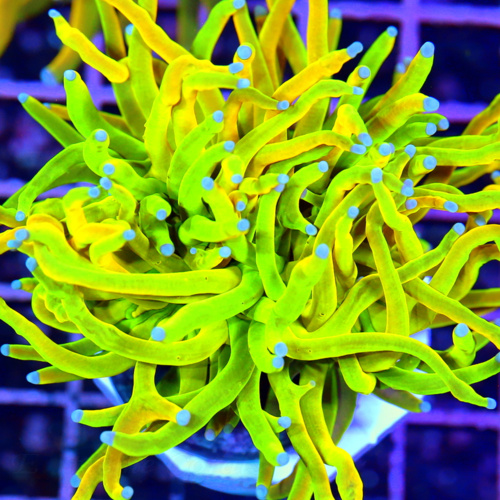
Learn the most common torch coral mistakes, what symptoms they cause, and how to fix issues like poor extension, tissue recession, brown jelly, lighting stress, and flow damage.
Learn 12 common torch coral mistakes, how to spot early warning signs, and how to fix problems with lighting, flow, recession, brown jelly, and unstable reef tank conditions.
by Scott Shiles • April 23, 2026
Torch coral is one of the most sought-after LPS corals in the reef hobby, but it is also one of the easiest to lose when a few key conditions are off. Problems like closed polyps, tissue recession, weak extension, color loss, or rapid decline usually are not random. In most cases, torch coral reacts to a small group of recurring husbandry mistakes that can be identified and corrected early. In our experience, torch corals usually do not crash without warning. They decline in stages, and the hobbyists who do best with them are the ones who learn how to read those stages before infection or severe recession takes over.
Whether you are keeping your first Euphyllia or trying to stabilize an established colony, understanding these patterns can make the difference between a torch that thrives and one that slowly fades. ExtremeCorals.com has been selecting and shipping live corals for over 25 years, with hundreds of thousands of corals handled and delivered to reef hobbyists.
If you are looking for healthy, fully conditioned torch corals, browse our WYSIWYG LPS corals and compare stable, ready-to-ship specimens.
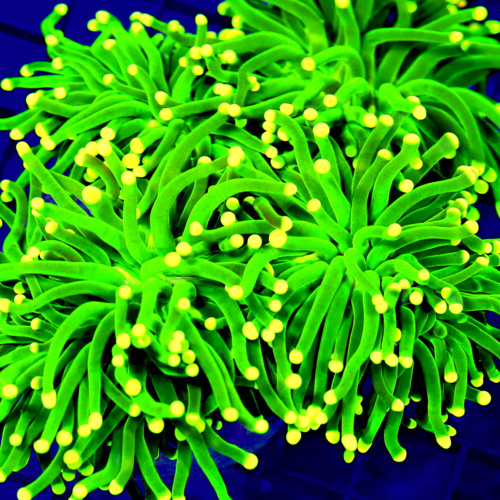
Quick Torch Coral Problem List
- Torch coral not opening fully
- Tissue recession from the skeleton
- Brown jelly infection
- Bleaching or color fading
- Flow damage and torn tissue
- Stings from nearby corals
- Stress from unstable parameters
- Slow decline after adding new livestock
Why Torch Corals Struggle So Often
Torch corals are hardy only when their environment is stable. They do not respond well to repeated swings, aggressive neighbors, rough handling, or constant changes in lighting and flow. One of the biggest mistakes reef keepers make is treating torch corals like they can adapt quickly to anything. In reality, torch corals usually decline in stages. First, extension weakens. Then color shifts. Then feeding response drops. If the cause is not corrected, tissue recession or infection often follows.
That is why early diagnosis matters so much. A torch coral that is not fully opening is already telling you something. In our experience, hobbyists often wait until there is obvious recession before reacting, but the real warning signs usually show up much earlier in posture, inflation, and feeding response.
1. Unstable Water Parameters
This is one of the most common causes of torch coral decline. Sudden swings in salinity, alkalinity, temperature, or nutrients can stress torch corals fast, even when the numbers do not look extreme on paper.
Common signs
- Reduced extension
- Receding tissue
- Failure to inflate normally
- General dull or irritated appearance
How to fix it
Focus on stability before chasing perfection. Keep salinity stable, avoid large alkalinity swings, and make sure temperature does not drift day to night. Many struggling torch corals improve once the tank becomes predictable again. Do not make several major corrections at once. Slow, controlled adjustment is usually safer than sudden improvement.
A common mistake hobbyists make is correcting alkalinity, salinity, and nutrients all at the same time after seeing a coral look stressed. In many reef tanks, that compounds the problem instead of fixing it.
2. Incorrect Lighting
Lighting that is too weak can lead to poor color and weak growth, while lighting that is too intense can cause stress, fading, or bleaching. Torch corals generally respond best when changes in intensity are gradual, not abrupt.
Common signs
- Color fading
- Bleached tips or pale tissue
- Staying withdrawn during peak light hours
- Stretching upward for more light
How to fix it
If a torch was recently moved, or if your lighting schedule was changed, start there. Use a measured acclimation approach when increasing intensity. Stable spectrum and consistent photoperiod matter more than constantly tweaking settings. If your torch has lost color after an equipment change, reduce stress first and let it settle before making additional adjustments.
If you want to understand lighting placement better, read our reef tank lighting guide.
3. Improper Water Flow
Torch corals need enough movement to keep debris from settling and to help with gas exchange, but too much direct flow can tear tissue and keep polyps from extending naturally. This is one of the easiest mistakes to overlook because many reef keepers mistake heavy whipping for healthy movement.
Common signs
- Tentacles being blasted in one direction
- Frayed or damaged tissue
- Polyps staying short and tight
- Detritus collecting around the base when flow is too weak
How to fix it
Torch corals usually do best in moderate, indirect flow that creates a gentle swaying motion rather than a harsh blast. If the tissue is being pushed hard against the skeleton, move the coral or redirect the pump. If debris is settling around the colony, increase random flow slightly.
We’ve found that “nice movement” and “too much movement” get confused all the time with torches. A healthy torch usually sways. It should not look like it is being pushed over by a powerhead.
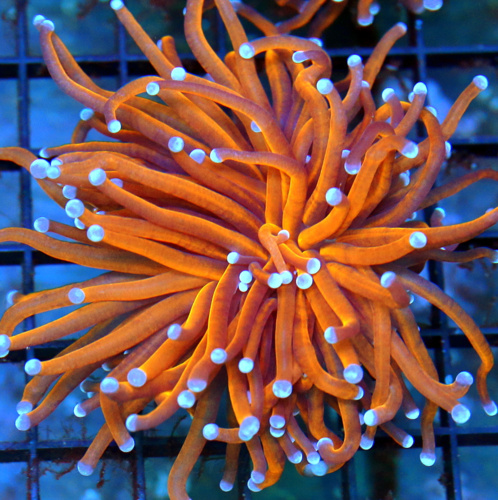
4. Poor Placement in the Tank
Placement affects almost everything: light, flow, aggression, and long-term expansion room. A torch coral may look fine on day one but start declining weeks later if it is positioned in a stressful zone.
Common signs
- Partial extension only on one side
- Repeated retraction
- Tissue wear from contact with rock
- Stings from nearby corals
How to fix it
Give torch corals room around all sides. They need enough space to expand fully and enough distance to avoid being stung by neighboring corals. Avoid wedging them into tight rockwork where flesh can rub or detritus can collect. A torch that has room to expand usually gives you much better feedback about whether the placement is working.
5. Aggression From Nearby Corals
Torch corals may look aggressive, but they can also be damaged by nearby corals, especially in mixed reefs where spacing is tight. Sweeper tentacles, chemical warfare, and direct contact all add stress.
Common signs
- Tissue damage on one side only
- Sudden decline after adding another coral nearby
- Unexplained retraction despite decent parameters
How to fix it
Increase spacing. Do not judge distance only by how close corals look when lights are on and everything is calm. Many corals extend farther at night. If a torch is losing tissue on the side facing another coral, separate them first before assuming disease.
Some sellers focus on volume or trends. Experienced coral vendors focus on long-term coral health and consistency. Placement and spacing are a big part of that with Euphyllia.
6. Inconsistent Temperature
Temperature swings are especially stressful for Euphyllia. Even if the average temperature seems acceptable, repeated daily highs and lows can weaken coral over time.
Common signs
- Random retraction
- Loss of feeding response
- Stress after hot afternoons or cold mornings
How to fix it
Use a reliable heater, monitor daily fluctuations, and make sure the tank does not creep outside a stable range. Pay extra attention during seasonal transitions, power interruptions, and heat spikes. Stability is more important than chasing a specific number.
7. Overfeeding or Underfeeding
Torch corals do not usually need heavy target feeding to survive, but poor feeding practices can still cause trouble. Overfeeding can foul the water, while underfeeding in a nutrient-starved system can limit recovery and growth.
Common signs
- Dirty water after feeding
- Poor tissue fullness
- Sluggish growth
- Excess nutrient buildup in the tank
How to fix it
Feed lightly and intentionally. Small offerings of appropriate coral foods or fine meaty foods can help, but do not force heavy feedings if the coral is stressed. A healthy torch usually benefits more from stable conditions than from excessive target feeding.
8. Nutrients Are Too High or Too Low
Torch corals tend to do poorly in tanks that swing between dirty and stripped out. Excess nutrients can contribute to nuisance algae, dull color, and bacterial problems, while ultra-low nutrient systems can leave torches pale and weak.
Common signs
- Browned out coloration
- Pale or faded tissue
- Slow recovery after stress
- Tank instability after aggressive filtration changes
How to fix it
Aim for balanced, stable nutrients rather than extremes. If you recently made a major change with carbon dosing, media, or oversized nutrient export, that shift may be the real problem. Make corrections slowly and watch how the coral responds over time.
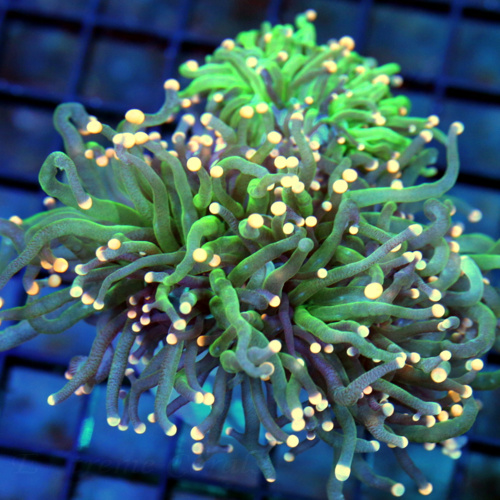
9. Skipping Quarantine on New Additions
New corals and fish can introduce pests, pathogens, and bacterial issues that quickly affect sensitive LPS corals. Many torch coral losses happen shortly after a new addition because a preventable problem entered the system unnoticed.
Common signs
- Problems appear after adding new livestock
- Sudden irritation without obvious parameter issues
- Spread of symptoms from one coral to another
How to fix it
Quarantine and inspect new additions whenever possible. Dip new corals appropriately, observe them carefully, and avoid rushing them directly into your display tank. Preventing problems is far easier than trying to save a torch after the issue spreads.
10. Brown Jelly and Other Infections
Brown jelly is one of the most feared torch coral problems because it can move fast. It often appears after tissue damage, stress, shipping shock, or sudden environmental swings.
Common signs
- Brown, slimy material on the flesh
- Rapid tissue loss
- Foul-looking decay around the head
- Decline spreading to nearby heads
How to fix it
Act quickly. Isolate the affected coral if possible, siphon away loose decaying material, and consider an appropriate coral treatment or dip based on your reef-keeping approach. Improve water quality and remove nearby stressors immediately. Once brown jelly is established, waiting usually makes the outcome worse.
11. Misreading Normal Behavior as a Problem
Not every temporary retraction means a torch coral is dying. Torches can react to feeding, flow changes, maintenance, fish activity, and nighttime cycles. Making constant adjustments every time the coral looks slightly different can create more stress than the original issue.
Common signs
- Short-term retraction after tank work
- Normal inflation changes through the day
- Healthy tissue with occasional temporary contraction
How to fix it
Look for patterns, not single moments. If tissue remains full, color is stable, and the coral reopens consistently, observation is often better than intervention. Experienced reef keepers learn that patience is part of good torch coral care.
12. Ignoring Early Warning Signs
The biggest torch coral mistake is waiting too long. Many losses could be reduced if hobbyists responded earlier to subtle signs like weaker extension, slight recession, or a reduced feeding response.
Common signs
- One head stays smaller than the others
- Minor recession at the base
- Color becoming duller over time
- Less response to stable conditions than before
How to fix it
When something changes, review the basics first: salinity, alkalinity, temperature, nutrients, placement, flow, and recent additions. In many cases, the answer is in what changed recently rather than in a mysterious disease. Torch corals usually tell you early when something is off, but you have to notice it before the damage becomes severe.
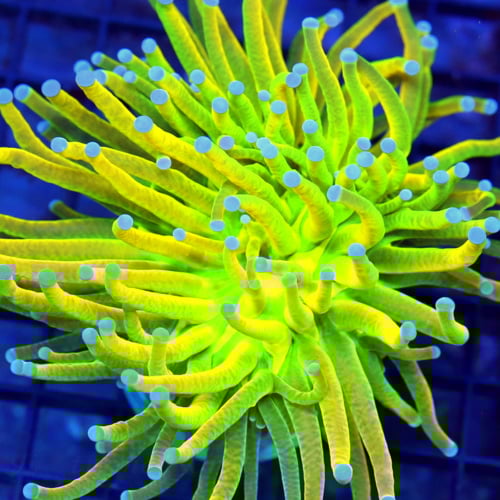
What Healthy Torch Coral Usually Looks Like
One of the best ways to avoid major losses is knowing what a strong torch coral should look like before trouble starts. In our experience, healthy torch corals usually show:
- Full, even extension across heads
- Stable color without fading or browning
- Tissue that looks thick and well attached to the skeleton
- A predictable feeding and inflation pattern
- No detritus buildup around the base
If you are selecting a healthy specimen, look for strong extension, healthy tissue, and stable coloration before buying. A common mistake hobbyists make is choosing only by name or tip color while overlooking tissue thickness and overall condition.
Best Practices for Long-Term Torch Coral Success
- Keep parameters stable and avoid sudden corrections
- Provide moderate, indirect flow
- Acclimate carefully to lighting changes
- Leave enough room around the coral for full expansion
- Watch for aggression from nearby corals
- Inspect new additions before they enter the display tank
- Respond early to reduced extension or recession
Related Corals You May Also Like
If you are interested in torch coral, you may also want to explore other Euphyllia and related reef tank guides:
- Browse LPS corals for sale
- Torch coral care guide
- Torch coral fragging guide
- Euphyllia coral care guide
- LPS coral care overview
Ready to add a healthy torch coral to your reef tank? Browse our LPS corals for sale and explore healthy additions for your aquarium.
Shop Torch Corals and LPS Corals
Explore our WYSIWYG LPS corals, new arrival corals, and featured corals to build a more colorful reef tank.
Final Thoughts
Torch corals can be incredibly rewarding, but they are not forgiving of repeated mistakes. Most torch coral problems come back to the same fundamentals: stability, placement, flow, lighting, and observation. If your torch coral is not opening, is losing tissue, or is starting to fade, the answer is usually not a magic product. It is usually a husbandry issue that needs to be identified and corrected.
The good news is that many torch corals recover well when the cause is caught early. Strong extension, healthy color, and steady growth are usually the result of a stable reef, not constant intervention.
Frequently Asked Questions
Q: Why is my torch coral not opening fully?
A: Common causes include unstable parameters, excessive direct flow, aggressive neighbors, recent lighting changes, or early infection.
Q: Can torch corals recover from tissue recession?
A: Yes, many can recover if the cause is caught early and the coral is stabilized before recession becomes severe.
Q: What flow is best for torch coral?
A: Moderate indirect flow is usually best. The tentacles should sway gently, not whip in one direction.
Q: How do I know if my torch coral is healthy before buying?
A: Look for strong extension, thick healthy tissue, stable coloration, and no visible recession at the base.
Q: Is brown jelly always random?
A: Usually not. In
overall rating:
my rating:
log in to rate
Please log in to leave a comment.
For more information visit: additional resources