My Cart: 0 item(s)

Extreme Corals News and Updates
Care Requirements of Blastomussa in Home Reef Aquariums
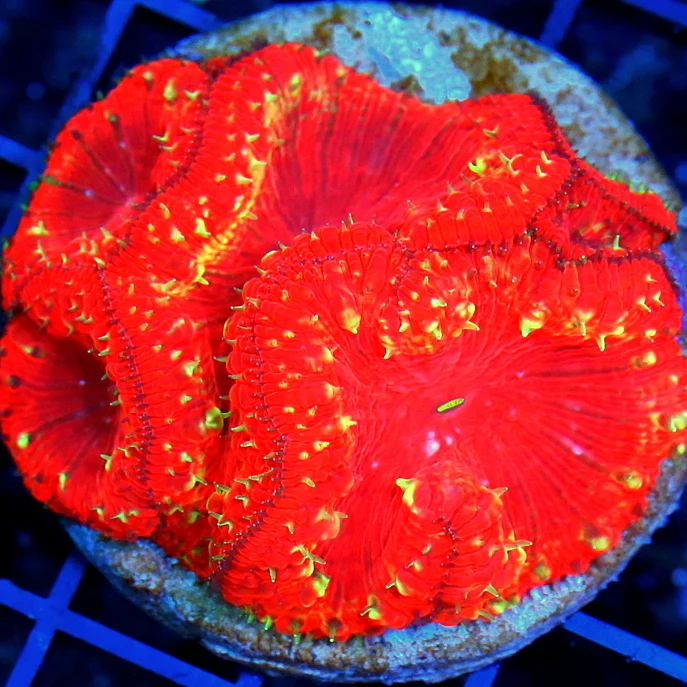
Learn how to care for Blastomussa coral in a home reef aquarium, including ideal placement, low-light needs, feeding, flow, compatibility, and how to spot early stress.
Learn how to care for Blastomussa coral in a reef tank with tips on low-light placement, feeding, water flow, compatibility, and stable long-term LPS coral health.
by Scott Shiles • April 16, 2026
Blastomussa Coral Care Guide: A Low-Light LPS Coral for Colorful, Peaceful Reef Tanks
Blastomussa is one of the best LPS corals for reef keepers who want bright color, fleshy texture, and a more peaceful coral that does not demand intense light or aggressive placement. Commonly called Blasto Coral, Blastomussa is prized for its rounded fleshy polyps, rich coloration, and adaptable nature in home reef aquariums. Unlike many high-energy stony corals, Blastomussa often thrives in calmer, lower-light zones, which makes it especially useful in mixed reefs, shaded aquascapes, and reef tanks that need a softer visual contrast.
For hobbyists who want a coral that looks premium without acting temperamental, Blastomussa is a great choice. It is suitable for both beginners and experienced reef keepers, grows at a manageable pace, and usually coexists well with other reef-safe livestock when given enough room. This guide explains the care requirements of Blastomussa in home reef aquariums, including where to place it, how to feed it, what kind of lighting and flow it prefers, and how to keep it healthy over the long term.
Looking to add a colorful, fleshy coral to your reef tank? Browse our LPS corals for sale and explore healthy corals for your aquarium.
Why Blastomussa Fits So Well in Home Reef Aquariums
Blastomussa stands out because it solves a common reefkeeping problem: not every tank needs another high-light, high-flow coral. Many reef aquariums have lower, calmer areas that still need color and life, and Blastomussa fits beautifully into those spaces.
- Peaceful and reef-safe with most compatible tank mates
- Low light requirement compared with many other stony corals
- Hardy and beginner-friendly in a stable system
- Moderate growth rate that does not overwhelm the aquascape
This makes Blastomussa especially appealing in mixed reefs where some corals want strong light and flow while others need gentler conditions.
What Blastomussa Looks Like in a Healthy Tank
A healthy Blastomussa usually looks inflated, rounded, and colorful. Its polyps should appear full rather than pinched, and the colony should have a calm, settled look in the tank instead of looking irritated or compressed by water movement.
Blastomussa commonly appears in colors such as:
- Red
- Green
- Purple
- Blue
Because the polyps are thick and fleshy, Blastomussa adds a softer and more dimensional look than many flatter or more rigid corals. That is part of what makes it so visually useful in aquascaping.
Natural Habitat and What That Means for Care
Blastomussa is native to the Indo-Pacific, especially around Australia, Indonesia, the Philippines, and the Great Barrier Reef. In nature, it is commonly found in sheltered reef slopes and lagoons, where light is lower and water movement is moderate. It is also associated with nutrient-richer conditions than many more delicate corals.
That natural background helps explain why Blastomussa usually does so well in home aquariums. It is naturally suited to:
- Shaded or indirect lighting areas
- Moderate surrounding water movement
- Stable but not ultra-sterile reef systems
In other words, Blastomussa often succeeds where many more demanding corals would not.
Start With Placement Before Anything Else
If you want Blastomussa to do well, placement should be your first decision, not your last. Many problems with this coral start when it is put too high, too bright, or too close to more aggressive species.
- Best tank zone: low to mid-level areas
- Best light zone: shaded or indirect lighting areas
- Best base: rockwork or a stable sand-bed position
- Spacing: leave room for full polyp expansion
Blastomussa is one of those corals that often looks dramatically better when moved into a calmer, lower-light area rather than a bright showcase zone.
Lighting Requirements
Blastomussa prefers low to moderate lighting, which is one of the main reasons it is so adaptable in home reef aquariums. It can be a strong choice for tanks with shaded areas that would not be suitable for more demanding LPS or SPS species.
- PAR range: 50-150 PAR
- Lighting type: LED, T5, or hybrid systems with adjustable intensity
- Lighting schedule: 8-10 hours per day with smooth ramp-up and ramp-down
If exposed to too much light too quickly, Blastomussa may fade, bleach, or stay retracted. It almost always benefits from gradual acclimation rather than abrupt exposure.
If you want to understand reef lighting better, read our guide on reef tank lighting.
Water Flow and Circulation
Blastomussa usually does best with moderate, indirect flow. It needs enough circulation to keep detritus from settling on the tissue, but not so much that the polyps stay tight and irritated.
- Moderate indirect flow is usually ideal
- Avoid strong direct currents
- Randomized movement helps mimic natural conditions
- Too much direct flow can keep polyps retracted
A good rule with Blastomussa is simple: the coral should move very little, but the water around it should not feel dead or stagnant.
If you want to learn more about circulation, read our guide on water flow and coral health.
Water Parameters for Long-Term Stability
Blastomussa is forgiving compared with many stony corals, but it still performs best when the tank stays consistent. Stable conditions help preserve tissue fullness, improve color, and reduce the chance of bacterial problems or recession.
- Temperature: 76-80°F
- Salinity: 1.024-1.026 SG
- pH: 8.1-8.4
- Alkalinity: 8-10 dKH
- Calcium: 400-450 ppm
- Magnesium: 1250-1350 ppm
- Nitrate: 5-10 ppm
- Phosphate: 0.03-0.07 ppm
Weekly water changes of about 10-15% help maintain nutrient balance and overall stability.
If you are working on chemistry stability, read our guide on reef tank water parameters.
Feeding and Nutrition
Blastomussa benefits from both photosynthesis and direct feeding. While it can survive without heavy feeding, target feeding often improves growth and color vibrancy.
- Preferred foods: mysis shrimp, brine shrimp, reef roids, and marine pellets
- Feeding frequency: 2-3 times per week
- Best method: target feeding for efficient nutrient uptake
Blastomussa often responds well to direct feeding, especially when done with small portions that the polyps can handle comfortably. Like many LPS corals, it usually rewards regular moderate feeding more than occasional heavy feeding.
Tank Mates and Compatibility
One of Blastomussa’s strongest qualities is that it is generally peaceful. It is usually compatible with a wide range of reef-safe fish and invertebrates, which makes it especially useful in mixed reef systems.
- Safe companions: clownfish, gobies, blennies, shrimp, and snails
- Use caution with: other LPS corals that need room to expand
- Avoid: certain angelfish and butterflyfish that may nip at polyps
Blastomussa is not usually the coral creating problems. More often, it is the coral that needs protection from aggressive neighbors.
Growth Rate and Propagation
Blastomussa has a moderate growth rate. It typically forms new polyps gradually, which allows it to build into a fuller colony without overwhelming surrounding rockwork.
- Moderate growth over time
- Forms colonies by budding new polyps
- Can be fragged with a bone cutter or coral saw
This slower, steadier growth is part of what makes Blastomussa so easy to integrate into reef aquascapes. It adds beauty without becoming a maintenance problem too quickly.
If you want to learn more about propagation, read our guide on how to frag corals.
Common Diseases and How to Prevent Them
Blastomussa is hardy, but several common issues can still affect it if tank conditions decline.
- Brown Jelly Disease: may require iodine dips and improved water quality
- Tissue Recession: often linked to unstable parameters or excessive flow
- Algae Overgrowth: can smother the coral when nutrients are excessive
Good maintenance, careful placement, and stable chemistry are the best ways to avoid most major problems with Blastomussa.
Signs of Stress You Should Not Ignore
Blastomussa usually gives clear signals when something is off. The earlier you notice them, the easier it is to correct the issue.
- Shrunken or closed polyps: often linked to poor water quality, too much flow, or lighting stress
- Faded or bleached coloration: often suggests excessive light
- Receding tissue: can indicate instability or underfeeding
Blastomussa is a good communicator. A healthy colony looks relaxed and fleshy, while a stressed one usually tells you fairly clearly that something needs to change.
Troubleshooting Common Problems
Bleaching
Usually caused by excessive light. Move the coral to a lower-light zone and allow it to recover gradually.
Pest Infestation
Inspect regularly for flatworms, nudibranchs, or parasitic snails.
Slow Growth
Increase target feeding slightly and confirm that alkalinity and calcium remain stable.
Best Tank Setup for Blastomussa
Blastomussa usually performs best in reef tanks with:
- Low to moderate lighting
- Moderate indirect flow
- Stable water chemistry
- Regular target feeding
- Enough room from aggressive neighboring corals
It is especially useful in lower-light zones that need color and life but are not ideal for more demanding stony corals.
Related Corals You May Also Like
If you are interested in Blastomussa, you may also want to explore other colorful fleshy LPS corals and related reef tank guides:
- Browse LPS corals for sale
- Blastomussa care guide
- Acan Lords vs Blastomussa vs Micromussa
- Lobophyllia care guide
- LPS corals overview
Ready to add a peaceful, colorful Blastomussa to your reef tank? Browse our LPS corals for sale and explore healthy additions for your aquarium.
Shop Blastomussa and LPS Corals
Explore our WYSIWYG LPS corals, new arrival corals, and featured corals to build a more colorful reef tank.
Final Thoughts
Blastomussa is one of the best corals for reef keepers who want bright color, fleshy texture, and a more forgiving LPS species that does well in lower-light conditions. With careful placement, moderate flow, stable water quality, and regular feeding, Blastomussa can become a long-term highlight in a home reef aquarium without making the tank harder to manage.
Frequently Asked Questions
Q: How fast does Blastomussa grow?
A: It has a moderate growth rate and gradually forms new polyps over time.
Q: Can Blastomussa be kept in a nano tank?
A: Yes, but stable parameters and enough expansion space matter.
Q: Does Blastomussa require direct feeding?
A: Not strictly, but target feeding improves growth and color.
Q: How can I tell if my Blastomussa is unhealthy?
A: Watch for retracted polyps, faded color, or slow tissue recession.
Q: Can Blastomussa be placed near other corals?
A: Yes, but it should be spaced away from more aggressive corals.
Q: What is the best way to frag Blastomussa?
A: Use a bone cutter or coral saw to carefully separate healthy polyps.
About the Author
Scott Shiles is the owner of ExtremeCorals.com, which he has operated for over 25 years and is recognized as one of the early dedicated live coral websites on the internet. A lifelong reef keeper since 1984, Scott has decades of hands-on experience maintaining marine aquariums and previously owned and operated a brick and mortar aquarium retail store for 10 years, including five years alongside Extreme Corals. He holds a degree in Marine Biology and has personally selected and sold hundreds of thousands of live corals. An avid scuba diver who has explored reef systems around the world, Scott shares practical coral care and husbandry knowledge based on real world reef experience.
overall rating:
my rating:
log in to rate
Please log in to leave a comment.
For more information visit: additional resources