My Cart: 0 item(s)

Extreme Corals News and Updates
Keeping Euphyllia Healthy in a Reef Tank: Lighting, Flow, Placement and Feeding Tips
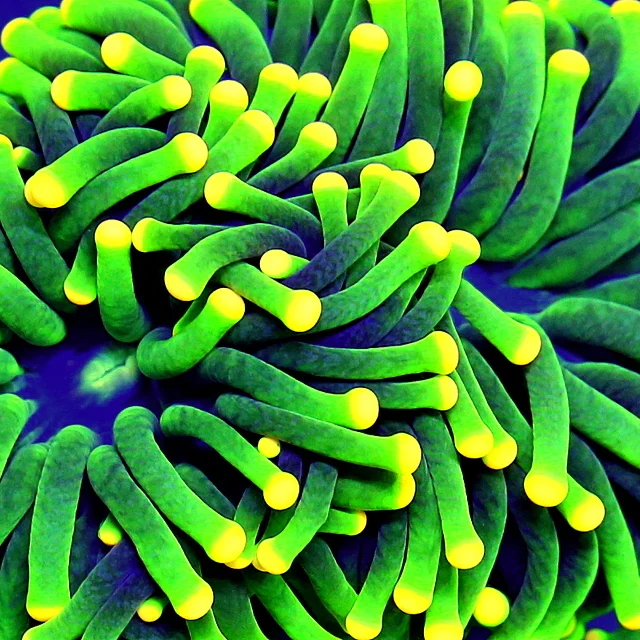
Euphyllia coral care guide – Learn how to maintain this flowing and semi-aggressive LPS coral in your reef aquarium
Euphyllia corals, including Torch, Hammer, and Frogspawn varieties, are stunning LPS corals from the Indo-Pacific. This guide covers lighting, flow, feeding, and placement to ensure success in your home reef tank.
by Scott Shiles • April 14, 2025
Looking to add Euphyllia corals to your reef tank? Browse our LPS corals for sale and explore colorful, flowing corals for your aquarium.
Euphyllia corals are some of the most popular LPS corals in reef aquariums because they combine movement, color, and strong visual impact with moderate care requirements. This guide explains how to keep Euphyllia healthy in a home reef tank, including lighting, flow, placement, feeding, water chemistry, and the most common mistakes that lead to stress or tissue damage.
Euphyllia is one of the most important coral groups in the reef hobby because it includes several of the most sought-after display corals in home aquariums. Torch corals, hammer corals, frogspawn corals, and grape corals all fall into this group. Their flowing tentacles and bright coloration make them a natural focal point in mixed reefs, but they also need careful spacing and stable water conditions to do well long term.
What Is Euphyllia?
Euphyllia is a group of large polyp stony corals known for long tentacles, fleshy tissue, and strong extension in moderate reef flow. In the hobby, Euphyllia usually refers to several closely related corals that are popular for mixed reefs and LPS-dominant aquariums.
- Torch coral – Known for long flowing tentacles and strong movement
- Hammer coral – Recognized by hammer- or anchor-shaped tips
- Frogspawn coral – Known for rounded branching tentacle tips
- Grape coral – Another Euphyllia-type coral with fleshy movement and expansion
These corals are popular because they offer a high-end display look without requiring the intense lighting and ultra-stable demand of many SPS corals.
Why Euphyllia Corals Are So Popular
- They create natural movement in a reef tank
- They come in highly desirable color forms
- They work well as centerpiece corals
- Branching varieties can often be fragged more easily
- They fit well in mixed reefs and LPS-focused systems
Euphyllia is often the coral group that moves hobbyists from beginner soft coral systems into more serious LPS reef keeping. They are beautiful, rewarding, and relatively forgiving when their key needs are met.
Natural Habitat and Why It Matters
In the wild, Euphyllia corals are found in the Indo-Pacific, including areas such as Australia, Indonesia, Fiji, the Philippines, and the Great Barrier Reef. They are commonly associated with lagoonal reef slopes, sheltered reef crests, and deeper reef sections where light is moderate and water movement is gentler than the highest-energy parts of the reef. That natural setting helps explain why they usually do better in moderate light and indirect flow instead of intense blasting conditions. :contentReference[oaicite:1]{index=1}
Euphyllia Water Parameters
Stable parameters are one of the biggest keys to long-term success with Euphyllia. The live article recommends the following general ranges, and those are strong target points for a healthy home reef system. :contentReference[oaicite:2]{index=2}
- Temperature: 76-80°F
- Salinity: 1.024-1.026
- pH: 8.1-8.4
- Alkalinity: 8-10 dKH
- Calcium: 400-450 ppm
- Magnesium: 1250-1350 ppm
- Nitrate: 5-10 ppm
- Phosphate: 0.03-0.07 ppm
Numbers matter, but stability matters more. Euphyllia often tolerates a reasonable range, but quick swings in alkalinity, salinity, or nutrient levels can cause retraction, poor extension, or tissue recession.
Lighting for Euphyllia Corals
The live article recommends moderate lighting and gives a PAR range of 100-200, which is a very workable target for most Euphyllia placements in a reef aquarium. :contentReference[oaicite:3]{index=3}
- Target moderate reef lighting
- Aim for roughly 100-200 PAR as a starting range
- Avoid sudden jumps in intensity
- Acclimate slowly when moving a coral higher in the tank
Too much light can lead to bleaching, tissue stress, or a coral that stays retracted. Too little light can reduce coloration and long-term growth. In most tanks, Euphyllia performs best when placed where it gets enough light to color up without being pushed into harsh, overly bright exposure.
If you are still fine-tuning your system, learn more about coral lighting.
Water Flow and Tentacle Movement
The live article recommends moderate, indirect, randomized flow and warns against strong direct current because it can cause tissue recession. :contentReference[oaicite:4]{index=4}
- Moderate indirect flow is ideal
- Avoid hard, direct blasts from powerheads
- Look for gentle swaying movement, not violent whipping
- Randomized flow patterns usually work better than constant directional flow
This is one of the most important placement factors for Euphyllia. The coral should move, but it should not look like it is being beaten by current. Over time, excessive flow can damage delicate tissue where it meets the skeleton.
You can also read our reef flow guide.
Best Placement for Euphyllia in a Reef Tank
The live article recommends placing Euphyllia in the mid to lower sections of the tank and giving it enough room for tentacle extension. It also notes a practical minimum tank size of 30 gallons or larger. :contentReference[oaicite:5]{index=5}
- Start in the middle to lower part of the tank
- Leave enough room for tentacles to expand fully
- Keep distance from neighboring corals
- Use stable rock placement with room to grow
Spacing is critical. Euphyllia is semi-aggressive and can sting nearby corals with sweeper tentacles. If the coral looks good in the morning but neighboring corals start showing damage later, crowding may be part of the problem.
Branching vs Wall Euphyllia
Not all Euphyllia grows the same way. Some forms are branching, while others grow as wall structures. This matters for fragging, placement, and long-term care.
- Branching varieties: Easier to frag and often easier to manage in home aquariums
- Wall varieties: Often more dramatic in shape, but harder to frag and sometimes more delicate if damaged
The live article specifically notes that branching Euphyllia can be fragged using a bone cutter, while wall varieties are much more difficult to propagate. :contentReference[oaicite:6]{index=6}
Feeding Euphyllia Corals
The live article notes that Euphyllia is photosynthetic but benefits from direct feeding, and it recommends foods such as mysis shrimp, brine shrimp, reef foods, and amino support 2-3 times per week. :contentReference[oaicite:7]{index=7}
- Target feed 2-3 times per week if the coral is healthy and extended
- Use small meaty foods or suitable reef coral foods
- Feed gently rather than overloading the coral
- Avoid overfeeding the whole tank just to feed one coral
Feeding is not always required for survival, but it can help improve fullness, growth, and overall response, especially in lower-nutrient systems.
Tank Mates and Compatibility
The live article identifies clownfish, gobies, blennies, shrimp, and snails as safer companions, while warning against aggressive fish such as certain angelfish and butterflyfish that may nip at tentacles. It also cautions that Euphyllia can sting other LPS corals and should be spaced out. :contentReference[oaicite:8]{index=8}
- Generally safe with peaceful reef fish
- Works well in mixed reefs with careful spacing
- Avoid known coral-nipping fish
- Do not crowd it next to other fleshy LPS corals
Compatibility is not only about fish. It is also about where the coral sits in relation to other corals and how much room it has to expand without contact.
Growth Rate and Fragging
The live article describes Euphyllia as having a moderate growth rate and notes that branching forms can be propagated more easily than wall forms. :contentReference[oaicite:9]{index=9}
- Expect moderate growth under stable conditions
- Branching forms are usually easier to frag safely
- Growth improves with stable alkalinity, calcium, and feeding support
- Crowding becomes more important as colonies expand
If a colony is doing well, growth can gradually turn it into a centerpiece coral, which is one reason planning for space matters from the beginning.
Common Euphyllia Problems
Brown Jelly Disease
The live article identifies brown jelly disease as a major bacterial issue and recommends improved water quality plus iodine dipping as a response. :contentReference[oaicite:10]{index=10}
Tissue Recession
The live article links tissue recession to unstable parameters, excessive flow, or aggression from nearby corals. :contentReference[oaicite:11]{index=11}
Bleaching
The live article notes that bleaching can result from excessive light exposure and recommends moving the coral to a lower-light area. :contentReference[oaicite:12]{index=12}
Pests and Irritation
The live article advises regular inspection for flatworms, nudibranchs, and parasitic snails. :contentReference[oaicite:13]{index=13}
In practical reefkeeping, the biggest problems usually come down to four things: too much flow, too much light, unstable chemistry, or poor spacing.
Signs Your Euphyllia Is Stressed
The live article highlights shrunken tentacles, faded color, retracted polyps, and receding tissue as warning signs. :contentReference[oaicite:14]{index=14}
- Shrunken or retracted tentacles
- Faded or washed-out color
- Receding tissue at the skeleton
- Failure to expand even when lights and flow seem normal
These signs should not be ignored. Euphyllia usually tells you something is wrong before total damage happens.
How to Acclimate Euphyllia
The live article recommends drip acclimation and minimizing handling because the coral’s fleshy tissue is easy to damage. :contentReference[oaicite:15]{index=15}
- Acclimate slowly to water conditions
- Handle carefully and avoid squeezing tissue
- Start in a moderate placement rather than the brightest part of the tank
- Watch response for several days before moving it again
Patience matters. One of the easiest ways to stress Euphyllia is to move it repeatedly before it has had time to settle.
Related Corals You May Also Like
If you are interested in Euphyllia, you may also want to explore other flowing LPS corals and related reef-building corals:
- Browse LPS corals for sale
- Torch coral care guide
- Hammer coral care guide
- LPS corals overview
- New arrival corals
Ready to build a flowing LPS reef? Browse our Euphyllia and LPS corals for sale and explore healthy, colorful corals for your reef tank.
Shop Euphyllia Corals
Explore our WYSIWYG LPS corals and find torch, hammer, frogspawn, and other flowing corals ready for your reef aquarium.
Frequently Asked Questions
Q: What PAR does Euphyllia need?
A: A moderate range around 100-200 PAR is a strong starting point for most Euphyllia placements.
Q: Does Euphyllia need direct feeding?
A: It can survive through photosynthesis, but target feeding 2-3 times per week can help support growth and extension.
Q: Where should Euphyllia be placed in a reef tank?
A: Most Euphyllia does best in the middle to lower areas of the tank with moderate indirect flow.
Q: Why is my Euphyllia not opening fully?
A: Common causes include too much flow, too much light, unstable parameters, or irritation from nearby corals.
Q: Can Euphyllia sting other corals?
A: Yes. Euphyllia is semi-aggressive and should be spaced away from neighboring corals to prevent stinging damage.
About the Author
Scott Shiles is the owner of ExtremeCorals.com, which he has operated for over 25 years and is recognized as one of the early dedicated live coral websites on the internet. A lifelong reef keeper since 1984, Scott has decades of hands-on experience maintaining marine aquariums and previously owned and operated a brick and mortar aquarium retail store for 10 years, including five years alongside Extreme Corals. He holds a degree in Marine Biology and has personally selected and sold hundreds of thousands of live corals. An avid scuba diver who has explored reef systems around the world, Scott shares practical coral care and husbandry knowledge based on real world reef experience.
overall rating:
my rating:
log in to rate
Please log in to leave a comment.
For more information visit: additional resources