My Cart: 0 item(s)

Extreme Corals News and Updates
Coral Diseases in Reef Tanks: Common Infections, Warning Signs and Prevention
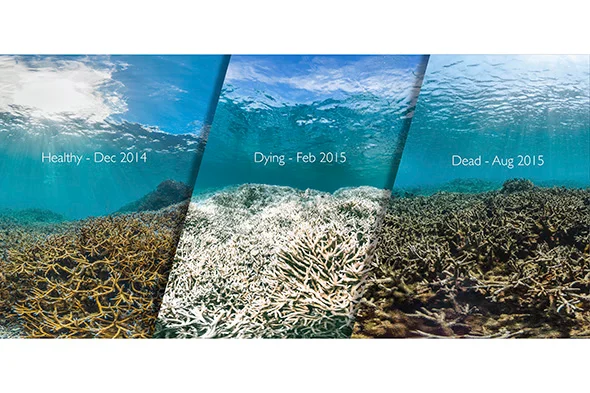
Learn the most common coral diseases seen in reef tanks, how to spot early warning signs, and the best ways to prevent and respond to coral health problems.
by Scott Shiles • October 17, 2023
Zoanthids Coral Care, SPS Coral Care, LPS Coral Care, Soft Corals Care, All Corals
Coral diseases are one of the biggest threats to reef tank stability because they can spread quickly, damage valuable corals, and turn small stress issues into major losses if they are not caught early. Reef tanks are delicate ecosystems, and when coral health starts to decline, disease often follows stress, poor water quality, physical damage, or unstable conditions. This guide explains some of the most common coral diseases seen in reef tanks, how to recognize them, and the most important steps reef keepers can take to prevent and respond to these problems.
For many reef hobbyists, coral disease can feel confusing at first because different problems often look similar in the early stages. A coral may bleach, lose tissue, develop mucus, or show a strange band of discoloration, and the underlying cause may involve infection, stress, injury, or a combination of factors. Learning the warning signs and understanding prevention is one of the best ways to protect a reef tank long term.
Looking to keep your reef tank healthier and more stable? Browse our new arrival corals and support them with strong reefkeeping habits and proper quarantine practices.
Why Coral Diseases Happen in Reef Tanks
Coral diseases usually do not appear out of nowhere. In many cases, they take hold after the coral has already been stressed by poor water quality, unstable temperature, physical damage, aggressive neighbors, pests, or sudden environmental changes.
- Unstable water parameters can weaken coral health
- Physical tissue damage can open the door to infection
- Poor flow or dirty water can increase bacterial pressure
- Stress from lighting or temperature swings can make corals more vulnerable
- New additions can introduce pests or pathogens into the system
This is why prevention is always better than treatment. A strong, stable reef tank is the best first defense against coral disease.
White Band Disease
White Band Disease is one of the most well-known coral illnesses, especially in Acropora and other acroporid corals. It typically appears as a slow-moving band of dead white skeleton where living tissue has receded.
- Often starts near the base of the coral
- Moves upward over time
- Leaves bare white skeleton behind
- Often linked to bacterial infection and environmental stress
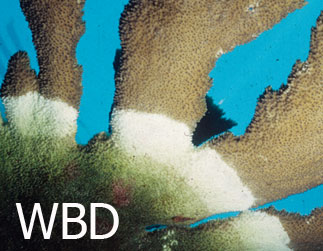
Quarantining new corals, maintaining strong water quality, and minimizing stress are some of the best ways to reduce the risk of White Band Disease in a reef tank.
Rapid Tissue Loss
Rapid Tissue Loss, sometimes called RTN or RTL depending on usage, is one of the most alarming coral problems because it can progress very quickly. Healthy tissue may seem to peel away or disappear in a short period of time, exposing the skeleton beneath.
- Tissue loss can happen very fast
- Often follows severe stress or damage
- May be linked to pathogens, instability, or physical injury
- Can spread quickly if the cause is not addressed
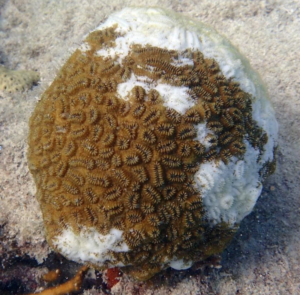
Prevention depends on keeping water quality high, avoiding tissue injury during maintenance, and allowing enough space between corals so they do not damage each other.
Brown Jelly Disease
Brown Jelly Disease is one of the most feared coral infections in reef tanks because it can move quickly across fleshy LPS corals and often appears as a brown, slimy, mucous-like mass on the coral.
- Usually starts as a localized brown spot or slime patch
- Often spreads rapidly across damaged or weakened tissue
- Can affect fleshy corals especially hard
- Often linked to bacterial infection and poor conditions
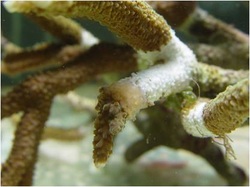
Quarantine, fast response, good flow, and clean water are especially important when dealing with Brown Jelly Disease. Waiting too long can mean losing the coral completely.
Black Band Disease
Black Band Disease is identified by a dark microbial band that moves across the coral’s surface, killing tissue as it progresses. It is one of the more visually distinctive coral diseases.
- Appears as a dark band on the coral
- Destroys tissue as it advances
- Often associated with bacterial communities
- Can be encouraged by poor flow and high organic load
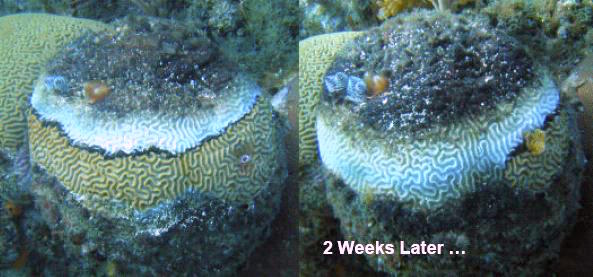
Good circulation, regular maintenance, and proper lighting can help reduce the conditions that allow Black Band Disease to develop.
Coral Bleaching
Coral bleaching is not a disease in the same way bacterial infections are, but it is one of the most serious coral health threats in reef tanks because it leaves the coral weakened and more vulnerable to further decline.
- Corals turn pale or white
- Usually caused by temperature stress, lighting issues, or poor water quality
- Occurs when corals lose or expel zooxanthellae
- Severely weakens the coral if not corrected
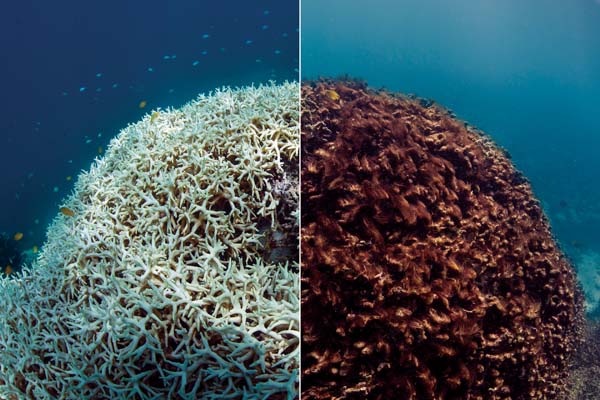
Stable temperature, proper lighting acclimation, and strong water quality are some of the most important tools for preventing bleaching in home aquariums.
Early Warning Signs of Coral Disease
Many coral problems are much easier to manage if they are caught early. Some of the most common warning signs include:
- Sudden tissue recession
- Brown mucus or slime
- Dark moving bands on the coral
- Pale or bleached tissue
- Polyp retraction that does not improve
- Color loss or unusual tissue texture
When these signs appear, it is important to act quickly instead of waiting to see if the coral improves on its own.
How to Prevent Coral Disease in Reef Tanks
Prevention is always easier than trying to save a coral after disease has already taken hold. The best prevention plan focuses on reef tank stability and careful coral handling.
- Quarantine new corals before adding them to the display tank
- Maintain stable temperature, salinity, and chemistry
- Use proper lighting and avoid sudden intensity changes
- Keep nutrients controlled without causing instability
- Provide appropriate water flow for the coral species
- Avoid physical tissue damage during handling or maintenance
- Leave enough space between corals to reduce aggression and injury
Most coral disease problems become more likely when the tank is unstable or crowded, so good husbandry is the foundation of disease prevention.
What to Do if a Coral Looks Sick
If a coral shows signs of disease or rapid decline, the first step is to assess the situation calmly and respond quickly.
- Test water parameters right away
- Inspect nearby corals for aggression or contact damage
- Check for pests or obvious physical injury
- Increase observation and isolate the coral if needed
- Remove decaying tissue or infected areas when appropriate
- Review any recent tank changes that may have triggered the issue
In some cases, fragging away healthy tissue or moving the coral to a safer quarantine or treatment area may help prevent further spread.
Why Quarantine Matters So Much
One of the most important disease-prevention habits in reefkeeping is quarantining new additions. Many coral problems enter the tank with new livestock, even when the coral looks healthy at first glance.
- Quarantine helps prevent hidden infections from reaching the display
- It gives you time to inspect for pests and tissue issues
- It reduces the risk of spreading disease to established corals
- It makes treatment easier if a problem is found early
For hobbyists with expensive or established reef tanks, quarantine is one of the smartest protections available.
How Healthy Corals Help Prevent Bigger Problems
Healthy corals are naturally more resilient than stressed corals. A coral kept in the right environment is simply less likely to become diseased in the first place.
- Strong color often reflects better overall condition
- Good polyp extension usually suggests comfort and stability
- Steady growth is often a sign the environment is working
- Healthy tissue is more resistant to bacterial and stress-related decline
This is why overall coral care and disease prevention are deeply connected. Good reefkeeping habits reduce disease pressure before it starts.
Related Reef Tank Topics You May Also Like
If you want to protect your corals and improve reef tank health, these related guides may also help:
- Coral health signs guide
- How to acclimate new corals
- Reef tank water parameters
- Water flow and coral health
- Browse new arrival corals
Ready to build a healthier reef tank with stronger coral care habits? Browse our new arrival corals and support them with stable conditions and smart quarantine practices.
Final Thoughts
Coral diseases in reef tanks can be serious, but they are easier to prevent and manage when you understand the warning signs and focus on stability, quarantine, and good maintenance. White Band Disease, Rapid Tissue Loss, Brown Jelly, Black Band Disease, and bleaching all show how quickly coral health can decline when stress and poor conditions take hold. The more proactive you are, the better chance your corals have to stay healthy and thrive.
Frequently Asked Questions
Q: What is the most dangerous coral disease in a reef tank?
A: There is no single answer, but Rapid Tissue Loss and Brown Jelly Disease are especially feared because they can progress very quickly.
Q: Is coral bleaching a disease?
A: Not in the traditional infectious sense. It is a severe stress response that can leave corals weakened and vulnerable to further problems.
Q: How do I prevent coral disease?
A: Focus on quarantine, stable water quality, good flow, proper lighting, and careful coral placement.
Q: Can poor water quality cause coral disease?
A: Yes. Poor water quality often weakens corals and makes them much more vulnerable to infection and stress-related decline.
Q: Should I quarantine new corals?
A: Yes, whenever possible. Quarantine is one of the best ways to prevent diseases and pests from entering the display tank.
About the Author
Scott Shiles is the owner of ExtremeCorals.com, which he has operated for over 25 years and is recognized as one of the early dedicated live coral websites on the internet. A lifelong reef keeper since 1984, Scott has decades of hands-on experience maintaining marine aquariums and previously owned and operated a brick and mortar aquarium retail store for 10 years, including five years alongside Extreme Corals. He holds a degree in Marine Biology and has personally selected and sold hundreds of thousands of live corals. An avid scuba diver who has explored reef systems around the world, Scott shares practical coral care and husbandry knowledge based on real world reef experience.
overall rating:
my rating:
log in to rate
Please log in to leave a comment.
For more information visit: additional resources