My Cart: 0 item(s)

Extreme Corals News and Updates
Torch Coral in Reef Aquariums: Best Placement, Flow, Feeding and Long-Term Care Tips
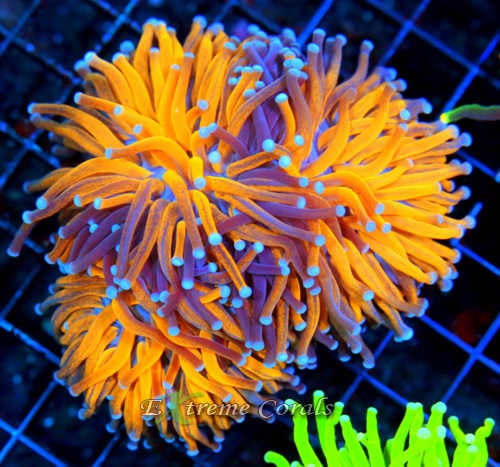
Learn how to care for torch coral in a reef tank with the right lighting, water flow, placement, feeding, and stable conditions to support healthy long-term growth.
Learn how to care for torch coral in a reef tank with tips on lighting, flow, placement, feeding, spacing, and water stability for healthy long-term growth.
by Scott Shiles • February 27, 2023
Looking to add a torch coral to your reef tank? Browse our LPS corals for sale and explore colorful, flowing corals for your aquarium.
Torch coral is one of the most sought-after LPS corals in reef tanks because of its long flowing tentacles, bright coloration, and strong centerpiece appeal. This guide explains how to keep torch coral healthy in a home reef aquarium, including lighting, flow, placement, feeding, water quality, and the most common problems that can keep it from thriving.
Torch coral, commonly identified in the hobby as Euphyllia glabrescens, is often chosen by reef keepers who want dramatic movement and a high-end look without building a full SPS system. It can become a standout coral in mixed reefs and LPS-focused tanks, but it still needs stable parameters, careful placement, and enough room to extend safely.
What Makes Torch Coral So Popular?
- Long tentacles create constant visible movement
- It becomes a natural centerpiece in many reef tanks
- Color forms can be highly collectible
- It fits well in LPS-dominant and mixed reef setups
- Healthy colonies add a high-end look to the aquarium
For many hobbyists, torch coral is one of the first corals that makes the tank feel alive. Its motion under moderate flow gives a reef tank a very different look than static rockwork or lower-profile corals.
Torch Coral Lighting Requirements
The live article recommends moderate to high lighting and gives a target range of 150 to 250 PAR, with the note that lighting consistency matters because fluctuations can stress the coral. That is a solid working range for many reef tanks.
- Moderate to moderately high lighting is usually best
- Aim around 150-250 PAR as a practical starting range
- Avoid sudden increases in intensity
- Acclimate new torches slowly if moving them higher in the tank
Too much light can stress torch coral and reduce extension, while too little can leave it looking weaker and less vibrant over time. A stable lighting schedule usually matters more than chasing aggressive intensity.
If you are still adjusting your setup, learn more about coral lighting.
Water Flow for Torch Coral
The live page recommends moderate to high water flow and uses a rough guideline of about 10 times tank volume per hour, while also warning against placing the coral directly in the path of strong flow.
- Moderate indirect flow is usually the safest target
- Enough flow should keep the tentacles moving gently
- Avoid direct blasting from a powerhead
- Randomized movement is usually better than a hard one-direction stream
In practical reefkeeping, the goal is not violent whipping. Torch coral should sway naturally, not look like it is being pushed flat. Excessive direct flow can irritate tissue and make long-term placement harder.
You can also read our reef flow guide.
Water Quality and Stability
The live article stresses that good water quality is essential and specifically lists salinity between 1.023 and 1.025, pH between 8.0 and 8.4, and temperature between 75 and 82 degrees Fahrenheit, while emphasizing that fluctuations can stress the coral.
- Salinity: 1.023-1.025
- pH: 8.0-8.4
- Temperature: 75-82°F
- Stable parameters matter more than constant correction
Because torch coral is an LPS coral with fleshy tissue, it often reacts visibly when salinity, alkalinity, or temperature swing too much. A coral that was extended and healthy can retract quickly when stability drops.
If you are working on overall chemistry consistency, learn more about pH and alkalinity in reef tanks.
Best Placement for Torch Coral
The live article says torch coral needs enough space to expand and warns that its sweeper tentacles can extend several inches beyond the base and sting nearby corals.
- Bottom to middle placement is often a strong starting point
- Give the coral plenty of open space
- Keep distance from neighboring corals
- Do not wedge it into a crowded LPS cluster
This is one of the most important parts of keeping torch coral successfully. Even if light and flow are correct, poor spacing can lead to coral warfare and tissue damage to surrounding pieces.
Do Torch Corals Need Feeding?
The live page says torch coral does not require regular feeding but can benefit from occasional feedings of small pieces of shrimp, clam, or fish, preferably at night when feeding tentacles are more likely to be extended. It also warns not to overfeed because that can hurt water quality.
- Feeding is optional, not mandatory
- Occasional small meaty foods can be beneficial
- Nighttime feeding may work better when tentacles are extended
- Avoid overfeeding the tank
In many reef tanks, stable light, flow, and water quality matter more than frequent feeding. Still, occasional feeding can support growth and fuller appearance in some systems.
How Fast Does Torch Coral Grow?
Torch coral is not usually the fastest-growing coral in a reef tank, but healthy colonies can add heads steadily over time when parameters stay stable and placement is right.
- Growth is usually moderate rather than explosive
- Stable chemistry supports better head development
- Feeding can help in some systems
- Space planning matters as colonies expand
A small torch frag can eventually become a major display coral, which is another reason not to crowd it too early.
Common Torch Coral Problems
Poor Extension
This is often linked to too much direct flow, unstable parameters, lighting stress, or irritation from nearby corals.
Tissue Recession
Tissue pulling back from the skeleton is usually a warning sign that placement, flow, or chemistry is off.
Brown Jelly and Infection Risk
Like other Euphyllia-type corals, torch corals can decline quickly if bacterial issues take hold after stress or damage.
Stinging Damage
Torch coral can injure neighboring corals if it is placed too close. The live page specifically warns about long sweeper tentacles extending several inches.
How to Tell If Your Torch Coral Is Healthy
- Long tentacles extend consistently
- The coral responds well to flow without collapsing
- Color stays strong and tissue looks full
- No visible recession around the skeleton
Healthy torch coral usually looks active and full. A coral that stays tightly closed for too long is often telling you something is wrong with placement or stability.
Related Corals You May Also Like
If you are interested in torch coral, you may also want to explore other flowing LPS corals and related reef-building corals:
- Browse LPS corals for sale
- Hammer coral care guide
- Euphyllia care requirements
- LPS corals overview
- New arrival corals
Ready to add a flowing showpiece coral to your reef tank? Browse our LPS corals for sale and explore healthy, colorful torch corals for your aquarium.
Shop Torch Corals
Explore our WYSIWYG LPS corals and find vibrant torch corals ready for your reef tank.
Frequently Asked Questions
Q: What PAR does torch coral need?
A: The live article recommends a range of 150 to 250 PAR for torch coral.
Q: Does torch coral need strong flow?
A: The live page recommends moderate to high flow overall, but also says not to place the coral directly in the path of strong water movement.
Q: Should I feed torch coral?
A: It does not require regular feeding, but the live page says it can benefit from occasional feeding with small pieces of shrimp, clam, or fish.
Q: Why is my torch coral stinging other corals?
A: The live article explains that torch coral has long sweeper tentacles that can extend several inches and sting nearby corals.
Q: What temperature should a torch coral tank be?
A: The live page recommends a reef tank temperature between 75 and 82 degrees Fahrenheit.
About the Author
Scott Shiles is the owner of ExtremeCorals.com, which he has operated for over 25 years and is recognized as one of the early dedicated live coral websites on the internet. A lifelong reef keeper since 1984, Scott has decades of hands-on experience maintaining marine aquariums and previously owned and operated a brick and mortar aquarium retail store for 10 years, including five years alongside Extreme Corals. He holds a degree in Marine Biology and has personally selected and sold hundreds of thousands of live corals. An avid scuba diver who has explored reef systems around the world, Scott shares practical coral care and husbandry knowledge based on real world reef experience.
overall rating:
my rating:
log in to rate
Please log in to leave a comment.
For more information visit: additional resources