My Cart: 0 item(s)

Extreme Corals News and Updates
How We Set Up a Coral Quarantine Tank: The Reef-Safe Process We Recommend Before Adding New Corals
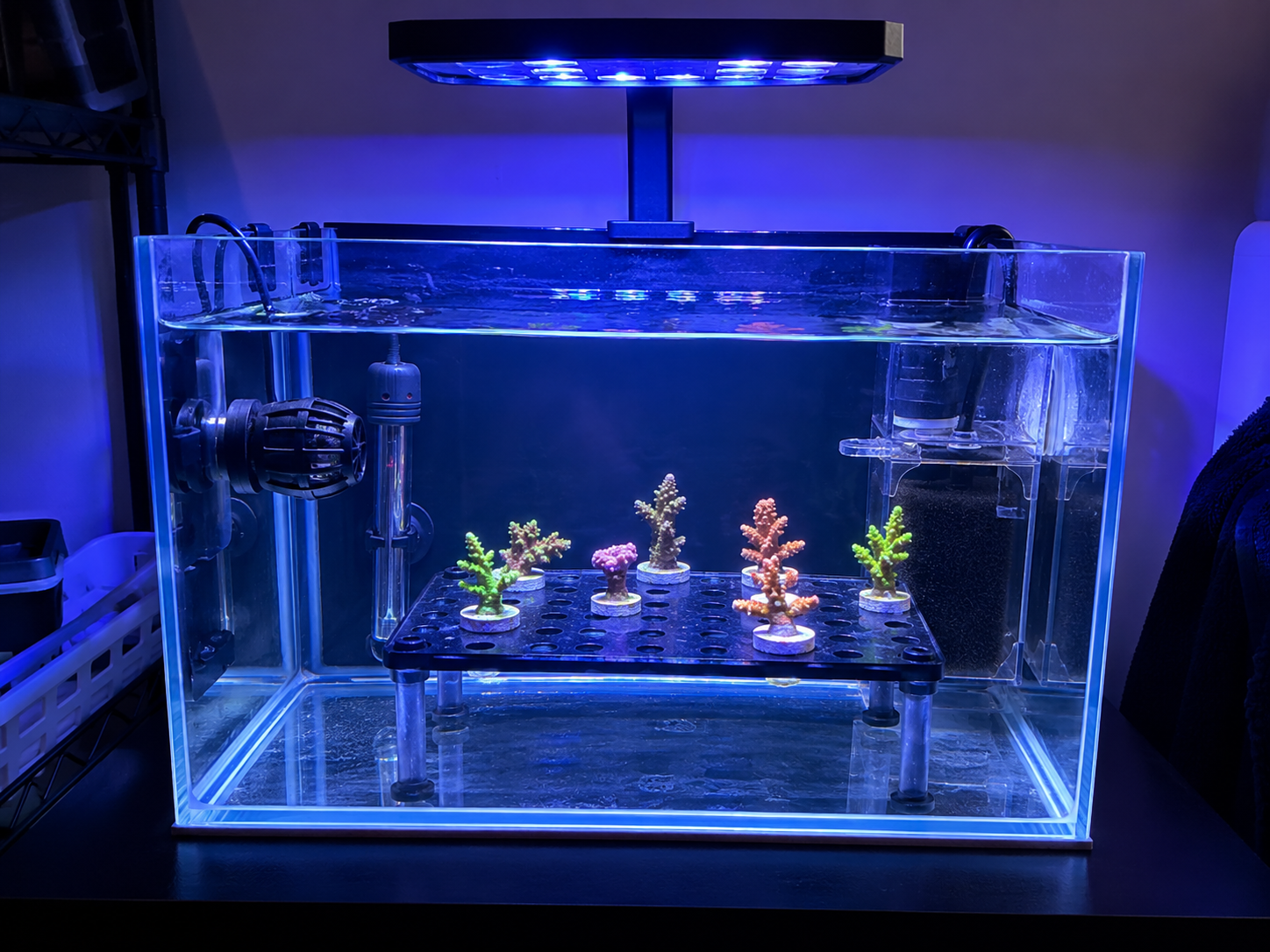
Learn how we recommend setting up a coral quarantine tank before adding new corals to your reef aquarium, including equipment, lighting, flow, dipping, observation, pest control, and long-term success.
Learn how we set up a coral quarantine tank before adding new corals to a reef aquarium. This guide covers equipment, lighting, flow, dipping, observation, pests, and safer coral introduction.
by Scott Shiles • May 15, 2026
Reef Tank Maintenance, All Corals
If there is one reefkeeping habit we believe saves hobbyists more frustration, money, and coral loss than almost anything else, it is quarantining new corals before they ever reach the display tank. A lot of reef problems do not begin in the display tank itself. They begin the day a new frag, colony, mushroom, zoa, or LPS coral is placed into the reef without enough inspection, dipping, or observation. In our experience, some of the most expensive coral problems hobbyists deal with later—flatworms, nudibranchs, algae introductions, tissue irritation, and avoidable pest spread—could have been reduced or caught earlier with a simple coral quarantine system. This guide explains exactly how we recommend setting up a coral quarantine tank, why it matters, what equipment is worth using, how to make the process manageable, and how to protect your display reef long term.
A common mistake hobbyists make is thinking coral quarantine has to be complex, expensive, or overly technical. In our experience, it does not. What matters most is that the system is stable, easy to monitor, and built around observation, dipping, and controlled introduction rather than rushing every new coral straight into the display.
If you are looking for healthy, fully conditioned corals for your reef tank, browse our WYSIWYG new arrivals to compare fully conditioned, ready-to-ship specimens.
Why We Strongly Recommend a Coral Quarantine Tank
We look at coral quarantine as a protective buffer between new livestock and the display reef. It gives you time to inspect corals more closely, monitor for delayed stress, watch for pests, and avoid introducing preventable problems into a system that may already contain valuable LPS, SPS, mushrooms, zoanthids, and showpiece colonies.
In our experience, coral quarantine helps with:
- Reducing the risk of introducing pests into the display tank
- Providing a controlled place for coral observation after shipping
- Giving new corals time to settle before competing in the main reef
- Allowing safer dipping, plug removal, and inspection routines
- Protecting expensive colonies already established in the display
A pattern we often see is that reef keepers only become serious about coral quarantine after one bad pest introduction. In our experience, it is much easier to build a simple quarantine system before that happens than to fix a mature reef after something slips through.
What a Coral Quarantine Tank Is Actually For
A coral quarantine tank is not meant to be a second full display reef. It is a temporary holding and observation system where new corals can be dipped, inspected, stabilized, and monitored before entering the main aquarium.
That means the goal is not to make it beautiful. The goal is to make it practical.
We recommend thinking of coral quarantine as a system for:
- Observation
- Pest detection
- Short-term recovery
- Safer introduction
- Controlled acclimation
In our experience, hobbyists sometimes make the mistake of overbuilding quarantine so much that it becomes hard to maintain. We recommend keeping it simple enough that you will actually use it every time new corals arrive.
The Basic Coral Quarantine Setup We Recommend
A strong coral quarantine setup does not need to be huge. What it needs is stability, simplicity, and enough equipment to keep corals safe for observation.
What we recommend as a basic quarantine setup:
- A small aquarium or all-in-one tank sized appropriately for the amount of coral you usually bring in
- A reliable heater to maintain stable temperature
- Moderate reef-capable lighting with adjustable intensity
- A small powerhead or gentle flow source for circulation
- Simple filtration such as sponge filtration, media basket filtration, or other easy-to-clean options
- Frag racks or removable observation surfaces
- Dedicated tools used only for quarantine when possible
In our experience, one of the most important things about coral quarantine is keeping the system easy to observe and easy to clean. A common mistake hobbyists make is adding too much rock or too much visual clutter, which gives pests more places to hide and makes inspection harder.
How We Think About Lighting in a Coral Quarantine Tank
Quarantine lighting should be good enough to support coral health, but not so intense that it becomes another source of stress. In our experience, quarantine is not the place to push light aggressively. It is a place to stabilize, observe, and introduce corals cautiously.
We recommend:
- Moderate adjustable lighting
- A stable daily schedule
- Lower starting intensity for freshly shipped corals
- Gradual adjustment if a coral clearly needs more light
New corals often arrive stressed from shipping, temperature changes, or handling. In our experience, one of the most common mistakes hobbyists make is assuming quarantine should exactly match the display tank from day one. We usually recommend a more conservative start, especially for freshly shipped fleshy LPS, mushrooms, ricordea, and sensitive corals.
If you want more detail on reef lighting, read our reef tank lighting guide.
How We Handle Water Flow in Coral Quarantine
Flow in a coral quarantine system should be broad, moderate, and easy to adjust. The goal is enough movement to keep oxygen levels healthy and detritus from settling, but not so much that new corals are blasted before they have even settled in.
In our experience, gentle indirect flow works best for quarantine because it gives you flexibility across coral types. Strong direct flow can make it harder to observe normal extension and feeding behavior, especially with fleshy LPS corals, mushrooms, and newly shipped pieces.
We recommend watching for:
- Detritus settling around the base of corals
- Coral tissue folding from too much direct current
- Weak extension or irritation tied to flow direction
- Dead spots that collect waste
A common mistake hobbyists make is running quarantine like a high-energy SPS tank even when the incoming corals are mixed types. In our experience, a more moderate and adjustable flow pattern is usually safer.
Bare Bottom or Sand in a Coral Quarantine Tank?
We generally recommend bare bottom for coral quarantine because it makes inspection, cleanup, and pest detection easier. Sand can trap debris, hide hitchhikers, and make the system harder to keep clean.
Bare bottom quarantine tanks offer a few practical advantages:
- Easier waste removal
- Better visibility of pests or detritus
- Simpler maintenance
- Cleaner observation environment
In our experience, the more visible and manageable the quarantine system is, the more useful it becomes. A common mistake hobbyists make is trying to make quarantine look like a miniature display instead of a functional holding system.
The Role of Dipping Before Quarantine
We strongly recommend dipping new corals before they enter quarantine. Dipping and quarantine work best together, not as replacements for each other. A dip can help dislodge many mobile pests and irritants, while quarantine gives you time to observe what the dip may have missed.
Our general approach is:
- Inspect the coral on arrival
- Dip according to the coral dip instructions
- Rinse in clean saltwater
- Inspect the plug, base, and underside
- Place the coral into quarantine for observation
In our experience, a common mistake hobbyists make is assuming the dip alone makes the coral fully safe. It helps, but quarantine is what gives you time to catch delayed issues and confirm that the coral is genuinely settling well.
For a deeper dive on that process, read our coral dipping guide.
Should You Remove Frag Plugs in Quarantine?
In many cases, yes. In our experience, the frag plug is often where a surprising amount of nuisance algae, vermetids, hidden pests, and general unwanted material are hiding. Quarantine is the best place to decide whether the original plug should stay or go.
We recommend evaluating the plug closely for:
- Algae growth
- Nuisance hitchhikers
- Eggs on hard surfaces
- Areas you may want to trim or remount more cleanly
A common mistake hobbyists make is carefully dipping the coral itself but then not paying enough attention to the plug. In our experience, the plug often deserves just as much suspicion as the coral tissue.
How Long We Recommend Keeping Corals in Quarantine
There is no perfect universal timeline because coral type, condition, and reefer risk tolerance all matter. In our experience, though, a short quarantine is better than no quarantine, and a more deliberate quarantine is better than a rushed one.
What matters during that time is not just the number of days. It is what you are observing:
- Is the coral opening and stabilizing?
- Are any pests showing up after the initial dip?
- Is the tissue healthy?
- Is the frag plug clean enough to trust?
- Is the coral handling quarantine conditions well?
We’ve found that hobbyists usually benefit most from quarantine when they use it as a true observation period and not just a waiting room.
What We Watch for During Coral Quarantine
Quarantine is valuable because it slows the process down enough for you to actually observe the coral. In our experience, many things that are easy to miss on day one become much more obvious by day three, five, or ten.
We recommend watching for:
- Pest activity
- Tissue recession
- Brown jelly or abnormal slime
- Weak extension
- Sudden bleaching or fading
- Detachment or poor response to flow
- Algae issues around the plug or base
A common mistake hobbyists make is paying close attention only on arrival day and then assuming everything is fine. In our experience, quarantine works best when you continue checking corals closely instead of relaxing too early.
The Most Common Coral Quarantine Mistakes
Most quarantine mistakes come from either rushing or overcomplicating the process.
- Skipping dipping entirely
- Running quarantine with unstable temperature or salinity
- Using lighting that is far too intense for fresh arrivals
- Ignoring the frag plug and underside
- Crowding too many corals into one small system
- Failing to observe regularly after the first few days
- Turning quarantine into a second cluttered display tank
In our experience, the best quarantine systems are quiet, simple, and repeatable. A common mistake hobbyists make is designing a quarantine process they will not realistically stick to every time new corals arrive.
Why This Matters So Much in Valuable Mixed Reefs
If you have a mature mixed reef with valuable LPS, SPS, zoanthids, mushrooms, and showpiece colonies, one bad coral introduction can affect much more than a single new frag. That is why we view quarantine as one of the most practical forms of reef insurance.
Some sellers focus on volume or trends. Experienced coral vendors focus on long-term coral health and consistency. We believe reef keepers should think the same way when introducing new corals into their systems.
ExtremeCorals.com has been selecting and shipping live corals for over 25 years, with hundreds of thousands of corals handled and delivered to reef hobbyists. In our experience, one of the biggest differences between smoother, lower-stress reef systems and constantly frustrated reef systems is how seriously the owner treats coral introduction from the very beginning.
How a Good Quarantine Routine Improves Buying Decisions Too
Quarantine also helps reef keepers buy more intelligently. When you know you have a safe introduction process, it becomes easier to choose corals for compatibility, growth, and long-term display rather than buying only by impulse.
It also helps you evaluate:
- Coral condition after shipping
- Whether a piece is truly healthy and settled
- How the coral responds to your water and lighting
- Whether the frag plug or mount should be changed
In our experience, reef keepers who quarantine tend to become better coral buyers because they slow down and look more carefully at every new piece.
Related Corals You May Also Like
If you are interested in safer coral introduction and long-term reef success, you may also want to explore these coral groups and related reef tank guides:
- Browse new arrival corals
- Browse featured WYSIWYG corals
- Coral dipping guide
- Coral acclimation guide
- How to buy healthy corals online
Ready to choose healthy corals for your reef tank? Browse our new arrival corals and explore healthy additions for your aquarium.
Shop WYSIWYG Corals and New Arrivals
Explore our WYSIWYG new arrival corals, featured corals, soft corals, and LPS corals to build a stronger reef tank.
Final Thoughts
A coral quarantine tank is one of the smartest setup choices a serious reef keeper can make. It does not need to be flashy. It just needs to be stable, clean, easy to inspect, and simple enough that you actually use it every time new corals arrive.
In our experience, that kind of process protects both the new coral and the display reef. It gives you time to observe, time to correct smaller issues, and time to make better decisions before a new piece becomes everyone else’s problem in the main tank.
Frequently Asked Questions
Q: Do I really need a separate coral quarantine tank?
A: In our experience, yes if you want the safest possible coral introduction process. It greatly reduces risk compared with adding new corals directly into the display tank.
Q: Is dipping enough without quarantine?
A: Dipping helps a lot, but quarantine adds observation time and catches problems that dipping alone may miss.
Q: Should I quarantine corals even from trusted sellers?
A: Yes. Even healthy, high-quality corals can carry hidden pests, algae, or hitchhikers.
Q: What is one of the biggest coral quarantine mistakes?
A: One of the biggest mistakes is making the quarantine system too complicated to use consistently or skipping observation after the initial dip.
Q: Can I keep different coral types in the same quarantine system?
A: Yes, in many cases, but it works best when the system is stable, not overcrowded, and the reefer adjusts handling and placement based on coral type.
About the Author
Scott Shiles is the owner of ExtremeCorals.com, which he has operated for over 25 years and is recognized as one of the early dedicated live coral websites on the internet. A lifelong reef keeper since 1984, Scott has decades of hands-on experience maintaining marine aquariums and previously owned and operated a brick and mortar aquarium retail store for 10 years, including five years alongside Extreme Corals. He holds a degree in Marine Biology and has personally selected and sold hundreds of thousands of live corals. An avid scuba diver who has explored reef systems around the world, Scott shares practical coral care and husbandry knowledge based on real world reef experience.
overall rating:
my rating:
log in to rate
Please log in to leave a comment.
For more information visit: additional resources