My Cart: 0 item(s)

Extreme Corals News and Updates
Rhodactis Mushroom Care for Reef Tanks: Best Lighting, Flow, Placement and Feeding Tips
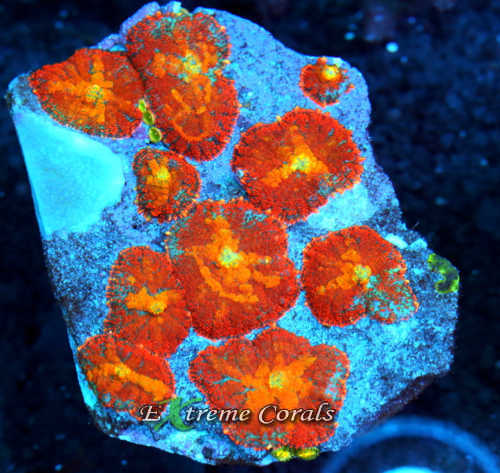
Find out how to properly care for your new Rhodactis Mushroom with this "how-to" guide on the requirements for healthy Rhodactis Mushroom from the #1 place to buy corals online!
Read along to find out the Lighting, Water Flow, Feeding, Placement & more when it comes to the care of your new Rhodactis Mushroom
by Scott Shiles • March 01, 2023
Looking to add Rhodactis mushrooms to your reef tank? Browse our mushrooms for sale and explore colorful, healthy corals for lower-light reef zones.
Rhodactis mushrooms are one of the most popular soft corals in reef tanks because they combine bold color, unique texture, and relatively forgiving care requirements. This guide explains how to keep Rhodactis mushrooms healthy in a reef aquarium, including lighting, flow, placement, feeding, water stability, growth, and the common mistakes that can keep them from thriving.
For many reef keepers, Rhodactis mushrooms are a great way to add strong visual impact without needing the intense lighting or placement demands of SPS corals. They often work especially well in lower to middle areas of the tank where flow is gentler and light is more moderate. When placed correctly and given stable conditions, they can become some of the most colorful and eye-catching corals in a mixed reef.
What Are Rhodactis Mushrooms?
Rhodactis mushrooms are soft corals in the mushroom coral group and are often prized for their vibrant colors, textured surface, and adaptable care requirements. The live article describes them as highly sought after because of their blue, green, orange, and red coloration and their suitability for low to moderate lighting setups. :contentReference[oaicite:1]{index=1}
Compared with some other mushroom corals, Rhodactis often have a fuller, more textured appearance and can bring a thicker, more dramatic look to lower-flow sections of a reef tank. They are popular in mixed reefs, mushroom gardens, and soft coral-focused displays.
Why Rhodactis Mushrooms Sell So Well
- They offer strong color without requiring extreme placement
- They work well in many mixed reef systems
- They can fill lower-light and lower-flow areas beautifully
- They usually adapt better than many more demanding stony corals
- They give a reef tank a fuller, more natural coral look
Rhodactis are especially attractive to hobbyists who want a coral that looks high impact but does not demand a full SPS-style setup. They are also a strong option for reef keepers who enjoy mushrooms but want something more textured and dramatic than flatter mushroom varieties.
Rhodactis Mushroom Lighting Requirements
The live article says Rhodactis thrive in low to moderate lighting and specifically describes about 75–150 PAR as a workable range for mushroom corals in this group. It also warns that sudden lighting changes can stress the coral and lead to shrinking or detachment. :contentReference[oaicite:2]{index=2}
- Low to moderate lighting is usually the best starting point
- Approximate light range around 75-150 PAR can work well
- Avoid abrupt increases in intensity
- Watch for shrinking, fading, or detachment as signs of stress
Many hobbyists make the mistake of assuming all colorful corals need stronger light. In reality, Rhodactis often look and behave better when they are not pushed into intense upper-tank lighting. Stable, moderate placement usually gives a better long-term result.
If you are still dialing in your system, learn more about coral lighting.
Water Flow for Rhodactis Mushrooms
The live article recommends moderate water flow and warns against high flow because it can damage the delicate tissue of the mushrooms. It also notes that suitable flow helps them feed on dissolved nutrients in the water. :contentReference[oaicite:3]{index=3}
- Moderate indirect flow is usually ideal
- Avoid direct blasting current
- Provide enough movement to prevent detritus buildup
- Look for a stable area where the coral is not being pushed around
In practical reefkeeping, Rhodactis often do best where there is enough flow to keep the area clean but not so much that the coral stays contracted or irritated. A lower-energy section of the rockwork is often the best place to start.
You can also read our reef flow guide.
Best Placement for Rhodactis Mushrooms
The live article notes that Rhodactis can be placed directly on the substrate or attached to rock or frag plugs, and it stresses giving them space from nearby corals because they can sting neighbors with sweeper tentacles. :contentReference[oaicite:4]{index=4}
- Lower to middle placement is often best
- They can be placed on rock, substrate, or plugs depending on the setup
- Leave room around them for expansion
- Do not crowd them against more aggressive corals
Many reef keepers like to isolate mushrooms or place them in dedicated mushroom zones so they can grow without being boxed in by LPS corals or fast-spreading neighbors. Placement matters not just for health, but for how good they actually look once settled.
Water Parameters for Rhodactis
The live article recommends stable reef conditions with a temperature of 72-78°F, pH between 8.1 and 8.4, salinity around 1.025 specific gravity, and alkalinity between 7-12 dKH. :contentReference[oaicite:5]{index=5}
- Temperature: 72-78°F
- pH: 8.1-8.4
- Salinity: around 1.025 specific gravity
- Alkalinity: 7-12 dKH
Even though Rhodactis are more forgiving than many stony corals, stability still matters. Salinity drift, repeated alkalinity swings, or neglected maintenance can still lead to poor expansion, stress, or detachment over time.
If you are working on overall chemistry consistency, learn more about pH and alkalinity in reef tanks.
Do Rhodactis Mushrooms Need Feeding?
The live article explains that Rhodactis are photosynthetic, but also states that they benefit from supplemental feeding because they can feed on dissolved organic matter, phytoplankton, and zooplankton. It recommends feeding 1-2 times per week depending on size and response. :contentReference[oaicite:6]{index=6}
- They are photosynthetic, so light is still a major energy source
- Supplemental feeding can support growth and overall health
- Feeding 1-2 times per week may be beneficial in some systems
- Avoid overfeeding the whole tank to feed one coral
In many home reef tanks, proper placement and stable water conditions matter more than aggressive feeding. Still, occasional light feeding can help support healthier growth and fuller appearance, especially in lower-nutrient systems.
Tankmates and Compatibility
The live article describes Rhodactis as generally peaceful but warns that they can become aggressive toward nearby corals if they feel crowded or threatened. It also recommends reef-safe, non-aggressive fish and invertebrates as better companions. :contentReference[oaicite:7]{index=7}
- Usually fine with peaceful reef fish
- Best with reef-safe invertebrates
- Leave space from other corals to avoid aggression
- Avoid predatory or rough tankmates that may disturb them
Compatibility is not just about fish. It is also about how much room the coral has and whether other corals are close enough to cause constant stress or chemical competition.
How Rhodactis Grow and Spread
Rhodactis mushrooms can grow steadily when settled and happy. In stable systems, they may expand in size and eventually multiply or spread, especially when placed in suitable lower-energy zones.
- Growth is usually steady rather than explosive
- Stable placement helps them settle and expand
- Healthy mushrooms may eventually divide or spread
This makes them a great option for hobbyists who want to build out a mushroom section or add fuller coral coverage to areas of the tank that may not be ideal for more demanding species.
Handling and Fragging Rhodactis
The live article warns that Rhodactis have delicate tissues and recommends using soft, non-abrasive tools such as propagation forceps or plastic bone cutters when moving or fragging them. It also emphasizes keeping any cuts clean and carefully monitoring new fragments after separation. :contentReference[oaicite:8]{index=8}
- Handle gently to avoid tearing tissue
- Use soft, non-abrasive tools when moving them
- Monitor fresh frags for stress or infection
- Keep placement stable after fragging
Fragging mushrooms is possible, but it should be done carefully and with patience. Damage from rough handling can set them back quickly.
Common Rhodactis Problems
Shrinking or Staying Closed
This is often linked to too much light, too much flow, instability, or stress from being moved too often.
Detachment
The live article specifically notes that sudden lighting changes may cause the coral to shrink or detach from its substrate. :contentReference[oaicite:9]{index=9}
Tissue Damage
Excess flow or rough handling can damage their delicate tissue.
Disease and Stress
The live article notes that Rhodactis are relatively hardy but can still suffer from bleaching, tissue necrosis, infections, or other issues if water quality drops or stress is ignored. It also recommends quarantine and observation for prevention. :contentReference[oaicite:10]{index=10}
How to Choose a Healthy Rhodactis
- Look for full, expanded tissue
- Avoid torn or heavily retracted specimens
- Choose strong color with no obvious bleaching
- Prefer mushrooms that look settled and attached well
If Rhodactis are an important sales coral for you, this part matters. Healthy, established pieces are much easier for customers to succeed with than stressed or recently disturbed mushrooms.
Related Corals You May Also Like
If you are interested in Rhodactis mushrooms, you may also want to explore other mushroom and soft coral options for similar reef tank zones:
- Browse mushrooms for sale
- Bounce mushroom care tips
- The ultimate zoanthid care guide
- Soft coral care ideas for mixed reefs
- Overview of coral types and care guidelines
Ready to add colorful Rhodactis mushrooms to your reef tank? Browse our mushrooms for sale and explore healthy, aquacultured corals ready for your aquarium.
Shop Rhodactis Mushrooms
Explore our mushroom corals for sale and find vibrant Rhodactis and other eye-catching soft corals for your reef tank.
Frequently Asked Questions
Q: What lighting do Rhodactis mushrooms need?
A: Rhodactis usually do best under low to moderate lighting, and the live article describes about 75-150 PAR as a useful low-to-moderate range. :contentReference[oaicite:11]{index=11}
Q: Do Rhodactis mushrooms need feeding?
A: They are photosynthetic, but they may benefit from supplemental feeding 1-2 times per week depending on their response and the nutrient level of the tank. :contentReference[oaicite:12]{index=12}
Q: Where should Rhodactis be placed in a reef tank?
A: They are often best in lower to middle areas with moderate indirect flow and enough space from neighboring corals.
Q: Why did my Rhodactis detach?
A: Stress from sudden lighting changes, unstable placement, or unsuitable flow can contribute to detachment. :contentReference[oaicite:13]{index=13}
Q: Are Rhodactis good for beginners?
A: They are often considered more forgiving than many stony corals, but they still do best in stable reef tanks with careful placement.
About the Author
Scott Shiles is the owner of ExtremeCorals.com, which he has operated for over 25 years and is recognized as one of the early dedicated live coral websites on the internet. A lifelong reef keeper since 1984, Scott has decades of hands-on experience maintaining marine aquariums and previously owned and operated a brick and mortar aquarium retail store for 10 years, including five years alongside Extreme Corals. He holds a degree in Marine Biology and has personally selected and sold hundreds of thousands of live corals. An avid scuba diver who has explored reef systems around the world, Scott shares practical coral care and husbandry knowledge based on real world reef experience.
overall rating:
my rating:
log in to rate
Please log in to leave a comment.
For more information visit: additional resources