
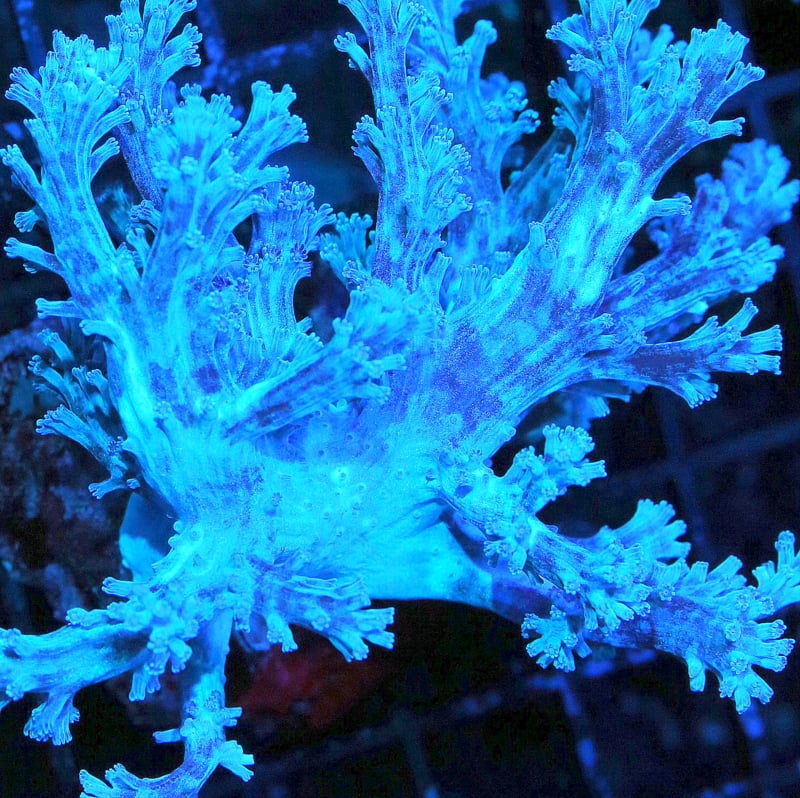
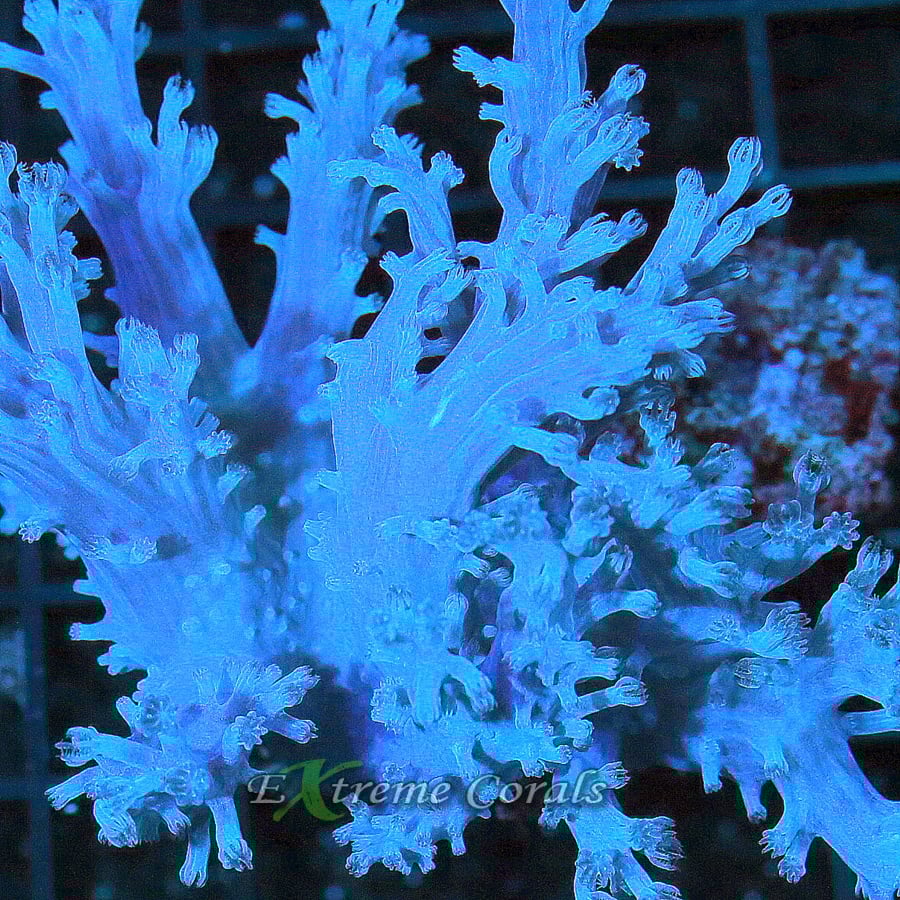
Xenia coral, often called pulsing Xenia, is one of the most recognizable soft corals in the reef hobby. Very few corals add the same kind of visible motion to an aquarium. When healthy, Xenia creates a constant pulsing movement that gives a reef tank an active, living look even when everything else is still. That unique behavior is a big part of why hobbyists keep it, but it is not the only reason. Xenia is also popular because it is usually fast growing, adaptable in the right conditions, and capable of filling space quickly in tanks that need more movement and softness.
At the same time, Xenia is a coral that teaches an important reefkeeping lesson: easy to keep does not always mean easy to manage. Many hobbyists lose Xenia because their tank is too unstable or too stripped of nutrients. Others keep it successfully at first, only to realize later that it spreads much faster than expected and begins creeping into areas where it is no longer welcome. That is why the goal with Xenia is not just to keep it alive. The goal is to keep it healthy, attractive, and under control.
If you are new to reefkeeping or want a broader overview of tank setup and coral husbandry fundamentals, our coral care guide is a great place to start. Xenia is often described as beginner friendly, but it still does best when introduced into a stable reef rather than a tank that is constantly shifting.
Why Xenia Coral Is So Popular
Xenia stands out because it does something most corals do not. Its pulsing motion creates real visual activity in the aquarium, and that can make even a small reef feel more natural and dynamic. In tanks filled mostly with static corals, pulsing Xenia draws the eye immediately. It also works well as a contrast coral when placed among mushrooms, zoanthids, or LPS corals because its motion brings a different kind of energy to the layout.
Another reason hobbyists like Xenia is that it can grow quickly once settled. That fast growth makes it satisfying in systems where some other corals seem to take forever to show progress. When conditions suit it, Xenia often spreads readily and gives the tank a more mature look in less time. If you are shopping for new soft corals or want to compare other beginner-friendly additions, you can also browse our new arrival coral frags.
What Makes Xenia Different from Other Soft Corals?
Xenia is not just another encrusting soft coral. Its pulsing behavior, rapid spreading nature, and preference for slightly nutrient-richer conditions set it apart. Unlike some corals that struggle when nutrients rise a bit, Xenia often looks better in tanks that are not aggressively stripped. That surprises a lot of reef keepers, especially those who assume cleaner always means better.
It is also one of the few corals where growth control needs to be part of the plan from the beginning. With some corals, you worry about whether they will grow at all. With Xenia, you often end up worrying about where it will grow next.
Lighting Requirements for Xenia Coral
Xenia generally does best in low to moderate lighting, though many hobbyists also keep it successfully under moderate reef lighting systems once it is acclimated properly. What matters most is not chasing a specific brand of fixture, but giving the coral enough consistent light to support healthy growth without shocking it with abrupt changes.
If the light is too weak, Xenia may slow down, stretch, or lose some of the vigor hobbyists expect. If the light is too intense or the coral is introduced too quickly into a brighter part of the tank, it may look stressed, remain closed for longer periods, or fail to pulse normally. Most of the time, it responds well when started in a moderate area and then observed rather than constantly moved around.
If you want a deeper look at how light affects coral behavior and growth, our article on how lighting affects coral growth is a helpful companion piece.
Water Flow for Pulsing Xenia
Xenia usually prefers low to moderate water flow. Too much direct flow can interfere with the pulsing behavior and keep the coral from looking natural. Too little flow can allow detritus to settle around the colony, which is not ideal either. The sweet spot is generally enough movement to keep the colony clean and healthy without blasting it.
This is one of the most misunderstood parts of Xenia care. Some hobbyists assume stronger flow is always better because it keeps surfaces cleaner, but with Xenia, heavy direct current can reduce the very pulsing action people buy it for. Gentle to moderate, indirect flow usually produces the best balance of health and natural movement.
If you want to improve overall reef flow strategy, our article on water flow and coral health is worth reading.
Water Quality and Parameters
Xenia tends to prefer stable but not ultra-clean water. That is one of the reasons it often does well in mixed reefs and soft coral systems where some nutrients are present. In tanks that are stripped too aggressively, Xenia may stop pulsing as strongly, stall out, or slowly decline. While it still needs stable reef chemistry, it often appreciates a little more available nutrient than delicate SPS corals do.
Good general targets include:
- Stable temperature in a normal reef range
- Stable salinity
- pH in a healthy reef range
- Consistent alkalinity
- Low ammonia and nitrite
- Reasonable nitrate and phosphate without harsh stripping
The key point is consistency. Xenia does not usually reward constant tinkering. In fact, it often thrives in tanks that are steady, mature, and not overmanaged. If you are working on the chemistry side of your reef, our reef water parameters guide is a useful resource.
Placement in the Reef Tank
Placement is critical with Xenia, not because it is especially delicate, but because it spreads. The best long-term strategy is to place Xenia on an isolated rock or island where it can grow without immediately invading prized neighboring corals. This is one of the smartest decisions you can make with this coral, especially if you already know you like its look and plan to keep it long term.
Too many hobbyists place Xenia directly into the main rock structure because it looks good in the moment. Months later, they are peeling it off surrounding rocks, trying to keep it away from slower-growing corals, or regretting that it reached a prime section of the aquascape. If you treat Xenia as a coral that needs containment from day one, it becomes much easier to enjoy.
- Place it on isolated rock structures when possible
- Keep it away from slow-growing or high-value neighboring corals
- Choose an area with room for outward spreading
- Do not place it where you cannot reach it later for trimming
Xenia Growth and Spreading
Fast growth is one of Xenia’s biggest selling points and one of its biggest management issues. In the right tank, it can spread quickly across rock surfaces and establish itself before the hobbyist realizes how much territory it is claiming. That can be great if your goal is to fill a section of the reef with motion and soft coral texture. It can be a problem if you expected it to stay neatly in one small area.
The best way to control Xenia is by planning ahead rather than reacting late. Once it is attached through a large area of the aquascape, removal becomes much more annoying. Isolated placement, regular trimming, and keeping it away from prized slower-growing colonies are the best strategies.
If you enjoy fast-growing, visually active corals, you may also want to explore our zoanthids, which can add color and coverage in a very different way.
Does Xenia Need Feeding?
Xenia is primarily photosynthetic and typically does not require direct feeding. In most reef tanks, stable conditions and available nutrients in the water are far more important than any target feeding routine. Many hobbyists overcomplicate this point. If your Xenia is established, pulsing, and spreading, feeding is usually not the missing ingredient.
That does not mean nutrition is irrelevant. It simply means Xenia usually responds more to overall tank conditions than to direct food delivery. A reef with reasonable nutrient availability and stable chemistry tends to support Xenia better than a spotless tank paired with constant feeding attempts.
Best Tank Setup for Xenia Coral
Xenia tends to do well in mixed reefs, soft coral systems, and mature tanks where the environment is stable and nutrients are not bottomed out. It is often a good fit for hobbyists who want movement and fast growth, but it is usually a poor fit for aquarists trying to run a highly controlled, ultra-clean SPS-dominant tank where spreading soft corals are unwelcome.
It can also work well in beginner-friendly systems, provided the hobbyist understands two things: first, the tank must still be stable; second, the coral needs to be contained. Those two points make the difference between Xenia being a fun, rewarding addition and Xenia becoming a frustrating weed coral in the wrong place.
If you are looking at other approachable corals for similar systems, you may also want to browse our ricordia mushrooms and compare another colorful, beginner-friendly soft coral option.
Common Mistakes with Xenia
Putting It on the Main Rockwork Too Soon
This is probably the most common mistake. Xenia can spread quickly, and once it reaches the main structure, controlling it becomes much harder.
Running the Tank Too Clean
Xenia often does worse in ultra-low-nutrient systems than many hobbyists expect. Stripping the tank too aggressively can reduce growth and pulsing.
Using Too Much Direct Flow
Strong flow can interrupt pulsing and make the colony look stressed or unnatural.
Expecting It to Stay Small
Xenia is not a coral you place casually without a long-term plan. Growth control should be considered from the beginning.
Chasing Constant Adjustments
Xenia usually prefers a stable tank over one that is constantly being fine-tuned. Too much tinkering can slow its progress more than help it.
How to Tell if Xenia Is Healthy
A healthy Xenia colony usually shows regular extension, visible pulsing, and steady growth over time. The stalks should look upright and intact, the polyps should open well, and the colony should not appear to be melting away or receding from the base.
Good signs include:
- Visible pulsing behavior
- Open, extended polyps
- Steady spreading or growth
- Normal coloration
- A firm, upright overall structure
Why Is My Xenia Not Pulsing?
This is one of the most common questions hobbyists ask. A lack of pulsing can be related to flow, lighting, recent stress, unstable parameters, or nutrient conditions that are too stripped down. It does not always mean the coral is dying, but it is usually a signal to review the basics.
Ask yourself:
- Is the flow too strong?
- Has the coral been moved recently?
- Is the tank too nutrient-poor?
- Has lighting changed suddenly?
- Have salinity, alkalinity, or temperature shifted recently?
In many cases, the solution is not a drastic intervention. It is a matter of restoring stable, moderate conditions and giving the coral time.
Who Should Keep Xenia Coral?
Xenia is a strong choice for reef hobbyists who want motion, fast growth, and a soft coral that adds energy to the tank. It is especially appealing in mixed reefs and soft coral systems where the aquascape includes space for an isolated island or a contained spreading zone.
It is a weaker fit for hobbyists who dislike fast spreaders, run extremely nutrient-poor systems, or want every coral to remain tightly controlled in a dense SPS layout. In the right tank, Xenia is fun and rewarding. In the wrong tank, it can become a maintenance headache.
Frequently Asked Questions About Xenia Coral
Is Xenia coral easy to care for?
Yes, in a stable reef tank Xenia is generally considered one of the easier soft corals to keep, but managing its growth is part of keeping it successfully.
Why is my Xenia not pulsing?
Flow, lighting, stress, unstable parameters, or very low nutrient levels can all affect pulsing behavior.
Does Xenia grow fast?
Yes. In the right conditions, Xenia is one of the faster-spreading corals in the hobby.
Does Xenia need feeding?
Usually no. It is primarily photosynthetic and tends to rely more on light and overall water conditions than on direct feeding.
Where should Xenia be placed?
It is best placed on an isolated rock or island where it can spread without overtaking neighboring corals.
Related Corals and Reef Topics You May Also Like
If you are interested in pulsing Xenia, you may also want to explore a few related coral groups and reef education resources that can help with placement, flow, and overall tank stability:
- Read our full coral care guide
- Learn more about coral lighting
- Improve reef tank flow
- Dial in your water parameters
- Browse zoanthids
- Shop ricordia mushrooms
- See new coral arrivals
Ready to add movement and personality to your reef tank? Pulsing Xenia can be one of the most visually rewarding soft corals in the hobby when it is placed correctly and managed from the start. In the right system, it adds energy to the reef in a way very few corals can match.
Shop Soft Corals and New Arrivals
Explore our new arrival corals and browse standout additions for your reef tank.
About the Author
Scott Shiles is the owner of ExtremeCorals.com, which he has operated for over 25 years and is recognized as one of the early dedicated live coral websites on the internet. A lifelong reef keeper since 1984, Scott has decades of hands-on experience maintaining marine aquariums and previously owned and operated a brick and mortar aquarium retail store for 10 years, including five years alongside Extreme Corals. He holds a degree in Marine Biology and has personally selected and sold hundreds of thousands of live corals. An avid scuba diver who has explored reef systems around the world, Scott shares practical coral care and husbandry knowledge based on real world reef experience.