My Cart: 0 item(s)

Extreme Corals News and Updates
Zoanthid and Palythoa Care Guide: Lighting, Flow, Placement and Growth in Reef Tanks
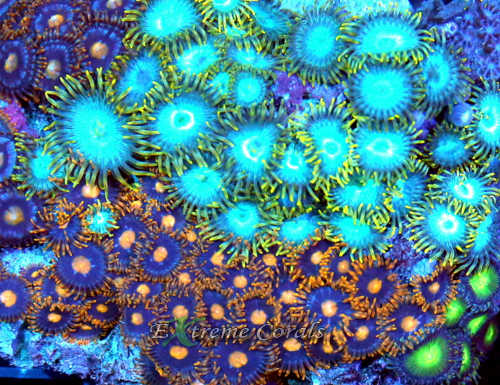
Learn how to care for zoanthids and palythoas in a reef tank with tips on lighting, water parameters, flow, placement, feeding, maintenance, and choosing healthy colonies.
Learn how to care for zoanthids and palythoas in a reef tank with guidance on lighting, water flow, feeding, placement, water parameters, and long-term colony health.
by Scott Shiles • April 22, 2026
Zoanthids Coral Care, All Corals
Zoanthids and Palythoas are some of the most popular reef tank corals for good reason: they combine bright color, strong visual variety, manageable care, and the ability to make a tank look fuller and more established over time. For many reef keepers, these soft corals are the first corals that make a reef tank feel truly alive. They are relatively easy to care for compared with many stony corals, but they still perform best when their lighting, flow, and placement are handled correctly. This guide explains how to care for Zoanthids and Palythoas in a reef tank, including lighting, water parameters, feeding, maintenance, common mistakes, and what to look for when choosing a healthy colony.
In our experience, zoanthids and palythoas are some of the most rewarding corals for both beginners and experienced reef keepers because they offer immediate visual payoff and long-term growth potential. A common mistake hobbyists make is thinking of them as “set and forget” corals. While they are forgiving, they still respond noticeably to stable conditions, clean placement, and proper spacing.
If you are looking for colorful, healthy polyps for your reef tank, browse our WYSIWYG zoanthids and palythoas to compare healthy examples.
Why Zoanthids and Palythoas Are So Popular
Zoanthids and Palythoas remain favorites in the reef hobby because they offer an unusual combination of flexibility and visual appeal. They come in a huge range of colors and patterns, they can work in many types of aquascapes, and they often grow into impressive colonies over time.
- Wide range of colors and morphs
- Good beginner-friendly reputation in stable tanks
- Useful for filling in rockwork and adding color zones
- Can adapt to a range of reef setups
- Often rewarding to collect and grow out
We’ve found that zoanthids are often one of the easiest ways to make a reef tank feel more complete. A single healthy colony can gradually transform a bare section of rock into one of the most eye-catching parts of the aquarium.
Lighting
Zoanthids and Palythoas generally require moderate to high lighting. In most reef tanks, they do well with around 6 to 8 hours of strong usable light each day, along with an appropriate reef spectrum.
- Moderate to high lighting is usually best
- A mix of blue and white light works well
- LED lighting is a popular choice because it is adjustable and efficient
- Acclimate new colonies carefully if moving them into brighter zones
In our experience, one common mistake hobbyists make is placing zoanthids too high too quickly under strong LEDs. Some morphs can handle brighter light well, but others respond better to moderate light and gradual acclimation. If a colony stays tightly closed or begins fading, lighting intensity is one of the first things worth reviewing.
If you want to understand reef lighting better, read our guide on reef tank lighting.
Water Parameters
Maintaining proper water parameters is crucial for the health of your Zoanthids and Palythoas. While they are more tolerant than many SPS corals, they still respond best when the tank is stable rather than constantly shifting.
- Temperature: 75 to 82°F
- pH: 8.1 to 8.4
- Specific Gravity: 1.023 to 1.025
- Alkalinity: keep stable within normal reef range
Regular testing of the water parameters is necessary to ensure that they remain within a healthy range. In many reef tanks, the issue is not that zoanthids demand “perfect” numbers. It is that they do not like repeated swings, neglected maintenance, or deteriorating water quality over time.
If you are working on chemistry stability, read our guide on pH and alkalinity in reef tanks.
Water Flow
Zoanthids and Palythoas generally prefer moderate to high water flow in a reef tank. Flow helps simulate their natural environment and prevents debris from settling on the colony.
- Moderate to moderately strong indirect flow is usually ideal
- Flow should keep detritus from collecting on the colony
- A powerhead or wavemaker can help create the necessary movement
- Avoid direct blasting that causes the colony to stay closed
We’ve found that these corals usually do best when they receive enough movement to stay clean but not so much that their polyps remain irritated. A common mistake hobbyists make is assuming more flow is always better. In reality, polyps that are constantly closing from direct pressure are not in a good spot.
If you want to learn more about circulation, read our guide on water flow and coral health.
Feeding
Zoanthids and Palythoas are photosynthetic corals and do not require heavy or regular feeding in the same way some fleshy LPS corals do. However, they can benefit from occasional feedings of very fine coral foods.
- They rely heavily on light for nutrition
- Occasional phytoplankton or zooplankton feedings can be beneficial
- Fine foods may help support growth in some systems
- Avoid overfeeding, which can reduce water quality
In our experience, feeding is best viewed as supportive rather than essential. A common mistake hobbyists make is overfeeding polyps in a tank that is already nutrient rich. Usually, stable water quality matters more than aggressive feeding.
Placement
Zoanthids and Palythoas can be placed in various locations within the reef tank, but placement still matters more than many beginners expect. They should not be placed too close to other corals or in an area of the tank with harsh direct flow.
- Place colonies where they can open fully
- Avoid direct contact with the sand bed when possible
- Keep them away from aggressive neighboring corals
- Use rock islands or dedicated zones if you want them to spread cleanly
Additionally, they should not be placed in direct contact with the sand bed, as this can cause irritation and damage to their soft tissue. We’ve found that zoanthids often look best when they are given a defined section of rock where they can gradually spread and create a natural mat of color over time.
Maintenance
Regular maintenance is essential for the health of your Zoanthids and Palythoas. Even though they are considered forgiving corals, they still benefit from clean conditions and regular observation.
- Check colonies for signs of damage, discoloration, or pests
- Remove any dead or damaged tissue promptly when necessary
- Perform regular water changes to maintain water quality
- Keep debris from settling around the colony
In our experience, zoanthid colonies often stay healthiest when the surrounding rockwork is kept reasonably clean and the colony is not being ignored just because it is “easy.” Small issues are much easier to correct early than after the colony has already been declining for a while.
Standout Section: How to Tell a Healthy Zoanthid or Palythoa Colony Before Buying
This is one of the most useful things a buyer can learn, because not every colony that looks colorful in a photo is actually in strong condition.
When selecting a healthy colony, look for:
- Open, responsive polyps rather than tightly shut ones
- Stable coloration without obvious fading or tissue damage
- A clean, intact mat or base
- No visible melting, excessive algae, or obvious irritation
- Growth that looks settled rather than recently stressed
A common mistake hobbyists make is choosing only by color name or morph hype. In our experience, healthy tissue, clean structure, and good extension tell you much more than a flashy name. If you are looking for a healthy, fully acclimated specimen, compare several examples and pay attention to how the colony actually looks, not just how bright it appears under heavy blue light.
This is also where WYSIWYG buying helps. It gives you a chance to compare actual colonies and judge their condition before buying. If you want to compare healthy examples naturally, browse our zoanthids and palythoas collection.
Common Problems With Zoanthids and Palythoas
Even though these are often beginner-friendly corals, there are still a few common issues worth watching for.
- Colonies staying closed for long periods
- Detritus buildup on the mat
- Fading from lighting stress
- Pests or irritation from nearby corals
- Slow melting or unexplained recession
We’ve found that many zoanthid problems come back to a few simple causes: poor placement, insufficient or excessive flow, unstable water, or buying a colony that was already stressed. One pattern we often see is that hobbyists improve results quickly when they stop making large changes and instead focus on stability and observation.
Final Thoughts
Zoanthids and Palythoas are relatively easy to care for and can add a lot of beauty to your reef tank. By following the above tips, you can help ensure that your corals remain healthy and vibrant. As with any new addition to your tank, it is important to research and learn about the specific needs of your corals to ensure that you provide them with the best care possible.
In our experience, zoanthids and palythoas are some of the most satisfying corals a hobbyist can keep because they offer both immediate color and long-term growth. When they are healthy, they help make a tank feel established, diverse, and full of life.
Related Corals You May Also Like
If you are interested in Zoanthids and Palythoas, you may also want to explore other colorful soft corals and related reef tank guides:
- Browse zoanthids and palythoas
- Ricordea mushroom care guide
- Toadstool leather care guide
- Zoanthid and palythoa fragging guide
- Beginner coral care guide
Ready to add more color and texture to your reef tank? Browse our zoanthids and palythoas and explore healthy additions for your aquarium.
Shop Zoanthids and Palythoas
Explore our WYSIWYG zoanthids and palythoas, new arrival coral frags, and featured corals to build a more colorful reef tank.
Frequently Asked Questions
Q: Are zoanthids and palythoas good for beginners?
A: Yes, they are often very good beginner corals because they are colorful, adaptable, and usually manageable in stable reef systems.
Q: What lighting do zoanthids and palythoas need?
A: Moderate to high lighting is usually best, along with a balanced reef spectrum.
Q: Do zoanthids and palythoas need feeding?
A: They are mainly photosynthetic, but they can benefit from occasional fine coral foods.
Q: What flow is best for zoanthids and palythoas?
A: Moderate to moderately strong indirect flow is usually ideal because it helps keep the colony clean without forcing it shut.
Q: How do I know if a zoanthid colony is healthy before buying?
A: Look for open polyps, stable coloration, a clean mat, and no signs of melting or tissue damage.
About the Author
Scott Shiles is the owner of ExtremeCorals.com, which he has operated for over 25 years and is recognized as one of the early dedicated live coral websites on the internet. A lifelong reef keeper since 1984, Scott has decades of hands-on experience maintaining marine aquariums and previously owned and operated a brick and mortar aquarium retail store for 10 years, including five years alongside Extreme Corals. He holds a degree in Marine Biology and has personally selected and sold hundreds of thousands of live corals. An avid scuba diver who has explored reef systems around the world, Scott shares practical coral care and husbandry knowledge based on real world reef experience.
overall rating:
my rating:
log in to rate
Please log in to leave a comment.
For more information visit: additional resources