My Cart: 0 item(s)

Extreme Corals News and Updates
Zoanthid and Palythoa Care Guide: Lighting, Flow, Growth, Safety and Reef Tank Success
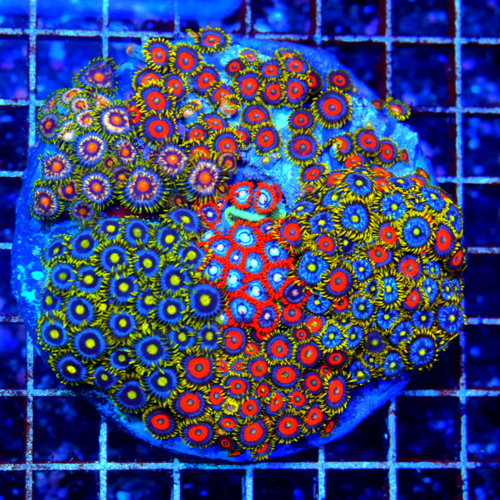
A comprehensive Extreme Corals guide to Zoanthid and Palythoa care, including lighting, flow, placement, water parameters, feeding, growth, pests, safe handling, palytoxin awareness, closed polyps, Zoa gardens and long-term reef tank success.
Learn Zoanthid and Palythoa care for reef tanks, including lighting, flow, placement, water parameters, feeding, growth, pests, safe handling, palytoxin awareness and Zoa garden tips.
by Scott Shiles • June 12, 2026
Zoanthids and Palythoas are among the most recognizable corals in the reef aquarium hobby because they combine extraordinary color, colony growth, pattern diversity, and relatively forgiving care in a way few other corals can match. A single small frag can become a living garden of glowing polyps, with rings, skirts, speckles, metallic centers, neon mouths, and color combinations that look almost impossible under reef lighting. Yet behind their popularity is a coral group that deserves real understanding. Zoanthids and Palythoas are hardy compared with many advanced corals, but they are still living cnidarians with specific needs for light, flow, water quality, placement, pest prevention, and safe handling.
Here at Extreme Corals, we have seen thousands upon thousands of Zoanthid and Palythoa colonies come through our systems over the years. We have seen brilliant colonies open like fields of wildflowers under blue light, and we have also seen what happens when polyps are smothered by algae, shocked by unstable salinity, irritated by pests, or placed in the wrong flow. In our experience, the reef keepers who do best with Zoanthids and Palythoas are not always the ones chasing the rarest names. They are the ones who understand how these corals behave, how they grow, how they respond to stress, and how to build stable reef conditions around them.
This complete Zoanthid and Palythoa care guide is written to be one of the most useful resources a reef hobbyist can read before buying, placing, growing, fragging, or troubleshooting these corals. It covers Zoanthid care, Palythoa care, lighting, water flow, tank size, water parameters, feeding, growth, placement, pest prevention, safe handling, palytoxin awareness, common problems, closed polyps, melting, algae irritation, Zoanthid gardens, compatibility, buying tips, and how to build long-term success. If you are shopping for colorful polyps, browse our Zoanthids for sale, new arrival corals, and Scott's Handpicked Corals.
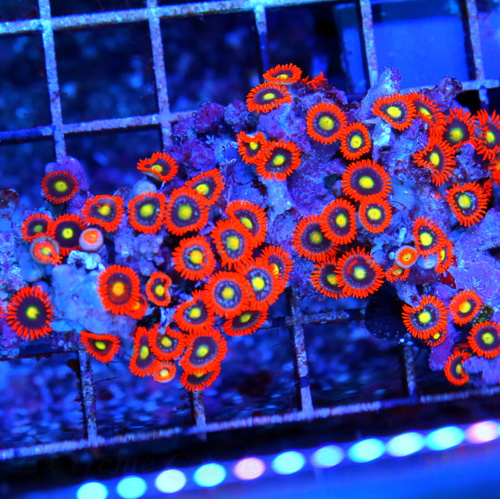
What Are Zoanthids and Palythoas?
Zoanthids and Palythoas are colonial polyps that grow across rock, plugs, rubble, and reef surfaces. Each polyp has a central mouth surrounded by tentacles, often called the skirt. In reef aquariums, they are prized for color and pattern rather than skeleton structure. Unlike LPS and SPS corals, Zoanthids and Palythoas do not build large stony skeletons. Instead, they grow as soft-bodied polyps connected by tissue across a surface.
In the aquarium trade, the words Zoanthid, Zoa, Palythoa, and Paly are sometimes used loosely. Some colonies are easy to recognize as small Zoanthid polyps, while others are larger, thicker Palythoa-type polyps. Some hobby names do not always match scientific classification perfectly. For the reef keeper, the practical care principles are similar, but there are important differences in growth habit, polyp size, aggressiveness, and safe handling.
Zoanthids are often smaller, tighter-growing polyps with intense color variation. Palythoas are often larger, thicker, and sometimes more aggressive in growth. Both can be beautiful. Both can be hardy. Both can also close, shrink, melt, or decline if the tank environment is unstable.
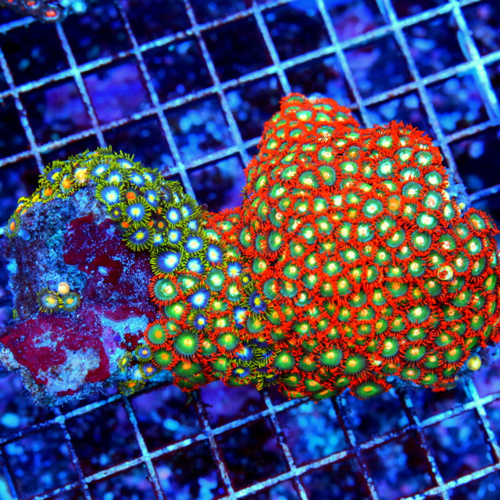
Why Zoanthids Are So Popular in Reef Aquariums
Zoanthids became famous in the reef hobby because no other coral group offers quite the same combination of color variety, collectability, growth, and visual customization. A reef keeper can create an entire garden using different Zoanthid morphs, each with its own name, color ring, skirt, and pattern.
Zoanthids are popular because they offer:
- Huge color variety
- Manageable care for many reef keepers
- Strong visual impact under blue reef lighting
- Good growth in stable systems
- Easy placement on rocks, islands, and frag plugs
- Great options for nano reefs and larger aquariums
- Excellent collector appeal
- Natural colony growth that can create a living reef garden
Here at Extreme Corals, we think Zoanthids are one of the best coral groups for reef keepers who want both beauty and variety. A reef full of only one coral type can become visually flat, but a carefully built Zoanthid garden creates contrast, movement, texture, and color without needing the extreme demands of many SPS systems.
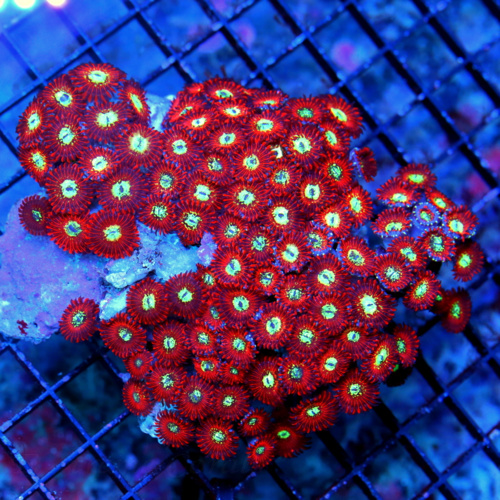
Why Palythoas Deserve Respect
Palythoas can be dramatic, hardy, and fast-growing. Many have large polyps, bold skirts, strong feeding response, and a rugged appearance that appeals to reef keepers who want a more substantial polyp colony. Some Palythoas can create a natural reef look quickly because their larger polyps fill space faster than small Zoanthids.
However, Palythoas also deserve respect. Some varieties may grow aggressively, crowd neighboring corals, trap detritus between polyps, or contain potentially dangerous palytoxin. Safe handling matters with both Zoanthids and Palythoas, but many reef keepers are especially cautious with Palythoa-type colonies.
Our advice is simple: enjoy them, but handle them intelligently. Do not boil, scrub, cut, crush, or aggressively disturb unknown Palythoa colonies. Wear eye protection and gloves when fragging or handling them, keep children and pets away from work areas, and never treat these corals casually just because they are common in the hobby.
Zoanthids vs Palythoas: Practical Differences
For day-to-day reef keeping, Zoanthids and Palythoas share many care needs, but there are differences worth understanding.
| Feature | Zoanthids | Palythoas |
|---|---|---|
| Polyp Size | Often smaller and tighter | Often larger and thicker |
| Growth Style | Can form colorful mats and gardens | Can grow faster and more aggressively in some tanks |
| Color Variety | Extremely broad, often highly collectible | Often bold, earthy, neon, or large-polyp patterns |
| Placement | Excellent for islands, gardens, and mixed reef rockwork | Best placed with growth control in mind |
| Handling | Use caution and protection | Use extra caution, especially with unknown colonies |
| Feeding Response | Some respond to fine foods | Many larger polyps show stronger feeding response |
The most important practical takeaway is that both groups need stable reef conditions, but Palythoas are often treated with more caution because of larger polyps, stronger growth, and palytoxin concern.
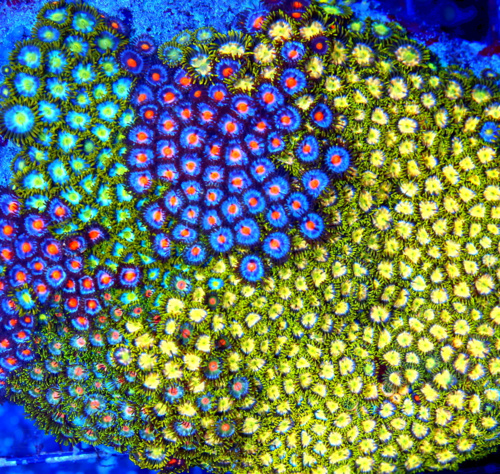
Are Zoanthids Good Beginner Corals?
Many Zoanthids are good beginner corals once the tank is fully cycled and stable. They are generally more forgiving than many LPS and SPS corals, and they can grow well under lower to moderate lighting. They are often excellent first corals for reef keepers who want color and growth without immediately entering advanced coral care.
Zoanthids are beginner friendly when:
- The tank is fully cycled with no ammonia
- Salinity is stable
- Lighting is appropriate and not suddenly intense
- Flow keeps debris away without blasting the polyps
- Nitrate and phosphate are measurable but controlled
- Pests are prevented or removed early
- The colony is not smothered by algae
They are not good choices for a tank that is still cycling, unstable, full of nuisance algae, or experiencing constant salinity swings. Easy does not mean indestructible. It means forgiving when the basic reef foundation is in place.
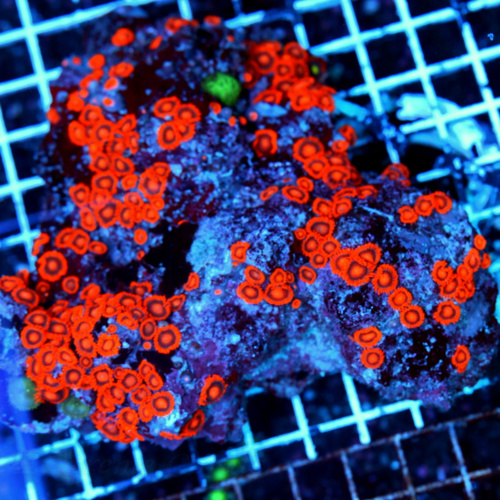
Are Palythoas Good Beginner Corals?
Some Palythoas are hardy enough for beginners, but they should be chosen and placed carefully. Their larger polyps and potential growth rate can make them useful for filling space, but they may spread quickly and should be handled with caution.
For new reef keepers, we recommend placing Palythoas on isolated rocks or dedicated areas where growth can be managed. Avoid placing fast-growing Palythoa colonies in the center of your main aquascape unless you are comfortable with them spreading over time.
Here at Extreme Corals, we like Palythoas for reef keepers who want bold, hardy polyps and understand safe handling. For a first-ever coral, many hobbyists may prefer smaller Zoanthids, mushrooms, or soft corals before adding fast-growing Palythoa colonies.
Best Tank Size for Zoanthids and Palythoas
Zoanthids and Palythoas can be kept in nano reefs, medium mixed reefs, and large reef aquariums. The best tank size depends less on the coral itself and more on stability. Small tanks can grow Zoanthids beautifully, but salinity and temperature swings happen faster. Larger tanks offer more stability and more room to create Zoanthid gardens.
| Tank Size | Zoanthid and Palythoa Suitability | Important Notes |
|---|---|---|
| 10-20 gallons | Excellent for small Zoa gardens if stable | Top-off and salinity control are critical |
| 20-40 gallons | Great for mixed beginner Zoa and soft coral tanks | Plan growth zones early |
| 40-75 gallons | Excellent for Zoa islands, mixed reefs, and larger colonies | More stable and easier to aquascape |
| 75+ gallons | Excellent for large gardens and collector displays | Requires more lighting and flow planning |
A 20 to 75 gallon reef is often a strong range for hobbyists building a Zoanthid-focused tank. Nano reefs can be beautiful, but evaporation must be controlled because salinity swings are one of the fastest ways to stress polyps.
Tank Equipment for Zoanthid and Palythoa Success
Zoanthids and Palythoas do not require the most expensive reef equipment, but they do need reliable equipment that supports stability. The most important equipment is the equipment that keeps the tank consistent.
Useful equipment includes:
- Reef-appropriate LED, T5, hybrid, or similar coral lighting
- Reliable heater and thermometer
- Powerhead or wavemaker for steady water movement
- RO/DI water source for top-off and salt mixing
- Refractometer or digital salinity meter
- Basic test kits for alkalinity, nitrate, phosphate, calcium, and magnesium
- Mechanical filtration such as floss, socks, or cups
- Protein skimmer for many medium and larger systems
- Auto top-off system when possible
Here at Extreme Corals, we would rather see a reef keeper use simple equipment consistently than buy complicated gear and neglect the basics. Zoanthids usually grow best in tanks with stable salinity, clean but nutrient-balanced water, moderate light, and enough flow to keep the colony clean.
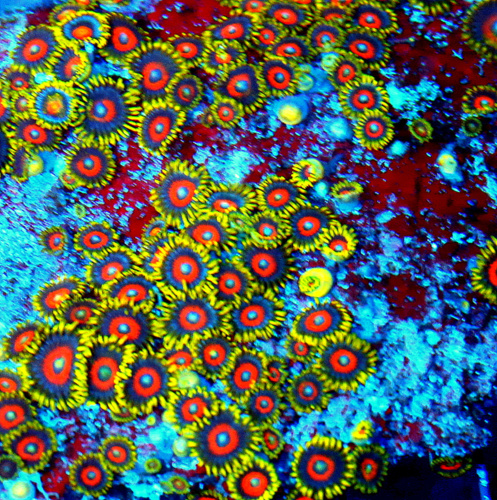
Water Parameters for Zoanthids and Palythoas
Zoanthids and Palythoas are forgiving compared with many advanced corals, but stable water still matters. They often tolerate measurable nutrients better than some SPS corals, but they do not like ammonia, major salinity swings, dirty stagnant areas, or rapid parameter changes.
| Parameter | Recommended Range for Zoanthids and Palythoas |
|---|---|
| Temperature | 76-80°F |
| Salinity | 1.024-1.026 specific gravity |
| pH | 8.0-8.4 |
| Alkalinity | 7-10 dKH, kept stable |
| Calcium | 400-450 ppm |
| Magnesium | 1250-1350 ppm |
| Nitrate | 2-15 ppm in many mixed reef systems |
| Phosphate | 0.03-0.10 ppm in many mixed reef systems |
| Ammonia | 0 ppm in established reef tanks |
Zoanthids and Palythoas often dislike ultra-sterile conditions. In our experience, many colonies look fuller and grow better when nitrate and phosphate are measurable but controlled. That does not mean dirty water is good. It means balance is better than stripping the reef to zero nutrients. For a deeper breakdown, read our reef tank water parameters guide.
Salinity Stability Is Critical
Salinity is one of the most important numbers for Zoanthids and Palythoas. These corals may look hardy, but repeated salinity swings can make polyps close, shrink, detach from healthy growth patterns, or melt. Nano reefs are especially vulnerable because evaporation changes salinity faster.
Good salinity habits include:
- Use RO/DI freshwater for top-off
- Do not top off evaporation with saltwater
- Use mixed saltwater only for water changes
- Check salinity with a calibrated refractometer or reliable digital meter
- Match new saltwater before water changes
- Use an auto top-off system when possible
If Zoanthids suddenly close across multiple colonies, salinity should be one of the first things you check.
Alkalinity, Calcium and Magnesium
Zoanthids and Palythoas do not consume alkalinity and calcium the same way fast-growing stony corals do, but they still benefit from stable reef chemistry. If your tank also contains LPS or SPS corals, alkalinity swings can affect the entire reef environment, including Zoanthid colonies.
Stable alkalinity supports overall reef stability, pH buffering, and coral health. Calcium and magnesium should remain in a normal reef range, especially in mixed reef tanks where stony corals and coralline algae are growing.
If Zoanthids are closing, do not ignore alkalinity just because they are not SPS corals. A sudden alkalinity change can stress the whole system. Read our pH and alkalinity guide for more help.
Nitrate and Phosphate for Zoanthids
Zoanthids and Palythoas often do best with measurable nutrients. Too many beginners make the mistake of trying to make nitrate and phosphate zero because they think zero equals clean. In many reef tanks, zero nutrients can lead to pale, closed, or slow-growing polyps.
Good nutrient balance helps support:
- Fuller polyp extension
- Better color stability
- Natural biological activity
- More consistent growth
- Less sensitivity to strong lighting
High nutrients can still cause problems. Too much nitrate and phosphate can fuel algae that grows between polyps and irritates the colony. The goal is measurable but controlled nutrients. Read our nitrates in reef tanks guide for a deeper look at nutrient balance.
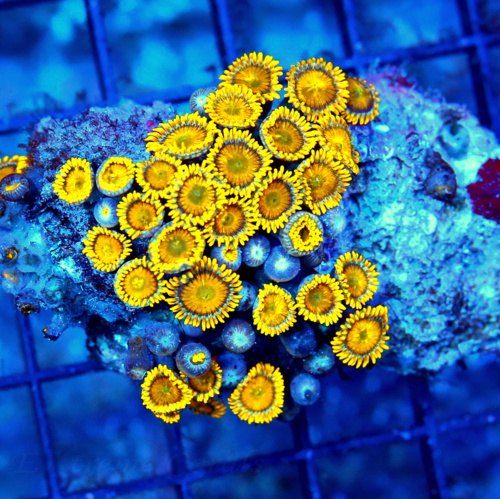
Lighting Requirements for Zoanthids and Palythoas
Zoanthids and Palythoas usually do well in low to moderate lighting, though some varieties can adapt to stronger light. The mistake is assuming every bright Zoanthid needs high light. Many polyps color and grow better when they are not shocked by intense lighting.
General lighting guidance:
- Start new Zoanthids in lower to moderate light.
- Move them higher slowly only if they stretch or lose color from insufficient light.
- Avoid sudden LED intensity increases.
- Use acclimation mode when changing lights.
- Watch how the colony looks during peak light.
Signs of too much light may include closed polyps, faded color, shrinking skirts, bleaching, or polyps looking tight during the brightest part of the day. Signs of too little light may include stretching, dull color, slow growth, or polyps reaching upward. Read our best reef tank lighting guide for more help.
Water Flow for Zoanthids and Palythoas
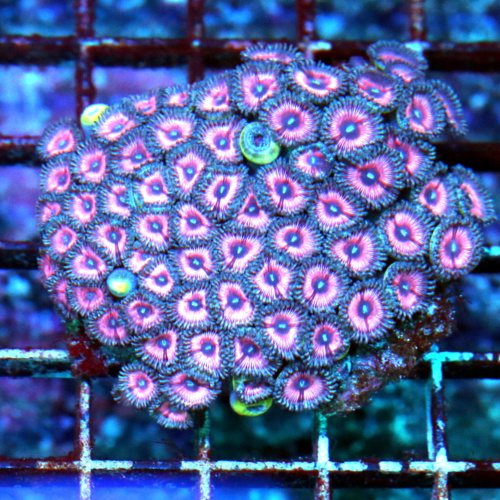
Flow is one of the biggest keys to healthy Zoanthid colonies. Zoanthids do not want to be blasted by a narrow powerhead jet, but they do need enough flow to keep debris, mucus, algae, and detritus from settling between polyps. Poor flow is one of the most common reasons Zoanthid colonies slowly decline.
Good flow should be:
- Moderate
- Indirect
- Varied when possible
- Strong enough to keep the colony clean
- Not so strong that polyps cannot open
If detritus settles between polyps, increase gentle flow or clean the area carefully. If the polyps are folded hard in one direction or stay closed on the side facing a pump, the flow may be too direct. Read our water flow and coral health guide.
Best Placement for Zoanthids
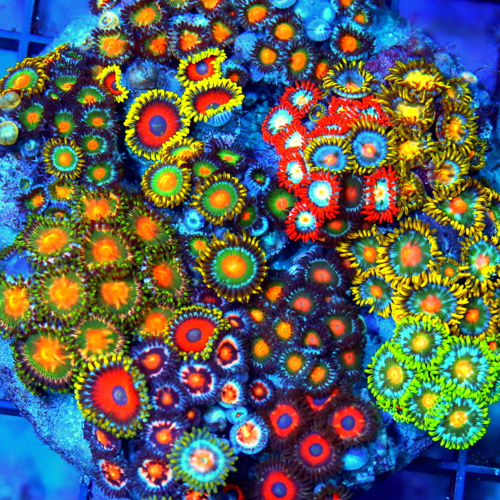
Zoanthids are excellent for reef rock, isolated islands, frag racks, grow-out areas, and dedicated Zoa gardens. Placement should consider light, flow, growth rate, color contrast, and future spread.
Good Zoanthid placement options include lower to middle rockwork, dedicated Zoanthid islands, moderate light shelves, areas with indirect flow, rubble gardens where colonies can spread naturally, and separate rocks for high-growth varieties.
When planning a Zoanthid garden, think like a landscaper. Put slower, prized varieties where they will not be overrun. Put faster-growing varieties on isolated rocks. Leave room between colonies so they can expand without immediate competition.
Best Placement for Palythoas
Palythoas should usually be placed with even more growth control in mind. Some varieties can spread quickly and shade or crowd nearby corals. They can look fantastic on dedicated rocks, but they may become difficult to remove if they grow across the main aquascape.
Good Palythoa placement options include isolated rocks, dedicated colony zones, back or side areas where spread is acceptable, moderate flow areas that prevent debris buildup, and locations away from delicate or slow-growing corals.
Do not place fast-growing Palythoas beside expensive slow-growing Zoanthids unless you are willing to manage the boundary. Growth control starts with the first placement decision.
Building a Zoanthid Garden
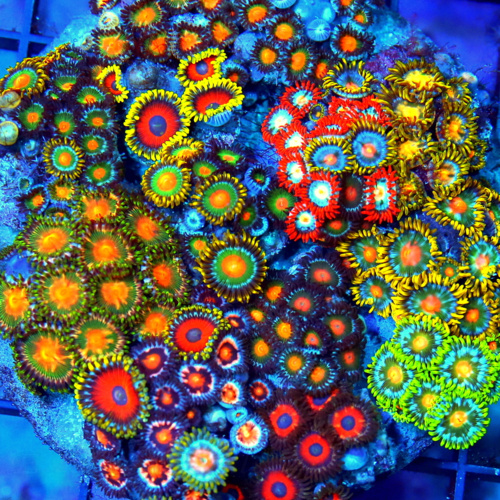
A Zoanthid garden can be one of the most beautiful displays in a reef tank. The best gardens are not random piles of frags. They are planned around color, growth speed, polyp size, lighting, flow, and spacing.
To build a strong Zoa garden:
- Group varieties with similar lighting needs.
- Place faster growers on edges or separate rocks.
- Leave room between high-value slow growers and aggressive spreaders.
- Use color contrast intentionally.
- Keep the garden in a flow zone that prevents detritus buildup.
- Watch for pests before adding new colonies.
- Do not let nuisance algae take hold between polyps.
Here at Extreme Corals, we think the best Zoanthid gardens look natural but are actually planned. The reef keeper gives the polyps room to grow into each other gradually while preventing one aggressive variety from covering the entire display.
Do Zoanthids and Palythoas Need Feeding?
Zoanthids and Palythoas are photosynthetic, but many can benefit from nutrient availability and occasional feeding. Larger Palythoa polyps often show a stronger feeding response than small Zoanthids. Some Zoanthids may capture fine foods, while others rely more on light, dissolved nutrients, and fish-fed reef systems.
Feeding options may include fine coral foods, small zooplankton-style foods, phytoplankton-style foods when appropriate, small meaty particles for larger Palythoas, and nutrients supplied naturally through fish feeding.
Feeding should be light. Heavy feeding can raise nutrients and fuel algae between polyps. If the colony closes after feeding, the food may be too large, the flow may be wrong, or the tank may already have enough nutrients.
Zoanthid Growth Rate
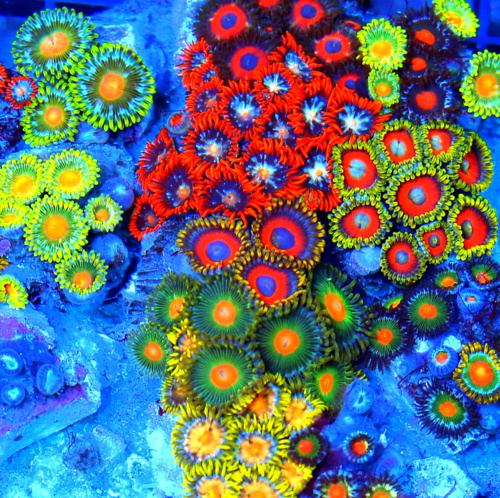
Zoanthid growth rate depends on variety, lighting, nutrients, flow, stability, and pest pressure. Some varieties grow quickly and cover plugs fast. Others grow slowly and remain prized collector pieces for years. A slow-growing Zoa is not always unhealthy. Some morphs are naturally slower.
Zoanthid growth improves when salinity is stable, light is appropriate, flow keeps the colony clean, nutrients are measurable but controlled, pests are absent, algae is not irritating the mat, and the colony is not being moved constantly.
Do not judge every Zoa by the fastest-growing variety in your tank. Growth speed is part genetics, part environment, and part stability.
Palythoa Growth Rate
Palythoas often grow faster than many small collector Zoanthids, though this depends on the variety. Large-polyp Palys can spread quickly when nutrients, light, and flow are favorable. That can be useful if you want coverage, but it can be a problem if the colony is on your main rock structure.
To manage Palythoa growth, use isolated rocks, keep them away from slow-growing prized Zoanthids, trim or frag only with proper safety precautions, do not let colonies grow into delicate LPS or SPS corals, and plan the colony’s future size rather than just the current frag size.
Palythoas can be beautiful, but they should be placed like a coral that may become dominant.
Safe Handling and Palytoxin Awareness
Any serious Zoanthid and Palythoa care guide must talk about safe handling. Some Zoanthids and Palythoas can contain palytoxin or related compounds. The risk is highest when colonies are cut, crushed, boiled, scrubbed, handled roughly, or exposed to situations that aerosolize or spread toxins. Most hobbyists keep Zoanthids safely by using common sense, but careless handling can be dangerous.
Safe handling practices include:
- Wear gloves when handling Zoanthids or Palythoas.
- Wear eye protection when fragging or cutting.
- Do not boil live rock with Zoanthids or Palythoas on it.
- Do not scrub colonies aggressively in open air.
- Do not cut colonies near children or pets.
- Wash hands and tools after handling.
- Avoid touching your face or eyes during handling.
- Use ventilation and careful containment when fragging.
Here at Extreme Corals, we want reef keepers to enjoy these corals with respect. Safety does not mean fear. It means treating the coral like a living animal with defensive chemistry, not like a plastic decoration.
Common Zoanthid Pests
Zoanthids can be affected by several pests. A healthy colony may suddenly close, shrink, or disappear if pests are present. Prevention and inspection matter, especially when adding new frags.
Common Zoanthid pests and irritants include Zoanthid-eating nudibranchs, sundial snails, small predatory hitchhikers, Asterina stars in some systems, flatworms in some cases, egg clusters near closed polyps, algae growing between polyps, and vermetid snail webs irritating colonies.
New Zoanthids should be inspected closely before entering the display. Dipping can help with some pests, but dips may not kill eggs. Visual inspection, quarantine when possible, and repeated observation are important. Read our coral pests and predators guide and coral quarantine guide.
Why Zoanthids Stay Closed
Closed Zoanthids are one of the most common reef keeper frustrations. A colony may close for a few hours after disturbance, shipping, dipping, or feeding. That can be normal. But if Zoanthids stay closed for days, something needs investigation.
Common reasons Zoanthids stay closed include shipping or acclimation stress, salinity swings, too much light, too little light, too much direct flow, too little flow and detritus buildup, nuisance algae between polyps, pests or eggs, fish or invertebrate irritation, nearby coral aggression, unstable alkalinity, or poor water quality.
Do not immediately start dosing random products. First, test salinity, alkalinity, nitrate, and phosphate. Look closely for pests. Check flow. Check whether algae is irritating the mat. Then make a slow, targeted correction.
Zoanthid Melting and Polyp Loss
Zoanthid melting is when polyps begin shrinking, dissolving, or disappearing from a colony. This can happen from stress, infection, pests, poor water quality, rapid parameter shifts, or severe irritation. It can sometimes move quickly, especially after shipping stress or damage.
Possible causes include unstable salinity, dirty stagnant areas, pests, algae smothering the colony, physical damage, poor acclimation, sudden lighting changes, and bacterial irritation.
If melting begins, isolate the issue if possible. Remove dead material carefully, improve flow, check water parameters, inspect for pests, and consider appropriate coral dips outside the display when needed. Do not let decaying tissue sit in a small system.
Algae Around Zoanthids
Algae is one of the most common reasons Zoanthids decline. When algae grows between polyps, it traps detritus, blocks light, irritates tissue, and prevents polyps from opening. The colony may look like it is sick when the real problem is algae pressure.
Algae problems around Zoanthids are often caused by high nutrients, poor flow, old plugs with exposed surfaces, detritus buildup, too much feeding, weak cleanup crew support, and insufficient maintenance.
Fix the environment, not just the visible algae. Improve flow, control feeding, clean around the colony carefully, maintain nutrients, and keep the colony from being smothered.
Fish and Invertebrate Compatibility
Zoanthids and Palythoas usually do well with peaceful reef-safe fish and invertebrates. Problems happen when animals nip polyps, walk over colonies constantly, steal food, bury the colony in sand, or irritate closed polyps.
Use caution with some angelfish, some butterflyfish, some filefish, large crabs, urchins that bulldoze loose frags, fish that spit sand onto low colonies, and shrimp that steal food or pick constantly at irritated polyps.
If Zoanthids close after adding a new fish, watch the tank from a distance. Some fish only nip when the reef keeper is not standing close.
Coral Compatibility and Spacing
Zoanthids and Palythoas can grow beside many corals, but spacing still matters. They can be irritated by aggressive LPS corals, and they can also overgrow slower neighbors if allowed to spread unchecked.
Keep them away from Torch Corals, Hammer Corals, Frogspawn Corals, Galaxea, aggressive chalice corals, Favia and Favites with sweeper tentacles, and slow-growing SPS that can be overrun.
Zoanthid gardens look best when the reef keeper plans boundaries. Use separate rocks, sand gaps, or careful trimming to prevent unwanted overgrowth.
Fragging Zoanthids and Palythoas
Zoanthids and Palythoas can be fragged, but safety and cleanliness matter. Fragging means cutting living tissue, and these corals may contain defensive compounds. This is not a job to do casually on the kitchen counter without protection.
Safe fragging principles include wearing gloves and eye protection, using clean tools, working in a controlled area away from children and pets, avoiding unnecessary crushing of polyps, cutting through mat or rock when possible rather than slicing polyps, rinsing frags in clean saltwater before returning them to the system, disposing of waste safely, and washing hands, tools, and surfaces afterward.
Beginners should practice caution and read more before fragging. For general coral propagation help, read our coral fragging guide.
How to Choose Healthy Zoanthids Online
When buying Zoanthids online, do not choose by name alone. A famous name does not matter if the frag is unhealthy. Look for good polyp structure, clean tissue, healthy color, and no visible algae or pest pressure.
Look for open or naturally shaped polyps, good color for that variety, no obvious melting tissue, no heavy algae between polyps, no visible nudibranchs, sundial snails, or eggs, a clean plug or rock surface, and healthy tissue connecting the polyps.
Be cautious with frags that are closed in every photo, smothered with algae, freshly cut and irritated, or showing missing polyps. Some freshly handled Zoas may close temporarily, but a healthy frag should still look like it has strong tissue.
How to Choose Healthy Palythoas Online
When buying Palythoas online, health and placement planning are both important. Large polyps should look full, attached, and free of decay. Avoid colonies with rotting tissue, damaged mouths, or heavy algae growing between polyps.
Choose Palythoa colonies that show full polyp shape, secure attachment, no melting or slime, no severe bleaching, clean surrounding surface, and good spacing for growth. Because some Palys can spread quickly, decide where the colony will go before buying it. A beautiful Palythoa can become a problem if it is placed in the wrong spot.
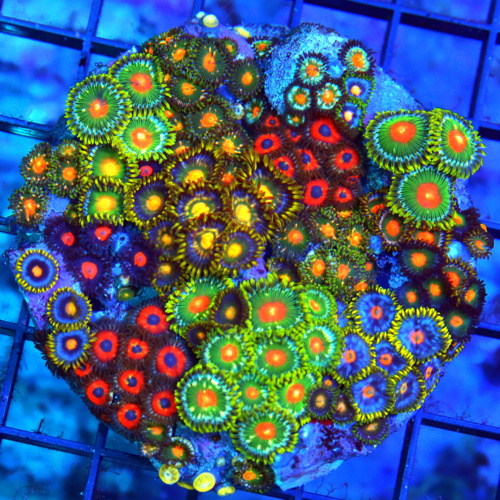
Our Practical Zoanthid and Palythoa Advice at Extreme Corals
At Extreme Corals, our practical advice is simple: give Zoanthids and Palythoas stable water, moderate light, enough indirect flow, and a clean growing surface. Do not strip nutrients to zero. Do not let algae smother the colony. Do not ignore pests. Do not handle unknown Palythoa colonies carelessly. If you get those basics right, these corals can become some of the most rewarding pieces in your reef tank.
Our Zoanthid and Palythoa care rules are:
- Start new frags in moderate light.
- Use indirect flow that keeps polyps clean.
- Keep salinity stable.
- Keep nitrate and phosphate measurable but controlled.
- Inspect for pests before adding new colonies.
- Keep algae from growing between polyps.
- Use isolated rocks for fast growers.
- Handle all Zoanthids and Palythoas safely.
- Do not move colonies constantly.
- Let healthy colonies grow into planned gardens.
Zoanthids and Palythoas are not just easy colorful corals. They are living reef animals that can tell a story about stability, adaptation, and growth. When cared for properly, they can turn a reef tank into a living mosaic.
Related Zoanthid, Palythoa and Coral Care Guides
If you are building a Zoanthid garden or learning Palythoa care, these related guides and categories can help:
- Zoanthids for Sale - Browse colorful Zoanthids and Palythoa-style polyps.
- Why Zoanthids Stay Closed - Troubleshoot closed polyps and common stress causes.
- Zoanthid Coral Care Guide - Learn more about Zoanthid care basics.
- Coral Pests and Predators Guide - Identify pests that irritate coral colonies.
- Coral Quarantine Guide - Protect your display before adding new corals.
- Best Reef Tank Lighting Guide - Match Zoanthids to proper lighting zones.
- Coral Placement Guide - Plan coral spacing and growth zones.
- Reef Tank Water Parameters Guide - Keep water stable for coral health.
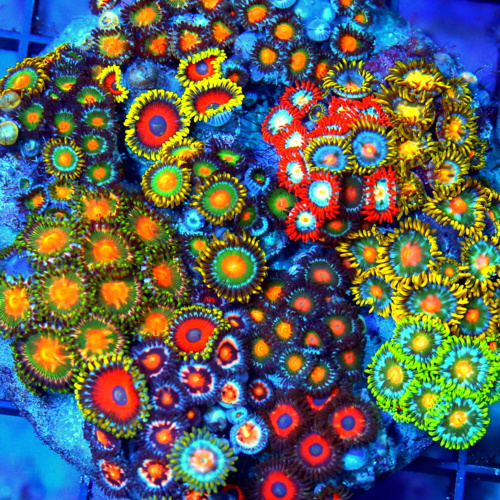
Shop Zoanthids and Palythoas at Extreme Corals
Zoanthids and Palythoas are excellent choices for reef keepers who want color, colony growth, and a living garden effect in their aquarium. They do best in stable reef tanks with moderate lighting, indirect flow, balanced nutrients, safe handling, and thoughtful placement.
Browse our Zoanthids for sale, new arrival corals, new coral frags, soft corals, mushroom corals, and Scott's Handpicked Corals at ExtremeCorals.com to choose healthy WYSIWYG corals for your reef aquarium.
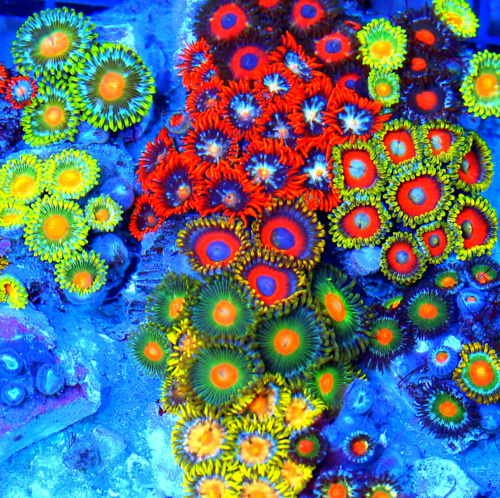
Frequently Asked Questions About Zoanthid and Palythoa Care
Are Zoanthids easy to care for?
Many Zoanthids are beginner friendly once the tank is stable. They need stable salinity, moderate lighting, indirect flow, measurable but controlled nutrients, and protection from pests and algae irritation.
Are Palythoas easy to care for?
Many Palythoas are hardy, but they should be placed carefully because some grow quickly and may contain palytoxin. Handle them with gloves and eye protection, especially when cutting or disturbing colonies.
What lighting do Zoanthids need?
Zoanthids usually do well in low to moderate lighting, though some varieties adapt to stronger light. Start new frags lower or in moderate light and adjust slowly based on polyp response.
What flow is best for Zoanthids?
Zoanthids usually prefer moderate indirect flow that keeps debris away without blasting the polyps. Poor flow can allow detritus and algae to build up between polyps.
Do Zoanthids need feeding?
Zoanthids are photosynthetic and do not need heavy feeding, but they may benefit from nutrient availability, fish-fed reef systems, and occasional fine coral foods.
Why are my Zoanthids closed?
Zoanthids may stay closed because of shipping stress, salinity swings, too much light, too much flow, poor water quality, pests, algae irritation, fish nipping, or nearby coral aggression.
Do Zoanthids like dirty water?
Zoanthids do not need dirty water, but many do better with measurable nutrients rather than zero nitrate and zero phosphate. The goal is balanced, controlled nutrients.
Can Zoanthids grow next to other corals?
Zoanthids can grow near many corals, but they should be kept away from aggressive stinging corals and given enough space so they do not overgrow slower neighbors.
Can Palythoas be dangerous?
Some Palythoas and Zoanthids can contain palytoxin or related compounds. Do not boil, crush, scrub, or cut them carelessly. Use gloves, eye protection, and safe handling practices.
How do I build a Zoanthid garden?
Build a Zoanthid garden by grouping varieties with similar light and flow needs, separating fast growers from slow growers, using isolated rocks when needed, preventing pests, and keeping algae from growing between polyps.
About the Author
Scott Shiles is the owner of ExtremeCorals.com, which he has operated for over 25 years and is recognized as one of the early dedicated live coral websites on the internet. A lifelong reef keeper since 1984, Scott has decades of hands-on experience maintaining marine aquariums and previously owned and operated a brick and mortar aquarium retail store for 10 years, including five years alongside Extreme Corals. He holds a degree in Marine Biology and has personally selected and sold hundreds of thousands of live corals. An avid scuba diver who has explored reef systems around the world, Scott shares practical coral care and husbandry knowledge based on real world reef experience.
overall rating:
my rating:
log in to rate
1 Comment
Please log in to leave a comment.
For more information visit: additional resources