My Cart: 0 item(s)

Extreme Corals News and Updates
Duncan Coral Care Guide: Duncanopsammia Lighting, Flow, Feeding, Placement and Growth Tips
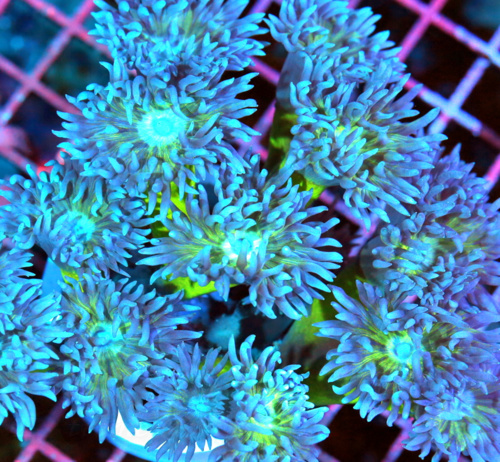
A comprehensive Extreme Corals guide to Duncan Coral care, including Duncanopsammia lighting, flow, placement, feeding, water parameters, growth, fragging, closed polyps, compatibility, buying tips and LPS coral care.
Learn Duncan Coral care for reef tanks, including Duncanopsammia lighting, flow, placement, feeding, water parameters, growth, fragging, closed polyps and LPS coral care tips.
by Scott Shiles • May 26, 2026
Duncan Corals are one of the best LPS corals for reef keepers who want movement, color, feeding response, and a coral that can grow into a beautiful colony without being as demanding as many high-end SPS corals. Also called Duncanopsammia axifuga, Duncan Coral, Whisker Coral, Daisy Coral, or Duncanopsammia Coral, this large polyp stony coral has become a favorite because it brings a soft, flowing look to the aquarium while still offering the structure and colony growth of an LPS coral.
Here at Extreme Corals, we have handled and sold a tremendous number of Duncan Corals over the years, and in our experience, they are one of the most dependable LPS corals when placed correctly. A healthy Duncan Coral can open wide, extend long tentacles, feed aggressively, grow new heads, and become a centerpiece colony in a mixed reef. They are often forgiving enough for newer reef keepers with stable tanks, but they still need proper lighting, moderate indirect flow, stable alkalinity, clean but nutrient-balanced water, and enough room to expand.
This complete Duncan Coral care guide covers Duncanopsammia lighting, water flow, placement, feeding, water parameters, growth rate, fragging, compatibility, common problems, closed polyps, tissue recession, pests, buying tips, and how to build long-term success with this popular LPS coral. If you are shopping for colorful LPS corals, browse our LPS corals for sale, new arrival corals, and Scott's Handpicked Corals.
What Is a Duncan Coral?
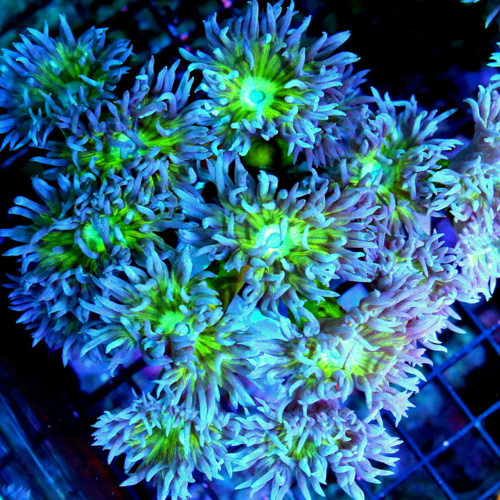
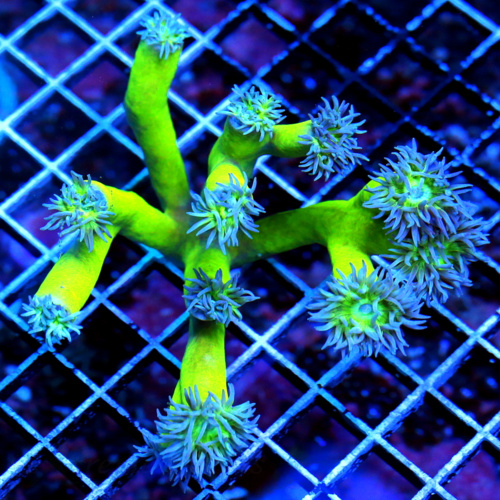
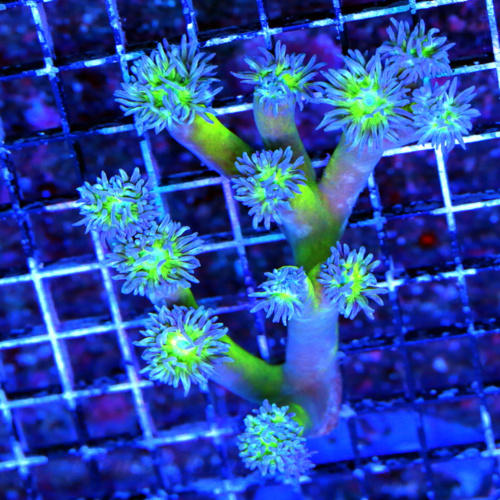
Duncan Coral is the common aquarium name for Duncanopsammia axifuga, a large polyp stony coral from the family Dendrophylliidae. In reef aquariums, Duncans are loved for their round fleshy polyps, long waving tentacles, branching skeleton, and strong feeding response. Many specimens show green, teal, cream, tan, blue-green, yellow, or purple tones depending on lighting and individual color strain.
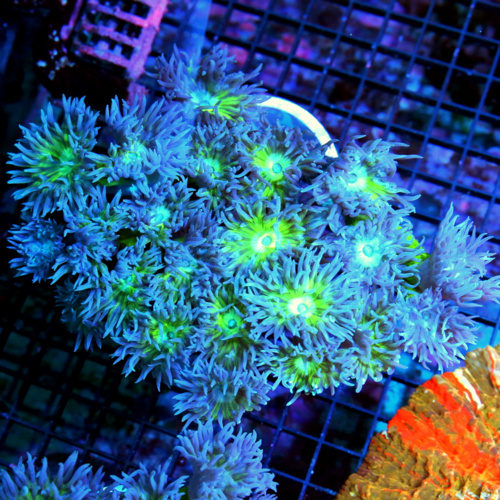
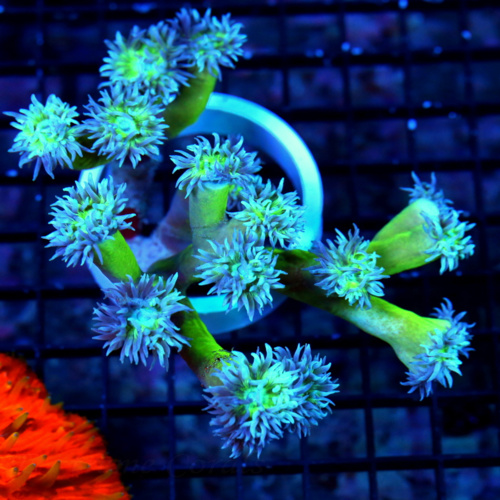
Duncan Corals grow as branching colonies. Each head has a fleshy polyp that extends from a hard calcium carbonate skeleton. When healthy, the polyps open wide and create a soft, flower-like appearance. This is why Duncan Corals are sometimes called Daisy Corals or Whisker Corals.
A healthy Duncan Coral usually shows:
- Open, full polyps during the light cycle
- Extended tentacles that move gently in the flow
- Fleshy tissue covering the polyp base
- No exposed fresh skeleton around the head
- Good feeding response when food is offered
- Gradual growth of new heads in stable conditions
- Normal retraction at night or when disturbed
Duncans are often considered one of the better beginner-to-intermediate LPS corals because they are hardy compared with many delicate fleshy LPS corals, but they still provide excellent movement and colony growth.
Why Duncan Corals Are So Popular in Reef Tanks
Duncan Corals are popular because they offer several things reef keepers want in one coral. They move in the current, they feed well, they grow visible new heads, they usually adapt well to mixed reef aquariums, and they can become impressive colonies without taking over the entire tank.
Reef keepers like Duncan Corals because they offer:
- Great movement from long tentacles
- Good color under reef lighting
- Strong feeding response
- Visible head growth over time
- Moderate care requirements
- Good beginner LPS potential in stable tanks
- Less aggression than many Euphyllia corals
- A natural colony look in mixed reefs
In our experience, Duncan Corals are excellent bridge corals for reef keepers moving from soft corals into LPS. They help hobbyists learn about alkalinity stability, calcium demand, feeding response, and coral placement without being as unforgiving as many advanced LPS or SPS corals.
Are Duncan Corals Beginner Friendly?
Duncan Corals can be good beginner LPS corals when the reef tank is stable. They are usually more forgiving than many Torch Corals, chalices, Acropora, and delicate fleshy LPS corals. However, they are still stony corals, which means they use calcium, alkalinity, and magnesium to grow their skeleton.
Duncan Corals are easier when:
- The tank is fully cycled and stable.
- Salinity stays consistent.
- Alkalinity does not swing sharply.
- Lighting is moderate instead of extreme.
- Flow is moderate and indirect.
- Nitrate and phosphate are measurable but controlled.
- The coral is not placed beside aggressive stinging corals.
They are not good choices for brand-new unstable systems with ammonia, salinity swings, poor lighting control, or constant parameter changes. For a reef keeper with basic maintenance habits in place, Duncan Corals can be very rewarding.
Best Tank Setup for Duncan Corals
Duncan Corals do well in many mixed reef aquariums. They do not need an SPS-dominant system, but they do need stable reef conditions. A tank with moderate light, moderate indirect flow, stable salinity, stable alkalinity, and reasonable nutrients is usually ideal.
A good Duncan Coral tank setup includes:
- A fully cycled reef aquarium
- Stable temperature and salinity
- Moderate reef lighting
- Moderate indirect water flow
- Room for colony growth
- Stable alkalinity, calcium, and magnesium
- Clean water with measurable nutrients
- Peaceful reef-safe fish and invertebrates
Duncans can work in nano reefs, medium mixed reefs, and larger reef displays. In smaller aquariums, stability and spacing become more important because small tanks change quickly and leave less room between coral colonies.
Duncan Coral Lighting Requirements
Duncan Corals usually do best under moderate reef lighting. They are photosynthetic and benefit from reef lighting, but they do not need to be blasted with intense SPS-level light. Too much light too quickly can cause Duncans to stay closed, shrink, fade, or lose fullness.
A practical Duncan Coral lighting approach is:
- Start new Duncans in lower to moderate light.
- Move them gradually if more light is needed.
- Avoid placing new specimens directly under intense LED peaks.
- Watch polyp expansion during peak light hours.
- Use light acclimation when upgrading fixtures or changing schedules.
Many Duncan Corals do well in moderate PAR ranges, often somewhere around the lower to middle zones of a mixed reef. Exact placement depends on the aquarium depth, light fixture, spectrum, water clarity, and coral response. Read our best reef tank lighting guide for more detail on matching coral placement to lighting.
Signs Duncan Coral Is Getting Too Much Light
Duncan Corals can usually adapt to moderate light, but sudden high intensity can stress them. Modern LED lights can be stronger than they appear, especially under blue-heavy reef settings.
Signs of too much light may include:
- Polyps staying tight during peak lighting
- Fading or washed-out color
- Reduced tentacle extension
- Polyp tissue looking thin
- Better expansion in shaded periods
- Slow decline after a lighting increase
If your Duncan looks better lower in the tank or during lower light periods, reduce intensity or move it to a more moderate zone. Do not move the coral repeatedly every day. Choose a better location and give it time to adjust.
Water Flow for Duncan Corals
Duncan Corals usually prefer moderate indirect flow. Their polyps should move gently, but they should not be whipped, folded, or blasted by direct powerhead current. Too much flow can keep the coral closed and irritate the fleshy tissue. Too little flow can allow debris to settle around the heads and skeleton.
Good Duncan Coral flow should be:
- Moderate
- Indirect
- Broad rather than narrow and forceful
- Strong enough to keep debris away
- Gentle enough for full polyp extension
When flow is right, the tentacles should sway naturally without being slammed in one direction. If the coral stays closed only on the side facing a pump, direct flow may be the problem. For more help, read our water flow and coral health guide.
Best Placement for Duncan Corals
Duncan Corals are usually best placed in lower to middle areas of the aquarium or on stable rockwork where they receive moderate light and indirect flow. They can also be placed higher if the lighting is not too intense and the coral is acclimated slowly, but many reef keepers have excellent success with them in moderate zones.
Good Duncan Coral placement options include:
- Middle rock shelves
- Lower to middle mixed reef zones
- Stable plug or rock positions
- Moderate flow areas away from direct pump output
- Open areas where the colony can grow new heads
Avoid placing Duncan Corals:
- Directly in front of a powerhead
- Under intense light without acclimation
- Where sand is constantly blown into the polyps
- Against aggressive LPS corals
- Where large snails, urchins, or crabs can knock them over
- Too close to fast-growing corals that will crowd the colony
Placement matters because Duncan Corals grow branching heads. A single frag can become a colony over time, so give it room from the beginning. Our coral placement guide can help you plan better long-term spacing.
Duncan Coral Water Parameters
Duncan Corals are hardy for LPS corals, but they still need stable reef chemistry. Because they are stony corals, alkalinity, calcium, and magnesium matter. Because they have fleshy polyps, salinity, nutrients, and flow stability also matter.
| Parameter | Recommended Range for Duncan Corals |
|---|---|
| Temperature | 76-80°F |
| Salinity | 1.024-1.026 specific gravity |
| pH | 8.0-8.4 |
| Alkalinity | 7-10 dKH, kept stable |
| Calcium | 400-450 ppm |
| Magnesium | 1250-1350 ppm |
| Nitrate | 2-15 ppm in many mixed reefs |
| Phosphate | 0.03-0.10 ppm in many mixed reefs |
| Ammonia | 0 ppm in established reef tanks |
In our experience, Duncan Corals often do well in clean but not stripped water. Ultra-low nutrient systems can make some LPS corals look thin or less inflated, while excessive nutrients can fuel algae and irritate the skeleton. Stability and balance are more important than chasing extreme numbers. For a deeper breakdown, read our reef tank water parameters guide.
Alkalinity Stability for Duncan Corals
Alkalinity stability is one of the most important parts of Duncan Coral care. Duncans are not usually as sensitive as Acropora, but they still build skeleton and can react poorly to sudden alkalinity changes. A Duncan may close, lose fullness, slow growth, or begin tissue recession if alkalinity swings repeatedly.
Alkalinity instability may show as:
- Polyps staying closed
- Reduced tentacle extension
- Slower new head growth
- Tissue pulling back from the skeleton
- Poor feeding response
- General stress after dosing or water changes
Keep alkalinity stable instead of trying to force a perfect number. A consistent 8 dKH is usually better than bouncing from 7 to 10 dKH. Read our pH and alkalinity guide for more help with reef chemistry.
Do Duncan Corals Need Feeding?
Duncan Corals are photosynthetic, but they also benefit from feeding. This is one of the reasons reef keepers enjoy them so much. A healthy Duncan often grabs food quickly and pulls it toward the mouth. Feeding can support growth, new head development, tissue fullness, and recovery, especially in tanks with lower nutrients.
Good foods for Duncan Corals may include:
- Mysis shrimp
- Small pieces of marine shrimp
- Finely chopped meaty foods
- Small LPS pellets
- Zooplankton-style coral foods
- Fine coral foods that the polyps can capture
Feed small portions. Large food pieces can be rejected or rot in the aquarium. In many reef tanks, feeding once or twice per week is plenty. Heavy feeding can raise nitrate and phosphate if filtration and maintenance do not keep up.
How to Feed Duncan Corals Safely
The best time to feed is when the polyps are open and the tentacles show a feeding response. You can gently target feed each head or broadcast feed small particles depending on the aquarium.
A simple Duncan Coral feeding method is:
- Use a small amount of appropriate food.
- Turn down strong flow temporarily if needed.
- Gently place food near the tentacles.
- Allow the coral to pull food toward the mouth.
- Protect food from shrimp or fish stealing it.
- Restart normal flow after feeding.
- Remove large rejected food pieces if possible.
Do not force food into closed polyps. If the Duncan refuses food repeatedly, check lighting, flow, salinity, alkalinity, and overall water quality.
How Fast Do Duncan Corals Grow?
Duncan Coral growth depends on stability, feeding, light, flow, water chemistry, and the health of the original frag. A healthy Duncan can grow new heads steadily in a stable reef tank. Some colonies grow quickly when fed and kept in balanced conditions, while others grow more slowly.
Growth is encouraged by:
- Stable alkalinity
- Proper calcium and magnesium
- Moderate light
- Moderate indirect flow
- Occasional feeding
- Measurable nutrients
- Enough space for the colony to expand
New heads often appear as small buds around the base or sides of existing polyps. Over time, these develop into full heads with their own tentacles. This visible growth is one of the reasons Duncan Corals are so satisfying to keep.
Duncan Coral Compatibility and Aggression
Duncan Corals are generally less aggressive than many LPS corals, but they still need space. They may not have the same long sweeper tentacles as some aggressive corals, but their fleshy polyps can be damaged by neighboring stingers or by direct contact with fast-growing corals.
Give Duncan Corals space from:
- Torch Corals
- Hammer Corals
- Frogspawn Corals
- Galaxea
- Aggressive chalice corals
- Favia and Favites with sweeper tentacles
- Fast-spreading soft corals that may crowd the skeleton
Duncan Corals often work well in mixed reefs when given room. They can be placed near peaceful corals, but do not let neighboring colonies grow into them. Coral spacing becomes more important as the colony gets larger.
Fish and Invertebrate Compatibility
Duncan Corals are usually compatible with peaceful reef-safe fish and invertebrates. Problems are more likely when animals irritate the polyps, steal food, knock the coral over, or perch repeatedly on the heads.
Good tankmates include:
- Peaceful reef-safe fish
- Small gobies and blennies that do not constantly perch on the coral
- Reef-safe wrasses with caution around feeding time
- Snails and cleanup crew that do not knock the coral loose
- Cleaner shrimp with caution because they may steal food
Use caution with large hermit crabs, urchins, coral-nipping fish, aggressive angelfish, butterflies, or fish that constantly bother fleshy LPS corals. If a Duncan stays closed after adding a new fish or invertebrate, observe the tank carefully for irritation.
How to Frag Duncan Corals
Duncan Corals are usually easier to frag than many fleshy LPS corals because they grow on branching skeletons. The safest frags are taken by cutting the hard skeleton between heads rather than cutting through fleshy tissue. However, fragging should still be done carefully with clean tools and stable water conditions.
Basic Duncan Coral fragging principles include:
- Only frag healthy, established colonies.
- Cut the skeleton between heads when possible.
- Avoid cutting through living polyp tissue.
- Use clean coral cutters, bone cutters, or a coral saw when appropriate.
- Rinse debris away after cutting.
- Place frags in moderate flow for healing.
- Watch for tissue recession or infection after fragging.
Duncan Corals can recover well from clean cuts, but rough breaks can damage tissue. If you are new to propagation, read our coral fragging guide before cutting prized colonies.
Why Is My Duncan Coral Closed?
A closed Duncan Coral is one of the most common concerns reef keepers have. Duncans may close temporarily at night, during feeding, after being touched, after a water change, or when disturbed. Occasional retraction is normal. Staying closed for days is a warning sign.
Common reasons Duncan Corals stay closed include:
- Too much direct flow
- Too much light or sudden lighting increase
- Salinity swings
- Alkalinity swings
- Poor water quality
- Nearby coral aggression
- Fish or shrimp irritating the polyps
- Recent shipping or acclimation stress
- Pests or physical damage
If your Duncan is closed, do not immediately move it repeatedly or dose random products. Test the water, observe flow and lighting, check for irritation, and look at recent changes. Repeated movement can make the problem worse.
Common Duncan Coral Problems
Duncan Corals are hardy, but they can still run into problems when the tank is unstable or placement is wrong.
Duncan Coral Not Opening
This is often caused by too much flow, too much light, recent stress, unstable alkalinity, salinity changes, or irritation from fish, shrimp, or nearby corals.
Duncan Coral Tissue Recession
Tissue recession may be caused by alkalinity swings, poor water quality, coral stings, bacterial irritation, fragging damage, or physical injury around the skeleton.
Duncan Coral Losing Color
Color loss can come from lighting stress, low nutrients, poor acclimation, unstable chemistry, or general stress. Check recent lighting changes and nutrient levels.
Duncan Coral Skeleton Showing
Some skeleton is visible between branches, but fresh exposed skeleton around a polyp head can mean recession or tissue damage. Watch closely and correct stress factors early.
Duncan Coral Covered With Algae
Algae growing on the skeleton can irritate nearby tissue. Improve nutrient control, flow, and gentle cleaning around the coral without damaging the polyps.
How to Choose a Healthy Duncan Coral Online
When buying Duncan Corals online, choose health first and color second. A healthy Duncan should have good tissue, open polyps when settled, and no obvious recession around the heads. If the coral is closed in a photo, look carefully at the skeleton and tissue base.
Look for:
- Full, open polyps when visible
- Healthy tissue around each head
- No fresh exposed skeleton at the polyp base
- No brown jelly or melting tissue
- Good color without severe bleaching
- A stable frag plug or branch structure
- Multiple heads if you want faster colony development
Be cautious with:
- Fresh tissue recession
- Heads that appear damaged or missing flesh
- Brown slime around the skeleton
- Severely bleached specimens
- Freshly broken pieces with torn tissue
At Extreme Corals, we know customers want corals that look good and have a realistic chance to thrive. Duncan Corals are excellent choices when the specimen is healthy and the buyer’s tank is ready.
Our Practical Duncan Coral Advice at Extreme Corals
At Extreme Corals, our practical advice for Duncan Corals is simple: keep them in moderate light, moderate indirect flow, stable salinity, and stable alkalinity. Feed lightly if they respond well, but do not overfeed the tank. Give the colony enough room to grow, and do not place it where aggressive corals can sting it.
Our Duncan Coral care rules are:
- Use moderate lighting.
- Use moderate indirect flow.
- Keep salinity stable.
- Keep alkalinity stable.
- Maintain calcium and magnesium for skeleton growth.
- Feed small foods occasionally if the coral responds well.
- Give space from aggressive LPS corals.
- Do not move the coral repeatedly unless placement is clearly wrong.
- Watch for closed polyps as an early warning sign.
A healthy Duncan Coral should look open, full, and active. When it is comfortable, it becomes one of the most rewarding LPS corals in a reef aquarium.
Related Duncan Coral and LPS Coral Guides
If you are researching Duncan Coral care or shopping for LPS corals, these related guides and categories can help:
- LPS Corals for Sale - Browse large polyp stony corals for reef aquariums.
- New Arrival Corals - See recently added corals for your reef tank.
- Scott's Handpicked Corals - Explore standout corals selected for color and quality.
- Hammer Coral Care Guide - Learn care for another popular LPS coral.
- Torch Coral Care Guide - Understand flow, placement, and aggression in Torch Corals.
- Euphyllia Coral Guide - Compare Torch, Hammer, and Frogspawn care.
- Coral Placement Guide - Plan coral placement by light, flow, spacing, and growth.
- Reef Tank Water Testing Guide - Keep coral water parameters stable.
Shop Duncan Corals and LPS Corals at Extreme Corals
Duncan Corals are excellent choices for reef keepers who want a hardy, attractive LPS coral with movement, feeding response, and visible colony growth. They are especially useful in mixed reefs where moderate lighting, moderate indirect flow, and stable reef chemistry are already in place.
Browse our LPS corals for sale, new arrival corals, new arrival coral frags, new coral colonies, and Scott's Handpicked Corals at ExtremeCorals.com to find healthy WYSIWYG corals for your reef aquarium.
Frequently Asked Questions About Duncan Coral Care
Are Duncan Corals easy to care for?
Duncan Corals are usually considered easier LPS corals when kept in a stable reef tank. They need moderate light, moderate indirect flow, stable salinity, stable alkalinity, and enough room to grow.
What lighting do Duncan Corals need?
Duncan Corals usually do best under moderate reef lighting. They should be acclimated slowly and should not be placed directly under intense light without adjustment.
What flow is best for Duncan Corals?
Duncan Corals usually prefer moderate indirect flow. The polyps should sway gently, but direct blasting flow can keep them closed or irritate the tissue.
Where should I place Duncan Corals?
Duncan Corals are often best placed in lower to middle areas of the reef tank or on stable rockwork where they receive moderate light and indirect flow.
Do Duncan Corals need feeding?
Duncan Corals are photosynthetic, but they benefit from occasional feeding. Small meaty foods, mysis shrimp, small LPS pellets, and fine coral foods can support growth when used carefully.
Why is my Duncan Coral closed?
A Duncan Coral may stay closed because of too much flow, too much light, salinity swings, alkalinity swings, poor water quality, nearby coral aggression, fish irritation, or recent shipping stress.
How fast do Duncan Corals grow?
Duncan Coral growth varies, but healthy specimens can grow new heads steadily in stable reef tanks with proper lighting, flow, water parameters, and occasional feeding.
Can Duncan Corals touch other corals?
Duncan Corals should be given space from other corals. They are not usually as aggressive as many LPS corals, but nearby stinging corals can damage their tissue.
Can Duncan Corals be fragged?
Yes, Duncan Corals can be fragged by cutting the branching skeleton between heads. Avoid cutting through living tissue and only frag healthy, established colonies.
What water parameters do Duncan Corals need?
Duncan Corals usually do well with temperature around 76-80°F, salinity 1.024-1.026, alkalinity 7-10 dKH, calcium 400-450 ppm, magnesium 1250-1350 ppm, and measurable but controlled nutrients.
About the Author
Scott Shiles is the owner of ExtremeCorals.com, which he has operated for over 25 years and is recognized as one of the early dedicated live coral websites on the internet. A lifelong reef keeper since 1984, Scott has decades of hands-on experience maintaining marine aquariums and previously owned and operated a brick and mortar aquarium retail store for 10 years, including five years alongside Extreme Corals. He holds a degree in Marine Biology and has personally selected and sold hundreds of thousands of live corals. An avid scuba diver who has explored reef systems around the world, Scott shares practical coral care and husbandry knowledge based on real world reef experience.
overall rating:
my rating:
log in to rate
Please log in to leave a comment.
For more information visit: additional resources