
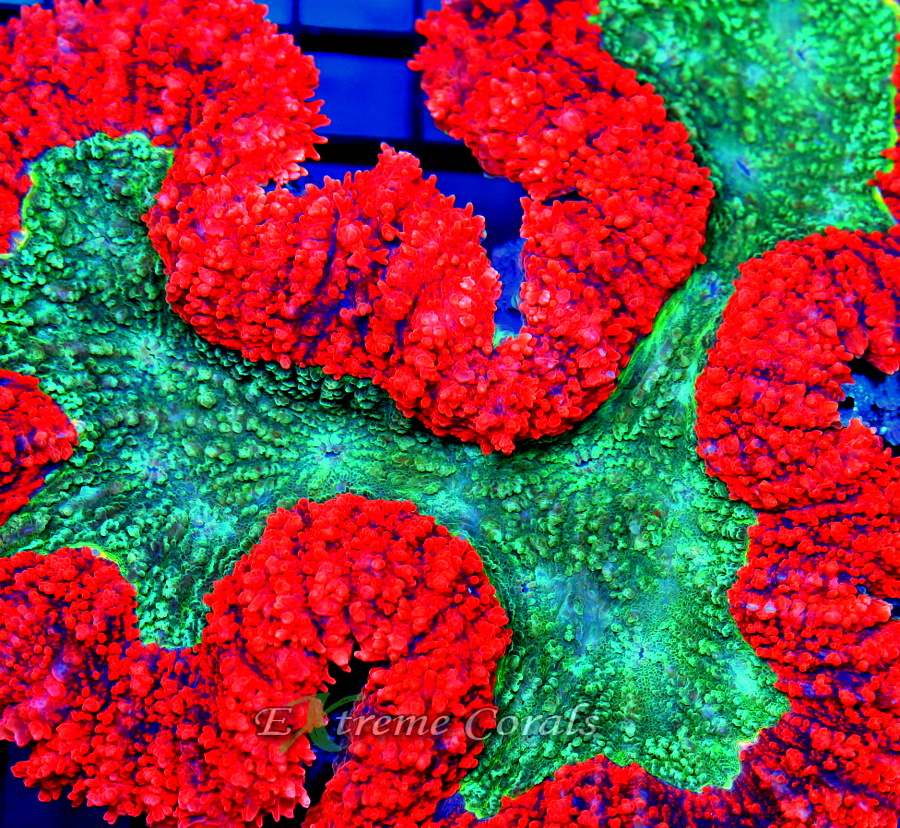
Lobophyllia and Symphyllia are two of the most appealing large-polyp stony corals in the reef hobby. Both are loved for their fleshy appearance, brain-like structure, strong coloration, and ability to become true showpieces in a mixed reef or LPS-dominant aquarium. They are the kind of corals that immediately give a tank more maturity and weight. When healthy, they add texture, depth, and that unmistakable premium LPS look that many reef hobbyists are chasing.
They are also two corals that get compared constantly, and for good reason. At a glance, hobbyists often group them together because both have lobed skeletal structure, fleshy tissue, and a generally similar role in the aquarium. But from a reefkeeping standpoint, there are some important differences in look, growth style, aggression, and placement strategy that are worth understanding before you buy.
If you keep fleshy LPS corals or are building a reef around standout display pieces, both of these corals fit naturally into that plan. They pair well with many of the specimens in our LPS corals collection, and they also compare closely with other showpiece corals featured in our Acanthophyllia care guide, Trachyphyllia care guide, Symphyllia wilsoni guide, and Micromussa care guide.
The key to long-term success with Lobophyllia and Symphyllia is not chasing tricks. It is understanding that both are fleshy LPS corals that reward stability, careful placement, and restraint. Hobbyists who blast them with flow, crowd them into coral wars, or keep moving them around usually create unnecessary problems. Hobbyists who respect their tissue, aggression, and need for consistency usually do much better.
What Is the Difference Between Lobophyllia and Symphyllia?
Lobophyllia, often shortened to Lobo, is usually recognized by its fleshy polyps, bold coloration, and rounded to deeply folded brain-like structure. It often shows dramatic color combinations, including greens, reds, oranges, blues, and mixed patterns that make it a favorite among collectors who want visual intensity.
Symphyllia, often called Lobed Brain or Closed Brain coral, tends to have a more convoluted, flowing, or folded structure with flesh that can more fully cover or wrap the skeleton. Its coloration can be more subdued in some specimens, though high-end pieces can still be extremely attractive. What Symphyllia sometimes gives up in raw brightness, it often makes up for in texture, pattern, and a more sculpted appearance.
In the reef tank, both are used as fleshy LPS display corals, but they do not always create the same visual effect. Lobophyllia often feels bolder and thicker in color presentation, while Symphyllia often brings more layered structure and pattern. If you enjoy corals with strong fleshy expansion and visible individuality, both are excellent choices.
Are Lobophyllia and Symphyllia Easy to Keep?
In a stable reef tank, both Lobophyllia and Symphyllia are usually considered moderate-care corals rather than difficult ones. They are more forgiving than many SPS corals, but they still punish poor placement, instability, and rough handling. They are not corals you want to treat casually just because they are LPS.
The main challenge is not usually advanced chemistry. The main challenge is respecting the coral as a living animal with fleshy tissue that can be damaged and with enough aggression to require real spacing. If your tank already does well with fleshy LPS corals, these are realistic additions. If your system swings in salinity, alkalinity, temperature, or nutrient levels, it is better to stabilize those basics first. Our main coral care guide is a good supporting resource if you are still tightening up the foundation of your reef.
Lighting for Lobophyllia and Symphyllia
Both Lobophyllia and Symphyllia generally do best under moderate lighting, with many hobbyists also keeping them successfully in slightly lower light depending on placement and acclimation. What matters most is not chasing maximum PAR, but giving the coral enough usable light to support healthy tissue and color without forcing it into stress.
A common mistake is assuming that colorful fleshy corals should automatically be placed high in the tank to intensify color. In reality, many Lobophyllia and Symphyllia specimens look and behave better when introduced more conservatively. Too much light too fast can lead to fading, poor expansion, or a chronically irritated appearance.
If you want a broader understanding of how light affects coral health and placement decisions, our article on how lighting affects coral growth is worth reading before placing new LPS corals.
Water Flow: Gentle to Moderate Usually Wins
Lobophyllia and Symphyllia both prefer low to moderate flow or gentle to moderate indirect flow rather than strong direct current. These corals need enough water movement to prevent waste from settling on the tissue and to support oxygen exchange, but they do not want to be blasted. Excessive flow can prevent full expansion, irritate tissue, and create long-term stress that hobbyists sometimes misread as a chemistry problem.
You want these corals to look calm, fleshy, and comfortably expanded. If the tissue is being whipped in one direction or staying tightly retracted, flow is probably too strong. If debris is settling heavily on the coral, flow may be too low or poorly directed. The ideal pattern is broad and indirect rather than narrow and forceful.
If flow tuning is still something you are refining, our article on water flow and coral health can help support better placement decisions.
Water Parameters and Stability
Like many fleshy LPS corals, Lobophyllia and Symphyllia tend to respond better to stability than to constant adjustment. A tank with stable salinity, alkalinity, temperature, pH, calcium, and magnesium is usually far more important than trying to hit some perfect textbook number every single day.
Good general priorities include:
- Stable salinity
- Stable alkalinity
- Consistent temperature
- Reasonable calcium and magnesium for skeletal support
- Low ammonia and nitrite
- Controlled nitrate and phosphate without harsh stripping
- Stable pH in a normal reef range
Many reef keepers see their best results with these corals in mature tanks that feel settled rather than systems that are constantly being corrected. If you want to strengthen the chemistry side of your reef, review our reef tank water parameters guide.
Feeding Lobophyllia and Symphyllia
Both of these corals are primarily photosynthetic, but they can benefit from occasional supplemental feeding. Small meaty foods like Mysis shrimp or quality coral foods can help support tissue fullness, feeding response, and overall condition, especially in systems where nutrients run on the lean side.
The most effective feeding strategy is usually moderate and deliberate rather than excessive. One or two feedings per week can be useful, but overfeeding quickly creates more problems than benefits if water quality begins to slide. Pumps can be reduced temporarily during target feeding so the coral has time to respond and retain the food.
Healthy Lobophyllia and Symphyllia should not need constant force-feeding. If a coral is already holding color, showing good tissue condition, and remaining stable, that is often a sign the overall system is supplying what it needs.
Placement in the Reef Tank
Placement is one of the biggest factors in long-term success with both Lobophyllia and Symphyllia. These corals are often best placed on the substrate or on secure lower rock structures where their tissue can expand without rubbing against sharp surfaces. Even if the skeleton seems safely positioned, fleshy tissue can extend farther than expected and contact nearby rock or neighboring corals.
Many hobbyists do best by treating both corals as lower-reef display pieces with real personal space. That means avoiding crowded coral gardens, narrow ledges, or locations where the coral will be constantly brushed by fish, crabs, or snails. If you are already keeping similar showpiece LPS corals, compare your placement strategy with our articles on Symphyllia wilsoni, Acanthophyllia, and Pectinia coral, since all of them reward thoughtful spacing and safe placement.
- Place them in low to mid areas in most systems
- Use stable substrate or smooth rock support
- Allow room for tissue expansion
- Avoid sharp rock edges and tight crevices
- Keep distance from aggressive neighboring corals
Aggression and Sweeper Tentacles
One of the biggest mistakes hobbyists make with Lobophyllia and Symphyllia is underestimating their aggression. Both can extend sweeper tentacles and can damage neighboring corals if placed too closely. This is especially important in mixed reefs where many different LPS corals are clustered together because they all look great side by side during the day.
Daytime appearance is not enough when planning coral spacing. You need to think about what the coral may do at night. Adequate spacing reduces both the chance of coral warfare and the chance of confusing aggression damage for lighting or chemistry issues later.
If you are building an LPS-heavy aquarium, spacing matters just as much as lighting and flow. Corals like Pectinia, Trachyphyllia, and Micromussa all reinforce the same lesson: pretty placement is not always safe placement.
How to Choose Between Lobophyllia and Symphyllia
If you are deciding between the two, the choice often comes down to the visual style you want and the rest of the reef around it. Lobophyllia often attracts hobbyists who want bold color, thicker-looking flesh, and a classic “Lobo” showpiece effect. Symphyllia often appeals to hobbyists who like convoluted texture, layered ridges, and more sculpted patterns.
Neither is automatically better. They simply create a different look. In many tanks, they also complement each other well. A colorful Lobophyllia placed near a more textural Symphyllia can create excellent visual variety as long as spacing is respected.
Common Mistakes with Lobophyllia and Symphyllia
Placing Them Too Close to Other Corals
This is one of the most common issues. Their fleshy tissue and potential sweeper reach mean they need more space than hobbyists often allow.
Using Too Much Direct Flow
Strong direct current can keep them irritated and retracted instead of full and healthy.
Moving Them Repeatedly
A new coral may take time to settle. Constant repositioning often adds more stress than it solves.
Overreacting to Minor Adjustment Stress
Fleshy LPS corals often need time after shipping or placement changes. Small, deliberate corrections are better than multiple drastic changes at once.
Focusing on Numbers Instead of Stability
These corals usually do best in stable systems, not in tanks where the reefer is constantly chasing idealized targets.
How to Tell if They Are Healthy
Healthy Lobophyllia and Symphyllia generally show good tissue fullness, stable coloration, and a settled appearance from day to day. Tissue should look substantial over the skeleton, not thin, torn, or receding. A healthy feeding response is also a good sign when appropriate foods are offered.
Positive signs include:
- Stable, fleshy expansion
- Good coloration
- No visible tissue recession
- Normal feeding response
- A consistent appearance over time
Warning Signs to Catch Early
If either coral starts declining, it is worth reviewing the basics first. Tissue recession, chronic retraction, faded color, damage from nearby corals, or repeated deflation often trace back to placement, flow, lighting, or recent instability.
Ask yourself:
- Is the coral getting hit by too much direct flow?
- Was it placed too brightly too quickly?
- Is nearby coral aggression a possibility?
- Have salinity, alkalinity, or temperature shifted recently?
- Has the tissue been rubbing against rock or skeleton?
Early corrections usually work far better than waiting until visible tissue loss becomes severe.
Lobophyllia and Symphyllia in Mixed Reefs
Both corals can do very well in mixed reefs if the aquascape allows them enough room. They are not usually the best corals for ultra-tight mixed gardens where every inch of rock is covered. They perform better when treated as lower-reef or mid-reef display pieces with space to breathe.
They also combine nicely with other premium LPS corals when the layout is deliberate. If you enjoy this kind of reef, it makes sense to compare them with other display-worthy choices like Symphyllia wilsoni, Acanthophyllia, Trachyphyllia, and Pectinia.
Frequently Asked Questions About Lobophyllia and Symphyllia
Are Lobophyllia and Symphyllia good beginner corals?
They are better described as moderate-care LPS corals. They are realistic for hobbyists with stable tanks, but they are not as forgiving as the easiest beginner corals.
Do Lobophyllia and Symphyllia need feeding?
They are primarily photosynthetic, but they can benefit from occasional feeding with small meaty foods or quality coral foods.
Where should Lobophyllia and Symphyllia be placed?
Most reef keepers have the best results placing them in lower to mid areas with moderate light, gentle to moderate indirect flow, and plenty of space from neighboring corals.
Are these corals aggressive?
Yes. Both can extend sweeper tentacles and should not be crowded against neighboring corals.
What is the main difference between Lobophyllia and Symphyllia?
Lobophyllia often shows bolder color and classic fleshy Lobo structure, while Symphyllia often features more convoluted texture and layered, lobed growth forms.
Related Corals and Reef Topics You May Also Like
If you are interested in Lobophyllia and Symphyllia, you may also want to explore these related care articles and coral categories to build a stronger, more compatible reef:
- Browse LPS corals for sale
- Read our Symphyllia wilsoni care guide
- See our Acanthophyllia care guide
- Compare with Trachyphyllia care
- Learn more about Micromussa care
- Understand Pectinia aggression and placement
- Improve your coral lighting strategy
- Dial in reef tank flow
- Strengthen reef water parameters
- See new coral arrivals
Ready to add a premium brain coral to your reef? Lobophyllia and Symphyllia can both become major showpieces when they are placed thoughtfully, fed sensibly, and given stable long-term conditions. For hobbyists who appreciate fleshy LPS corals with real presence, they remain two of the most rewarding choices in the hobby.
Shop Lobophyllia, Symphyllia, and Other LPS Corals
Explore our LPS corals for sale and find standout display corals for your reef tank.
About the Author
Scott Shiles is the owner of ExtremeCorals.com, which he has operated for over 25 years and is recognized as one of the early dedicated live coral websites on the internet. A lifelong reef keeper since 1984, Scott has decades of hands-on experience maintaining marine aquariums and previously owned and operated a brick and mortar aquarium retail store for 10 years, including five years alongside Extreme Corals. He holds a degree in Marine Biology and has personally selected and sold hundreds of thousands of live corals. An avid scuba diver who has explored reef systems around the world, Scott shares practical coral care and husbandry knowledge based on real world reef experience.