My Cart: 0 item(s)

Extreme Corals News and Updates
Zoanthid Coral Care Guide: Lighting, Flow, Placement, Growth and Color Tips
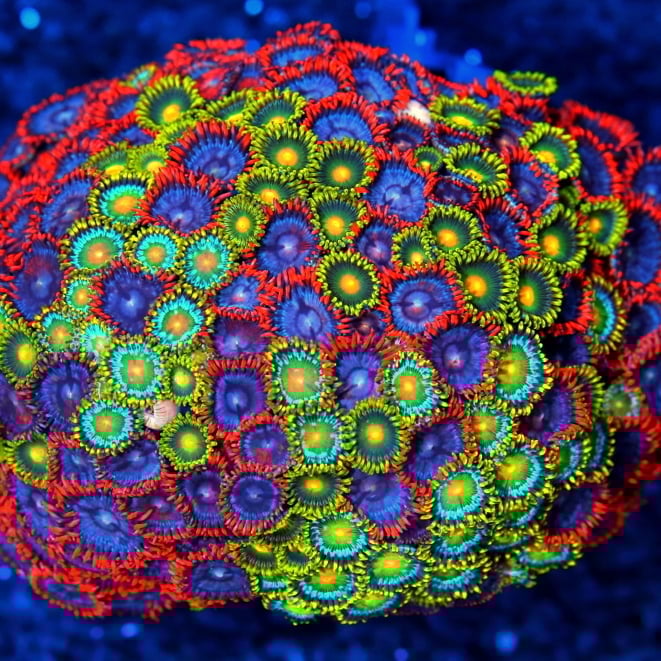
Learn how to care for zoanthid corals in a reef tank with the right lighting, flow, placement, nutrients, growth control, and safety tips for long-term success.
Learn how to care for zoanthid corals in a reef tank with tips on lighting, flow, placement, nutrients, growth, color, common problems, and palytoxin safety.
by Scott Shiles • April 15, 2026
Zoanthids are one of the most popular corals in reef aquariums because they combine bright color, easy care, fast growth, and strong adaptability in a wide range of tank conditions. Whether you are new to reefkeeping or already running an established mixed reef, zoanthids are often one of the best corals for adding color and coverage to rockwork. This guide explains how to care for zoanthid corals in a reef tank, including lighting, flow, placement, water parameters, feeding, growth, common problems, and important palytoxin safety precautions.
For many reef keepers, zoanthids are one of the first corals that make a tank look truly alive. Their wide variety of colors and patterns can create entire zoa gardens, and once they settle in, many varieties grow quickly and spread into impressive colonies. With proper care and stable conditions, zoanthids can be one of the most rewarding corals in the aquarium.
Looking to add colorful, beginner-friendly corals to your reef tank? Browse our zoanthids for sale and explore healthy additions for your aquarium.
Are Zoanthids Easy to Care For?
Yes, zoanthids are widely considered one of the easiest corals to care for, which is one reason they are so popular with both beginners and experienced hobbyists.
They are hardy, adaptable, and usually able to tolerate a wider range of conditions than many sensitive SPS and LPS corals. Their resilience, fast growth, and ability to perform well in nutrient-rich systems make them a reliable option for many reef tanks.
- They are beginner friendly
- They adapt to a wide range of reef conditions
- They usually grow quickly once established
- They provide strong color and coverage with manageable care
Natural Habitat and Location in the Wild
Zoanthids are found in tropical reef environments across the Indo-Pacific, Caribbean, and Atlantic regions. They are especially common in places such as Australia, Indonesia, Fiji, the Red Sea, and the Great Barrier Reef.
In the wild, they are often found on shallow reef flats, rocky reef structures, lagoon areas, and coral rubble zones where they attach firmly to hard surfaces under moderate lighting and moderate water movement.
That natural habitat helps explain why zoanthids usually adapt well to reef tanks with:
- Moderate lighting
- Low to moderate indirect flow
- Stable water chemistry
- Hard surfaces such as live rock for spreading
Why Choose Zoanthids for Your Reef Tank?
- Wide variety of colors and patterns that create striking coral gardens
- Beginner-friendly and hardy compared with many other coral species
- Fast-growing and encrusting for covering rock surfaces
- Easy to propagate for hobbyists who want to frag and expand colonies
Zoanthids are especially attractive to reef keepers who want colorful, low-maintenance corals that can quickly transform the look of the aquarium.
Zoanthid Coral Lighting Requirements
Proper lighting is one of the most important parts of zoanthid care. Zoanthids usually thrive under moderate lighting and often perform best in a PAR range of about 50 to 150.
- Recommended PAR: 50-150
- Best spectrum: blue-heavy lighting often enhances color best
- Too much light: can cause bleaching or persistent closed polyps
- Too little light: may cause dull color and slower growth
For best results, start new zoanthids in lower-light areas and gradually acclimate them upward if needed. Stable lighting usually produces better coloration than frequent changes.
If you want to understand reef lighting better, read our guide on reef tank lighting.
Zoanthid Coral Flow Requirements
Zoanthids prefer low to moderate indirect flow. They need enough movement to keep debris and algae from settling on the colony, but not so much that the polyps remain closed from irritation.
- Low to moderate indirect flow is usually ideal
- Direct high flow can irritate the colony
- Too little flow can allow detritus buildup
- Gentle, steady movement usually supports healthy extension
The best flow usually keeps the colony clean while still allowing the polyps to stay open comfortably.
If you want to learn more about circulation, read our guide on water flow and coral health.
Zoanthid Coral Placement in the Tank
Zoanthids are usually best placed in the lower to mid-level areas of the aquarium. They can adapt to higher placement over time, but they should always be acclimated slowly to stronger light.
For best results, place zoanthids:
- In the lower to middle areas of the tank
- Under moderate lighting conditions
- In areas with gentle, indirect flow
- With enough room to allow for spreading
Proper placement plays a major role in both growth rate and coloration. A colony that is placed thoughtfully often opens better, spreads faster, and colors up more strongly over time.
Water Parameters for Zoanthid Coral
Stable water parameters are key to long-term success with zoanthids. Although they are tolerant compared with many other corals, they still perform best within healthy reef ranges.
- Salinity: 1.025-1.026
- Alkalinity: 8-9 dKH
- Calcium: 400-450 ppm
- Magnesium: 1250-1350 ppm
- Nitrates: 5-15 ppm
- Phosphates: 0.03-0.10 ppm
Unlike many SPS corals, zoanthids often benefit from slightly richer nutrient levels. Ultra-low nutrient systems can lead to slower growth, weaker expansion, and reduced coloration.
If you are working on chemistry stability, read our guide on pH and alkalinity in reef tanks.
Feeding Zoanthid Coral for Growth
Zoanthids do not require direct feeding to survive because they receive most of their energy from photosynthesis. However, occasional feeding can improve growth and colony expansion.
- They mainly rely on photosynthesis
- They can absorb nutrients from the water column
- Fine particulate foods may help some colonies grow faster
- In nutrient-rich tanks, extra feeding is often unnecessary
Feeding should always be balanced against water quality. Many zoanthid colonies grow very well with stable nutrients and moderate reef conditions alone.
Zoanthid Growth Rate and Spreading Behavior
Zoanthids are known for their fast growth and spreading behavior. Under stable conditions, they spread across rock surfaces using a mat-like base and can quickly form larger colonies.
- They are considered a fast-growing coral
- They often spread within weeks to months in stable systems
- Growth depends on light, nutrients, and tank stability
- They are excellent for filling in rockwork with color
In ideal conditions, many reef keepers see noticeable spreading within a few months, which makes zoanthids a great option for building a vibrant coral garden.
How to Make Zoanthids More Colorful
Zoanthid coloration depends on lighting, nutrients, and overall stability. If you want the strongest color, focus on consistency more than quick changes.
To improve zoanthid color:
- Use a blue-heavy lighting spectrum
- Maintain stable water parameters
- Avoid sudden changes in lighting or chemistry
- Keep moderate nutrient levels instead of stripping the tank too clean
Zoanthids often lose color in ultra-low nutrient systems or unstable tanks. Strong coloration usually comes from a balanced environment rather than extreme conditions.
Common Zoanthid Problems
Although zoanthids are hardy, they can still experience problems if tank conditions decline or pests are introduced.
Common issues include:
- Closed or retracted polyps
- Melting or shrinking colonies
- Algae growing between polyps
- Pest infestations such as nudibranchs or zoanthid spiders
Most zoanthid problems are linked to unstable conditions, poor flow, pest pressure, or excess algae. Regular observation and steady water quality are some of the best ways to prevent these issues.
Are Zoanthids Dangerous? Palytoxin Warning
Some zoanthids contain palytoxin, which is one of the most potent natural toxins known. Problems are rare, but it is still important to handle zoanthids carefully and respectfully.
- Avoid handling them with bare hands if you have cuts
- Wear gloves when moving or fragging colonies
- Use eye protection during fragging
- Never boil live rock containing zoanthids
With proper precautions, zoanthids are safe to keep and remain one of the most popular corals in the reef aquarium hobby.
How to Tell If Zoanthids Are Healthy
- Polyps stay open consistently
- Color remains bright and stable
- The colony spreads over time
- There is little to no algae growing between polyps
- The polyps respond well to stable tank conditions
A healthy zoanthid colony usually looks open, colorful, and actively spreading. A colony that stays closed too long is often reacting to something in the environment.
Best Tank Setup for Zoanthid Corals
Zoanthids usually do best in reef tanks with:
- Moderate lighting
- Low to moderate indirect flow
- Stable water chemistry
- Moderate nutrient levels
- Enough room to spread across rockwork
They are a strong choice for beginners, mixed reefs, nano tanks, and larger display systems where color and easy growth are priorities.
Related Corals You May Also Like
If you are interested in zoanthid corals, you may also want to explore other colorful beginner-friendly corals and related reef tank guides:
- Browse zoanthids for sale
- Xenia coral care guide
- Green Star Polyps care guide
- Beginner’s guide to caring for live corals
- Coral health signs guide
Ready to build a colorful zoa garden in your reef tank? Browse our zoanthids for sale and explore healthy additions for your aquarium.
Shop Zoanthids and Colorful Corals
Explore our WYSIWYG zoanthids, new arrival corals, and featured corals to build a more vibrant reef tank.
Final Thoughts
Zoanthids are one of the best corals for reef keepers who want bright color, easy care, and fast growth in a wide range of tank setups. With moderate lighting, low to moderate flow, stable parameters, moderate nutrients, and careful handling, zoanthids can become one of the most rewarding and visually impressive parts of a reef aquarium.
Frequently Asked Questions
Q: How fast do zoanthids grow?
A: Zoanthids grow rapidly and often begin spreading within weeks to months in stable reef tanks.
Q: Can zoanthids be kept in a nano tank?
A: Yes, but regular pruning may be needed because many varieties spread quickly.
Q: Do zoanthids require direct feeding?
A: Not necessarily. They survive well on photosynthesis, though occasional feeding can improve growth and color.
Q: How can I tell if my zoanthids are unhealthy?
A: Watch for closed polyps, faded color, melting tissue, algae between polyps, or slow growth.
Q: Can zoanthids be placed near other corals?
A: Yes, but they should be spaced thoughtfully so they do not overgrow slower neighboring corals.
Q: Is palytoxin dangerous?
A: Yes. Some zoanthids contain palytoxin, so gloves and eye protection are strongly recommended when handling or fragging them.
About the Author
Scott Shiles is the owner of ExtremeCorals.com, which he has operated for over 25 years and is recognized as one of the early dedicated live coral websites on the internet. A lifelong reef keeper since 1984, Scott has decades of hands-on experience maintaining marine aquariums and previously owned and operated a brick and mortar aquarium retail store for 10 years, including five years alongside Extreme Corals. He holds a degree in Marine Biology and has personally selected and sold hundreds of thousands of live corals. An avid scuba diver who has explored reef systems around the world, Scott shares practical coral care and husbandry knowledge based on real world reef experience.
overall rating:
my rating:
log in to rate
Please log in to leave a comment.
For more information visit: additional resources