My Cart: 0 item(s)

Extreme Corals News and Updates
Zoanthid Coral Care Guide: Lighting, Flow, Placement & Growth Tips (2026)
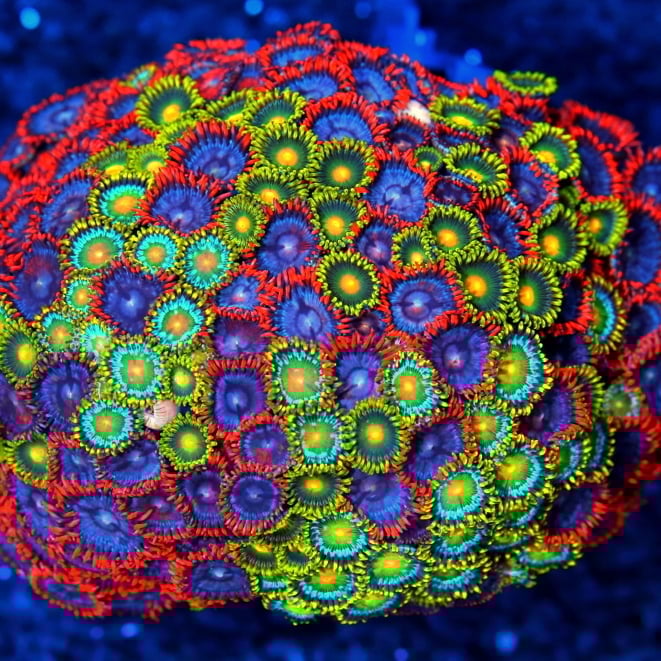
Zoanthid coral care guide – Learn how to maintain this fast-growing and colorful soft coral in your reef aquarium.
Zoanthids, or Zoas, are vibrant, fast-growing soft corals from the Indo-Pacific. This guide covers lighting, flow, feeding, and placement to ensure success in your home reef tank.
by Scott Shiles • September 22, 2025
Zoanthid Coral Care Guide: Lighting, Flow, Placement & Growth Tips (2026)
Zoanthids are one of the easiest corals to care for, making them ideal for beginners and experienced reef keepers alike. Known for their vibrant colors and fast growth, zoanthids can thrive in a wide range of reef tank conditions.
To successfully care for zoanthid corals, you need to provide moderate lighting, low to moderate water flow, stable water parameters, and proper placement within your aquarium. When these conditions are met, zoanthids will grow quickly, spread across rockwork, and display bright, eye-catching coloration.
Are Zoanthids Easy to Care For?
Yes — zoanthids are one of the easiest corals to care for and are ideal for beginners.
Zoanthids are considered one of the easiest corals to care for, making them a top choice for beginners. They are hardy, adaptable, and can tolerate a wide range of water conditions compared to more sensitive coral species.
Their fast growth rate, resilience, and ability to thrive in nutrient-rich environments make them a reliable and forgiving coral for most reef aquariums.
Zoanthid Coral Lighting Requirements
Proper lighting is essential for zoanthid coral care. Zoanthids thrive under moderate lighting conditions and generally prefer a PAR range of 50–150.
A blue-heavy spectrum helps enhance coloration and encourages healthy polyp extension. Too much light can cause bleaching or closed polyps, while insufficient lighting may result in dull color and slower growth.
For best results, start zoanthids in lower light areas and gradually acclimate them to higher light if needed.
Proper zoanthid coral care depends on stable conditions, moderate lighting, and consistent water quality.
Zoanthid Coral Flow Requirements
Zoanthids prefer low to moderate, indirect water flow. Flow should be strong enough to keep debris and algae from settling on the colony, but not so strong that it forces the polyps to remain closed.
Direct, high flow can irritate zoanthids, while insufficient flow can lead to detritus buildup. A gentle, indirect current is ideal for maintaining healthy colonies.
Zoanthid Coral Placement in the Tank
Zoanthids are best placed in the lower to mid-level areas of the aquarium. They can adapt to higher placement over time but should always be acclimated slowly to stronger lighting.
For best results, place zoanthids:
- In the lower to middle areas of the tank
- Under moderate lighting conditions
- In areas with gentle, indirect flow
- With enough space to allow for spreading
- Proper placement plays a major role in both growth rate and coloration.
Water Parameters for Zoanthid Coral
Stable water parameters are key to long-term success with zoanthid coral care. While zoanthids are tolerant, they perform best within the following ranges:
- Salinity: 1.025–1.026
- Alkalinity: 8–9 dKH
- Calcium: 400–450 ppm
- Magnesium: 1250–1350 ppm
- Nitrates: 5–15 ppm
- Phosphates: 0.03–0.10 ppm
Unlike many SPS corals, zoanthids often benefit from slightly higher nutrient levels. Ultra-low nutrient systems can lead to slower growth and reduced coloration.
Feeding Zoanthid Coral for Growth
Zoanthids do not require direct feeding to survive, as they receive most of their energy from photosynthesis. However, occasional feeding can improve growth and colony expansion.
They can absorb nutrients from the water and may benefit from fine particulate foods. In nutrient-rich tanks, additional feeding is often unnecessary.
Zoanthid Growth Rate and Spreading Behavior
Zoanthids are known for their fast growth and spreading behavior. Under stable conditions, they spread across rock surfaces using a mat-like base and can quickly form large colonies.
Growth rate depends on lighting, nutrient levels, and overall tank stability. In ideal conditions, zoanthids can multiply rapidly within a few months.
How Fast Do Zoanthids Grow?
Zoanthids grow quickly, often spreading within weeks to months in stable reef tanks
Zoanthids are considered a fast-growing coral when kept in proper conditions. With moderate lighting, stable parameters, and adequate nutrients, colonies can expand quickly and begin spreading within weeks.
Many reef keepers see noticeable growth within a few months, making zoanthids an excellent choice for filling in rockwork and creating colorful displays.
How to Make Zoanthids More Colorful
Coloration in zoanthids depends on lighting, nutrients, and stability. To achieve the best color:
- Use a blue-heavy lighting spectrum
- Maintain stable water parameters
- Avoid sudden changes in lighting or chemistry
- Keep moderate nutrient levels
Zoanthids often lose color in ultra-low nutrient systems or unstable environments. Consistency is key to vibrant coloration.
Common Zoanthid Problems
Although zoanthids are hardy, they can still experience issues:
- Closed or retracted polyps
- Melting or shrinking colonies
- Algae growing between polyps
- Pest infestations such as nudibranchs or zoanthid spiders
Most problems are caused by unstable conditions, poor flow, or pests. Regular observation and stable parameters help prevent these issues.
Are Zoanthids Dangerous? (Palytoxin Warning)
Some zoanthids contain palytoxin, one of the most potent natural toxins. While issues are rare, it is important to handle zoanthids carefully.
Avoid handling them with bare hands if you have cuts, and never boil live rock containing zoanthids. Wearing gloves and eye protection when fragging or moving colonies is strongly recommended.
With proper precautions, zoanthids are safe to keep and remain one of the most popular corals in the reef aquarium hobby.
Natural Habitat and Location in the Wild
Zoanthids are found in tropical reefs across the Indo-Pacific, Caribbean, and Atlantic Ocean, particularly in Australia, Indonesia, Fiji, the Red Sea, and the Great Barrier Reef. They thrive in shallow reef flats, lagoon areas, and rocky reef structures, where they attach to live rock and coral rubble under moderate water flow and lighting.
Why Choose Zoanthids for Your Reef Tank?
- Wide Variety of Colors & Patterns – Creates stunning, colorful coral gardens.
- Beginner-Friendly & Hardy – Thrives in a range of water conditions.
- Fast-Growing & Encrusting – Covers rock surfaces quickly.
- Easy to Propagate – Simple fragging process for hobbyists.
1. How fast do Zoanthids grow?
Zoanthids grow rapidly, covering rock surfaces in a few weeks under ideal conditions.
2. Can Zoanthids be kept in a nano tank?
Yes, but regular pruning is required to prevent overgrowth.
3. Do Zoanthids require direct feeding?
While they survive on photosynthesis, occasional feeding enhances growth and color vibrancy.
4. How can I tell if my coral is unhealthy?
Signs include closed polyps, faded colors, or slow growth.
5. Can Zoanthids be placed near other corals?
It should be spaced away from slower-growing corals to prevent overgrowth.
6. Is Palytoxin dangerous?
Yes, some Zoanthids contain palytoxin, which can be harmful if inhaled or absorbed through cuts. Always wear gloves when handling or fragging them.
About the Author
Scott Shiles is the owner of ExtremeCorals.com, which he has operated for over 25 years and is recognized as one of the early dedicated live coral websites on the internet. A lifelong reef keeper since 1984, Scott has decades of hands-on experience maintaining marine aquariums and previously owned and operated a brick and mortar aquarium retail store for 10 years, including five years alongside Extreme Corals. He holds a degree in Marine Biology and has personally selected and sold hundreds of thousands of live corals. An avid scuba diver who has explored reef systems around the world, Scott shares practical coral care and husbandry knowledge based on real world reef experience.
overall rating:
my rating:
log in to rate
Please log in to leave a comment.
For more information visit: additional resources