My Cart: 0 item(s)

Extreme Corals News and Updates
Bird’s Nest Coral in Reef Tanks: Seriatopora Care, Placement, Flow and Growth Tips
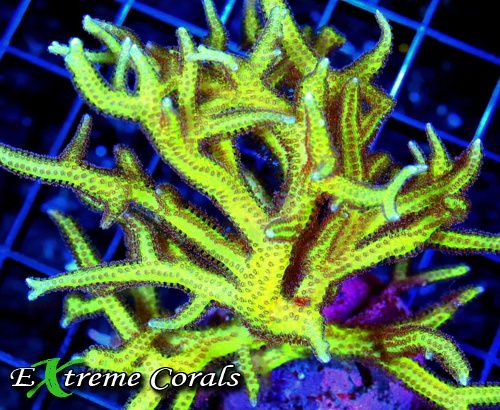
Find out how to properly care for your new Seriatopora Coral with this "how-to" guide on the requirements for healthy Seriatopora Coral from the #1 place to buy corals online!
Read along to find out the Lighting, Water Flow, Feeding, Placement & more when it comes to the care of your new Seriatopora Coral
by Scott Shiles • March 30, 2023
Looking to add Seriatopora to your reef tank? Browse our SPS corals for sale and explore colorful branching corals for your aquarium.
Seriatopora, commonly called bird’s nest coral, is one of the most popular SPS corals for reef keepers who want fast growth, intricate branching structure, and strong color in a home aquarium. This guide explains how to keep bird’s nest coral healthy in a reef tank, including lighting, water flow, placement, feeding, fragging, and the most common issues that can slow growth or damage the colony.
Bird’s nest coral is often recommended as one of the more approachable SPS corals because it offers the branching look many reef keepers want without always being as demanding as some higher-end Acropora species. In the right system, it can grow quickly, create beautiful structure, and add a bright, natural reef look to the tank.
What Is Seriatopora?
Seriatopora is a small polyp stony coral known for its delicate branching structure that resembles a bird’s nest. In reef aquariums, it is especially popular for its visual texture, relatively fast growth, and strong color potential.
Bird’s nest corals can show a range of colors, including pink, green, yellow, and purple tones depending on species, lighting, and overall tank conditions. Their branching structure can become a major focal point in a well-planned SPS or mixed reef.
Why Bird’s Nest Coral Is So Popular
- It has an intricate branching shape that adds strong reef structure
- It often grows faster than many SPS corals
- It can be a more approachable SPS option for reef keepers
- It brings bright color to the upper sections of a reef tank
- It can be fragged and propagated once established
For many hobbyists, Seriatopora is a great transition coral between beginner LPS and more demanding SPS species. It rewards good tank stability with noticeable growth and visible colony development.
Natural Habitat and Why It Matters
Bird’s nest corals are found in the Indo-Pacific and are often associated with areas that receive good light and solid water movement. That natural environment helps explain why Seriatopora usually performs best under stronger lighting and moderate to strong turbulent flow in reef aquariums.
Understanding where the coral comes from helps with placement. A coral that evolved in brighter, better-oxygenated reef conditions will rarely do its best in a dim, low-flow corner of the tank.
Lighting for Seriatopora
Bird’s nest coral generally does best under moderate to high lighting. Strong, stable lighting supports photosynthesis, growth, and better coloration over time.
- Moderate to high lighting is usually ideal
- A practical range is often around 250-350 PAR
- Avoid sudden jumps in intensity
- Acclimate new frags slowly when moving them higher in the tank
Too little light can slow growth and dull color, while too much light too quickly can stress fresh pieces. In most tanks, Seriatopora performs well when placed where it receives reliable light without abrupt changes.
If you are still fine-tuning your system, learn more about coral lighting.
Water Flow for Bird’s Nest Coral
Seriatopora generally prefers moderate to high water flow. Good flow helps keep the colony clean, improves nutrient exchange, and reduces dead spots between the branches.
- Moderate to high turbulent flow is usually best
- Aim for strong movement without one harsh direct blast
- Good flow helps prevent debris from settling in the colony
- Randomized flow is often better than constant directional flow
Bird’s nest coral does not usually do well in stagnant areas. Its branching structure can trap detritus if circulation is weak, which is one reason strong overall tank flow matters so much for long-term health.
You can also read our reef flow guide.
Water Parameters for Seriatopora
Like other SPS corals, bird’s nest coral depends heavily on stable reef chemistry. Fast swings are often more damaging than slightly imperfect numbers.
- Temperature: 75-82°F
- pH: 8.1-8.4
- Specific gravity: 1.023-1.025
- Ammonia and nitrite: 0 ppm
- Nitrate: as low and stable as practical
- Phosphate: low and controlled
In an SPS system, stability matters more than chasing every reading. A healthy Seriatopora colony usually comes from a tank with consistent salinity, stable alkalinity, and predictable maintenance.
If you are working on chemistry stability, learn more about pH and alkalinity in reef tanks.
Best Placement for Bird’s Nest Coral
Seriatopora is usually best placed in an area where it can receive strong light and solid water movement without being crowded by neighboring corals.
- Middle to upper placement is often best
- Leave space around the colony for future growth
- Keep it away from aggressive stinging corals
- Choose a position with steady, clean flow
Because bird’s nest can grow quickly, placement should account for future size, not just the current frag. A small piece can become a dense branching colony faster than many hobbyists expect.
Does Seriatopora Need Feeding?
Bird’s nest coral relies mainly on photosynthesis, but occasional supplemental feeding can still be helpful in some systems.
- Photosynthesis remains the main energy source
- Fine planktonic foods may be offered once or twice weekly
- Do not overfeed the whole tank
- Stable water quality still matters more than heavy feeding
In many home reef tanks, lighting, flow, and chemistry drive most of the success with Seriatopora. Feeding can support health, but it is not a substitute for stability.
How Fast Does Bird’s Nest Coral Grow?
Bird’s nest coral is often known for relatively fast growth compared with many other SPS corals. In a stable reef tank, it can build out a branching colony fairly quickly.
- Growth can be fast under strong conditions
- Stable light and flow improve colony development
- Good chemistry supports better skeletal growth
- Space planning matters as the colony thickens
This is one reason Seriatopora is such a rewarding SPS coral. Hobbyists can often see visible progress sooner than they would with slower-growing species.
Fragging and Propagation
Once established, bird’s nest coral can usually be fragged successfully by experienced hobbyists using clean tools and stable post-frag conditions.
- Use clean, sterilized tools
- Cut carefully to avoid unnecessary tissue damage
- Give new frags stable light and flow while healing
- Monitor closely after fragging
Its branching structure makes it a practical coral for propagation, which is another reason it remains popular in SPS systems and frag setups.
Common Seriatopora Problems
Bleaching
Too much light too quickly, temperature swings, or general instability can cause color loss and bleaching.
Poor Growth or Browning
Weak lighting, poor flow, or excess nutrients can reduce color quality and slow growth.
Tissue Loss
Rapid or slow tissue recession can happen when water stability breaks down or the coral is stressed for too long.
Disease and Pest Issues
Quarantining new corals, maintaining good water quality, and watching for early signs of trouble can help reduce disease risk.
How to Tell If Bird’s Nest Coral Is Healthy
- Strong, even coloration
- Visible steady growth over time
- Clean tissue with no recession
- A settled branching structure without chronic stress signs
A healthy Seriatopora colony usually looks stable and steadily expanding. If color fades or tissue begins pulling away, it is worth reviewing placement and tank stability right away.
Related Corals You May Also Like
If you are interested in Seriatopora, you may also want to explore other SPS and reef-building corals:
- Browse SPS corals for sale
- Pocillopora care guide
- Acropora care guide
- How to frag corals
- Overview of coral types and care guidelines
Ready to build an SPS reef? Browse our SPS corals for sale and explore healthy branching corals for your aquarium.
Shop Seriatopora and SPS Corals
Explore our WYSIWYG SPS corals and find colorful branching corals for your reef tank.
Frequently Asked Questions
Q: Is bird’s nest coral a good beginner SPS coral?
A: Bird’s nest coral is often considered one of the more approachable SPS corals because it combines fast growth and strong visual appeal with somewhat broader tolerance than more demanding SPS species.
Q: What PAR does Seriatopora need?
A: A practical target is often around 250-350 PAR, depending on the system and acclimation.
Q: What flow is best for bird’s nest coral?
A: Moderate to high turbulent flow is usually ideal because it keeps the colony clean and supports healthy growth.
Q: Does Seriatopora need feeding?
A: It mainly relies on photosynthesis, but occasional fine planktonic foods may help in some systems.
Q: Why is my bird’s nest coral turning white?
A: Bleaching can be caused by too much light too quickly, temperature instability, or broader tank stress.
About the Author
Scott Shiles is the owner of ExtremeCorals.com, which he has operated for over 25 years and is recognized as one of the early dedicated live coral websites on the internet. A lifelong reef keeper since 1984, Scott has decades of hands-on experience maintaining marine aquariums and previously owned and operated a brick and mortar aquarium retail store for 10 years, including five years alongside Extreme Corals. He holds a degree in Marine Biology and has personally selected and sold hundreds of thousands of live corals. An avid scuba diver who has explored reef systems around the world, Scott shares practical coral care and husbandry knowledge based on real world reef experience.
overall rating:
my rating:
log in to rate
Please log in to leave a comment.
For more information visit: additional resources