My Cart: 0 item(s)

Extreme Corals News and Updates
Saltwater Aquarium Maintenance Guide: Daily, Weekly and Monthly Reef Tank Care
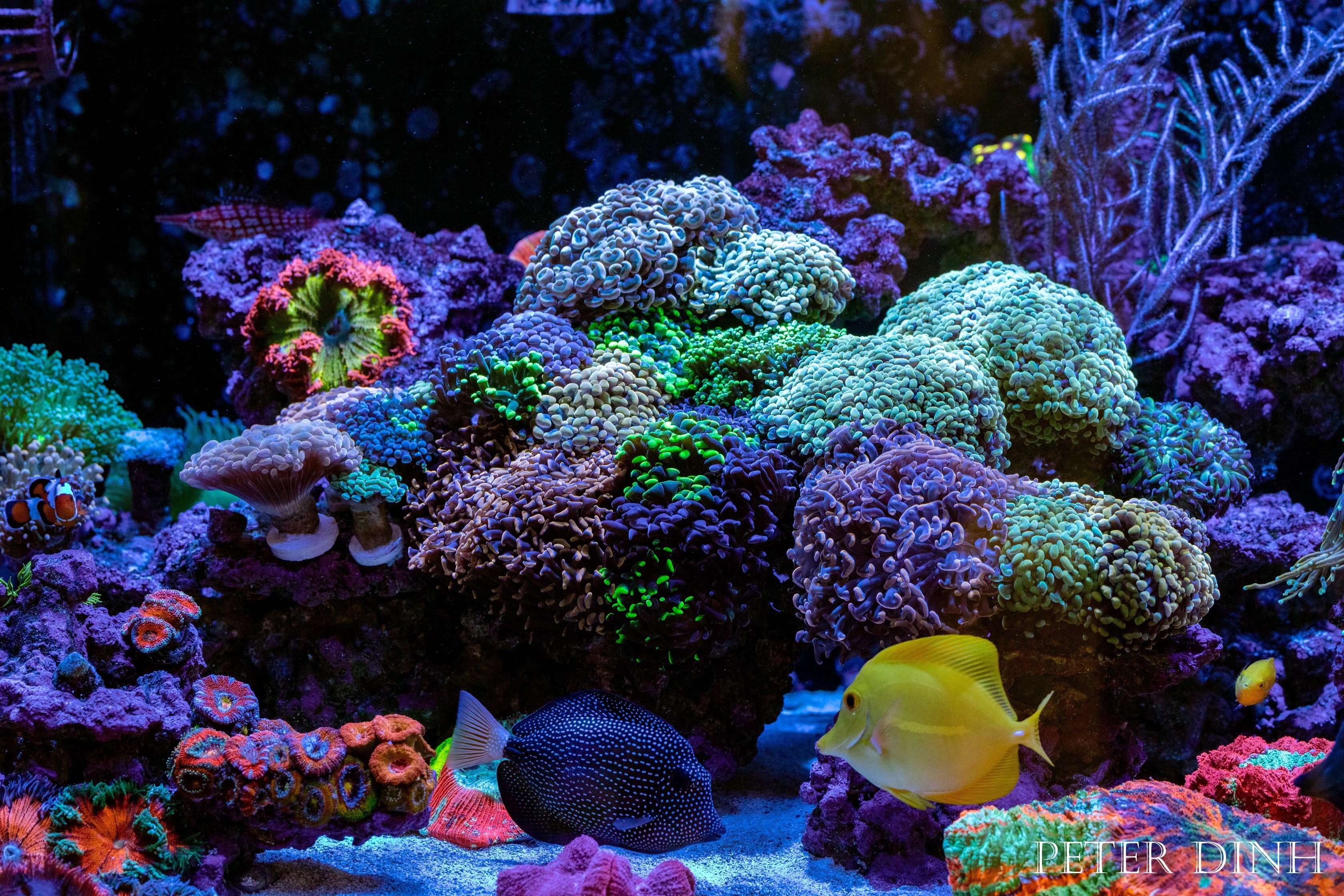
A comprehensive Extreme Corals guide to saltwater aquarium maintenance, including daily, weekly and monthly reef tank care, water changes, testing, salinity, alkalinity, nitrate, phosphate, lighting, flow, feeding, filtration and coral health.
Learn saltwater aquarium maintenance for reef tanks, including daily, weekly and monthly care, water changes, testing, salinity, alkalinity, nitrate, phosphate, lighting, flow and coral health.
by Scott Shiles • May 12, 2028
Reef Tank Maintenance, Reef Tank Equipment, All Corals
Proper saltwater aquarium maintenance is the difference between a reef tank that slowly struggles and a reef tank that stays stable, colorful, and healthy for the long term. Corals, fish, shrimp, snails, live rock, bacteria, lighting, flow, filtration, and nutrients are all connected in a closed aquarium system. When maintenance is consistent, corals usually open better, hold stronger color, grow more predictably, and recover faster from normal stress. When maintenance becomes inconsistent, small problems can turn into algae outbreaks, parameter swings, coral recession, fish stress, and long-term frustration.
Here at Extreme Corals, we have maintained reef aquariums, handled live corals, shipped corals, and helped reef keepers for decades. In our experience, most reef tank problems do not start with one huge mistake. They usually come from skipped water changes, unstable salinity, neglected equipment, overfeeding, poor flow, dirty filtration, or water parameters that drift for weeks before the reef keeper notices. The goal of saltwater aquarium maintenance is not perfection. The goal is stability.
This complete saltwater aquarium maintenance guide covers daily, weekly, and monthly reef tank routines, water changes, water testing, salinity, alkalinity, calcium, magnesium, nitrate, phosphate, lighting, flow, feeding, filtration, algae prevention, equipment cleaning, coral observation, and the common mistakes that cause reef tanks to decline. If you are building a healthier reef, start with our coral care guide, review our reef tank water testing guide, and browse our new arrival corals when your aquarium is stable and ready.
Why Consistency Is Everything in Reef Tank Maintenance
Corals and marine fish come from environments that are naturally stable compared with a home aquarium. In the ocean, water volume is massive, dilution is constant, and changes usually happen gradually. In a reef tank, evaporation, feeding, dosing, equipment problems, algae growth, dead spots, and missed maintenance can change conditions quickly.
Consistent maintenance helps prevent:
- Salinity swings
- Alkalinity instability
- High nitrate and phosphate
- Algae outbreaks
- Coral recession
- Bleaching or fading color
- Fish stress and disease pressure
- Detritus buildup in low-flow areas
- Equipment failure from neglect
In our experience, reef tanks do best when maintenance becomes a routine instead of a reaction. A simple routine done consistently is better than a major cleanup only after the tank already looks bad.
Daily Saltwater Aquarium Maintenance Tasks
Daily reef tank maintenance should be quick, but it is one of the best ways to catch problems early. You do not need to tear the tank apart every day. You need to observe the system and make sure the basic life-support pieces are working.
Daily tasks should include:
- Check temperature.
- Confirm pumps and powerheads are running.
- Check water level and top off evaporated water with RO/DI freshwater.
- Observe fish behavior and breathing.
- Observe coral extension, color, and tissue condition.
- Feed fish appropriately without overfeeding.
- Look for unusual algae, cloudiness, pests, or dead livestock.
- Confirm the auto top-off is working if your system uses one.
A coral that suddenly stays closed, a fish breathing hard, a return pump making noise, or a heater stuck on can all be early warning signs. Daily observation gives you a chance to fix small issues before they become expensive problems.
Weekly Reef Tank Maintenance Routine
Weekly maintenance is where long-term reef stability is built. These tasks keep waste from accumulating, confirm your parameters are staying in range, and help prevent nuisance algae and coral stress.
Weekly reef maintenance often includes:
- Test salinity, alkalinity, nitrate, and phosphate.
- Test calcium and magnesium if you keep stony corals or dose supplements.
- Clean aquarium glass or acrylic.
- Inspect corals for recession, pests, bleaching, or irritation.
- Clean or replace filter socks, filter floss, or mechanical media.
- Empty and clean the protein skimmer cup if needed.
- Remove detritus from low-flow areas.
- Perform a partial water change when scheduled.
Many reef tanks benefit from a 10-20% water change every one to two weeks, depending on tank size, fish load, feeding, nutrient trends, and coral demand. For detailed water change help, read our saltwater aquarium water change guide.
Monthly Saltwater Aquarium Maintenance
Monthly maintenance focuses on equipment reliability and long-term system performance. Pumps, lights, heaters, plumbing, skimmers, and filtration can slowly lose efficiency if they are ignored. A reef tank may look fine until one neglected piece of equipment fails.
Monthly maintenance should include:
- Inspect and clean powerheads or wavemakers.
- Inspect return pump performance.
- Clean salt creep from safe areas.
- Check heater operation and temperature accuracy.
- Inspect plumbing, tubing, and fittings for leaks or buildup.
- Clean protein skimmer parts as needed.
- Review coral growth and adjust placement if corals are getting too close.
- Inspect lighting schedule and fixture condition.
- Review test result trends from the month.
As your reef matures, monthly checks become more important. Coral colonies grow, pumps collect buildup, nutrients shift, and coral demand for alkalinity and calcium can increase.
Water Changes: The Backbone of Reef Maintenance
Water changes help remove dissolved waste, refresh trace elements, reduce nutrient buildup, improve clarity, and support more stable reef chemistry. They are not the only maintenance tool, but they are one of the simplest and most reliable habits in saltwater aquarium care.
A good water change routine should include:
- Use RO/DI water to mix new saltwater.
- Never add dry salt directly to the display tank.
- Mix saltwater fully in a separate container.
- Match salinity before adding new water.
- Match temperature, especially for larger changes.
- Check alkalinity when doing larger water changes or changing salt brands.
- Add new water slowly and avoid blasting corals.
Water changes should feel like a controlled refresh, not a shock event. If your corals close badly after every water change, check whether the new water matches the tank closely enough.
Maintaining Stable Water Parameters
Stable water parameters matter more than chasing perfect numbers. Corals can often adapt to a reasonable range, but they do not respond well to constant swings. Salinity and alkalinity are especially important because they can change quickly and cause visible coral stress.
| Parameter | General Reef Tank Range | Maintenance Focus |
|---|---|---|
| Temperature | 76-80°F | Keep stable and avoid heater failure or heat spikes |
| Salinity | 1.024-1.026 specific gravity | Top off with RO/DI freshwater and test regularly |
| pH | 8.1-8.4 | Support gas exchange and stable alkalinity |
| Alkalinity | 8-10 dKH for many mixed reefs | Test often, especially in LPS and SPS systems |
| Calcium | 400-450 ppm | Maintain for stony coral growth |
| Magnesium | 1250-1350 ppm | Helps stabilize calcium and alkalinity balance |
| Nitrate | 2-10 ppm for many mixed reefs | Keep measurable but controlled |
| Phosphate | 0.03-0.07 ppm for many mixed reefs | Avoid extremes and rapid changes |
Some successful aquariums run slightly outside these ranges, but stability is the common factor. For a deeper explanation of water chemistry, read our reef tank water parameters guide.
Salinity Maintenance and RO/DI Top-Off
Salinity stability is one of the most important parts of saltwater aquarium maintenance. Evaporation removes freshwater but leaves salt behind, so the salinity rises as water evaporates. That is why evaporation should be replaced with fresh RO/DI water, not saltwater.
Good salinity maintenance includes:
- Use RO/DI freshwater for top-off.
- Use mixed saltwater only for water changes.
- Calibrate your refractometer or salinity meter.
- Check salinity before and after larger water changes.
- Watch auto top-off systems for failure or overfilling.
Many mysterious coral problems come from salinity drift. If corals are closing, shrinking, or looking stressed, salinity should be one of the first things you verify.
Alkalinity, Calcium and Magnesium Maintenance
Alkalinity, calcium, and magnesium are especially important for LPS and SPS corals because stony corals use calcium carbonate to build skeleton. As corals grow, they consume these elements. A tank with only a few soft corals may not need much supplementation, while a tank full of growing stony corals may need regular dosing.
Good mineral maintenance includes:
- Test alkalinity consistently.
- Monitor calcium and magnesium.
- Use water changes to help maintain balance.
- Dose only based on test results.
- Make corrections slowly.
- Expect demand to increase as coral growth increases.
Alkalinity is one of the most important numbers in a stony coral reef. Torch Corals, Hammer Corals, Frogspawn Corals, chalices, Acropora, Montipora, and many other stony corals can react poorly to sudden alkalinity swings.
Nitrate and Phosphate Maintenance
Nitrate and phosphate are nutrients. They should not be ignored, but they should not automatically be stripped to zero either. Corals need some nutrient availability, especially many LPS corals, soft corals, Zoanthids, and mushrooms. The goal is controlled nutrients, not sterile water.
High nutrients may lead to:
- Nuisance algae
- Dull or browner coral color
- Detritus buildup
- Reduced SPS performance
- Water quality decline
Ultra-low nutrients may lead to:
- Pale corals
- Thin LPS tissue
- Closed Zoanthids
- Mushrooms shrinking
- Greater sensitivity to strong light
In our experience, many reef tanks look best with measurable nitrate and phosphate that stay stable. For more detail, read our nitrates in reef tanks guide.
Lighting Maintenance for Reef Tanks
Lighting maintenance is often overlooked. Reef keepers focus on water testing, but lighting changes can stress corals just as quickly. A sudden increase in intensity, a changed schedule, dirty lenses, aging bulbs, or poor spread can all affect coral health.
Good lighting maintenance includes:
- Keep a consistent daily schedule.
- Avoid sudden intensity increases.
- Use acclimation mode when upgrading lights or adding sensitive corals.
- Clean salt creep or dust from lenses and covers.
- Replace bulbs on schedule if using T5 or metal halide lighting.
- Watch coral response after any lighting change.
Corals do not need constant lighting experiments. They need a stable schedule that matches their needs. Read our best reef tank lighting guide for help matching light to coral type.
Flow and Pump Maintenance
Water flow keeps detritus suspended, delivers oxygen and nutrients, removes waste from coral tissue, and helps corals breathe. Over time, pumps and powerheads can lose performance from algae, calcium deposits, snail shells, debris, or buildup.
Good flow maintenance includes:
- Inspect powerheads regularly.
- Clean pump guards and intakes.
- Remove algae or debris from wavemakers.
- Check that flow still reaches behind rockwork.
- Adjust flow as corals grow and block water movement.
- Avoid blasting fleshy LPS corals directly.
Dead spots often lead to detritus buildup and algae problems. Direct flow can damage coral tissue. The best reef flow is strong enough to keep the system clean but matched to the corals being kept. Read our water flow and coral health guide for more detail.
Feeding and Nutrient Control
Feeding is part of maintenance because every food added to the tank eventually affects water quality. Fish need proper nutrition, and many corals benefit from food or dissolved nutrients, but overfeeding can quickly raise nitrate and phosphate.
Good feeding habits include:
- Feed small portions that fish consume quickly.
- Target feed corals only when appropriate.
- Remove uneaten food when possible.
- Adjust feeding based on nutrient tests.
- Do not feed heavily just because corals look stressed.
- Balance feeding with filtration and water changes.
A reef tank can be underfed or overfed. The best approach is to feed consistently, test nutrients, and watch coral response.
Filtration and Protein Skimmer Maintenance
Filtration removes waste, improves clarity, supports gas exchange, and helps stabilize nutrients. A protein skimmer, mechanical filtration, live rock, biological filtration, carbon, refugiums, and water changes can all play a role depending on the system.
Good filtration maintenance includes:
- Empty and clean the skimmer cup regularly.
- Clean skimmer neck buildup so performance stays consistent.
- Replace or clean filter socks, cups, or floss before they become nutrient traps.
- Use activated carbon when appropriate and replace it on schedule.
- Keep sump areas from collecting excessive detritus.
- Do not over-clean biological filtration all at once.
A dirty filter sock left too long can become a nutrient source. A neglected skimmer can lose efficiency. Clean filtration is part of stable reef keeping.
Algae Control Through Better Maintenance
Algae outbreaks are usually a symptom of imbalance. Light, nutrients, flow, grazing, filtration, and maintenance all play a role. Trying to solve algae only by scraping glass does not fix the underlying cause.
Better maintenance helps reduce algae by:
- Keeping nitrate and phosphate controlled
- Removing detritus before it breaks down
- Improving flow through dead spots
- Cleaning filtration before it becomes dirty
- Managing feeding
- Maintaining a proper cleanup crew
- Avoiding excessive lighting duration or intensity
Some algae is normal in a living reef tank. The goal is control. If algae is smothering corals, growing through Zoanthids, or covering sand and rock rapidly, nutrient and maintenance habits need to be reviewed.
Cleaning Glass, Rockwork and Sand
Cleaning should be done carefully in a reef aquarium. You want to remove algae and detritus without shocking the system or damaging corals. Aggressive cleaning can release trapped waste, irritate coral tissue, or destabilize older sandbeds.
Good cleaning habits include:
- Clean glass regularly before algae becomes thick.
- Blow detritus off rockwork gently before water changes.
- Siphon debris from accessible low-flow areas.
- Clean small sections of sand at a time if needed.
- Avoid deep aggressive stirring of old sandbeds.
- Keep cleaning tools away from coral tissue.
Do not try to fix months of neglect in one afternoon. Large aggressive cleanings can create more stress than smaller repeated maintenance sessions.
Coral Observation During Maintenance
Every maintenance session is a chance to inspect corals. Corals often show early warning signs before a major problem develops. A single closed coral may be reacting to a local issue. Several closed corals may point to a system-wide change.
Look for:
- Reduced polyp extension
- Bleaching or fading color
- Tissue recession
- Brown jelly or melting tissue
- Pests or bite marks
- Algae growing into coral tissue
- Corals touching or stinging each other
- Frags knocked loose by fish or invertebrates
In our experience, observation is one of the most valuable maintenance skills. The reef tank usually tells you something is changing if you pay attention early enough.
Common Saltwater Aquarium Maintenance Mistakes
Most reef maintenance mistakes are avoidable. They usually happen when reef keepers rush, skip routines, or make large corrections without testing.
Common mistakes include:
- Skipping water changes for too long
- Using untreated tap water
- Adding saltwater instead of freshwater for top-off
- Making sudden alkalinity corrections
- Overfeeding fish and corals
- Letting filter socks or floss sit too long
- Ignoring dirty pumps and weak flow
- Changing lighting intensity too fast
- Cleaning too much old sand at once
- Only testing water after corals look bad
The best reef tanks are not usually maintained by complicated routines. They are maintained by consistent routines.
Signs Your Reef Tank Maintenance Routine Is Working
A healthy reef tank does not have to be perfect, but it should be predictable. When maintenance is working, the aquarium becomes more stable and easier to understand.
Signs of a strong maintenance routine include:
- Stable salinity and alkalinity
- Predictable nitrate and phosphate trends
- Good coral extension
- Corals holding color
- Limited nuisance algae
- Fish eating and behaving normally
- Clear water
- Pumps and equipment running quietly and consistently
If your tank is predictable week after week, your maintenance routine is probably moving in the right direction.
A Simple Reef Tank Maintenance Schedule
A schedule helps turn maintenance into a habit. The exact timing can be adjusted for your system, but this framework works well for many reef keepers.
| Frequency | Maintenance Tasks |
|---|---|
| Daily | Check temperature, water level, pumps, fish behavior, coral extension, and top off with RO/DI water |
| Weekly | Test key parameters, clean glass, service mechanical filtration, inspect corals, remove detritus, perform water change if scheduled |
| Monthly | Clean pumps, inspect heater and plumbing, review lighting, clean skimmer parts, check coral spacing and growth |
| As Needed | Adjust dosing, move corals, replace media, respond to pests, correct nutrient trends, repair or replace equipment |
Maintenance should be flexible, but it should not be random. A routine helps prevent problems before they become emergencies.
Our Practical Saltwater Aquarium Maintenance Advice at Extreme Corals
At Extreme Corals, our practical maintenance advice is simple: keep the reef stable, keep equipment clean, test before making changes, and watch the corals closely. Do not let the tank run on autopilot for weeks and then try to fix everything at once.
Our reef maintenance rules are:
- Top off with RO/DI freshwater.
- Perform water changes consistently.
- Test salinity and alkalinity regularly.
- Keep nitrate and phosphate measurable but controlled.
- Clean pumps before flow becomes weak.
- Do not overfeed.
- Do not make sudden chemistry changes.
- Inspect corals every time you work on the tank.
- Track trends instead of guessing.
Good maintenance does not have to be overwhelming. It has to be consistent.
Related Saltwater Aquarium Maintenance Guides
If you are improving your reef tank maintenance routine, these related guides and coral categories can help:
- Saltwater Aquarium Water Change Guide - Learn how to change water safely without shocking corals.
- Reef Tank Water Testing Guide - Understand what to test and why it matters.
- Reef Tank Water Parameters Guide - Keep chemistry stable for coral health.
- Nitrates in Reef Tanks - Learn why balanced nutrients matter.
- Best Reef Tank Lighting Guide - Maintain lighting for coral color and growth.
- Water Flow and Coral Health - Improve circulation and reduce detritus buildup.
- Live Coral Care Guide - Build a stronger foundation for coral success.
- New Arrival Corals - Browse healthy corals once your reef tank is stable.
Shop Healthy Corals for a Stable Reef Tank
Once your maintenance routine is consistent, you can add corals with more confidence. Stable water, clean equipment, proper lighting, good flow, and balanced nutrients give new corals a much better chance to settle in and thrive.
Browse new arrival corals, new coral frags, new coral colonies, LPS corals, SPS corals, soft corals, Zoanthids, and Scott's Handpicked Corals at ExtremeCorals.com to choose healthy WYSIWYG corals for your aquarium.
Frequently Asked Questions About Saltwater Aquarium Maintenance
How often should I do water changes in a saltwater aquarium?
Many reef tanks benefit from 10-20% water changes every one to two weeks. The best schedule depends on tank size, fish load, feeding, nutrient levels, coral demand, and filtration.
What is the most important part of reef tank maintenance?
Stability is the most important part of reef tank maintenance. Stable salinity, alkalinity, temperature, nutrients, lighting, and flow prevent many common coral and fish problems.
How do I keep my saltwater tank clean?
Keep a saltwater tank clean with regular water changes, proper flow, controlled feeding, clean mechanical filtration, protein skimmer maintenance, detritus removal, and consistent water testing.
How often should I test my reef tank water?
Most reef tanks should test salinity and alkalinity regularly, often weekly or more often in stony coral systems. Nitrate, phosphate, calcium, and magnesium should also be tested based on coral demand and system stability.
Why is my reef tank getting algae?
Reef tank algae is usually caused by excess nutrients, poor flow, overfeeding, dirty filtration, long lighting schedules, insufficient cleanup crew support, or inconsistent maintenance.
Should I use tap water in a saltwater aquarium?
Untreated tap water should not be used in a reef tank because it may contain chlorine, chloramine, copper, phosphate, nitrate, silicate, and other contaminants. RO/DI water is the better choice.
Do I top off evaporation with saltwater or freshwater?
Top off evaporation with fresh RO/DI water. Evaporation removes freshwater but leaves salt behind. Mixed saltwater should be used for water changes, not top-off.
How often should I clean reef tank pumps?
Many reef tank pumps and powerheads should be inspected monthly and cleaned as needed. If flow becomes weaker, noise increases, or algae and calcium buildup are visible, cleaning is needed.
Can overcleaning hurt a reef tank?
Yes, aggressive cleaning can disturb old sandbeds, release trapped waste, remove too much biological stability, or stress corals. Smaller consistent maintenance is usually safer than major disruptive cleanings.
How do I know if my reef tank maintenance routine is working?
A strong maintenance routine usually results in stable test numbers, clear water, good coral extension, strong coral color, normal fish behavior, limited nuisance algae, and reliable equipment performance.
About the Author
Scott Shiles is the owner of ExtremeCorals.com, which he has operated for over 25 years and is recognized as one of the early dedicated live coral websites on the internet. A lifelong reef keeper since 1984, Scott has decades of hands-on experience maintaining marine aquariums and previously owned and operated a brick and mortar aquarium retail store for 10 years, including five years alongside Extreme Corals. He holds a degree in Marine Biology and has personally selected and sold hundreds of thousands of live corals. An avid scuba diver who has explored reef systems around the world, Scott shares practical coral care and husbandry knowledge based on real world reef experience.
overall rating:
my rating:
log in to rate
Please log in to leave a comment.
For more information visit: additional resources