My Cart: 0 item(s)

Extreme Corals News and Updates
Trachyphyllia and Wellsophyllia Care Guide: Lighting, Feeding, Flow and Placement
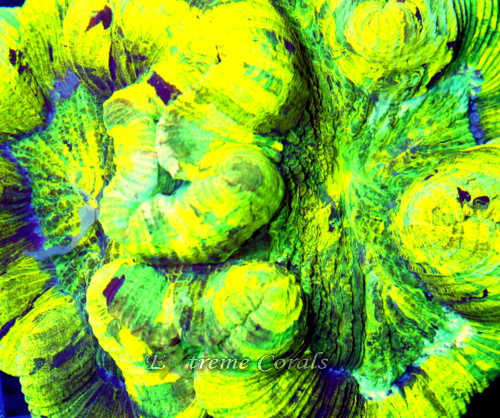
Learn how to care for Trachyphyllia and Wellsophyllia corals in a reef tank with practical guidance on sandbed placement, lighting, water flow, feeding, water parameters, compatibility, tissue health, and long-term LPS coral success.
Learn Trachyphyllia and Wellsophyllia coral care for reef tanks, including lighting, feeding, flow, sandbed placement, water parameters, compatibility, and stress signs.
by Scott Shiles • April 28, 2026
Trachyphyllia and Wellsophyllia corals are some of the most colorful and impressive large polyp stony corals for home reef aquariums. Known for their fleshy tissue, open brain-like shape, bold color patterns, and strong feeding response, these corals can become beautiful showpiece pieces in the lower areas of a reef tank.
Although Trachyphyllia and Wellsophyllia are often considered approachable LPS corals, they still need stable water quality, gentle flow, moderate to lower lighting, careful sandbed placement, and controlled feeding. Their fleshy tissue can be damaged by sharp rock, strong direct current, unstable chemistry, or aggressive tank mates, so placement and consistency matter.
At Extreme Corals, Trachyphyllia and Wellsophyllia are valued because they offer high visual impact without requiring the same lighting and flow demands as many SPS corals. This guide covers Trachyphyllia and Wellsophyllia care in reef tanks, including water parameters, lighting, feeding, water flow, placement, compatibility, stress signs, and long-term coral health.
What Are Trachyphyllia and Wellsophyllia Corals?
Trachyphyllia and Wellsophyllia are fleshy LPS corals commonly grouped together in the reef hobby because their care needs, appearance, and placement requirements are very similar. Both are often described as open brain corals or folded brain-style LPS corals, with large fleshy tissue that expands over a hard calcium carbonate skeleton.
Trachyphyllia corals are usually solitary corals that remain as a single large polyp rather than forming branching colonies. They are often found in rounded, folded, or figure-eight shapes and may show bright red, green, blue, orange, purple, or rainbow color combinations.
Wellsophyllia corals have also long been associated with this same general open brain coral group. In the aquarium trade, the names Trachyphyllia and Wellsophyllia are sometimes used closely together, and many reef keepers care for them using the same husbandry approach: soft sandbed placement, gentle flow, moderate light, and stable water chemistry.
Why Choose Trachyphyllia or Wellsophyllia for Your Reef Tank?
Trachyphyllia and Wellsophyllia are excellent choices for reef keepers who want a colorful centerpiece coral with fleshy texture and strong presence. They can fill open sandbed areas beautifully and provide a very different look from branching LPS corals, SPS corals, or soft coral colonies.
Reef keepers often choose these corals because they offer:
- Bold coloration with red, green, blue, purple, orange, and rainbow varieties
- Large fleshy tissue that creates a full, showpiece appearance
- Strong feeding response when healthy and settled
- Excellent sandbed placement for open lower reef areas
- Moderate care level in stable reef aquariums
- High visual impact without SPS-level lighting or flow demands
They are especially appealing for hobbyists who want a premium LPS coral that looks substantial in the tank. A healthy Trachyphyllia or Wellsophyllia can anchor the lower portion of a reef aquascape and draw attention even in a coral-rich display.
Natural Habitat and Aquarium Needs
Trachyphyllia and Wellsophyllia corals are associated with Indo-Pacific reef environments, including sandy lagoon floors, reef slopes, sheltered areas, and soft substrate zones. In these habitats, they often rest on sand or rubble rather than attaching high on exposed rock faces.
This natural placement matters in a home reef tank. These corals are not built for sharp rock crevices, intense direct flow, or high-light upper rockwork. They usually do best when placed on the sandbed or a very smooth, stable lower area where their fleshy tissue can inflate without rubbing against hard surfaces.
The goal is to provide a stable version of their natural conditions: moderate to lower lighting, low to moderate indirect flow, clean but not sterile water, and enough open space for full expansion.
Best Water Parameters for Trachyphyllia and Wellsophyllia
Stable water chemistry is one of the most important parts of Trachyphyllia and Wellsophyllia care. These corals can tolerate normal reef ranges, but they do not respond well to rapid changes in salinity, alkalinity, temperature, or nutrient levels.
| Parameter | Recommended Range |
|---|---|
| Temperature | 75-80°F |
| Salinity | 1.024-1.026 specific gravity |
| pH | 8.0-8.4 |
| Alkalinity | 8-10 dKH |
| Calcium | 400-450 ppm |
| Magnesium | 1250-1350 ppm |
| Nitrate | 5-10 ppm |
| Phosphate | 0.03-0.07 ppm |
Older reef advice often aimed for nitrate and phosphate as close to zero as possible, but many fleshy LPS corals do better when nutrients are present but controlled. Water that is too stripped can lead to pale tissue, poor inflation, and weaker feeding response. Excess nutrients, on the other hand, can contribute to algae growth and bacterial issues.
Tank Size and Setup
Trachyphyllia and Wellsophyllia can be kept in many reef tank sizes, but a tank of 30 gallons or larger is a practical starting point for most hobbyists. Larger tanks are often easier because they provide more stability and more open sandbed space.
These corals should be placed where they can remain undisturbed. They do not like being tipped over, buried by sand, scraped by rock, or bumped repeatedly by fish and invertebrates. A stable lower placement area makes long-term care much easier.
A good setup includes:
- A soft sandbed or smooth lower placement area
- Low to moderate indirect flow
- Moderate to lower reef lighting
- Open space around the coral
- Stable salinity, alkalinity, calcium, and magnesium
- Room for tissue expansion after feeding and during daily inflation
Sandbed Placement and Tissue Protection
Placement is one of the most important parts of caring for Trachyphyllia and Wellsophyllia. Their large fleshy tissue can expand beyond the skeleton, which makes them vulnerable to damage from sharp rock, rough substrate, strong flow, or nearby corals.
In most reef tanks, these corals are best placed directly on the sandbed. Soft sand helps protect the underside of the coral and allows the tissue to expand naturally. If placed on rock, the surface should be smooth, stable, and free of sharp points that could cut the tissue.
Avoid placing these corals where:
- Rock can rub or cut the fleshy tissue
- Strong flow pushes tissue against the skeleton
- Sand-burrowing fish constantly cover the coral
- Aggressive LPS corals can reach them with sweeper tentacles
- Fast-growing corals can shade or crowd them
A Trachyphyllia or Wellsophyllia that is allowed to sit calmly on the sandbed with open space will usually inflate better, feed better, and remain healthier over time.
Lighting Requirements
Trachyphyllia and Wellsophyllia usually do best under low to moderate reef lighting. They need enough light to support photosynthesis and color, but excessive intensity can cause bleaching, shrinking, or tissue stress.
A practical starting range for many specimens is around 50-120 PAR, especially when newly added to a reef tank. Some corals may adapt to slightly stronger light over time, but sudden exposure to high intensity should be avoided.
Signs that lighting may be too strong include:
- Faded or washed-out color
- Bleaching
- Reduced inflation
- Tissue pulling tight against the skeleton
- Failure to settle after placement
If the coral looks stressed under bright light, move it to a lower-light area or reduce intensity gradually. Make changes slowly so the coral has time to adjust.
Water Flow and Circulation
Trachyphyllia and Wellsophyllia prefer low to moderate, indirect water flow. The goal is to keep water moving gently around the coral without blasting the tissue. Strong direct current can cause the flesh to retract, rub against the skeleton, or slowly recede.
Too little flow can also be a problem. If detritus collects around the coral or food sits too long on the tissue, irritation and bacterial issues may develop. The best flow pattern is gentle, random, and indirect.
Watch the coral’s tissue. A healthy flow zone should allow the coral to inflate fully. If tissue is being pushed hard in one direction or folded against the skeleton, adjust the pump direction or move the coral to a calmer area.
Feeding Trachyphyllia and Wellsophyllia
Trachyphyllia and Wellsophyllia are photosynthetic, but they also benefit from supplemental feeding. Feeding can support fuller tissue, stronger coloration, improved recovery after stress, and long-term coral health.
Good food options include:
- Mysis shrimp
- Brine shrimp
- Finely chopped marine seafood
- Small pieces of shrimp or fish
- Small particle LPS coral foods
- Zooplankton-based coral foods
Target feeding once or twice per week is a good starting point for most systems. The best time to feed is often after lights dim or when feeding tentacles are visible. Use a turkey baster or coral feeding tool to gently place food near the mouth area without blasting the tissue.
Do not overfeed. Large pieces of food that sit on the coral too long can irritate the tissue or decay before being consumed. Small controlled feedings are better than heavy feeding that raises nutrients and damages water quality.
Compatibility With Fish and Other Corals
Trachyphyllia and Wellsophyllia are generally peaceful compared with many aggressive LPS corals, but they still need space. Their fleshy tissue can be damaged by nearby coral sweepers, fast-growing neighbors, fish that nip, or invertebrates that steal food during feeding.
Good tank mates often include:
- Clownfish
- Gobies
- Blennies
- Peaceful wrasses
- Snails
- Most reef-safe shrimp with caution during feeding
Use caution with angelfish, butterflyfish, and fish known to nip fleshy coral tissue. Also watch shrimp during feeding, because cleaner shrimp and other scavengers may pull food from the coral and irritate the tissue.
Trachyphyllia vs Wellsophyllia: Are Care Needs Different?
For most home reef aquariums, Trachyphyllia and Wellsophyllia can be cared for very similarly. Both prefer protected lower placement, gentle flow, moderate to lower lighting, stable water chemistry, and occasional feeding.
The biggest practical differences are usually individual coral shape, tissue thickness, color pattern, and how the coral responds to your tank. Some specimens inflate more than others. Some tolerate slightly brighter light. Some need more protection from flow. The coral’s response should guide your final placement.
Rather than worrying only about the name, focus on the coral’s condition. A healthy open brain-style LPS coral should show full tissue, stable color, no exposed skeleton, and a feeding response when appropriate food is offered.
Common Problems and Stress Signs
Trachyphyllia and Wellsophyllia often show stress through changes in tissue inflation, color, and feeding response. Catching these signs early gives you a better chance to correct the issue before tissue loss becomes serious.
Common stress signs include:
- Reduced inflation: May be caused by strong flow, unstable water, excessive light, or recent handling.
- Faded color or bleaching: Often linked to too much light, sudden changes, or low nutrients.
- Tissue recession: Can result from rough placement, sharp rock, coral aggression, or unstable parameters.
- Weak feeding response: May indicate stress, poor water quality, or irritation from fish or shrimp.
- Algae on exposed skeleton: Often follows tissue damage or recession.
- Brown slime or tissue decay: May indicate bacterial infection or damaged tissue.
If a coral begins declining, check the basics first: salinity, temperature, alkalinity, nitrate, phosphate, lighting, flow, and nearby coral aggression. Avoid moving the coral repeatedly unless the placement is clearly causing damage.
Handling and Acclimation
Trachyphyllia and Wellsophyllia should be handled carefully because their fleshy tissue can tear or scrape easily. When moving the coral, support the skeleton and avoid squeezing the inflated tissue. If possible, move the coral when it is less inflated to reduce the risk of damage.
Temperature acclimate first, then gradually adjust the coral to your aquarium water. If using a coral dip, follow product directions carefully and avoid harsh or extended dips unless needed. After placement, allow the coral time to settle before feeding heavily or moving it again.
A newly added Trachyphyllia or Wellsophyllia may take several days to fully inflate. As long as the tissue is intact, the coral is on a safe surface, and water conditions are stable, patience is usually better than constant repositioning.
Maintenance Tips for Long-Term Health
Long-term success comes from consistency. These corals do not need constant adjustment, but they do need stable reef conditions and regular observation.
Good maintenance habits include:
- Test salinity, alkalinity, calcium, magnesium, nitrate, phosphate, and temperature regularly.
- Perform regular water changes to support trace element balance and nutrient control.
- Keep detritus from collecting around the coral.
- Feed small controlled portions rather than large heavy meals.
- Protect the coral from sharp rock, sand burial, and aggressive neighbors.
- Make lighting and flow changes slowly.
- Watch tissue inflation and color trends over time.
A Trachyphyllia or Wellsophyllia that stays inflated, colorful, and responsive is usually telling you the placement and care routine are working.
How to Tell If Trachyphyllia or Wellsophyllia Is Healthy
A healthy specimen should look full, settled, and colorful. It may inflate more at certain times of day and show feeding tentacles when food is present.
Positive signs include:
- Full fleshy tissue expansion
- Stable color without sudden fading
- No exposed skeleton or tissue recession
- Good feeding response
- Clean mouth area
- No algae growing on damaged tissue or skeleton
- Stable position on sandbed or smooth lower placement area
These corals are not fast-growing like some branching corals, so growth should not be the only measure of success. Tissue health, color, inflation, and stability are more important indicators.
Related Corals You May Also Like
If you are interested in Trachyphyllia and Wellsophyllia, these related LPS corals and care guides may help you choose similar showpiece corals for your reef aquarium:
- Large Polyp Stony Corals - Browse colorful LPS corals with fleshy tissue, feeding response, and showpiece appeal.
- Trachyphyllia Coral Care Guide - Learn more detailed care tips for Trachyphyllia corals.
- Wellsophyllia Coral Care Guide - Review care information for Wellsophyllia corals.
- Scolymia Coral Care Guide - Explore another colorful sandbed-friendly LPS coral.
- Cynarina Coral Care Guide - Learn care tips for a fleshy showpiece coral with similar placement needs.
- Coral Care Guides - Browse more coral care resources for LPS, SPS, soft corals, mushrooms, and zoanthids.
Shop Trachyphyllia, Wellsophyllia and LPS Corals
Trachyphyllia and Wellsophyllia corals are excellent choices for reef keepers who want bold color, fleshy texture, and a showpiece coral for the lower part of the aquarium. Once your tank is stable, choosing a healthy specimen from a trusted coral source gives the coral a stronger start.
Browse LPS corals, new arrival corals, and Scott's Handpicked Corals at ExtremeCorals.com to find pieces that match your lighting, flow, placement, and reefkeeping goals.
Frequently Asked Questions About Trachyphyllia and Wellsophyllia Care
Are Trachyphyllia and Wellsophyllia beginner-friendly?
They can be good choices for beginners with stable reef tanks, but they are not ideal for brand-new unstable systems. They need gentle flow, moderate to lower lighting, safe sandbed placement, and stable water chemistry.
Where should I place Trachyphyllia or Wellsophyllia in my reef tank?
Place them on the sandbed or a smooth lower area of the tank where the fleshy tissue will not rub against sharp rock. They should have open space to inflate fully.
How much light do Trachyphyllia and Wellsophyllia need?
They usually do best under low to moderate reef lighting. A starting range around 50-120 PAR is often appropriate, with slow adjustment based on the coral’s response.
What kind of flow is best for Trachyphyllia and Wellsophyllia?
Low to moderate, indirect flow is best. The water should keep debris from settling around the coral without blasting the fleshy tissue or pushing it against the skeleton.
Do Trachyphyllia and Wellsophyllia need to be fed?
They are photosynthetic, but they often benefit from occasional target feeding. Small meaty foods such as mysis shrimp, brine shrimp, and finely chopped seafood can support tissue fullness and long-term health.
Can Trachyphyllia and Wellsophyllia touch other corals?
They should be given space from other corals. Their fleshy tissue can be damaged by aggressive neighbors, sweeper tentacles, or fast-growing corals that crowd or shade them.
Why is my Trachyphyllia or Wellsophyllia shrinking?
Shrinking can be caused by excessive light, strong direct flow, unstable water parameters, poor placement, fish or shrimp irritation, low nutrients, or tissue damage from rough surfaces.
About the Author
Scott Shiles is the owner of ExtremeCorals.com, which he has operated for over 25 years and is recognized as one of the early dedicated live coral websites on the internet. A lifelong reef keeper since 1984, Scott has decades of hands-on experience maintaining marine aquariums and previously owned and operated a brick and mortar aquarium retail store for 10 years, including five years alongside Extreme Corals. He holds a degree in Marine Biology and has personally selected and sold hundreds of thousands of live corals. An avid scuba diver who has explored reef systems around the world, Scott shares practical coral care and husbandry knowledge based on real world reef experience.
overall rating:
my rating:
log in to rate
Please log in to leave a comment.
For more information visit: additional resources