My Cart: 0 item(s)

Extreme Corals News and Updates
Care Requirements of Trachyphyllia in Home Reef Aquariums
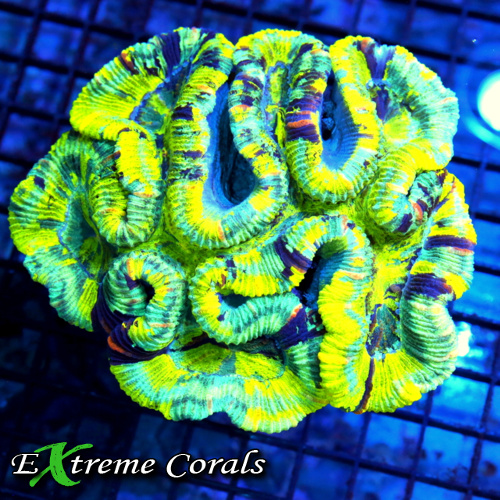
Learn how to care for Trachyphyllia open brain coral, including lighting, flow, sandbed placement, feeding, water parameters, tissue health and common stress signs.
Learn Trachyphyllia coral care for reef tanks, including lighting, flow, feeding, sandbed placement, water parameters, tissue damage and common open brain coral problems.
by Scott Shiles • May 13, 2026
Trachyphyllia coral, commonly called Open Brain Coral, is a colorful large polyp stony coral known for its fleshy tissue, ridged open brain shape, and bright reef tank colors. Red, green, blue, pink, orange, purple, and multi-color Trachyphyllia corals can become beautiful showpieces under blue and balanced reef lighting.
Unlike many colonial LPS corals, Trachyphyllia is usually a solitary coral. It grows as one large fleshy polyp over a stony skeleton rather than spreading into a colony of many separate heads. That makes placement especially important. The coral needs a stable sandbed location, gentle flow, moderate to lower light, and protection from sharp rock or aggressive neighbors.
At Extreme Corals, Trachyphyllia is a favorite for reef keepers who want a bold, colorful LPS centerpiece without the high-light demands of SPS corals. This guide explains Trachyphyllia coral care, including lighting, flow, feeding, water parameters, sandbed placement, compatibility, tissue health, common problems, and long-term success. For more coral care basics, you can also review our coral care guide library.
What Is Trachyphyllia Coral?
Trachyphyllia is a fleshy large polyp stony coral with a hard skeleton and inflated tissue that forms a ridged open brain appearance. It is often sold as Open Brain Coral and is prized for its color, shape, and ability to become a centerpiece on the sandbed.
Trachyphyllia corals are popular because they offer:
- Bright color under reef lighting
- Large fleshy tissue expansion
- Classic open brain coral appearance
- Strong centerpiece potential
- Moderate care requirements in stable tanks
- Good feeding response when healthy
Trachyphyllia can be beginner friendly in a stable reef aquarium, but its soft tissue must be protected from rough handling, sharp rocks, direct flow, and coral aggression.
Natural Habitat and Reef Tank Behavior
Trachyphyllia corals are found in Indo-Pacific reef environments, including sandy lagoon floors, sheltered reef slopes, and lower-energy reef zones. In these areas, they are often exposed to moderate to lower light and gentle water movement rather than the strong turbulent conditions found on high-energy reef crests.
In the reef aquarium, that natural habitat points toward sandbed placement, low to moderate light, and gentle indirect flow. A healthy Trachyphyllia should inflate fully, hold stable color, and show no exposed skeleton or spreading tissue recession.
Best Water Parameters for Trachyphyllia Coral
Stable water chemistry is one of the most important parts of Trachyphyllia coral care. This coral can tolerate normal reef ranges, but it does not respond well to sudden swings in salinity, alkalinity, temperature, or nutrients.
| Parameter | Recommended Range |
|---|---|
| Temperature | 76-80°F |
| Salinity | 1.024-1.026 specific gravity |
| pH | 8.1-8.4 |
| Alkalinity | 8-10 dKH |
| Calcium | 400-450 ppm |
| Magnesium | 1250-1350 ppm |
| Nitrate | 5-10 ppm |
| Phosphate | 0.03-0.07 ppm |
Trachyphyllia usually does best in clean, stable reef water with measurable but controlled nutrients. Water that is too stripped can leave fleshy LPS corals looking thin or pale, while excessive nutrients can fuel algae and bacterial issues around the coral.
Lighting Requirements for Trachyphyllia Coral
Trachyphyllia corals usually prefer low to moderate or moderate lighting. A practical starting range for many open brain corals is around 80-150 PAR, depending on tank depth, previous lighting, and the coral’s condition.
Too much light can cause bleaching, fading, or tissue contraction. Too little light can reduce color and slow growth. New Trachyphyllia corals should be started in lower to moderate light and adjusted slowly only after they settle. For a deeper look at PAR and spectrum, review our reef tank lighting guide.
Signs Trachyphyllia may be getting too much light include:
- Faded or washed-out coloration
- Bleaching or paling
- Tissue pulling tight against the skeleton
- Reduced inflation during peak light
- Better appearance in shaded periods
Blue-spectrum lighting can bring out strong fluorescence, but full tissue expansion and stable color matter more than maximum brightness.
Water Flow for Trachyphyllia Coral
Trachyphyllia prefers low to moderate indirect flow. The coral needs enough movement to keep its surface clean and oxygenated, but strong direct flow can damage fleshy tissue or prevent normal expansion.
Good Trachyphyllia flow should:
- Move gently across the coral
- Allow full tissue inflation
- Keep detritus from settling around the base
- Avoid direct powerhead blasts
- Support feeding response and waste removal
If the coral is being pushed sharply in one direction, folding over itself, or staying deflated, adjust the flow or move it to a calmer area.
Best Placement for Trachyphyllia in a Reef Tank
Trachyphyllia is usually best placed on the sandbed, not directly on sharp rockwork. Its fleshy tissue can expand beyond the skeleton, and rough surfaces can cut or irritate the coral as it inflates and deflates.
Good placement options include:
- Stable sandbed areas
- Lower areas of the tank
- Open areas with room for full expansion
- Zones with gentle indirect flow
- Areas away from aggressive neighboring corals
Avoid placing Trachyphyllia where sand constantly blows onto the tissue, where fish can bury it, or where nearby corals can sting it. If you are planning an LPS-focused reef, browse our LPS coral selection with spacing and placement in mind.
Is Trachyphyllia Aggressive?
Trachyphyllia is generally less aggressive than many LPS corals with long sweeper tentacles, but it still needs room. Its fleshy tissue expands widely, and nearby corals can irritate or sting it if placed too close.
Good spacing habits include:
- Leave 4-6 inches of space around the coral when possible.
- Keep it away from torches, galaxea, chalices, and aggressive LPS corals.
- Avoid placing zoanthids or mushrooms where they can grow into its tissue.
- Watch nighttime behavior from neighboring corals.
- Plan for full expansion, not just the skeleton size.
Trachyphyllia often looks best when it has its own open sandbed zone.
Feeding Trachyphyllia Coral
Trachyphyllia is photosynthetic, but it benefits from occasional feeding. Careful target feeding can support tissue fullness, color, growth, and recovery after shipping or stress.
Good foods for Trachyphyllia include:
- Mysis shrimp
- Finely chopped marine seafood
- Small LPS coral pellets
- Zooplankton-based coral foods
- Fine powdered coral foods used lightly
Feed small portions one to two times per week as a starting point. Many open brain corals show a stronger feeding response after lights dim. Avoid placing large chunks of food on the coral, and do not overfeed to the point where nutrients rise quickly.
Tank Mates and Compatibility
Trachyphyllia can be kept with many peaceful reef fish and invertebrates, but it should be protected from animals that pick at fleshy tissue or disturb the sandbed around the coral.
Good tank mates often include:
- Clownfish
- Gobies
- Blennies
- Peaceful wrasses
- Reef-safe snails
- Cleaner shrimp with caution during feeding
Use caution with some angelfish, butterflyfish, large hermit crabs, and shrimp that may steal food aggressively from the coral. Also avoid sand-sifting animals that bury the coral repeatedly.
Growth Rate and Long-Term Development
Trachyphyllia has a slow growth rate compared with many spreading corals. It remains a solitary open brain coral rather than developing into a branching colony. Its long-term success is measured more by tissue health, inflation, and stable color than rapid size increase.
Healthy long-term development depends on:
- Stable alkalinity, calcium, and magnesium
- Low to moderate or moderate lighting
- Gentle indirect flow
- Clean sandbed placement
- Balanced nutrients
- Occasional careful feeding
- Protection from tissue damage
A healthy Trachyphyllia can stay beautiful for many years when the sandbed location and water conditions are stable.
Can Trachyphyllia Be Fragged?
Trachyphyllia is not commonly fragged because it is a solitary coral with one large fleshy polyp over a skeleton. Cutting it can cause major tissue damage, infection, and recession.
For most reef keepers, Trachyphyllia should be treated as a display coral rather than a propagation coral. If fragging is attempted, it should only be done by experienced coral cutters with proper tools, stable recovery conditions, and an understanding of the risk.
Common Trachyphyllia Coral Problems
Most Trachyphyllia problems come from tissue damage, excessive light, direct flow, unstable water chemistry, poor sandbed placement, pests, or irritation from neighboring corals.
Tissue Recession
Tissue recession may be caused by alkalinity swings, rough substrate, direct flow, light shock, nearby stinging corals, poor water quality, or bacterial issues. Check placement and water stability first.
Brown Jelly Disease
Brown jelly disease can appear as brown, slimy tissue decay and can spread quickly through fleshy LPS corals. If suspected, isolate the coral if possible, improve water quality, increase appropriate flow, and use a coral dip when needed.
Bleaching or Faded Color
Bleaching or fading is often connected to too much light, sudden lighting changes, low nutrients, or stress. Move the coral to a lower-light area or reduce intensity gradually if light stress is likely.
Pests and Irritation
Flatworms, nuisance algae, sand buildup, and hitchhikers can irritate Trachyphyllia tissue. Inspect new corals carefully, and review our coral pests and predators guide if tissue damage appears without an obvious water quality issue.
Handling and Acclimation
Trachyphyllia should be handled very carefully because its fleshy tissue can tear against the skeleton. Avoid touching the inflated tissue directly. Handle the base or skeleton only when necessary, and support the coral during transfer.
Good acclimation practices include:
- Temperature acclimate the coral.
- Inspect for tissue damage, pests, and algae.
- Dip only when appropriate and follow product directions.
- Place on a clean, stable sandbed.
- Start in low to moderate lighting.
- Use gentle indirect flow.
- Avoid repeated moves after placement.
A new Trachyphyllia may take time to inflate fully. Stable placement is usually better than constant repositioning.
Maintenance Tips for Open Brain Coral
Trachyphyllia care is mostly about preventing tissue damage and keeping water stable. Because the coral sits on the sandbed, debris can collect around it if flow is too weak.
Helpful maintenance habits include:
- Use a turkey baster to gently remove detritus around the coral.
- Keep sand from repeatedly covering the tissue.
- Test alkalinity and salinity regularly.
- Perform regular water changes.
- Watch for fish or inverts stealing food or picking at tissue.
- Keep nearby aggressive corals out of reach.
The coral should look clean, inflated, and free from sand abrasion or algae growth around exposed areas.
Signs of a Healthy Trachyphyllia Coral
A healthy Trachyphyllia should show full fleshy expansion, strong color, and no exposed skeleton. It may inflate more during certain parts of the day and extend feeding tentacles after lights dim.
Healthy signs include:
- Full inflated tissue
- Stable bright color
- No spreading recession
- No brown jelly or tissue decay
- Good feeding response
- Clean sandbed placement
- No signs of fish or invert damage
A coral that stays inflated and holds color is usually doing well. A coral that remains shrunken, pale, or receding needs closer inspection.
Related Corals You May Also Like
If you like Trachyphyllia open brain corals, these related coral categories and care guides can help you build a colorful LPS reef tank:
- LPS Corals - Browse colorful large polyp stony corals for reef aquariums.
- New Arrival Corals - See recently added WYSIWYG corals for your reef tank.
- Scott's Handpicked Corals - Explore standout corals selected for color and quality.
- Symphyllia Coral Care Guide - Compare another fleshy brain-style LPS coral.
- Goniastrea Coral Care Guide - Learn care for another brain-style stony coral.
- Mycedium Coral Care Guide - Review care for a chalice-style LPS coral.
- LPS vs SPS Corals - Compare care needs across major stony coral groups.
- Coral Care Guides - Browse care resources for LPS, SPS, soft corals, mushrooms, and zoanthids.
Shop Trachyphyllia and LPS Corals
Trachyphyllia is a beautiful open brain coral for reef keepers who want a colorful sandbed centerpiece with fleshy texture and strong visual impact. With low to moderate lighting, gentle indirect flow, stable water chemistry, and careful placement, it can become one of the most impressive corals in a reef tank.
Browse LPS corals, new arrival corals, and featured corals at ExtremeCorals.com to find healthy corals that match your reef tank.
Frequently Asked Questions About Trachyphyllia Coral Care
Is Trachyphyllia coral beginner friendly?
Yes, Trachyphyllia can be beginner friendly in a stable reef tank. It needs low to moderate lighting, gentle flow, sandbed placement, and protection from tissue damage.
How much light does Trachyphyllia need?
Trachyphyllia usually does best under low to moderate or moderate lighting, often around 80-150 PAR. Avoid placing it under intense light too quickly.
What flow is best for Trachyphyllia coral?
Trachyphyllia prefers low to moderate indirect flow. Strong direct flow can damage fleshy tissue and may cause recession.
Where should I place Trachyphyllia in a reef tank?
Trachyphyllia is usually best placed on a stable sandbed, not sharp rockwork, where it receives gentle indirect flow and low to moderate light.
Does Trachyphyllia need feeding?
Trachyphyllia is photosynthetic but benefits from occasional target feeding with small meaty foods or LPS coral foods, especially after lights begin to dim.
Why is my Trachyphyllia receding?
Recession may be caused by rough substrate, direct flow, excessive light, alkalinity swings, pests, tissue injury, poor water quality, or bacterial infection.
Can Trachyphyllia be kept in a nano tank?
Yes, Trachyphyllia can be kept in a nano tank if salinity, temperature, lighting, flow, and nutrients remain stable and the coral has room to expand.
Can Trachyphyllia coral be fragged?
Fragging is not usually recommended because Trachyphyllia is a solitary open brain coral with one large fleshy polyp. Cutting it can cause serious damage.
About the Author
Scott Shiles is the owner of ExtremeCorals.com, which he has operated for over 25 years and is recognized as one of the early dedicated live coral websites on the internet. A lifelong reef keeper since 1984, Scott has decades of hands-on experience maintaining marine aquariums and previously owned and operated a brick and mortar aquarium retail store for 10 years, including five years alongside Extreme Corals. He holds a degree in Marine Biology and has personally selected and sold hundreds of thousands of live corals. An avid scuba diver who has explored reef systems around the world, Scott shares practical coral care and husbandry knowledge based on real world reef experience.
overall rating:
my rating:
log in to rate
Please log in to leave a comment.
For more information visit: additional resources