My Cart: 0 item(s)

Extreme Corals News and Updates
How to Place Corals in a Reef Tank: Lighting, Flow, Aggression and Sandbed vs Rockwork Guide
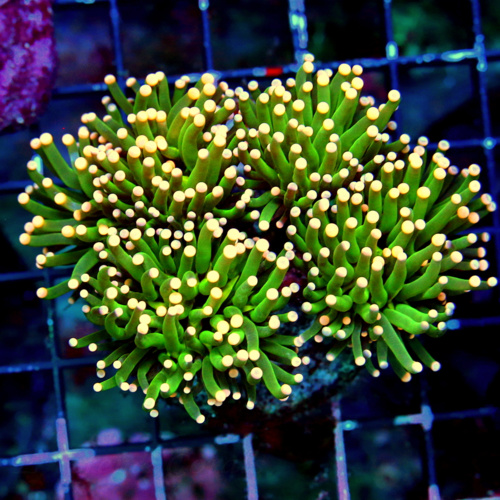
Learn how to place corals correctly in a reef tank based on lighting, flow, aggression, growth pattern, and sandbed versus rockwork placement so your corals stay healthier and grow better long term.
Learn how to place corals in a reef tank with practical tips on lighting, flow, aggression, spacing, sandbed placement, rockwork zones, and long-term coral growth.
by Scott Shiles • April 30, 2026
Coral placement is one of the most important reefkeeping skills because even a healthy coral can decline if it is put in the wrong light, the wrong flow, or too close to the wrong neighbor. Many reef keepers focus heavily on buying the right coral, but the real long-term result often depends just as much on where that coral goes once it enters the tank. In our experience, a large number of coral problems that seem like chemistry issues or “mystery declines” are actually placement problems. A torch coral blasted by direct flow, a mushroom scorched by excessive light, or a fleshy LPS coral stung by a nearby neighbor can all decline even in otherwise good water. This guide explains how to place corals correctly in a reef tank using practical reefkeeping logic built around lighting, flow, aggression, growth pattern, and whether a coral belongs on the sandbed or rockwork.
A common mistake hobbyists make is placing corals based only on what looks good on day one. In reality, the best placement decisions are made by thinking about how the coral will expand, grow, feed, and interact with the tank over time. The reef tanks that look the best long term are usually the ones where placement was planned with patience instead of impulse.
If you are looking for healthy, fully conditioned corals for your reef tank, browse our WYSIWYG new arrivals to compare fully conditioned, ready-to-ship specimens.
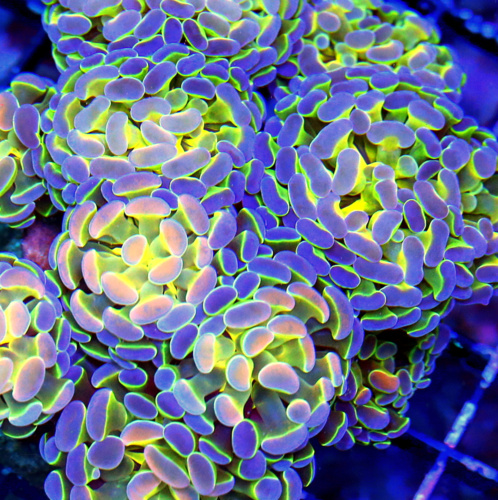
Why Coral Placement Matters More Than Many Reef Keepers Realize
Every coral has a preferred zone in the aquarium. Some need stronger light, some need calmer flow, some need sandbed protection, and some need much more space than they appear to need when first placed. Good coral placement reduces stress, improves feeding response, supports stronger color, and lowers the chance of coral-to-coral aggression.
Coral placement affects:
- Light exposure
- Water movement
- Detritus accumulation
- Aggression and stinging risk
- Growth pattern and future space
- Long-term aquascape balance
We’ve found that hobbyists often get much better results simply by relocating a coral to a more suitable area rather than changing multiple water parameters. A pattern we often see is that once the coral is finally placed where it actually belongs, extension improves first, then color and growth follow.
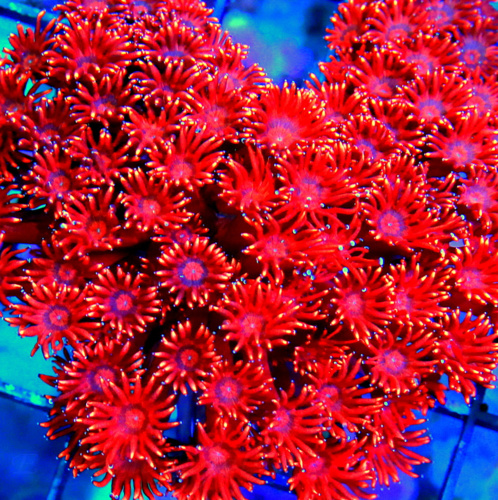
Start With Four Placement Questions
Before placing any coral in a reef tank, ask these four questions:
- How much light does this coral actually want?
- What kind of flow does it prefer?
- How aggressive is it, or how vulnerable is it to aggression?
- How much room will it need as it expands or grows?
In our experience, these four questions solve most placement problems before they start. A common mistake hobbyists make is placing a coral based only on its current size and not on how it behaves once fully expanded or established.
How Lighting Should Influence Coral Placement
Lighting is one of the biggest placement variables in any reef tank. Corals that want lower light often belong near the bottom or in partially shaded zones, while many SPS corals need brighter and more stable upper-level light exposure.
General placement logic by lighting need:
- Low-light corals usually do best in lower or shaded areas
- Moderate-light corals often fit well in mid-level rockwork or moderate lower zones
- Higher-light corals usually belong in upper rockwork with careful acclimation
That said, lighting is never just “top” versus “bottom.” Overhangs, shadows, LED hotspots, and rock structure all matter. We’ve found that many placement errors happen because the reefer assumes the tank has even lighting when it really has dramatic differences from zone to zone.
If you want to understand lighting zones better, read our reef tank lighting guide.
How Water Flow Should Influence Coral Placement
Flow affects coral health just as much as light. Corals need water movement for gas exchange, waste removal, feeding support, and keeping detritus from settling. But the wrong kind of flow can be just as harmful as too little flow.
General placement logic by flow type:
- Low-flow corals do best where tissue is not pushed or folded harshly
- Moderate-flow corals usually prefer indirect movement and gentle sway
- High-flow corals often need stronger, broader circulation with good oxygenation
In our experience, a common mistake hobbyists make is thinking “more flow” is always cleaner and healthier. Some fleshy corals look irritated for weeks simply because they are in a high-energy zone that would be better suited for SPS.
To better understand circulation, read our water flow and coral health guide.
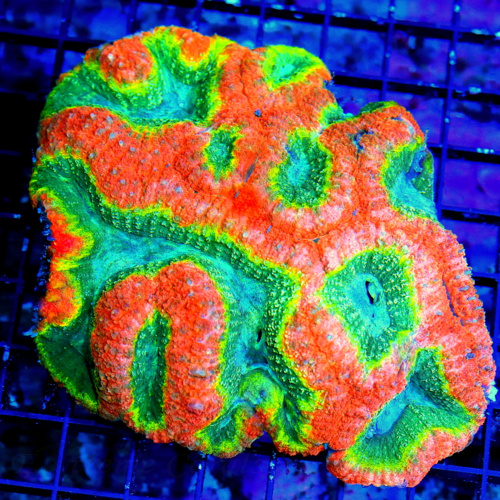
Sandbed vs Rockwork: Which Corals Usually Belong Where?
This is one of the most useful practical placement questions in reefkeeping. Some corals are much better suited for sandbed life, while others are more secure and healthier on rockwork.
Corals that often do well on the sandbed:
- Scolymia
- Trachyphyllia
- Many Cynarina and similar fleshy showpieces
- Some open brain and fleshy solitary LPS corals
Corals that often do well on rockwork:
- Acropora
- Montipora
- Birdsnest and many other SPS
- Zoanthids
- Mushrooms and ricordea when managed correctly
- Many branching LPS corals
Some corals can work in either location depending on the tank. In our experience, one common mistake hobbyists make is putting fleshy LPS corals directly on rough rock where tissue rubs and gets damaged. Another is placing rock-loving corals on unstable sand where they tip, shift, or collect detritus around the base.
Give Aggressive Corals More Room Than You Think
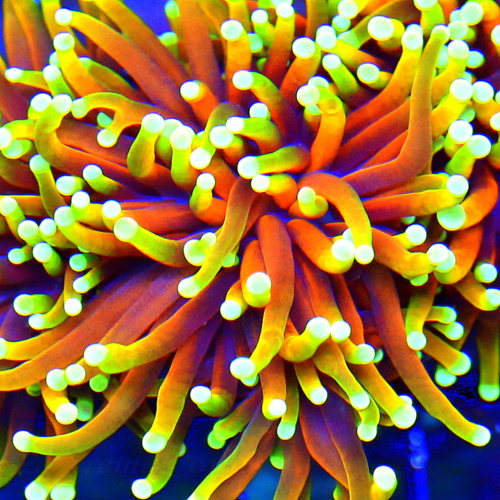
Coral aggression is one of the most overlooked placement factors in mixed reef tanks. Many corals look peaceful during the day and still become very aggressive at night through sweeper tentacles or tissue contact.
Corals that often need extra spacing include:
- Torch corals
- Hammer corals and frogspawn
- Galaxea
- Many fleshy LPS corals that inflate well beyond the skeleton
We’ve found that one common mistake hobbyists make is measuring coral spacing while the coral is partially closed, newly added, or under daytime-only observation. Corals often expand more than expected once settled, and nighttime sweepers can change the whole risk picture.
Plan for Growth, Not Just Today’s Size
Coral placement should always account for the future. A tiny frag will not stay tiny forever if the tank is healthy. Fast-growing SPS can shade lower corals, encrusting corals can claim more rock than expected, and mushrooms or zoanthids can spread into neighboring zones.
Think ahead about:
- Vertical growth
- Horizontal encrusting spread
- Shading risk
- Sweeper reach
- How easy the coral will be to move later
In many reef tanks, the best placement decision is the one that makes future maintenance easier. We’ve found that hobbyists who plan for growth early usually enjoy the reef more because they spend less time doing difficult rescue moves later.
A Practical Placement Guide by Coral Type
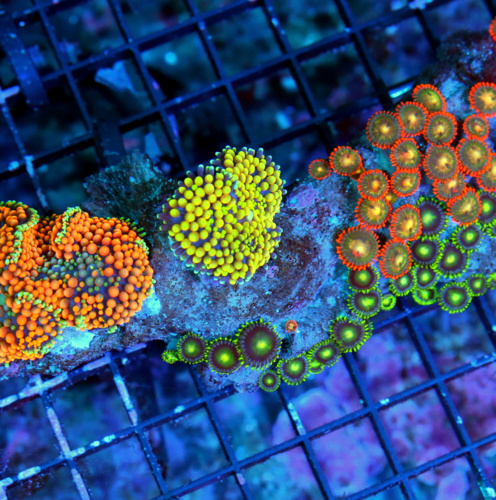
Soft corals often do well in moderate to lower-energy zones, depending on the species. Mushrooms, ricordea, and many leathers can work beautifully in lower or moderate zones where flow is not too harsh.
LPS corals usually need more thoughtful spacing and often prefer moderate light and indirect flow. Many fleshy LPS corals do well on lower rockwork or the sandbed, while branching LPS can sometimes work slightly higher if flow remains gentle enough.
SPS corals often belong higher in the tank where light and flow are stronger and more consistent. They usually need mature, stable conditions and should not be crowded into lower, detritus-prone zones.
In our experience, one of the easiest ways to improve a reef tank is to stop trying to force every coral into the same general “display zone.” Mixed reefs look better when each coral type is allowed to live where it performs naturally.
How to Tell When a Coral Is Placed Wrong
Corals usually give warning signs when placement is not working. The challenge is noticing them early enough to make a useful correction.
Common warning signs include:
- Poor extension or chronic shrinking
- Fading or bleaching
- Tissue recession
- Detritus collecting around the base
- Repeated collapse after flow changes
- Aggression damage from nearby corals
- A coral trying to detach or shift
We’ve found that a common mistake hobbyists make is blaming the water chemistry first when the coral has been clearly showing a placement problem all along. Light shock, flow stress, and aggression often look like “health decline” unless you step back and evaluate the zone itself.
Why New Corals Should Usually Start Lower and Safer
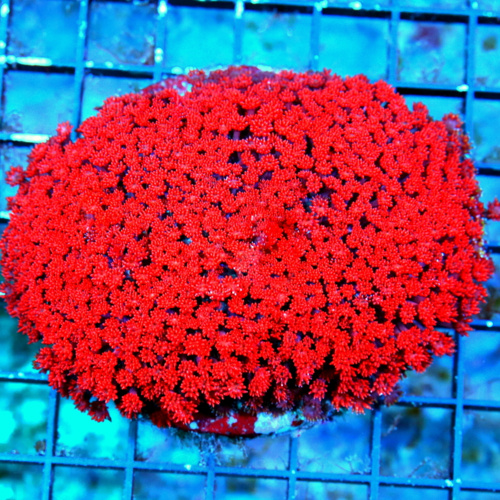
New corals often do best when introduced conservatively. Even if a coral may eventually live higher in the tank, many pieces benefit from gentler placement while they settle and adapt.
This is especially true for:
- Freshly shipped corals
- Higher-light SPS frags
- Ricordea and mushrooms
- Fleshy LPS corals with shipping stress
In our experience, the reefer who places new corals more cautiously usually gets better long-term results than the reefer who tries to put every coral into its final “perfect spot” immediately. A stable adjustment period often matters more than instant visual perfection.
How to Build Better Coral Zones in a Mixed Reef
One of the smartest ways to design a mixed reef is by building zones instead of placing each coral randomly. This approach supports better growth, easier maintenance, and fewer coral wars.
A practical mixed reef might include:
- Upper high-energy zone for SPS
- Mid-level moderate zone for branching LPS and adaptable corals
- Lower calmer zone for fleshy LPS, mushrooms, and sandbed showpieces
- Isolated islands for spreading corals like mushrooms or zoanthids
We’ve found that reef tanks built this way almost always look more intentional and stay easier to manage. A pattern we often see is that hobbyists who stop “filling holes” randomly and start building zones get much better coral performance.How to Choose a Healthy Coral Before Placement Even Starts
Placement matters, but it matters even more when the coral itself is healthy to begin with. A weak coral in the right spot may still struggle, while a strong coral in a decent spot has a much better chance.
When selecting a healthy specimen, look for:
- Stable tissue
- Good color for the species
- No obvious recession
- A coral that looks settled rather than freshly stressed
- A form that matches your actual tank conditions
If you are looking for a healthy, fully acclimated specimen, the smartest buying decision is usually the coral that fits your reef well, not just the one with the most dramatic photo.
Related Corals You May Also Like
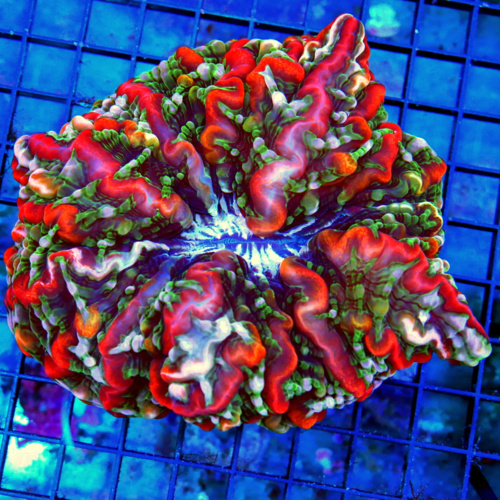
If you are interested in better coral placement and long-term reef success, you may also want to explore these related coral groups and reef tank guides:
- Browse new arrival corals
- Browse featured WYSIWYG corals
- Reef tank lighting guide
- Water flow and coral health guide
- LPS vs SPS vs Soft Corals guide
Ready to choose healthy corals for the right zones in your reef tank? Browse our new arrival corals and explore healthy additions for your aquarium.
Shop WYSIWYG Corals and New Arrivals
Explore our WYSIWYG new arrival corals, featured corals, soft corals, LPS corals, and SPS corals to build a stronger reef tank.
Final Thoughts
Good coral placement is one of the clearest signs of an experienced reef keeper. It affects growth, color, feeding, aggression, and long-term stability more than many people realize. The right coral in the wrong place often fails slowly. The right coral in the right place often becomes one of the easiest and most rewarding parts of the reef.
In our experience, reef tanks improve dramatically when hobbyists stop thinking only in terms of “where it fits” and start thinking in terms of “where it belongs.” That one shift leads to healthier corals, cleaner layouts, and fewer long-term headaches.
Frequently Asked Questions
Q: Should I place new corals at the bottom first?
A: In many cases, yes. Starting lower and more conservatively often helps new corals adjust more safely before moving them into stronger light or flow if needed.
Q: How do I know if a coral should go on the sandbed?
A: Many fleshy solitary LPS corals do best on the sandbed, especially when their tissue can be damaged by rough rock or when they naturally prefer lower zones.
Q: How much space should I leave between corals?
A: It depends on the coral, but most hobbyists should leave more room than they think, especially with aggressive LPS corals or fast growers.
Q: Can poor coral placement look like a water chemistry problem?
A: Yes. Flow stress, lighting stress, and aggression often cause symptoms that people first mistake for chemistry issues.
Q: What is one of the most common coral placement mistakes?
A: Placing corals based on appearance alone without accounting for future growth, expansion, and aggression is one of the most common mistakes.
About the Author
Scott Shiles is the owner of ExtremeCorals.com, which he has operated for over 25 years and is recognized as one of the early dedicated live coral websites on the internet. A lifelong reef keeper since 1984, Scott has decades of hands-on experience maintaining marine aquariums and previously owned and operated a brick and mortar aquarium retail store for 10 years, including five years alongside Extreme Corals. He holds a degree in Marine Biology and has personally selected and sold hundreds of thousands of live corals. An avid scuba diver who has explored reef systems around the world, Scott shares practical coral care and husbandry knowledge based on real world reef experience.
overall rating:
my rating:
log in to rate
Please log in to leave a comment.
For more information visit: additional resources