My Cart: 0 item(s)

Extreme Corals News and Updates
Donut Coral Care Guide: Cynarina, Acanthophyllia and Scolymia Care for Reef Tanks
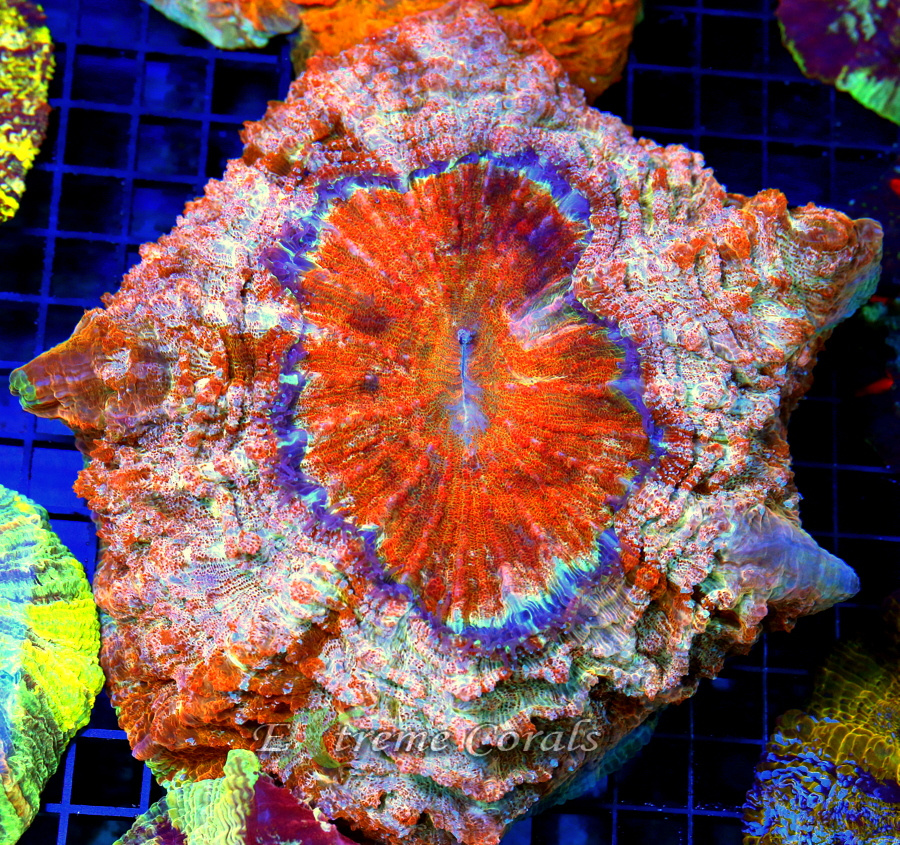
A comprehensive Extreme Corals guide to Donut Coral care, including Cynarina, Acanthophyllia and Scolymia-style LPS corals, lighting, flow, placement, feeding, water parameters, compatibility, tissue recession and buying tips.
Learn Donut Coral care for reef tanks, including Cynarina, Acanthophyllia and Scolymia-style corals, lighting, flow, placement, feeding, water parameters, tissue recession and LPS care tips.
by Scott Shiles • May 01, 2026
Donut Corals are some of the most impressive fleshy LPS corals in reef aquariums because they offer intense color, large inflated tissue, dramatic shape, and true showpiece appeal. These corals are often sold under names like Cynarina, Acanthophyllia, Scolymia, Meat Coral, Button Coral, Doughnut Coral, and Donut Coral. While those names are sometimes used loosely in the aquarium trade, the care goal is the same: give these large fleshy LPS corals stable water, moderate lighting, gentle indirect flow, careful placement, and enough space to expand without being damaged.
Here at Extreme Corals, we have handled and sold a tremendous number of large fleshy LPS corals over the years, and in our experience, Donut Corals reward reef keepers who understand stability and restraint. They are not corals that should be blasted with flow, crowded between aggressive neighbors, or thrown under intense lighting without acclimation. When they are placed correctly and kept in stable reef water, they can become some of the most eye-catching corals in the entire aquarium.
This complete Donut Coral care guide covers Cynarina, Acanthophyllia, and Scolymia-style care, including lighting, flow, placement, tank size, water parameters, feeding, handling, tissue recession, bleaching, algae issues, propagation, compatibility, and how to choose a healthy specimen online. If you are shopping for colorful fleshy LPS corals, browse our LPS corals for sale, new arrival corals, and Scott's Handpicked Corals.
What Is a Donut Coral?
In the reef aquarium hobby, the name Donut Coral is commonly used for large, round, fleshy LPS corals such as Cynarina, Acanthophyllia, and sometimes Scolymia-style corals. These corals are known for their circular shape, thick inflated tissue, vivid coloration, and large single-polyp appearance. Many specimens show incredible red, orange, green, teal, blue, yellow, purple, or rainbow patterns under reef lighting.
Donut Corals are large polyp stony corals. They have a hard calcium carbonate skeleton underneath the living tissue. That fleshy tissue is beautiful, but it is also delicate. If the coral is dropped, rubbed against rock, blasted with flow, stung by another coral, or handled roughly, the tissue can be damaged and may recede from the skeleton.
A healthy Donut Coral should usually show:
- Full, inflated tissue when settled
- Good color for that specimen
- No brown jelly or melting tissue
- No fresh exposed skeleton around the rim
- A clean underside or base when visible
- Normal feeding response when food is offered
- Gradual improvement after acclimation
These corals are often purchased as centerpiece pieces because one healthy Donut Coral can command attention in a reef tank without needing a large colony.
Cynarina vs Acanthophyllia vs Scolymia
The names Cynarina, Acanthophyllia, and Scolymia are sometimes confused in the aquarium trade, especially when corals are labeled by common names instead of exact scientific identification. While there are differences between them, reef keepers can usually care for these large fleshy LPS corals with similar principles: stable water, moderate light, gentle indirect flow, careful feeding, and plenty of space.
| Common Trade Name | General Appearance | Care Notes |
|---|---|---|
| Cynarina | Large fleshy single-polyp coral, often translucent or inflated | Needs gentle flow, stable water, and careful handling |
| Acanthophyllia | Large fleshy LPS, often thick and colorful with strong showpiece appeal | Moderate light, low to moderate indirect flow, room to expand |
| Scolymia-style corals | Round fleshy LPS with intense color and defined circular shape | Stable chemistry, careful feeding, and protection from aggressive neighbors |
For most reef keepers, the most important thing is not arguing over a label. The important thing is recognizing that these are fleshy LPS corals with delicate tissue and moderate care needs. They should be treated differently than SPS corals, fast-spreading soft corals, or high-flow Euphyllia gardens.
Are Donut Corals Beginner Friendly?
Donut Corals are usually best considered moderate care corals. They are not as demanding as many Acropora or advanced SPS corals, but they are more sensitive than many beginner soft corals. Their large fleshy tissue makes them vulnerable to rough handling, direct flow, stings, recession, and sudden parameter swings.
Donut Corals become easier when:
- The tank is mature and stable
- Salinity does not swing
- Alkalinity is steady
- Lighting is moderate and acclimated slowly
- Flow is gentle and indirect
- The coral has open space around it
- The sandbed or rock placement does not damage tissue
For a newer reef keeper, a Donut Coral can be a realistic choice if the aquarium is stable and the keeper already understands basic LPS care. For a brand-new tank with unstable salinity, changing nutrients, and untested lighting, it is better to wait.
Best Tank Setup for Donut Coral
Donut Corals do not need a complicated aquarium, but they need the right kind of stability. A tank with moderate lighting, gentle indirect water movement, a clean sandbed or stable low rock area, and consistent water chemistry is usually better than a high-energy SPS zone with intense light and strong flow.
A good Donut Coral tank setup includes:
- A mature reef tank with stable parameters
- Moderate reef lighting
- Low to moderate indirect flow
- Open sandbed or low rock placement
- Room away from aggressive corals
- Measurable but controlled nutrients
- Reliable filtration and regular maintenance
Tank size matters less than stability and placement, but larger tanks are often easier because salinity, temperature, nutrients, and alkalinity change more slowly. Nano tanks can keep fleshy LPS corals, but small mistakes create bigger swings.
Best Water Parameters for Donut Coral
Donut Corals need stable reef water. Because they are stony corals, calcium, alkalinity, and magnesium matter. Because they are fleshy LPS corals, salinity, temperature, nitrate, phosphate, and flow stability also matter a great deal.
| Parameter | Recommended Range for Donut Coral |
|---|---|
| Temperature | 76-80°F |
| Salinity | 1.024-1.026 specific gravity |
| pH | 8.1-8.4 |
| Alkalinity | 8-10 dKH, kept stable |
| Calcium | 400-450 ppm |
| Magnesium | 1250-1350 ppm |
| Nitrate | 2-10 ppm for many mixed reef systems |
| Phosphate | 0.03-0.07 ppm for many mixed reef systems |
In our experience, Donut Corals often do better in clean but not sterile water. Ultra-low nutrient systems can leave large fleshy LPS corals looking thin, pale, or less inflated. On the other hand, excessive nutrients can fuel algae around the skeleton and irritate tissue. Balance matters. For a deeper explanation, read our reef tank water parameters guide and our reef tank water testing guide.
Alkalinity Stability Is Critical for Donut Coral
Alkalinity stability is especially important for all stony corals, including Donut Corals. These corals may not grow skeletal mass as quickly as fast-growing SPS, but they still depend on stable reef chemistry. Sudden alkalinity swings can contribute to stress, poor expansion, tissue recession, and weaker recovery after shipping or handling.
Alkalinity problems may show as:
- Reduced inflation
- Tissue pulling away from the skeleton
- Slow recession around the edge
- Poor feeding response
- Greater sensitivity to lighting changes
- Slower recovery after relocation
Do not chase alkalinity aggressively. If a correction is needed, make it slowly. A steady number in a healthy range is usually safer than a “perfect” number reached too quickly.
Lighting Requirements for Donut Coral
Donut Corals generally do best under moderate reef lighting. They need enough light to support their symbiotic algae and maintain color, but they can bleach, shrink, or recede under lighting that is too intense or increased too quickly. This is especially important with modern LED reef lights, which can deliver more PAR than they appear to by eye.
A practical lighting approach for Donut Corals is:
- Start in moderate light, especially after shipping
- Avoid placing new specimens directly under intense LED peaks
- Increase lighting slowly only if the coral looks stable
- Watch tissue inflation during peak light
- Protect pale or stressed specimens from harsh lighting
Signs of too much light may include:
- Bleaching or pale tissue
- Tissue staying tight instead of inflated
- Color washing out
- Better appearance in shaded periods
- Slow recession after a lighting increase
Signs of too little light may include dull color, weak long-term fullness, and slow decline when other parameters are stable. For more help, read our best reef tank lighting guide.
Water Flow for Donut Coral
Flow is one of the biggest factors in Donut Coral success. These corals have large fleshy tissue that can be damaged by direct water movement. They should not be placed where a powerhead blasts them or where tissue is pushed hard against the skeleton all day.
Good Donut Coral flow should be:
- Low to moderate
- Indirect
- Broad rather than narrow and forceful
- Strong enough to keep debris from settling
- Gentle enough that tissue can inflate naturally
Too much direct flow can cause:
- Poor inflation
- Tissue tearing
- One-sided recession
- Skeleton rubbing through tissue
- Long-term stress
Too little flow can allow detritus, sand, or algae to collect around the coral. That can irritate the tissue and create problems around the skeleton. The ideal flow is gentle movement that keeps the coral clean without beating it up. Read our water flow and coral health guide for more detail.
Best Placement for Donut Coral
Donut Corals are usually best placed on the sandbed or on a very stable low rock surface where the tissue can expand without scraping against rough edges. Sandbed placement often works well because these corals are large, round, fleshy, and do not need to be mounted high in strong light.
Good placement options include:
- Open sandbed areas
- Low rock shelves with smooth surrounding space
- Moderate light zones
- Gentle indirect flow areas
- Dedicated LPS display zones
Avoid placing Donut Corals:
- Directly in front of a powerhead
- High under intense lighting without acclimation
- Against sharp rock edges
- Beside aggressive chalices, Torch Corals, Galaxea, or other stinging corals
- Where sand-sifting fish constantly bury them
- Where crabs, snails, or fish can repeatedly knock them over
A Donut Coral needs room to inflate. Placement that looks fine when the coral is closed may become too tight once the coral expands. For more help, read our coral placement guide.
Feeding Donut Coral
Donut Corals are photosynthetic, but they can benefit from occasional feeding. Many specimens will accept small meaty foods when healthy and settled. Feeding can support tissue fullness, energy reserves, and recovery, but it should be done carefully.
Good foods for Donut Corals may include:
- Mysis shrimp
- Small pieces of marine shrimp
- Small LPS pellets
- Finely chopped meaty marine foods
- Zooplankton-style coral foods
Feed small portions. Large chunks can be difficult for the coral to handle and may be rejected later, adding waste to the tank. In many aquariums, occasional target feeding once a week or every couple of weeks is enough. Heavy feeding without nutrient control can create algae and water quality problems.
How to Feed a Donut Coral Safely
The best time to feed is when the coral is expanded and showing feeding response. Some Donut Corals extend feeding tentacles after lights dim or when food is in the water. Turn off or reduce strong flow temporarily if needed, but do not leave pumps off too long.
A simple feeding method is:
- Use a small amount of appropriate food.
- Gently place food near the mouth or feeding tentacles.
- Protect the coral from shrimp or fish stealing the food.
- Wait until the coral begins pulling the food in.
- Restart normal flow after feeding.
- Remove uneaten food if it is rejected.
Do not force food into the mouth and do not feed a coral that is severely stressed, gaping, melting, or receding. Stabilize the environment first.
Handling and Maintenance of Donut Coral
Donut Corals should be handled with extra care because their tissue is large and delicate. Never grab the inflated tissue. If the coral must be moved, handle the skeleton or base carefully and avoid letting the tissue scrape against rock, buckets, bags, egg crate, or tools.
Good handling habits include:
- Move the coral only when necessary.
- Avoid touching inflated tissue.
- Keep the coral submerged when possible.
- Do not let tissue rub against sharp rock.
- Place it where it cannot fall.
- Inspect the tissue after moving.
Maintenance around the coral also matters. Do not blast it with a turkey baster, bury it in sand, or allow algae to grow into the tissue edge. Gentle cleaning around the coral is safer than aggressive disturbance.
Compatibility and Coral Aggression
Donut Corals need space from aggressive corals. Their fleshy tissue can be damaged by sweeper tentacles, chemical irritation, or direct contact from nearby corals. They may look tough because they are large, but their tissue can recede quickly after repeated stinging or abrasion.
Keep Donut Corals away from:
- Torch Corals
- Galaxea
- Aggressive chalice corals
- Large Euphyllia colonies
- Favia and Favites with sweeper tentacles
- Fast-spreading mushrooms or soft corals that may crowd tissue
Give the coral more room than it appears to need. A healthy Donut Coral can expand significantly, and that expansion should not push it into neighboring corals.
How to Choose a Healthy Donut Coral Online
When buying Donut Corals online, do not choose by color alone. A colorful coral still needs healthy tissue. Look closely at the shape, inflation, tissue edge, and skeleton condition where visible.
Look for:
- Full tissue coverage
- No obvious fresh recession
- No brown jelly or slimy decay
- No sharp skeleton cutting into tissue
- Good color without severe bleaching
- A clean base or underside when visible
- Natural inflated shape
Be cautious with:
- Corals showing exposed skeleton around the rim
- Pieces that look collapsed or deflated in every image
- Bleached specimens with thin tissue
- Brown slime or melting tissue
- Corals with algae growing into damaged skeleton
- Freshly cut or damaged pieces
At Extreme Corals, we want customers to buy corals that have both beauty and a real chance of long-term success. A healthy Donut Coral should look like a living animal with strong tissue, not just a bright color pattern.
Acclimating a New Donut Coral
New Donut Corals should be acclimated carefully because shipping, dipping, salinity differences, and lighting changes can all create stress. The coral may not fully inflate immediately after arrival, but it should gradually improve under stable conditions.
Good acclimation practices include:
- Temperature acclimate carefully.
- Inspect the coral for tissue damage or pests.
- Dip only when appropriate and follow product directions.
- Start in moderate light.
- Use gentle indirect flow.
- Place the coral where tissue will not rub or be stung.
- Avoid moving it repeatedly unless placement is clearly wrong.
Once the coral is placed correctly, give it time. Constant movement can create more stress than the original problem.
Common Donut Coral Problems
Donut Corals are not impossible to keep, but their large fleshy tissue makes visible problems serious. Early action can prevent a small issue from becoming a major loss.
Donut Coral Not Inflating
A Donut Coral may not inflate because of shipping stress, salinity swings, too much light, too much direct flow, low nutrients, poor water quality, or repeated irritation from fish or invertebrates. Check recent changes first.
Bleaching or Pale Tissue
Bleaching may come from excessive light, rapid lighting increases, heat stress, nutrient starvation, or poor acclimation. Reduce stress and stabilize the tank rather than making sudden aggressive corrections.
Tissue Recession
Tissue recession can be caused by alkalinity swings, direct flow damage, sharp skeleton abrasion, coral stings, bacterial irritation, poor shipping recovery, or low stability. Recession should not be ignored.
Algae Around the Skeleton
Algae growing near damaged skeleton can irritate tissue and slow recovery. Improve nutrient control, increase gentle flow around the area, and remove algae carefully without damaging the coral.
Brown Jelly or Melting Tissue
Brown jelly-like decay is serious and can move quickly in fleshy LPS corals. If suspected, isolate when possible, remove decaying material carefully, improve water quality, and consider appropriate coral dips or treatment outside the display.
Propagation and Fragging Donut Coral
Donut Corals can sometimes be propagated by experienced coral farmers, but they are not beginner fragging corals. Their large fleshy tissue and single-polyp structure make cutting risky. Damage can lead to recession, infection, or loss of the coral.
If propagation is attempted, it should only be done with:
- A healthy, established coral
- Proper coral cutting equipment
- Clean tools and clean working conditions
- Experience with fleshy LPS corals
- Appropriate healing flow and water quality
- Careful monitoring after cutting
Most hobbyists should not make a prized Donut Coral their first fragging project. If you are learning coral propagation, start with easier coral types and read our coral fragging guide.
Our Practical Donut Coral Advice at Extreme Corals
At Extreme Corals, our practical advice for Donut Corals is straightforward: protect the tissue, keep the water stable, use moderate light, use gentle indirect flow, and give the coral space. These corals are not difficult because they need complicated care. They are difficult when reef keepers treat them like rock-solid decorations instead of delicate fleshy animals.
Our Donut Coral care rules are:
- Place the coral in moderate light.
- Use gentle indirect flow.
- Keep salinity and alkalinity stable.
- Avoid sharp rock contact.
- Give the coral space from aggressive neighbors.
- Feed small meaty foods occasionally if the coral responds well.
- Do not overfeed or pollute the tank.
- Watch for recession, bleaching, or brown jelly early.
- Handle the coral by the skeleton or base, not the inflated tissue.
A healthy Donut Coral can be one of the most beautiful corals in a reef aquarium. The key is giving it a low-stress environment where its tissue can stay inflated, colorful, and protected.
Related Donut Coral and LPS Coral Guides
If you are researching Donut Coral care or shopping for fleshy LPS corals, these related guides and categories can help:
- LPS Corals for Sale - Browse large polyp stony corals for reef aquariums.
- New Arrival Corals - See recently added corals for your reef tank.
- Scott's Handpicked Corals - Explore standout corals selected for color and quality.
- Hammer Coral Care Guide - Learn care for another popular LPS coral.
- Torch Coral Care Guide - Understand care and aggression in flowing LPS corals.
- Coral Placement Guide - Plan coral placement by light, flow, spacing, and growth.
- Reef Tank Water Testing Guide - Keep coral water parameters stable.
- Coral Care Guide - Review the foundation of coral husbandry.
Shop Donut Corals and LPS Corals at Extreme Corals
Donut Corals are outstanding choices for reef keepers who want a colorful, fleshy, high-impact LPS coral with true centerpiece potential. They do best in stable reef tanks with moderate lighting, gentle indirect flow, careful placement, and enough room to expand without being stung or damaged.
Browse our LPS corals for sale, new arrival corals, new arrival coral frags, new coral colonies, and Scott's Handpicked Corals at ExtremeCorals.com to find healthy WYSIWYG corals for your reef aquarium.
Frequently Asked Questions About Donut Coral Care
What is a Donut Coral?
Donut Coral is a common trade name often used for large round fleshy LPS corals such as Cynarina, Acanthophyllia, and Scolymia-style corals. They are known for large inflated tissue and intense color.
Are Donut Corals easy to care for?
Donut Corals are usually moderate care corals. They are not as demanding as many SPS corals, but they need stable water, moderate light, gentle indirect flow, careful placement, and protection from tissue damage.
What lighting does Donut Coral need?
Donut Corals usually do best under moderate reef lighting. New specimens should be light acclimated slowly and should not be placed directly under intense light without adjustment.
What flow is best for Donut Coral?
Donut Corals prefer low to moderate indirect flow. The flow should keep debris away without blasting the fleshy tissue or pushing it against the skeleton.
Where should I place Donut Coral?
Donut Corals are often best placed on the sandbed or a stable low rock area with moderate light, gentle indirect flow, and enough open space for tissue expansion.
Do Donut Corals need feeding?
Donut Corals are photosynthetic but can benefit from occasional small feedings of mysis shrimp, small LPS pellets, or finely chopped meaty marine foods when healthy and settled.
Why is my Donut Coral not inflating?
A Donut Coral may not inflate because of shipping stress, salinity swings, too much light, direct flow, poor water quality, low nutrients, coral stings, or irritation from fish and invertebrates.
Can Donut Corals touch other corals?
Donut Corals should be kept away from aggressive corals. Their fleshy tissue can be damaged by stings from Torch Corals, chalices, Galaxea, Favia, Favites, and other aggressive neighbors.
Can Donut Corals be fragged?
Donut Corals can sometimes be propagated by experienced coral farmers, but they are risky beginner fragging corals because their large fleshy tissue can be damaged easily.
What causes Donut Coral tissue recession?
Tissue recession may be caused by alkalinity swings, direct flow damage, sharp rock abrasion, coral stings, poor shipping recovery, bacterial irritation, low stability, or algae growing near damaged skeleton.
About the Author
Scott Shiles is the owner of ExtremeCorals.com, which he has operated for over 25 years and is recognized as one of the early dedicated live coral websites on the internet. A lifelong reef keeper since 1984, Scott has decades of hands-on experience maintaining marine aquariums and previously owned and operated a brick and mortar aquarium retail store for 10 years, including five years alongside Extreme Corals. He holds a degree in Marine Biology and has personally selected and sold hundreds of thousands of live corals. An avid scuba diver who has explored reef systems around the world, Scott shares practical coral care and husbandry knowledge based on real world reef experience.
overall rating:
my rating:
log in to rate
Please log in to leave a comment.
For more information visit: additional resources