My Cart: 0 item(s)

Extreme Corals News and Updates
Coral Aggression Guide: How to Manage Sweeper Tentacles, Chemical Warfare and Reef Tank Spacing
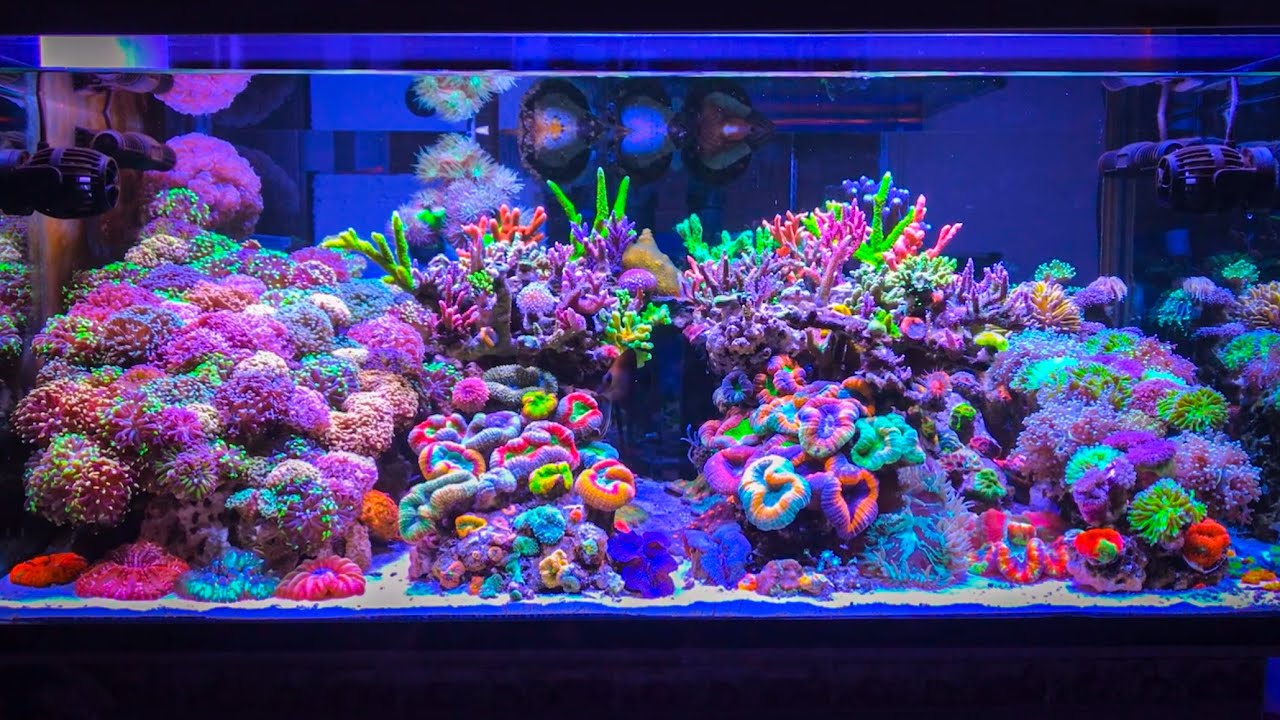
Learn how coral aggression works in reef tanks, including sweeper tentacles, chemical warfare, coral spacing, compatible placement, pruning, carbon use and long-term reef tank space management.
Learn how to manage coral aggression in reef tanks, including sweeper tentacles, chemical warfare, coral spacing, pruning, carbon use and compatible coral placement.
by Scott Shiles • May 01, 2026
Reef Tank Maintenance, All Corals
Corals may look peaceful, but reef aquariums are full of competition. Many corals fight for space, light, flow, nutrients, and long-term survival. In the wild, these battles help shape reef structure. In a home aquarium, the same natural behavior can cause stinging, tissue recession, chemical stress, shading, and coral losses if the tank is too crowded or poorly planned.
Coral aggression is especially important in mixed reef tanks because different coral groups defend space in different ways. Some LPS corals extend long sweeper tentacles. Some soft corals release chemical compounds. Some mushrooms and fast-growing polyps spread across rockwork and crowd slower corals. Some plating corals eventually shade everything below them. The more you understand these behaviors, the easier it becomes to build a reef tank that looks full without turning into a coral war zone.
At Extreme Corals, we see coral aggression as one of the most important long-term placement issues in reef keeping. This guide explains coral aggression, sweeper tentacles, chemical warfare, mesenterial filaments, fast-growing corals, spacing, activated carbon, pruning, fragging, and reef tank space management. For broader planning help, you can also review our coral placement guide, coral care guide, and water flow and coral health guide.
What Is Coral Aggression?
Coral aggression is the way corals compete with neighboring corals for space and resources. In a reef tank, this can happen through direct stinging, sweeper tentacles, chemical release, overgrowth, shading, or tissue contact.
Aggression is not a sign that something is wrong with the coral. It is normal coral behavior. The problem is that a home aquarium is a confined space, so aggressive behavior can damage nearby corals much faster than many reef keepers expect.
Common forms of coral aggression include:
- Sweeper tentacles: Long stinging tentacles extended to damage nearby corals.
- Mesenterial filaments: Digestive filaments some corals can extend onto neighbors.
- Chemical warfare: Compounds released by some corals that may irritate or suppress others.
- Direct contact stinging: Tissue damage when corals touch each other.
- Overgrowth: Fast-growing corals spreading onto slower neighbors.
- Shading: Larger colonies blocking light from corals below.
The goal is not to avoid all aggressive corals. Many aggressive LPS corals are beautiful and worth keeping. The goal is to understand their behavior and place them correctly.
Why Coral Aggression Matters in Home Reef Tanks
In the ocean, corals have far more space, water movement, and ecological balance. In a reef tank, everything is compressed. A coral that would naturally compete across a larger reef surface may be placed only a few inches from another coral in an aquarium.
If coral aggression is ignored, it can lead to:
- Tissue recession on nearby corals
- White burn marks or damaged edges
- Closed polyps and poor extension
- Corals shrinking away from aggressive neighbors
- Slow decline that looks like a water quality problem
- Loss of expensive corals from preventable stinging
Many reef keepers blame lighting, nutrients, or water chemistry when the real problem is coral-to-coral competition. Always inspect spacing and nighttime behavior when a coral declines near an aggressive neighbor.
Sweeper Tentacles: The Most Obvious Form of Coral Aggression
Sweeper tentacles are extended stinging tentacles that some corals use to defend territory. They are often longer than the coral’s normal daytime tentacles and may appear after dark, during feeding, or when nearby corals are too close.
Corals known for sweeper tentacles may include:
- Torch Coral
- Hammer Coral
- Frogspawn Coral
- Favia Coral
- Favites and Platygyra-style brain corals
- Galaxea Coral
- Many chalice-style LPS corals
Sweeper tentacles are one reason spacing matters so much. A coral that looks safely separated during the day may reach much farther at night.
Chemical Warfare Between Corals
Chemical warfare, also called allelopathy, happens when corals release compounds into the water that may irritate, suppress, or stress neighboring corals. This is especially important in tanks that mix soft corals, leather corals, mushrooms, LPS corals, and SPS corals.
Soft corals and leather corals are often discussed in chemical warfare conversations because they may release compounds that affect more sensitive stony corals. Mushrooms can also crowd and irritate nearby corals through both physical contact and chemical competition.
Chemical aggression is harder to see than sweeper tentacles, but warning signs may include:
- Corals staying closed without obvious stinging
- SPS corals losing color in soft-coral-heavy systems
- Unexplained poor polyp extension
- Multiple sensitive corals declining at the same time
- Improvement after carbon use or water changes
Activated carbon, regular water changes, strong protein skimming, and good flow can help reduce the impact of chemical warfare in mixed reefs.
Mesenterial Filaments and Direct Coral Digestion
Some corals can extend mesenterial filaments, which are digestive structures used to damage or digest nearby competitors. This can happen when corals are placed too close together or when one coral grows into another.
This type of aggression may show up as damaged tissue exactly where two corals are close or touching. It can be easy to mistake this for random tissue recession, but the pattern usually gives it away.
Watch for:
- Damage only on the side facing another coral
- White skeleton exposed along a contact line
- Nighttime filament extension
- One coral clearly winning while the other recedes
- Repeated damage after the corals grow closer together
When this happens, spacing or relocation is usually needed. Once tissue damage begins, waiting too long can make recovery much harder.
Aggressive Coral Types to Plan Around
Not every coral is aggressive in the same way. Some sting. Some spread. Some shade. Some release chemicals. A smart reef layout accounts for all of these behaviors before the coral is glued into the rockwork.
Aggressive LPS Corals
Many LPS corals are beautiful centerpiece corals, but they can be strong competitors. Torches, hammers, frogspawn, Favia, Favites, Galaxea, Pectinia, and chalice corals should all be given room.
For LPS-focused reef planning, browse our LPS coral selection and review compatibility before placing multiple aggressive corals close together.
Fast-Spreading Soft Corals
Some soft corals are not aggressive through a long sting, but they can still become dominant by spreading quickly. Green Star Polyps, Xenia, mushrooms, and some leather corals can take over space if placed directly on main rockwork without a plan.
Fast spreaders are often best kept on isolated rock islands where their growth can be controlled.
Mushrooms and Zoanthids
Mushrooms and Zoanthids can be excellent reef tank corals, but placement still matters. Mushrooms can multiply and irritate neighbors, while zoanthid colonies can grow into nearby coral bases if not managed.
They are often best placed where they can spread without crowding slower-growing LPS or SPS corals.
Plating and Shading Corals
Some corals cause problems by shading rather than stinging. Plating Montipora, scrolling corals, and large branching colonies can block light from corals below them as they grow.
Shading can be slow and easy to miss until lower corals begin fading, stretching, or losing tissue.
How Much Space Should You Leave Between Corals?
There is no perfect spacing number for every coral, but a reef tank should be planned around full expansion, sweeper reach, and future growth. A small frag may look harmless now, but a healthy coral can become much larger after several months.
Practical spacing guidelines include:
- Leave several inches around peaceful LPS corals.
- Leave at least 6 inches around aggressive LPS corals when possible.
- Give Euphyllia room for full daytime expansion and nighttime sweepers.
- Keep fast-spreading corals on isolated rocks if control is important.
- Plan for future colony size, not just frag size.
- Watch flow direction because sweepers can reach downstream neighbors.
More space usually creates fewer problems. A reef tank with thoughtful open space often performs better than one packed tightly from the start.
How Water Flow Affects Coral Aggression
Flow direction matters because sweeper tentacles, chemical compounds, mucus, and food particles can all move with the current. A coral may damage another coral downstream even when it looks far enough away from above.
Water flow also affects coral tissue health. Strong direct flow can damage fleshy corals and make aggression worse by pushing tentacles into neighboring colonies. Weak flow can allow detritus and chemical buildup in crowded coral zones.
Good flow planning should:
- Use indirect movement rather than direct blasting.
- Keep waste from collecting between colonies.
- Prevent aggressive tentacles from being pushed into peaceful corals.
- Create different zones for different coral types.
- Support coral expansion without causing tissue damage.
If you are seeing damage only on one side of a coral, look at both the neighboring coral and the flow direction. The current may be carrying the problem farther than expected.
Using Activated Carbon for Chemical Aggression
Activated carbon can help reduce dissolved organic compounds and possible chemical aggression in mixed reef tanks. It is especially useful in systems with soft corals, leather corals, mushrooms, and sensitive stony corals living together.
Activated carbon is not a replacement for spacing or maintenance, but it can be a useful support tool.
Good carbon-use habits include:
- Use quality activated carbon in an appropriate amount.
- Change carbon regularly instead of leaving it exhausted.
- Rinse carbon before use when product instructions recommend it.
- Use carbon alongside water changes and protein skimming.
- Do not rely on carbon to fix severe overcrowding.
In mixed reefs, carbon can help improve water clarity and reduce some chemical stress, but the tank still needs good spacing, flow, and coral compatibility planning.
Pruning and Fragging to Control Coral Competition
Even well-planned reefs need maintenance as corals grow. Pruning and fragging help keep fast-growing corals from overtaking the tank and help prevent larger colonies from shading or stinging neighbors.
Corals that may need regular trimming include:
- Green Star Polyps
- Pulsing Xenia
- Fast-growing mushrooms
- Zoanthid colonies
- Branching Euphyllia colonies
- Plating Montipora
- Large encrusting LPS colonies
Fragging should be done with clean tools and only on healthy corals. For propagation basics, review our coral fragging guide before cutting valuable pieces.
Signs Coral Aggression Is Happening
Coral aggression is not always obvious at first. Sometimes the damage appears slowly and only on the side facing another coral. Other times, a coral can be healthy one day and badly burned after a night of sweeper contact.
Signs of coral aggression include:
- White marks or burns facing a neighboring coral
- Tissue recession on one side only
- Polyps staying closed near an aggressive coral
- Sudden damage after corals grow closer together
- Sliming or irritation after contact
- Neighboring corals declining while others in the tank look fine
- Sweeper tentacles visible after lights out
If only one coral is affected and the damage faces a nearby coral, aggression should be high on the list of possible causes.
How to Stop Coral Aggression Before It Gets Worse
Once aggression starts, the best solution depends on the cause. A stinging coral may need more space. A fast spreader may need trimming. A soft-coral-heavy tank may need carbon and water changes. A coral being shaded may need relocation or pruning of the coral above it.
Helpful steps include:
- Observe the tank after lights out.
- Identify which coral is causing the damage.
- Move or trim corals before damage spreads.
- Increase spacing around aggressive LPS corals.
- Use activated carbon in mixed soft coral and stony coral systems.
- Improve indirect flow around crowded areas.
- Keep fast-growing corals on isolated rocks when possible.
Do not wait until multiple colonies are damaged. Early action is much easier than trying to save corals after repeated stinging or tissue loss.
Reef Tank Space Management for Long-Term Success
Managing coral aggression is really about managing space. A reef tank should leave room for coral expansion, fish movement, maintenance access, and future growth. A crowded reef can look impressive for a short time, but it often becomes harder to maintain as colonies mature.
Better space management includes:
- Creating separate coral zones based on light, flow, and aggression
- Leaving open sandbed and rockwork areas for future growth
- Using isolated islands for fast-spreading corals
- Keeping aggressive LPS corals away from peaceful neighbors
- Pruning colonies before they shade or sting other corals
- Choosing corals based on long-term compatibility, not impulse
For more on planning coral zones, review our reef tank coral placement guide.
Choosing Compatible Corals
Compatibility starts before the coral enters the tank. When choosing new corals, consider their aggression level, growth rate, lighting needs, flow needs, and long-term size.
Helpful questions before buying a coral include:
- Does this coral have sweeper tentacles?
- Will it spread quickly onto nearby rockwork?
- Will it shade lower corals later?
- Does it need a different flow level than nearby corals?
- Can it safely live in the zone I have available?
- Will it still fit this tank six months from now?
Better coral selection leads to fewer placement problems, fewer losses, and a more stable reef long term. Browse new arrival corals with compatibility and spacing in mind instead of choosing by color alone.
Common Coral Aggression Mistakes to Avoid
Placing Aggressive LPS Corals Too Close Together
Torch corals, hammer corals, frogspawn corals, Favia, chalices, Galaxea, and other aggressive LPS corals need room. Crowding them can lead to stinging and tissue damage.
Ignoring Nighttime Behavior
Many aggressive corals extend sweepers after dark. A coral that looks safe during the day may be reaching a neighbor at night.
Letting Fast Spreaders Reach the Main Rockwork
Green Star Polyps, Xenia, mushrooms, and some zoanthids can spread quickly. Isolated rocks make them easier to control.
Forgetting About Future Growth
A small frag may not be a problem today, but a healthy colony can grow into neighbors, shade lower corals, or create dead spots over time.
Assuming Carbon Fixes All Chemical Warfare
Activated carbon can help, but it does not replace water changes, good flow, protein skimming, pruning, and proper coral spacing.
Moving Damaged Corals Without Fixing the Cause
Moving a coral may help, but the root cause still needs to be identified. Check flow direction, sweeper reach, pests, shading, and water stability.
Building a Peaceful Mixed Reef
A peaceful mixed reef does not happen by accident. It comes from placing corals based on their needs and behavior. The best reef tanks usually include open areas, isolated rocks, dedicated coral zones, controlled growth, and enough space around aggressive corals.
A good mixed reef plan may include:
- SPS corals higher in stronger indirect flow
- Moderate LPS corals in middle and lower zones
- Fleshy sandbed corals in lower, calmer areas
- Fast-spreading soft corals on isolated islands
- Aggressive LPS corals placed with generous spacing
- Regular pruning before colonies grow into each other
Coral aggression can never be eliminated completely, but it can be managed well enough to build a beautiful, healthy, long-lasting reef tank.
Related Corals and Reef Tank Topics You May Also Like
If you are learning how to manage coral aggression and reef tank spacing, these related guides can help:
- Coral Placement Guide - Plan coral zones based on light, flow, spacing, and aggression.
- Euphyllia Coral Care Guide - Learn care and spacing for torch, hammer, and frogspawn corals.
- Favia Coral Care Guide - Understand care for a classic LPS coral with sweeper tentacles.
- Echinophyllia Chalice Coral Care Guide - Review care for an aggressive chalice-style LPS coral.
- Pulsing Xenia Care Guide - Keep Xenia healthy while controlling fast spread.
- Discosoma Mushroom Coral Guide - Place mushroom corals without letting them crowd slower neighbors.
- Water Flow and Coral Health - Use flow to support coral health and reduce dead spots.
- New Arrival Corals - Browse recently added corals with long-term compatibility in mind.
Shop Corals With Compatibility in Mind
The best reef tanks are built by choosing corals that fit the available space, lighting, flow, and compatibility plan. Aggressive corals can be beautiful, but they need room. Fast-growing corals can be useful, but they need control. Peaceful corals can thrive, but they should not be placed where they will be stung or shaded.
Browse new arrival corals, LPS corals, soft corals, and Zoanthids at ExtremeCorals.com to build a reef tank with better spacing, healthier growth, and fewer coral aggression problems.
Frequently Asked Questions About Coral Aggression
What is coral aggression?
Coral aggression is the way corals compete for space using sweeper tentacles, stinging, chemical release, overgrowth, shading, or direct tissue contact.
What are sweeper tentacles?
Sweeper tentacles are long stinging tentacles that some corals extend to damage nearby competitors. They often appear at night or when corals are placed too close together.
Which corals are most aggressive?
Many LPS corals can be aggressive, including torch corals, hammer corals, frogspawn corals, Favia, Favites, Galaxea, Pectinia, and chalice corals.
Can soft corals use chemical warfare?
Yes, some soft corals and leather corals can release compounds that may irritate neighboring corals, especially in crowded mixed reef tanks.
How far apart should corals be placed?
Spacing depends on the coral, but aggressive LPS corals often need at least 6 inches when possible. Always plan for full expansion, sweeper tentacles, and future growth.
Does activated carbon help with coral aggression?
Activated carbon can help reduce dissolved compounds and possible chemical warfare, but it does not replace proper spacing, water changes, flow, and coral compatibility planning.
How do I know if one coral is stinging another?
Look for tissue damage, white marks, recession, or closed polyps on the side facing a neighboring coral. Nighttime observation can reveal sweeper tentacles.
Can aggressive corals be kept in a mixed reef?
Yes, aggressive corals can be kept in mixed reefs if they are placed with enough space, appropriate flow, and careful monitoring as they grow.
About the Author
Scott Shiles is the owner of ExtremeCorals.com, which he has operated for over 25 years and is recognized as one of the early dedicated live coral websites on the internet. A lifelong reef keeper since 1984, Scott has decades of hands-on experience maintaining marine aquariums and previously owned and operated a brick and mortar aquarium retail store for 10 years, including five years alongside Extreme Corals. He holds a degree in Marine Biology and has personally selected and sold hundreds of thousands of live corals. An avid scuba diver who has explored reef systems around the world, Scott shares practical coral care and husbandry knowledge based on real world reef experience.
overall rating:
my rating:
log in to rate
Please log in to leave a comment.
For more information visit: additional resources