My Cart: 0 item(s)

Extreme Corals News and Updates
Blastomussa in Reef Tanks: Care, Placement, Feeding and Growth Tips
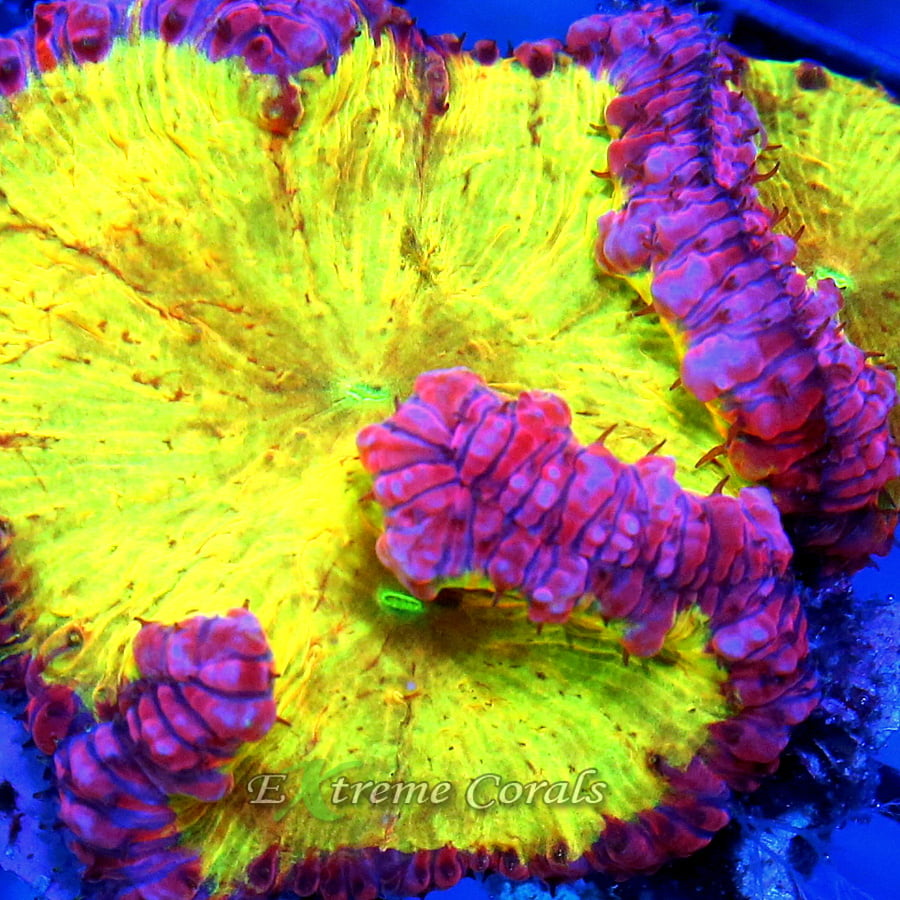
Essential Tips and Techniques for Maintaining Vibrant and Healthy Blastomussa Corals
Blastomussa corals are a vibrant and hardy choice for reef aquariums, perfect for beginners and experienced hobbyists alike. This guide covers essential care tips, ideal tank conditions, and troubleshooting common issues to help you maintain healthy and beautiful Blastomussa corals.
by Scott Shiles • May 29, 2024
Looking to add Blastomussa corals to your reef tank? Browse our LPS corals for sale and explore colorful, healthy pieces for your aquarium.
Blastomussa corals, often called Blastos, are popular LPS corals known for their fleshy polyps, vibrant color, and relatively forgiving care requirements. This guide explains how to keep Blastomussa healthy in a reef tank, including lighting, flow, placement, feeding, water chemistry, and common problems that can affect long-term growth and expansion.
Blastomussa are a great choice for reef keepers who want strong color and texture without jumping straight into more demanding SPS corals. They fit especially well in mixed reefs, lower-flow coral zones, and LPS-dominant displays. When placed correctly and kept in stable conditions, Blastomussa can become one of the most attractive and reliable corals in a home reef aquarium.
What Is Blastomussa?
Blastomussa is a large polyp stony coral known for its fleshy round polyps that grow over a hard skeleton. These corals are valued for their color, texture, and relatively manageable care needs in reef tanks. The two names hobbyists most often encounter are Blastomussa wellsi and Blastomussa merleti, both of which are popular in the reef hobby. The live article on this page already positions Blastomussa as a hardy, colorful LPS option for both newer and more experienced hobbyists. :contentReference[oaicite:1]{index=1}
Blastos are often chosen by hobbyists who want an LPS coral with strong visual impact but without the aggression or placement difficulty of some larger, more stinging species. They usually do well in lower to middle areas of a reef tank where lighting and flow are less intense.
Why Blastomussa Is So Popular
- Bright coloration and strong fluorescence under reef lighting
- Large fleshy polyps that add texture to the aquascape
- Good fit for mixed reefs and LPS-focused tanks
- Generally more forgiving than many SPS corals
- Works well in lower to mid-level coral placement zones
Blastomussa is especially appealing to reef keepers who want something visually rich without needing extremely high light or intense turbulent flow. It can be a good coral for building out a more balanced LPS section of the tank.
Blastomussa Care Requirements
Lighting
Blastomussa usually does best under low to moderate lighting. This is one area where hobbyists often go wrong, especially if they assume every stony coral needs strong light. In many tanks, placing Blastomussa under excessive intensity can lead to retraction, faded appearance, or stress.
- Low to moderate lighting is usually the safest starting point
- Avoid sudden jumps in light intensity
- Acclimate slowly if moving the coral higher in the tank
- Too much light can reduce expansion and color quality
If you are still fine-tuning your setup, learn more about coral lighting to better understand how placement affects LPS coral behavior.
Water Flow
Blastomussa generally prefers low to moderate indirect flow. The goal is enough movement to keep debris from settling on the coral without blasting the tissue directly. Strong directional flow can keep polyps from expanding fully and may irritate the fleshy tissue.
- Low to moderate indirect flow is best
- Avoid strong direct current
- Gentle movement helps keep the coral clean
The live article references both stronger and gentler flow language, but for practical placement in most reef tanks, gentler indirect flow is usually the better starting point. :contentReference[oaicite:2]{index=2} You can also read our reef flow guide for a broader look at coral-safe water movement.
Water Parameters
Blastomussa does best in stable reef conditions. It is more forgiving than many advanced corals, but like other LPS species, it still benefits from consistency in salinity, alkalinity, and general chemistry.
- Temperature: 75-80°F
- Salinity: 1.024-1.026
- pH: 8.1-8.4
- Alkalinity: 8-11 dKH
- Stable reef chemistry matters more than constant adjustment
The live post already recommends these ranges and emphasizes stable water conditions as a core part of Blastomussa care. :contentReference[oaicite:3]{index=3} If you are working on chemistry consistency, learn more about pH and alkalinity in reef tanks.
Best Placement for Blastomussa
Blastomussa is usually best placed in the lower to middle sections of a reef aquarium. This gives it a better chance of receiving manageable light and gentler flow while still allowing room for the polyps to expand fully.
- Place in lower to mid-level areas of the tank
- Allow enough room for polyp expansion
- Keep away from aggressive neighbors
- Secure placement on stable rockwork or a suitable coral surface
The live article also recommends lower to middle placement and enough space to avoid contact with other corals. :contentReference[oaicite:4]{index=4} In mixed reefs, this usually means giving Blastomussa its own quiet zone rather than forcing it into the same placement area as higher-energy corals.
Feeding Blastomussa
Blastomussa can survive largely on available nutrients and photosynthesis, but feeding can help improve growth and polyp fullness in many systems. This is especially true in lower-nutrient tanks where LPS corals may benefit from occasional direct feeding.
- Use small meaty foods or suitable coral foods
- Feed lightly instead of heavily
- Target feeding can help support growth
- Avoid overfeeding and nutrient spikes
The live article recommends small particle foods and target feeding to support nutrition and coloration. :contentReference[oaicite:5]{index=5} In practice, stable conditions still matter more than aggressive feeding schedules.
Blastomussa wellsi vs Blastomussa merleti
These are the two Blastomussa names hobbyists see most often, and while both are attractive, they can present a little differently in the tank.
- Blastomussa wellsi: Often shows larger, fleshier polyps and a fuller look
- Blastomussa merleti: Often has smaller, more compact heads and colony structure
Both can be excellent additions to a reef tank, and both benefit from similar overall care principles: stable parameters, moderate placement, and careful acclimation.
How Fast Does Blastomussa Grow?
Blastomussa is generally considered a slower-growing coral, which can actually be a positive in mixed reefs where you do not want a coral overtaking neighboring space too quickly. The live article specifically highlights its slower growth as one reason it works well in reef tanks without creating overcrowding problems. :contentReference[oaicite:6]{index=6}
- Growth is usually steady rather than fast
- Stable water chemistry improves long-term growth
- Feeding may help with fullness and colony development
- Patience is important with established colonies
Common Blastomussa Problems
Poor Expansion
This is often caused by too much flow, too much light, or instability in water parameters.
Bleaching or Faded Color
Excessive light or sudden changes in placement can cause stress and washed-out color.
Tissue Recession
This can be linked to poor water quality, unstable chemistry, or physical irritation from nearby corals or excessive current.
Pests and Irritation
The live article notes the importance of checking for pests like flatworms or nudibranchs and monitoring new additions. :contentReference[oaicite:7]{index=7} Quarantining new corals when possible can help prevent avoidable problems in an established reef tank.
How to Choose a Healthy Blastomussa
- Look for full, inflated polyps
- Avoid damaged tissue or obvious recession
- Choose specimens with strong, even coloration
- Check that the coral is not overly retracted or stressed
Starting with a healthy piece can make a major difference in how well the coral adapts and grows in your system.
Related Corals You May Also Like
If you are interested in Blastomussa, you may also want to explore other LPS corals and similar reef-friendly options:
- Browse LPS corals for sale
- LPS corals overview
- Hammer coral care guide
- Torch coral care guide
- New arrival corals
Ready to add a colorful Blastomussa to your reef tank? Browse our LPS corals for sale and explore healthy, aquacultured corals ready for your aquarium.
Shop Blastomussa and LPS Corals
Explore our WYSIWYG LPS corals and find vibrant Blastomussa and other fleshy stony corals for your reef tank.
Frequently Asked Questions
Q: Is Blastomussa a good beginner coral?
A: Blastomussa is often considered a good beginner-to-intermediate LPS coral because it is relatively hardy and adaptable when placed correctly.
Q: What lighting does Blastomussa need?
A: Blastomussa usually does best under low to moderate lighting rather than very intense light.
Q: Does Blastomussa need feeding?
A: Feeding is optional but can help support growth and polyp fullness, especially in lower-nutrient systems.
Q: Where should Blastomussa be placed in a reef tank?
A: Blastomussa is usually best placed in the lower to middle sections of the tank with gentle to moderate indirect flow.
Q: Why is my Blastomussa not opening fully?
A: Common causes include too much light, too much flow, unstable parameters, or general stress from placement changes.
About the Author
Scott Shiles is the owner of ExtremeCorals.com, which he has operated for over 25 years and is recognized as one of the early dedicated live coral websites on the internet. A lifelong reef keeper since 1984, Scott has decades of hands-on experience maintaining marine aquariums and previously owned and operated a brick and mortar aquarium retail store for 10 years, including five years alongside Extreme Corals. He holds a degree in Marine Biology and has personally selected and sold hundreds of thousands of live corals. An avid scuba diver who has explored reef systems around the world, Scott shares practical coral care and husbandry knowledge based on real world reef experience.
overall rating:
my rating:
log in to rate
Please log in to leave a comment.
For more information visit: additional resources