My Cart: 0 item(s)

Extreme Corals News and Updates
Torch Coral Care Tips: Expert Tricks for Growth, Color and Health (2026)
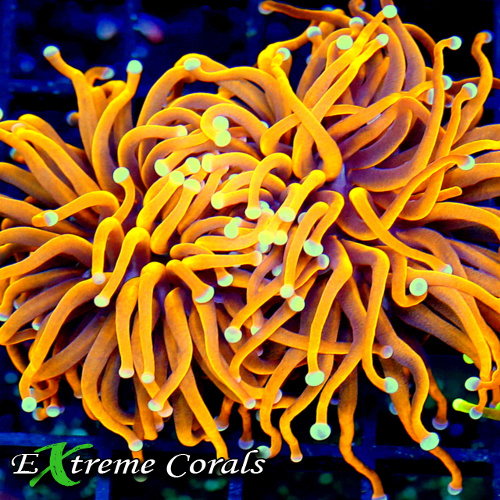
Learn how to improve torch coral growth, color, extension, and long-term health with expert tips on lighting, flow, feeding, placement, and stable reef tank care.
Learn expert torch coral care tips for better growth, stronger color, fuller extension, and long-term health with guidance on lighting, flow, feeding, and stability.
by Scott Shiles • April 23, 2026
Torch coral can be one of the most spectacular corals in a reef tank, but the torches that grow well, hold color, and stay extended long term are almost always the result of stability, smart placement, and careful observation rather than luck. Reef hobbyists are drawn to torch corals for obvious reasons: intense color, flowing tentacles, and a kind of motion that can instantly make a reef tank feel more alive. But in our experience, torch corals are also one of the easiest high-value LPS corals to stress if a few core conditions are off. This guide covers practical torch coral care tips that help improve growth, extension, color, and overall health, along with the expert-level details that often make the biggest difference over time.
Torch corals are not usually difficult because they need something exotic. They are difficult because they respond quickly to instability, rough placement, aggressive neighbors, and repeated changes. A common mistake hobbyists make is trying to improve a torch coral by constantly tweaking its environment. Most of the time, torch coral looks best when the tank becomes more predictable, not more complicated.
If you are looking for healthy, fully conditioned torch corals, browse our WYSIWYG LPS corals to compare stable, ready-to-ship specimens.
Understanding Torch Coral: An Overview
Torch corals are photosynthetic organisms that rely on light for energy production and maintaining their vibrant hues. They are known for their long, flowing tentacles that sway gracefully in the water, adding a dynamic and captivating element to any reef tank. Torch corals come in various colors, including green, gold, purple, and blue, each with unique patterns that make them highly sought after by reef enthusiasts.
Creating a suitable habitat for torch corals involves mimicking their natural environment as closely as possible. Providing adequate space, stable water parameters, and proper lighting are key factors in promoting the health and growth of these coral specimens. Pay close attention to placement, water chemistry, and neighboring corals to maintain a harmonious environment for these delicate but stunning animals.
ExtremeCorals.com has been selecting and shipping live corals for over 25 years, with hundreds of thousands of corals handled and delivered to reef hobbyists. In our experience, torch corals usually reward consistency more than intensity. The best long-term torches are rarely in the most aggressively run systems. They are in tanks where the reefer understands how to leave a good placement alone once it is working.
Torch Coral Care Tips (Quick Summary)
- Use moderate to high lighting, often around 100-200 PAR
- Provide moderate, indirect flow
- Keep water parameters stable
- Feed 1-3 times per week when appropriate
- Allow enough room for sweeper tentacles and full extension
Use Proper Lighting to Boost Color and Growth
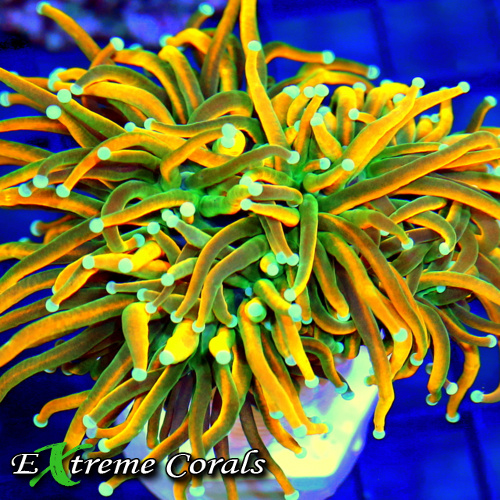
Lighting plays a crucial role in the growth and coloration of torch corals. These photosynthetic organisms rely on light for energy production and maintaining their vibrant hues. When selecting lighting for your aquarium, choose a reef-capable system that provides a strong, balanced spectrum suitable for LPS corals.
Proper lighting intensity and duration are essential for torch coral health. Be mindful of the light cycle you create in your aquarium, making sure your corals receive a stable balance of light and darkness. Adjust lighting based on the specific response of the coral rather than assuming brighter is always better.
We’ve found that torch corals often color up best when the lighting is strong enough to support healthy tissue and vivid pigment, but not so intense that the coral stays tight or loses fullness. A common mistake hobbyists make is moving a torch too quickly into a brighter area after shipping or after a system upgrade. If your torch fades after a lighting change, reduce stress first and let it settle before making more adjustments.
If you want to understand reef lighting better, read our reef tank lighting guide.
Maintain Stable Water Parameters: The #1 Success Factor
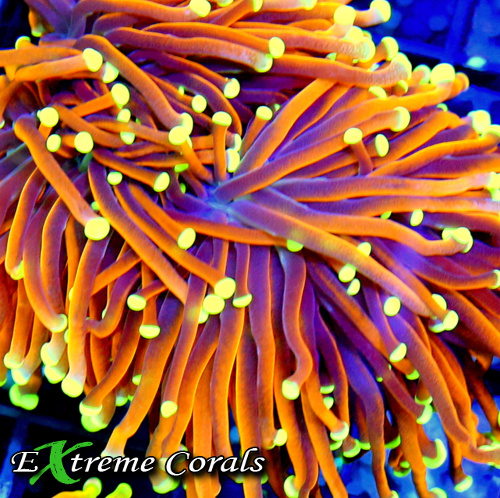
Maintaining pristine and stable water quality is one of the biggest factors in successful torch coral care. Regular testing for temperature, salinity, pH, alkalinity, calcium, magnesium, and nutrients helps prevent stress and disease in these sensitive corals.
Water changes are also important because they help remove accumulated waste and replenish key elements in the aquarium. Aim for consistency. In our experience, torch corals usually respond much better to a stable tank with good habits than to a reefer constantly chasing exact numbers and making sudden corrections.
Pro tip: Stability is more important than chasing perfect numbers when keeping torch coral.
A common mistake hobbyists make is trying to correct every parameter at once after seeing weaker extension. That often creates more instability instead of less. Slow, controlled improvement is usually safer than dramatic “fixes.”
If you are working on chemistry stability, read our pH and alkalinity guide.
Optimize Water Flow to Prevent Tissue Damage
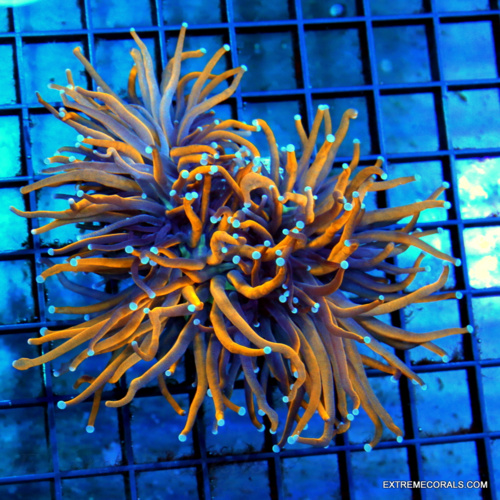
Water flow is one of the most important and most misunderstood parts of torch coral care. Torch corals need enough movement to keep debris from settling and to support gas exchange, but too much direct flow can damage tissue and keep polyps from extending naturally.
Moderate, indirect flow is usually ideal. The goal is a natural swaying motion rather than a harsh blast in one direction. In many reef tanks, one of the easiest mistakes to miss is mistaking heavy whipping for healthy extension. If the flesh is being pushed hard against the skeleton, the coral is usually getting too much direct flow.
We’ve found that torches usually look best when flow is broad and shifting rather than narrow and forceful. If detritus is settling around the base, increase random movement slightly. If the tentacles are consistently shortened or frayed, redirect the pump or adjust placement.
If you want to learn more about current patterns, read our water flow and coral health guide.
Place Torch Coral Correctly to Avoid Stress and Aggression
Placement affects almost everything about torch coral performance: light, flow, expansion, aggression, and long-term comfort. A torch coral may look acceptable at first and still slowly decline if it is positioned in a stressful zone.
Place torch coral in the bottom to middle portion of the tank in most systems, where it can receive appropriate light and moderate indirect current. Allow plenty of room around the colony so the flesh can expand fully and so sweeper tentacles do not contact neighboring corals.
One common mistake hobbyists make is placing torch corals too close to rock or other corals because the layout looks tighter and cleaner on day one. In our experience, torches nearly always do better when given more room than people think they need. They give much clearer feedback when they are not cramped.
Feed Torch Coral Properly to Improve Growth and Extension
While torch corals obtain the majority of their nutrition through photosynthesis, supplemental feeding can improve growth, tissue fullness, and recovery in many systems. Small offerings of fine meaty foods or coral foods one to three times per week are often enough.
Feed sparingly but consistently. Overfeeding can cause nutrient issues and reduce water quality, while underfeeding in a lean system can slow growth and recovery. In our experience, healthy torches benefit more from light, stable feeding and strong overall tank health than from heavy target feeding.
A common mistake hobbyists make is forcing food onto a stressed coral that is already irritated. If a torch is struggling, improving stability usually matters more than aggressive feeding attempts.
Monitor Water Quality Closely to Prevent Common Issues
Even when the major care points seem correct, torch corals can decline if the broader tank environment is not stable. Keep an eye on nutrient balance, detritus buildup, and the general cleanliness of the area around the coral.
Torch corals tend to do poorly in tanks that swing between overly dirty and overly stripped out. Excess nutrients can contribute to dull color and bacterial problems, while ultra-low nutrient systems can leave torches pale, weak, and slow to recover.
We’ve found that balanced nutrients and stable maintenance routines support better long-term torch color than dramatic export changes or constant correction. If a torch started declining after a major filtration or media change, that change may be the real cause.
Avoid Overcrowding and Give Torch Coral Room to Expand
Torch corals are not just movement corals. They are aggressive LPS corals with long sweeper tentacles and a lot of physical presence once fully expanded. Leave enough room around the colony for both visual balance and coral safety.
A common mistake hobbyists make is judging spacing while the coral is partially closed or while lights are still on. Torches often extend farther than expected and can damage nearby corals over time. If one side of a torch is irritated or receding, check whether another coral is too close before assuming disease.
Some sellers focus on volume or trends. Experienced coral vendors focus on long-term coral health and consistency. With torches, correct spacing is a big part of that.
Watch for Early Warning Signs and Catch Problems Fast
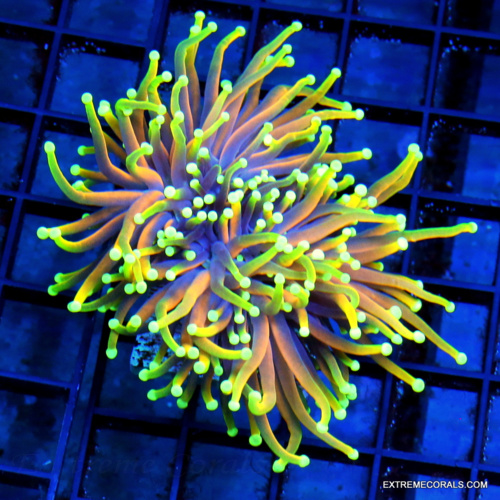
Despite your best efforts, you may still encounter issues while caring for torch corals. Common problems include tissue recession, bleaching, brown jelly, and pest or bacterial irritation. The key is spotting changes early.
Stay alert for warning signs such as:
- Reduced extension
- Duller color over time
- Uneven head size or shrinking tissue
- Lower feeding response
- Brown jelly or rapid tissue loss
If problems arise, act early. Review what changed recently, isolate the coral if needed, improve water quality, and reduce nearby stressors. In our experience, torch coral usually tells you something is off before the real damage starts. The hobbyists who do best with torches are the ones who respond while the signs are still subtle.
How to Improve Torch Coral Growth and Color
If your torch coral is stable but you want better growth and stronger color, these are usually the most important practical improvements:
- Maintain stable alkalinity and calcium
- Feed consistently but not excessively
- Keep nutrients balanced, not zero
- Avoid sudden parameter swings
- Provide indirect flow that keeps the coral extended but not stressed
We’ve found that torch coral color usually improves when the coral feels settled for a long period, not when the tank is constantly being reworked. A pattern we often see is that once placement, flow, and chemistry are finally stable, the coral gradually gains better extension first and stronger color after that.
What Healthy Torch Coral Usually Looks Like Before Buying
One of the best ways to improve success is to choose a strong specimen from the beginning. When selecting a healthy torch coral, look for:
- Full, even extension
- Thick tissue attached well to the skeleton
- Stable coloration without fading or browning
- No visible recession at the base
- A coral that looks settled rather than recently stressed
A common mistake hobbyists make is buying only by tip color or name without looking closely at tissue quality. In our experience, healthy flesh and strong extension matter more than hype.
Related Corals You May Also Like
If you are interested in torch coral, you may also want to explore other Euphyllia and related reef tank guides:
- Browse LPS corals for sale
- Torch coral mistakes guide
- Euphyllia coral care guide
- Torch coral fragging guide
- LPS coral care overview
Ready to add a healthy torch coral to your reef tank? Browse our LPS corals for sale and explore healthy additions for your aquarium.
Shop Torch Corals and LPS Corals
Explore our WYSIWYG LPS corals, new arrival corals, and featured corals to build a more colorful reef tank.
Bringing It All Together
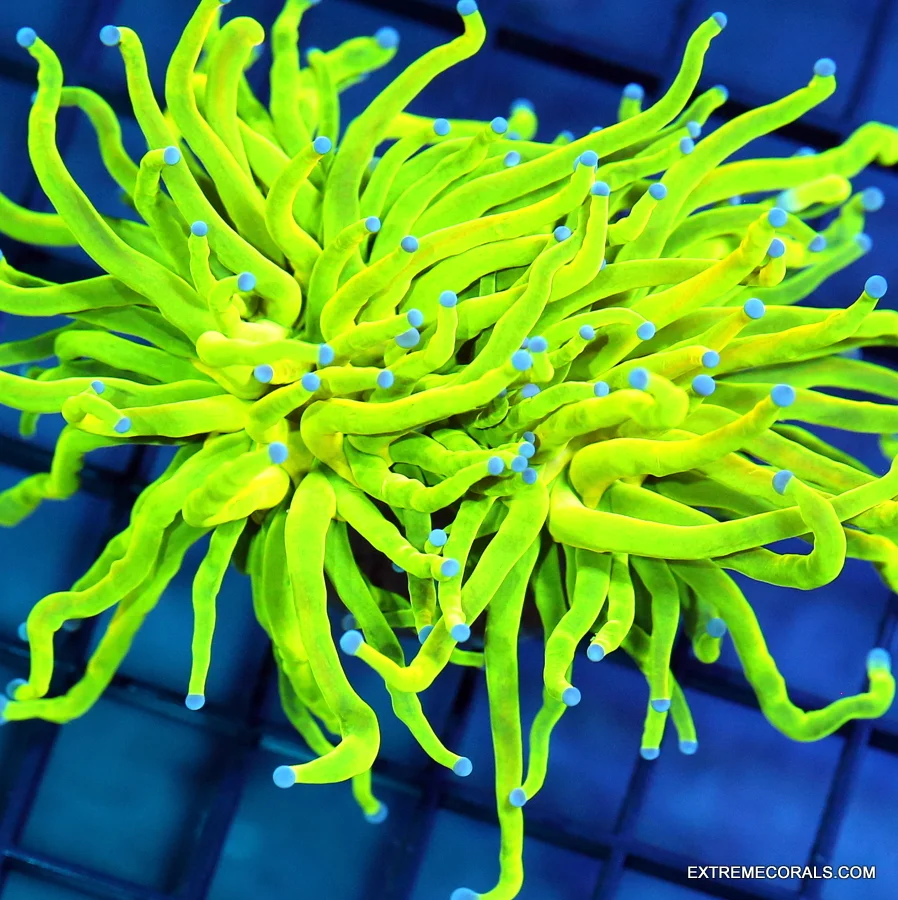
Torch corals are a stunning addition to any reef tank, offering vibrant colors and dynamic movement. Understanding their care requirements, including lighting, water quality, feeding, placement, and spacing, is essential for maintaining their health and beauty. With the right care and attention, torch corals can thrive and bring a mesmerizing beauty to your aquarium.
By following the tips and tricks outlined in this guide, you can create a healthier and more stable environment for your torch corals, helping them grow, color up, and extend fully over time. In our experience, the torches that look the best long term are usually not the ones in tanks that are constantly being “improved.” They are the ones in stable systems where the reefer understands the value of consistency.
Torch Coral Care Tips FAQs
How can I make my torch coral grow faster?
Stable parameters, moderate to strong reef lighting, and regular but controlled feeding usually help increase growth.
What improves torch coral color?
Stronger but appropriate lighting, stable conditions, and balanced nutrients usually improve coloration.
How often should I feed torch coral?
One to three times per week is usually a strong starting point in most reef systems.
What flow is best for torch coral?
Moderate, indirect flow that creates a gentle swaying motion is usually ideal.
About the Author
Scott Shiles is the owner of ExtremeCorals.com, which he has operated for over 25 years and is recognized as one of the early dedicated live coral websites on the internet. A lifelong reef keeper since 1984, Scott has decades of hands-on experience maintaining marine aquariums and previously owned and operated a brick and mortar aquarium retail store for 10 years, including five years alongside Extreme Corals. He holds a degree in Marine Biology and has personally selected and sold hundreds of thousands of live corals. An avid scuba diver who has explored reef systems around the world, Scott shares practical coral care and husbandry knowledge based on real world reef experience.
overall rating:
my rating:
log in to rate
Please log in to leave a comment.
For more information visit: additional resources