My Cart: 0 item(s)

Extreme Corals News and Updates
Sinularia Leather Coral Care Guide: How to Grow Hardy Finger Leather Corals
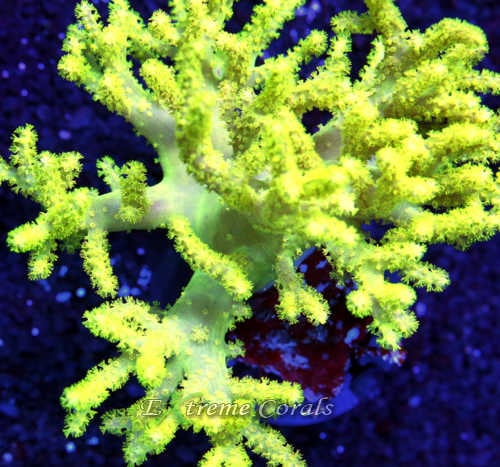
Learn how to care for Sinularia Leather coral in a reef tank, including lighting, flow, placement, shedding, allelopathy, feeding, water parameters, propagation and stress signs.
Learn Sinularia Leather coral care for reef tanks, including lighting, flow, feeding, placement, shedding, allelopathy, water parameters and propagation.
by Scott Shiles • May 14, 2026
Sinularia Leather coral, often called Finger Leather Coral, is a hardy and fast-growing soft coral known for its branching, tree-like shape and strong movement in reef flow. Green, yellow, tan, pink, brown, and fluorescent varieties can add height, texture, and natural motion to a reef aquarium.
Sinularia is popular because it is adaptable, forgiving, and easier to care for than many delicate LPS or SPS corals. It can thrive in a wide range of stable reef tank conditions, but it still needs proper lighting, strong enough water flow, room to grow, and good filtration. Like many leather corals, Sinularia can release chemical compounds that may irritate nearby corals, so placement and carbon use matter.
At Extreme Corals, Sinularia is a strong choice for reef keepers who want a durable coral with size, movement, and beginner-friendly care. This guide explains Sinularia Leather coral care, including lighting, water flow, placement, feeding, water parameters, shedding, allelopathy, tank mates, propagation, stress signs, and long-term success. For broader reef husbandry help, you can also browse our coral care guide library.
What Is Sinularia Leather Coral?
Sinularia is a soft coral that grows in branching, finger-like, tree-like, or lobed forms depending on the species and tank conditions. Unlike stony corals, it does not build a hard calcium carbonate skeleton. Instead, it develops a flexible structure that can sway in the current and expand into large colonies over time.
Sinularia Leather corals are popular because they offer:
- Excellent hardiness in stable reef tanks
- Beginner-friendly soft coral care
- Fast growth once established
- Branching structure and natural movement
- Good tolerance of moderate nutrients
- Easy propagation compared with many stony corals
Although Sinularia is hardy, it should not be treated as a coral that thrives in neglected water. Stable salinity, good flow, clean water, and room from sensitive neighbors help it grow better long term.
Natural Habitat and Reef Tank Behavior
Sinularia corals are found across Indo-Pacific reef environments, including shallow reef slopes, lagoons, reef flats, and rocky reef zones. In the wild, they attach to hard substrate and often experience moderate to strong water movement.
In reef aquariums, this background explains why Sinularia usually does well on stable rockwork with moderate to higher light and moderate to strong indirect flow. A healthy Sinularia should expand regularly, show normal texture, shed when needed, and avoid signs of decay or long-term shrinking.
Best Water Parameters for Sinularia Leather Coral
Sinularia is forgiving compared with many corals, but stable water chemistry still matters. Sudden changes in salinity, temperature, alkalinity, or nutrients can cause the coral to shrink, close, droop, or shed poorly.
| Parameter | Recommended Range |
|---|---|
| Temperature | 76-80°F |
| Salinity | 1.024-1.026 specific gravity |
| pH | 8.1-8.4 |
| Alkalinity | 8-10 dKH |
| Calcium | 400-450 ppm |
| Magnesium | 1250-1350 ppm |
| Nitrate | 5-15 ppm |
| Phosphate | 0.03-0.10 ppm |
Sinularia often tolerates measurable nutrients better than many delicate SPS corals, but excessive nutrients can fuel algae, bacterial film, and poor shedding. Clean, stable reef water with consistent maintenance is best.
Lighting Requirements for Sinularia Coral
Sinularia usually does well under moderate to moderately high reef lighting. A practical range for many Sinularia corals is around 100-250 PAR, depending on the coral’s color, previous lighting, tank depth, and overall health.
Too much light too quickly can cause bleaching, shrinking, or repeated stress shedding. Too little light may slow growth and reduce expansion. New Sinularia corals should be started in moderate lighting and adjusted gradually. For more detail on PAR, spectrum, and coral acclimation, review our reef tank lighting guide.
Signs lighting may be too intense include:
- Faded or washed-out color
- Shrunken branches during peak light
- Bleaching or paling
- Repeated shedding after lighting changes
- Better expansion in shaded periods
Full-spectrum reef lighting with a blue-white balance can work well. The goal is steady growth, normal extension, and clean shedding rather than pushing maximum light intensity.
Water Flow for Sinularia Leather Coral
Flow is one of the most important parts of Sinularia care. Sinularia usually prefers moderate to strong indirect flow that keeps the surface clean, supports gas exchange, and helps the coral remove mucus or waxy buildup.
Good Sinularia flow should:
- Move around and through the branches indirectly
- Prevent detritus from settling on the coral
- Help the coral shed mucus layers cleanly
- Avoid stagnant areas around the base
- Create movement without tearing tissue
Avoid a narrow direct blast from a pump. Strong indirect or randomized flow is better than harsh laminar current pointed straight at the coral.
Best Placement for Sinularia in a Reef Tank
Sinularia is usually best placed on stable rockwork where it can attach securely and grow upward or outward. Many specimens do well in middle to upper areas of the tank when lighting and flow are appropriate.
Good placement options include:
- Middle rockwork
- Upper rockwork with gradual light acclimation
- Open areas with room for branching growth
- Soft coral zones with strong indirect flow
- Areas away from delicate or chemically sensitive corals
Plan for future size. A small Sinularia frag can grow into a large colony that shades nearby corals or competes chemically in crowded systems. If you are building a soft coral display, browse our soft coral selection with spacing and growth in mind.
Sinularia Shedding and Waxing
Sinularia may periodically shed a thin waxy or mucus-like layer. This is a normal cleaning process that helps remove algae, debris, film, and surface irritation. During shedding, the coral may look shiny, closed, dull, or temporarily deflated.
Normal shedding signs include:
- Temporary shrinking or reduced expansion
- A shiny film on the coral surface
- Mucus or thin tissue-like material peeling away
- Improved expansion after the layer clears
- No rotting smell or decaying tissue
Shedding becomes a concern when the coral cannot clear the layer, stays closed too long, develops decaying tissue, or sits in low-flow areas where debris collects. Improving indirect flow often helps the coral complete the process.
Chemical Warfare and Allelopathy
Sinularia can release chemical compounds that may irritate or slow the growth of nearby corals. This chemical competition is called allelopathy and is common among many soft corals, especially in crowded mixed reef tanks.
Ways to reduce chemical irritation include:
- Use activated carbon and replace it regularly.
- Run a protein skimmer when appropriate.
- Perform regular water changes.
- Avoid crowding Sinularia against LPS or SPS corals.
- Provide strong water movement and good filtration.
If you keep Sinularia with LPS corals or more sensitive stony corals, carbon and consistent maintenance become more important.
Feeding Sinularia Coral
Sinularia relies heavily on photosynthesis, but it can benefit from dissolved nutrients and occasional broadcast feeding. It does not need heavy target feeding like many fleshy LPS corals.
Good feeding options include:
- Fine coral foods used lightly
- Phytoplankton-style foods in appropriate systems
- Zooplankton-based foods
- Amino acids used carefully
- Natural nutrients from fish feeding
Feed lightly one to two times per week if the tank can handle it. Overfeeding can raise nutrients, fuel algae, and create bacterial film on the coral.
Tank Mates and Compatibility
Sinularia can be kept with many peaceful reef fish and invertebrates. Its main compatibility concern is not usually stinging; it is space, shading, growth, and chemical competition.
Good tank mates often include:
- Clownfish
- Gobies
- Blennies
- Peaceful wrasses
- Reef-safe snails
- Cleaner shrimp
Use caution with some angelfish, butterflyfish, large crabs, and fish known to nip soft corals. Also avoid placing Sinularia too close to aggressive stony corals with sweeper tentacles.
Growth Rate and Long-Term Development
Sinularia can grow quickly once it is settled. In stable reef tanks, it may branch outward, develop a thicker base, and form a large colony that adds strong structure to the aquascape.
Healthy growth depends on:
- Stable salinity and temperature
- Moderate to moderately high lighting
- Moderate to strong indirect flow
- Balanced nutrients
- Enough room for branching growth
- Clean shedding cycles
- Good filtration and carbon use in mixed reefs
A healthy Sinularia should expand regularly, shed cleanly when needed, and show steady growth without rotting, melting, or prolonged collapse.
Propagating Sinularia Coral
Sinularia is one of the easier corals to propagate when the colony is healthy and established. Branches can be cut with clean scissors, a scalpel, or a razor and attached to rubble or frag plugs.
Propagation tips include:
- Propagate only healthy, established corals.
- Use clean sharp scissors, a scalpel, or a razor.
- Cut manageable branch sections.
- Attach frags with rubber bands, mesh, toothpicks, or gentle containment.
- Place new frags in moderate flow while healing.
- Watch for excessive slime, decay, or poor attachment.
Avoid fragging a coral that is already stressed, failing to shed, or recovering from shipping.
Common Sinularia Coral Problems
Most Sinularia problems are connected to weak flow, unstable water, excessive light changes, chemical irritation, pests, handling stress, or poor filtration.
Shrunken or Drooping Branches
Temporary shrinking can happen during shedding or after handling. Ongoing drooping may indicate poor water quality, lighting stress, low flow, excessive flow, or chemical irritation from nearby corals.
Failure to Shed
If the coral forms a waxy film but cannot clear it, flow may be too weak. Increase indirect flow and gently turkey baste nearby debris during maintenance without scraping the tissue.
Bleaching or Faded Color
Bleaching or fading is often connected to excessive light, sudden lighting changes, low nutrients, or general stress. Move the coral lower or reduce light intensity gradually if light stress is likely.
Algae or Film on the Coral
Algae or bacterial film can build up when flow is weak or nutrients are excessive. Improve flow, reduce excess nutrients, and allow the coral to complete its shedding cycle.
Pests and Irritation
Flatworms, nuisance algae, and hitchhikers can irritate Sinularia tissue. Inspect new corals carefully, and review our coral pests and predators guide if damage appears localized or unexplained.
Handling and Acclimation
Sinularia should be handled gently because it can release mucus when stressed. Repeated handling may cause it to stay closed or shed longer than normal.
Good acclimation practices include:
- Temperature acclimate the coral.
- Inspect for pests, damaged tissue, and algae.
- Dip only when appropriate and follow product directions.
- Place on stable rockwork.
- Start in moderate lighting.
- Provide moderate to strong indirect flow.
- Avoid repeated moves once placed.
A new Sinularia may take several days to fully expand. Give it stable conditions before making major changes.
Maintenance Tips for Sinularia Leather Coral
Sinularia is low-maintenance compared with many advanced corals, but it still benefits from consistent reef husbandry and good filtration.
Helpful maintenance habits include:
- Use activated carbon in mixed reefs.
- Maintain good flow through and around the branches.
- Perform regular water changes.
- Keep nitrate and phosphate measurable but controlled.
- Remove detritus from nearby rockwork.
- Trim or relocate the coral if it begins shading others.
- Watch for normal shedding cycles.
A Sinularia that expands regularly, sheds cleanly, and grows steadily is usually in good condition.
Signs of a Healthy Sinularia Coral
A healthy Sinularia should show firm branching structure, stable color, regular expansion, and clean shedding when needed. It may close temporarily during shedding, but it should reopen after the layer clears.
Healthy signs include:
- Firm upright branches
- Regular expansion
- Stable green, yellow, tan, pink, brown, or fluorescent color
- Clean shedding cycles
- No rotting tissue or bad smell
- Firm attachment to rock
- Steady growth over time
Watch trends. A Sinularia that closes briefly and then reopens is often simply shedding. A coral that continues shrinking, decaying, or failing to clear mucus needs attention.
Related Corals You May Also Like
If you like Sinularia Leather corals, these related coral categories and care guides can help you build a soft coral or beginner-friendly reef tank:
- Soft Corals - Browse hardy soft corals with movement, texture, and color.
- Mushroom Corals - Explore colorful lower-light corals for soft coral displays.
- Zoanthids - Shop colorful polyps for beginner-friendly reef zones.
- New Arrival Corals - See recently added WYSIWYG corals for your reef tank.
- Toadstool Leather Coral Care Guide - Compare another hardy leather coral for reef tanks.
- Best Beginner Corals - Compare easy coral choices for new reef tanks.
- Water Flow and Coral Health - Understand how flow supports coral expansion and shedding.
- Coral Care Guides - Browse care resources for soft corals, LPS, SPS, mushrooms, and zoanthids.
Shop Sinularia Leather and Soft Corals
Sinularia Leather coral is one of the best soft corals for reef keepers who want hardiness, movement, height, and fast growth. With moderate to higher lighting, strong indirect flow, stable water, carbon use in mixed reefs, and enough space, it can become a large and attractive feature in a reef aquarium.
Browse soft corals, mushroom corals, zoanthids, and new arrival corals at ExtremeCorals.com to find healthy corals for your reef tank.
Frequently Asked Questions About Sinularia Coral Care
Is Sinularia coral beginner friendly?
Yes, Sinularia is one of the more beginner-friendly soft corals. It is hardy in stable reef tanks and usually adapts well to moderate lighting and good indirect flow.
How much light does Sinularia need?
Sinularia usually does well under moderate to moderately high lighting. Many pieces do well around 100-250 PAR when acclimated gradually.
What flow is best for Sinularia coral?
Sinularia usually prefers moderate to strong indirect flow. Good flow helps it shed, keeps debris from settling, and supports healthy expansion.
Why is my Sinularia closed or drooping?
Sinularia may close or droop while shedding, adjusting to a new tank, reacting to flow changes, or responding to water quality issues. If it stays closed too long, check flow, lighting, and water parameters.
Is Sinularia shedding normal?
Yes, shedding is normal. The coral may close and develop a waxy or mucus-like film before the layer peels away. Good indirect flow helps the coral complete this process.
Does Sinularia need feeding?
Sinularia relies mostly on photosynthesis, but light broadcast feeding with fine coral foods or dissolved nutrients can support growth in balanced systems.
Can Sinularia hurt other corals?
Yes, Sinularia can release chemical compounds that may irritate other corals. Use activated carbon, water changes, good flow, and spacing in mixed reefs.
Can Sinularia be propagated?
Yes, healthy Sinularia corals can be propagated by cutting branches and attaching them to rubble or frag plugs in moderate flow.
About the Author
Scott Shiles is the owner of ExtremeCorals.com, which he has operated for over 25 years and is recognized as one of the early dedicated live coral websites on the internet. A lifelong reef keeper since 1984, Scott has decades of hands-on experience maintaining marine aquariums and previously owned and operated a brick and mortar aquarium retail store for 10 years, including five years alongside Extreme Corals. He holds a degree in Marine Biology and has personally selected and sold hundreds of thousands of live corals. An avid scuba diver who has explored reef systems around the world, Scott shares practical coral care and husbandry knowledge based on real world reef experience.
overall rating:
my rating:
log in to rate
Please log in to leave a comment.
For more information visit: additional resources