My Cart: 0 item(s)

Extreme Corals News and Updates
Bubble Coral Care Guide: How to Keep Plerogyra Healthy, Inflated and Thriving in Reef Tanks
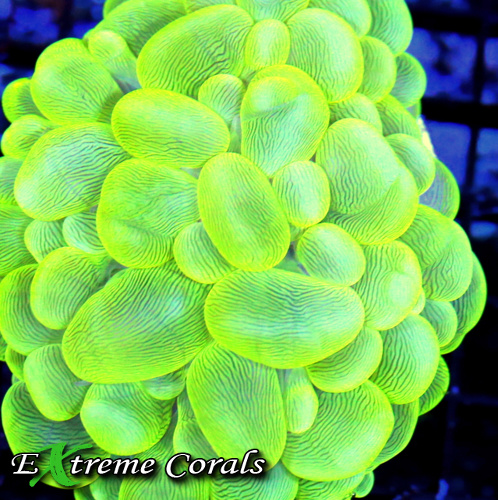
Learn how to care for Bubble Coral in a reef aquarium, including lighting, flow, placement, feeding, water parameters, sweeper tentacles, acclimation, pests and long-term LPS coral health.
Learn Bubble Coral care for reef tanks, including Plerogyra lighting, flow, placement, feeding, water parameters, sweeper tentacles, acclimation and stress signs.
by Scott Shiles • May 06, 2026
Bubble Coral is one of the most recognizable large polyp stony corals in reef aquariums. When healthy, it inflates into soft bubble-like vesicles that create a completely different texture from branching SPS, Zoanthids, mushrooms, chalices, or brain corals. A well-placed Bubble Coral can become a true centerpiece because it adds size, movement, contrast, and a fleshy LPS look that stands out even in a colorful mixed reef.
Bubble Coral is not usually considered one of the most difficult LPS corals, but it is also not a coral to wedge into a crowded rock wall and forget. Its tissue is delicate, its skeleton can be sharp under the inflated flesh, and its nighttime sweeper tentacles can reach farther than many reef keepers expect. Most Bubble Coral problems come from poor placement, too much direct flow, harsh lighting, unstable water chemistry, tissue abrasion, or coral neighbors that are too close.
At Extreme Corals, we have seen Bubble Coral do best when reef keepers treat it as a showpiece fleshy LPS coral that needs space, stability, and gentle conditions. This guide explains Bubble Coral care in a practical reef-keeper way, including lighting, flow, placement, feeding, water parameters, acclimation, sweeper tentacles, coral aggression, pests, tank mates, common problems, and signs of long-term health. For broader reef care support, review our coral care guide, coral placement guide, and coral aggression guide.
What Is Bubble Coral?
Bubble Coral is most commonly associated with the genus Plerogyra, including species such as Plerogyra sinuosa and Plerogyra simplex. These corals are known for large inflated daytime vesicles and feeding tentacles that often become more visible after lights dim.
The inflated “bubbles” are not just decoration. They are part of the coral’s living tissue and help create the coral’s unique appearance. Underneath that soft tissue is a hard stony skeleton. That skeleton is why Bubble Coral should be handled gently and placed where the tissue will not be pressed against sharp rock or blasted by direct current.
Bubble Coral is popular because it offers:
- Large inflated LPS coral appearance
- Strong visual contrast in mixed reef tanks
- Low to moderate lighting needs
- Gentle movement and fleshy texture
- Showpiece potential in LPS-focused aquariums
- Interesting nighttime feeding behavior
Bubble Coral is best viewed as a coral with moderate care needs. It is manageable for reef keepers with stable tanks, but it rewards thoughtful placement more than casual placement.
Why Bubble Coral Is So Popular
Bubble Coral has remained popular for decades because it looks different from most other reef corals. Instead of branching upward or encrusting flat across rockwork, it inflates into rounded vesicles that can make the coral look soft, full, and almost pearl-like under reef lighting.
It also fills an important visual role in aquascaping. Many reef tanks become dominated by rock, branches, polyps, and small frags. Bubble Coral adds a larger fleshy shape that softens the look of the aquascape and creates a strong focal point.
Bubble Coral works especially well in:
- LPS coral gardens
- Mixed reefs with open lower zones
- Showpiece coral displays
- Reef tanks needing a larger fleshy centerpiece
- Lower to middle aquascape areas with gentle indirect flow
The key is giving the coral enough room. Bubble Coral can look peaceful during the day but become more aggressive at night when feeding tentacles and sweepers extend.
Is Bubble Coral Easy to Keep?
Bubble Coral is usually moderate in care level. It is not as demanding as many high-light SPS corals, but it is more sensitive to physical damage and poor placement than many beginner soft corals. A stable reef tank that already supports fleshy LPS corals is usually a good environment for Bubble Coral.
Bubble Coral is easier when:
- Salinity and temperature are stable
- Alkalinity does not swing sharply
- Lighting is low to moderate
- Flow is gentle to moderate and indirect
- The coral has room to inflate fully
- Nearby corals cannot sting or shade it
Bubble Coral becomes harder when the tank is crowded, unstable, overly bright, or too turbulent. If you are still working on basic reef stability, focus on the fundamentals first before adding delicate fleshy LPS corals.
Best Water Parameters for Bubble Coral
Bubble Coral does best in stable reef water. Like many fleshy LPS corals, it usually reacts more to instability than to a minor difference from a target number. Sudden salinity changes, alkalinity swings, temperature spikes, or nutrient crashes can all reduce inflation and damage tissue over time.
| Parameter | Recommended Range |
|---|---|
| Temperature | 76-80°F |
| Salinity | 1.024-1.026 specific gravity |
| pH | 8.1-8.4 |
| Alkalinity | 8-10 dKH |
| Calcium | 400-450 ppm |
| Magnesium | 1250-1350 ppm |
| Nitrate | 2-10 ppm |
| Phosphate | 0.03-0.07 ppm |
Bubble Coral usually does well in clean but not sterile reef water. Very low nutrients can reduce fullness and color, while excessive nutrients can fuel algae and bacterial issues around the skeleton or damaged tissue. For a deeper chemistry reference, review our reef tank water parameters guide.
Lighting Requirements for Bubble Coral
Bubble Coral usually prefers low to moderate reef lighting. A practical starting range is often around 50-120 PAR, depending on the coral’s previous lighting, tank depth, color, and overall health. Some specimens may adapt to moderate lighting, but strong light should be introduced slowly.
Too much light too quickly can cause poor inflation, fading, bleaching, or tissue stress. Too little light may reduce color and energy over time. New Bubble Corals should usually start lower in the tank or in a lower-light zone, then be adjusted gradually if needed.
Signs Bubble Coral may be getting too much light include:
- Faded or pale coloration
- Reduced inflation during peak light
- Bleaching or washed-out tissue
- Tissue pulling tight against the skeleton
- Better expansion in shaded periods
Blue reef lighting can make Bubble Coral look excellent, but healthy tissue inflation is more important than maximum brightness. For a stronger explanation of PAR, spectrum, and acclimation, read our reef tank lighting guide.
Water Flow for Bubble Coral
Flow is one of the most important parts of Bubble Coral care. Bubble Coral needs enough movement to prevent detritus from collecting on the tissue, but it should never be blasted by a direct powerhead stream. The coral should look gently supported by flow, not compressed, folded, or whipped.
Good Bubble Coral flow should:
- Move gently around the inflated tissue
- Keep debris from settling between bubbles
- Support gas exchange and waste removal
- Allow full daytime expansion
- Avoid direct blasting from pumps
Strong direct flow can irritate tissue, prevent normal inflation, and eventually cause recession where the flesh meets the skeleton. If the coral stays collapsed on one side or the bubbles are constantly pushed in one direction, adjust the pump angle or move the coral to calmer indirect flow.
For broader flow planning, read our water flow and coral health guide.
Best Placement for Bubble Coral in a Reef Tank
Bubble Coral is usually best placed in the lower to middle areas of the reef tank where it receives low to moderate lighting and gentle to moderate indirect flow. It needs open space around it so the tissue can inflate without rubbing against rock, glass, coral skeletons, or neighboring corals.
Good placement options include:
- Lower rock ledges with smooth surrounding space
- Stable lower aquascape shelves
- Open LPS zones with moderate lighting
- Areas away from direct powerhead output
- Locations with room for nighttime sweeper tentacles
Avoid wedging Bubble Coral into narrow cracks or placing it where inflated tissue can scrape against sharp rock. The coral may look fine when slightly retracted, but once it inflates, the tissue can contact hard surfaces and become damaged.
A secure, open, stable placement is better than a dramatic high-rock placement that exposes the coral to harsh light, direct flow, and abrasion. For more placement help, review our coral placement guide.
Bubble Coral Sweeper Tentacles and Aggression
Bubble Coral can look gentle during the day, but it can be aggressive at night. Feeding tentacles and sweeper tentacles may extend well beyond the daytime bubble tissue. These tentacles can sting nearby corals and cause tissue damage if the coral is placed too close to neighbors.
Spacing matters because Bubble Coral can:
- Extend feeding tentacles after lights dim
- Sting nearby peaceful corals
- Compete with other LPS corals for space
- Be damaged by aggressive corals placed too close
- Cause overnight tissue damage that is missed during daytime observation
Leave more space than the coral appears to need during the day. A good rule is to check the tank after lights out occasionally so you can see how far the coral reaches. If you are planning a mixed reef, our coral aggression guide explains spacing and sweeper tentacle management in more detail.
Feeding Bubble Coral
Bubble Coral is photosynthetic, but it can benefit from occasional target feeding. Feeding can support tissue fullness, color, and long-term health when done carefully. The goal is small, appropriate food, not heavy feeding that harms water quality.
Good foods for Bubble Coral include:
- Mysis shrimp
- Small pieces of marine shrimp
- Finely chopped fish or clam
- Small LPS coral pellets
- Zooplankton-based coral foods
Feed when feeding tentacles are visible, often after lights dim or when food is in the water. Use small pieces that the coral can handle easily. Oversized food can be rejected or decay on the tissue. One or two light feedings per week is usually a safer starting point than frequent heavy feeding.
Handling and Acclimation
Bubble Coral should be handled carefully because inflated tissue can tear against the skeleton or surrounding rock. Avoid touching the fleshy tissue directly. Handle the base or skeleton when possible, and avoid squeezing the coral.
Good acclimation practices include:
- Temperature acclimate the coral before transfer.
- Inspect tissue, skeleton, plug, or rock for pests and damage.
- Use coral dips only when appropriate and follow product directions.
- Start in low to moderate lighting.
- Use gentle indirect flow.
- Avoid repeated moves after placement.
A new Bubble Coral may take time to inflate fully after shipping, dipping, or handling. Give it stable conditions and avoid moving it repeatedly unless there is a clear light, flow, aggression, or tissue-damage issue. For pest-prevention steps, review our coral quarantine guide.
Tank Mates and Compatibility
Bubble Coral can be kept with many peaceful reef fish and invertebrates, but it should be protected from animals that nip fleshy tissue, steal food aggressively, or knock the coral into the rockwork.
Good tank mates often include:
- Clownfish
- Gobies
- Blennies
- Peaceful wrasses
- Reef-safe snails
- Cleaner shrimp with caution during feeding
Use caution with some angelfish, butterflyfish, large crabs, and shrimp that constantly steal food from the coral. Also keep Bubble Coral away from aggressive corals such as torch corals, Galaxea, chalices, and strong-stinging brain corals unless there is generous space between them.
Common Bubble Coral Problems
Most Bubble Coral problems come from unstable water chemistry, harsh direct flow, excessive light, poor placement, tissue abrasion, shipping stress, pests, or nearby coral aggression.
Bubble Coral Not Inflating
Poor inflation may be caused by direct flow, too much light, recent handling, unstable salinity, alkalinity swings, pests, fish nipping, or nighttime coral aggression. Start by checking flow and placement because those are common causes.
Tissue Recession
Tissue recession may come from alkalinity instability, rubbing against rock, direct current, coral stings, pests, bacterial issues, or physical damage. Inspect the area where recession begins and look for contact points or nearby aggressive corals.
Bleaching or Faded Color
Bleaching or fading is often related to excessive light, heat stress, low nutrients, or rapid lighting changes. Move the coral lower or reduce intensity gradually if light stress is likely.
Brown Jelly or Slimy Tissue
Brown jelly or slimy decay is a serious warning sign. Improve water quality, increase appropriate indirect flow, isolate if needed, and consider a coral dip when appropriate.
Damage From Nearby Corals
If tissue damage appears on the side facing another coral, aggression may be the cause. Watch the tank after lights out to see whether sweeper tentacles are reaching the Bubble Coral or whether the Bubble Coral is stinging something else.
Pests and Irritation
Flatworms, nuisance algae, pest anemones, and hitchhikers can irritate Bubble Coral or grow around exposed skeleton. Inspect new corals carefully and review our coral pests and predators guide if the coral declines without an obvious light, flow, or water chemistry cause.
Maintenance Tips for Long-Term Bubble Coral Health
Bubble Coral care is mostly about protecting the fleshy tissue and keeping the reef stable. A properly placed Bubble Coral should not need constant adjustments.
Helpful maintenance habits include:
- Keep salinity and temperature stable.
- Test alkalinity regularly.
- Use low to moderate lighting.
- Maintain gentle to moderate indirect flow.
- Remove detritus nearby with a turkey baster when needed.
- Feed small portions when tentacles are visible.
- Watch for nighttime sweeper tentacles and coral aggression.
- Keep tissue from rubbing against rock or coral skeletons.
If Bubble Coral begins to decline, look for recent changes first. Flow, light, salinity, alkalinity, new tank mates, coral neighbors, or recent handling are often the clue.
Signs of a Healthy Bubble Coral
A healthy Bubble Coral should look full, inflated, clean, and stable. It may change shape during the day and night, but it should not remain collapsed, pale, slimy, or damaged.
Healthy signs include:
- Consistent daytime inflation
- Stable coloration
- Intact tissue with no exposed skeleton
- Normal feeding response
- No spreading recession
- No brown jelly or tissue decay
- Enough space from neighboring corals
A Bubble Coral that inflates regularly and holds color is usually doing well. A coral that stays pinched, pale, torn, or receding needs closer inspection.
Bubble Coral in Mixed Reef Tanks
Bubble Coral can do very well in mixed reef aquariums if it is given its own safe zone. It should not be squeezed between fast-growing soft corals, aggressive LPS corals, or high-flow SPS areas. It is better treated as a showpiece coral with room around it.
In mixed reefs, Bubble Coral works best when:
- It is placed lower or mid-level away from intense SPS lighting.
- It receives indirect flow instead of direct current.
- It has open space for inflation and sweepers.
- It is not near aggressive Euphyllia, chalices, Galaxea, or brain corals.
- It is monitored after dark for sweeper extension.
With the right placement, Bubble Coral can balance out branching SPS, Zoanthid gardens, mushrooms, and other LPS corals by adding a larger soft inflated shape to the display.
Related Corals and Reef Topics You May Also Like
If you are interested in Bubble Coral, these related coral categories and reef care guides can help with placement, compatibility, lighting, and long-term LPS success:
- Bubble Corals - Browse available Bubble Coral pieces.
- LPS Corals - Explore other large polyp stony corals for reef aquariums.
- Coral Aggression Guide - Learn how sweeper tentacles and coral spacing work.
- Coral Placement Guide - Place corals based on lighting, flow, spacing, and growth.
- Reef Tank Lighting Guide - Understand PAR, spectrum, and light acclimation.
- Water Flow and Coral Health - Improve flow for better coral extension and tissue health.
- Reef Tank Water Parameters Guide - Strengthen the chemistry foundation for LPS corals.
- New Arrival Corals - See recently added corals for your reef tank.
Shop Bubble Coral and LPS Corals
Bubble Coral can bring real texture, movement, and presence to a reef aquarium when it is placed and cared for properly. With low to moderate lighting, gentle indirect flow, stable water chemistry, occasional careful feeding, and enough spacing from neighboring corals, it can become one of the most memorable LPS corals in the tank.
Browse Bubble Corals, LPS corals, and new arrival corals at ExtremeCorals.com to find healthy corals that fit your reef tank.
Frequently Asked Questions About Bubble Coral Care
Is Bubble Coral beginner friendly?
Bubble Coral can be manageable for newer reef keepers with stable tanks, but it is best for hobbyists who can provide stable water chemistry, low to moderate lighting, gentle indirect flow, and enough space for expansion.
How much light does Bubble Coral need?
Bubble Coral usually does best under low to moderate lighting, often around 50-120 PAR. Avoid placing new specimens under intense light too quickly.
What flow is best for Bubble Coral?
Bubble Coral prefers gentle to moderate indirect flow. Strong direct flow can prevent inflation, irritate tissue, and cause long-term damage.
Where should Bubble Coral be placed?
Bubble Coral is usually best placed in lower to middle areas of the tank where it receives low to moderate light, indirect flow, and open space for inflation and sweeper tentacles.
Does Bubble Coral need feeding?
Bubble Coral is photosynthetic but can benefit from occasional target feeding with small meaty foods such as mysis shrimp, small marine shrimp pieces, or LPS coral foods.
Can Bubble Coral sting other corals?
Yes. Bubble Coral can extend feeding and sweeper tentacles, especially after lights dim, and these tentacles can sting nearby corals.
Why is my Bubble Coral not inflating?
Poor inflation may be caused by too much direct flow, excessive light, unstable water chemistry, tissue damage, pests, fish irritation, or nearby coral aggression.
Can Bubble Coral be kept in a mixed reef?
Yes, Bubble Coral can do well in mixed reefs if it is given enough room, protected from direct flow, kept away from aggressive neighbors, and placed in appropriate low to moderate lighting.
About the Author
Scott Shiles is the owner of ExtremeCorals.com, which he has operated for over 25 years and is recognized as one of the early dedicated live coral websites on the internet. A lifelong reef keeper since 1984, Scott has decades of hands-on experience maintaining marine aquariums and previously owned and operated a brick and mortar aquarium retail store for 10 years, including five years alongside Extreme Corals. He holds a degree in Marine Biology and has personally selected and sold hundreds of thousands of live corals. An avid scuba diver who has explored reef systems around the world, Scott shares practical coral care and husbandry knowledge based on real world reef experience.
overall rating:
my rating:
log in to rate
Please log in to leave a comment.
For more information visit: additional resources