
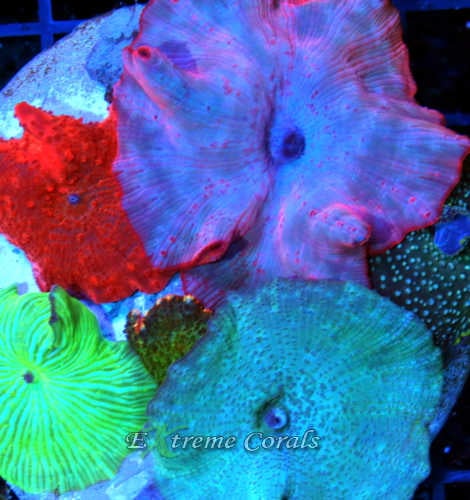
Discosoma Mushrooms in Reef Tanks: Simple Care, Smart Placement, and How to Get Better Color and Growth
Discosoma mushrooms are some of the most reliable, colorful, and enjoyable soft corals a reef hobbyist can keep. They do not need intense lighting, they usually adapt well to stable reef conditions, and they can add excellent color and texture to areas of the aquarium where other corals may not perform as easily. For hobbyists building a mixed reef or a soft coral system, Discosoma can be one of the smartest additions you can make.
Part of their appeal is that they combine ease of care with real visual value. A good colony of Discosoma can turn a quiet lower section of the reef into a bright, living patch of color. They also work especially well in tanks that need contrast against branching corals, LPS showpieces, or rock-heavy aquascapes. If you are browsing hardy soft corals with strong color variety, they fit naturally within our soft corals collection.
That said, easy does not mean random. Discosoma mushrooms still respond best when you respect the basics: stable parameters, lower to moderate light, gentle to moderate flow, and thoughtful placement. Hobbyists who keep those fundamentals in mind usually find that these corals are forgiving and rewarding. Hobbyists who treat them like decorations instead of living animals often run into avoidable problems.
What Are Discosoma Mushrooms?
Discosoma mushrooms are soft corals known for their smooth or lightly textured disc-shaped bodies, broad color range, and generally hardy nature. They are often recommended for newer reef keepers because they do not require the demanding conditions that many SPS corals do, but experienced hobbyists appreciate them too for their color, ease of growth, and ability to fill lower-light areas attractively.
They are especially useful in reef tanks where you want movement in color and texture without adding a coral that needs strong light or heavy feeding. Some varieties stay relatively compact, while others grow larger and form spreading colonies over time. That spreading habit is part of the appeal, but it also means placement should be planned from the beginning.
Why Discosoma Mushrooms Are So Popular
There are a few big reasons Discosoma mushrooms remain popular year after year. First, they are attractive. They come in a wide range of colors and patterns, and even simple varieties can create a bright, natural look in the reef. Second, they are adaptable. In a stable aquarium, they usually tolerate conditions that would make many more sensitive corals struggle. Third, they are useful in aquascaping. They can fill empty lower sections of rockwork and create a mature, established appearance without requiring intense light.
They also appeal to hobbyists who want a coral that feels rewarding without being overly technical. If you are working on a reef with mixed soft corals, mushrooms, and easy LPS, Discosoma often fits beautifully into that style of tank.
Lighting for Discosoma Mushrooms
Discosoma mushrooms usually do best in low to moderate lighting. In many reef tanks, this makes them ideal for lower areas of the aquascape, shaded sections, or zones where brighter-light corals may not be the best fit. One of the most common mistakes hobbyists make is assuming that more light always means better color. With Discosoma, too much light can cause stress, shrinking, fading, or a generally unhappy appearance.
If a mushroom is comfortable, it will usually expand well and show good color. If it stays small, looks irritated, or appears to be stretching or shrinking repeatedly, lighting is one of the first things worth reviewing. Starting in a lower-light position and allowing the coral to adjust gradually is usually the safer path.
If you want a broader understanding of how coral placement and light intensity affect coral health, our coral care guide is a good supporting resource.
Water Flow: Gentle to Moderate Is Best
Discosoma mushrooms generally prefer gentle to moderate water flow rather than strong direct current. Too much flow can cause them to stay contracted, detach, or develop a constantly irritated look. Too little movement can allow debris to settle on the coral or around the colony, which is not ideal either. The best flow is usually enough to keep the area clean without pushing the mushroom around.
Think in terms of calm, indirect movement. You want the coral to sit comfortably, not fight the current all day. If the mushroom is folding excessively, stretching oddly, or failing to open fully, flow is worth adjusting.
Water Parameters and Stability
Discosoma mushrooms are often described as tolerant, and that is true compared to many demanding corals, but they still do best in a stable reef tank. Stability matters more than chasing perfect numbers. Sudden shifts in salinity, alkalinity, temperature, or pH can stress even hardy corals, especially newly introduced ones.
Good priorities include:
- Stable salinity
- Stable alkalinity
- Consistent temperature
- Reasonable calcium and magnesium
- Low ammonia and nitrite
- Manageable nitrate and phosphate without wild swings
Discosoma typically does well in a mature, stable system where the reefer is not constantly making aggressive corrections. If you are still dialing in your chemistry, our reef tank water parameters guide is worth reviewing.
Placement in the Reef Tank
Placement is simple in principle but important in practice. Discosoma mushrooms are usually best placed in lower to middle areas of the tank where lighting is moderate and flow is not overly strong. They do especially well on rock surfaces where they can attach securely and gradually spread outward.
One of the better ways to use Discosoma in a display is to place them where their colony can expand naturally without threatening slower-growing, high-value corals nearby. Like many mushrooms, they can spread over time. That means you should not treat them as a coral that will always stay exactly where you first glue it. A little planning now saves a lot of scraping and rearranging later.
Feeding Discosoma Mushrooms
Discosoma mushrooms are primarily photosynthetic, and in many healthy reef tanks they do not need much direct feeding at all. That is one of the reasons they are considered relatively easy to keep. However, they can still benefit from nutrient availability in the system, and some hobbyists do report good response when the tank is fed consistently and kept stable.
If you choose to feed them, keep it light and sensible. Small meaty foods, very fine particulate foods, or coral-specific liquid foods can be used occasionally, but overfeeding often creates more problems than benefits. Water quality and stability matter far more than trying to force growth with food.
In most cases, a Discosoma colony that is expanding, attaching well, and showing strong color is already telling you the tank is providing what it needs.
Routine Maintenance and Long-Term Care
Discosoma mushrooms are low maintenance compared to many other corals, but they still benefit from basic reefkeeping discipline. Routine water changes, stable chemistry, and keeping nuisance algae under control all help them look their best. If debris settles around the colony, a gentle blast with a turkey baster can help keep the area cleaner without damaging tissue.
You generally do not need to constantly fuss with mushrooms. In fact, they often do better when left in a stable location and allowed to settle. Constant repositioning, flow changes, or lighting shifts are usually less helpful than simply giving the coral time in an appropriate environment.
Temperature and Environmental Stability
Discosoma mushrooms do best when temperature remains stable within a normal reef range. While they can tolerate a range of conditions, repeated daily swings are much harder on them than a steady environment. Like many soft corals, they usually respond better to consistency than to extremes.
A stable reef environment also helps with color, attachment, and overall expansion. Mushrooms that repeatedly detach or stay shrunken are often reacting to a mismatch in flow, light, or environmental stability.
Aggression and Chemical Competition
Discosoma mushrooms do not have the dramatic sweeper tentacles of some LPS corals, but they can still be surprisingly competitive. In established colonies, they can spread into neighboring territory and compete through contact and chemical irritation. This is one reason many reef keepers run activated carbon in mixed reefs, especially when soft corals are part of the system.
It is smart to think of Discosoma as peaceful-looking but not completely passive. They may not look threatening, but given time, they can claim space effectively.
Growth and Spreading Behavior
One of the reasons hobbyists enjoy Discosoma is that they can spread into attractive colonies. That can be a major advantage if you want a more mature, natural-looking reef without depending entirely on slow-growing corals. The flip side is that they can eventually move into places you do not want them.
If you want more control, place them on a defined rock structure or island where their spread can be managed more easily. This works especially well in mixed reefs where mushrooms are meant to occupy one visual zone while LPS or SPS corals dominate elsewhere.
Common Mistakes with Discosoma Mushrooms
Giving Them Too Much Light
Many hobbyists assume stronger lighting will improve color or growth. With Discosoma, excessive light often leads to stress, shrinking, or poor expansion.
Using Too Much Direct Flow
Mushrooms do not want to be blasted. Strong direct current can cause detachment, irritation, or chronic contraction.
Ignoring Their Ability to Spread
Discosoma can gradually colonize nearby rock. If you do not plan placement early, they may move into unwanted areas.
Chasing Constant Parameter Adjustments
These corals usually reward stable conditions more than aggressive tinkering. A calm, mature reef tends to suit them better.
Overfeeding
Trying to force growth through heavy feeding can cause water quality issues and does not usually improve results the way hobbyists hope.
How to Tell if Discosoma Mushrooms Are Healthy
Healthy Discosoma mushrooms usually stay well expanded, attach firmly, show stable color, and gradually spread over time. They should look fleshy and open rather than constantly pinched or detached. While they may occasionally close up temporarily, they should not stay in a stressed state for long if conditions are appropriate.
Positive signs include:
- Good expansion
- Stable coloration
- Firm attachment to rock
- Gradual growth or spreading
- No repeated detachment or tissue damage
Warning Signs to Watch Early
If Discosoma mushrooms start to decline, the first things to review are usually light, flow, and overall stability. Excessive shrinking, repeated detachment, color loss, failure to open, or visible irritation from nearby corals all deserve attention.
Ask yourself:
- Is the flow too strong?
- Are they getting too much light?
- Has salinity, temperature, or alkalinity shifted recently?
- Are nearby corals irritating them?
- Is algae or debris collecting around the colony?
In many cases, small corrections to placement and stability solve the issue faster than major changes.
Who Should Keep Discosoma Mushrooms?
Discosoma mushrooms are an excellent choice for beginners, mixed-reef hobbyists, and experienced reef keepers who want colorful, dependable soft corals for lower-light areas. They are especially good for hobbyists who want an easier coral that still offers strong visual impact and colony growth over time.
They are less ideal for reef keepers who want every coral tightly contained in a rigid aquascape with no spreading behavior. In the right system, though, they are one of the most satisfying and versatile soft corals you can keep.
Frequently Asked Questions About Discosoma Mushrooms
Are Discosoma mushrooms good for beginners?
Yes. In a stable reef tank, they are one of the more beginner-friendly soft corals thanks to their adaptability and relatively easy care.
Do Discosoma mushrooms need feeding?
Usually not much. They are primarily photosynthetic, though occasional light supplemental feeding can be used if done carefully.
Where should Discosoma mushrooms be placed?
They usually do best in low to moderate light with gentle to moderate flow, often in the lower to middle areas of the aquarium.
Can Discosoma mushrooms spread?
Yes. Over time they can form colonies and spread across rock, which is part of their appeal but also something to plan for.
Why are my mushrooms staying closed?
Common causes include too much light, excessive flow, unstable parameters, irritation from neighboring corals, or general acclimation stress.
Related Corals and Reef Topics You May Also Like
If you are interested in Discosoma mushrooms, you may also want to explore a few related corals and reef education resources that support better placement, stability, and overall reef success:
- Browse soft corals
- Read our full coral care guide
- Improve your reef tank water parameters
- Learn coral care strategies for vibrant reef tanks
- See new coral arrivals
Ready to add an easy, colorful soft coral to your reef? Discosoma mushrooms are a great way to bring more texture, coverage, and low-maintenance color into the tank. In a stable system with sensible placement, they can become one of the most dependable corals in your collection.
Shop Soft Corals
Explore our soft corals for sale and find colorful additions for your reef tank.
About the Author
Scott Shiles is the owner of ExtremeCorals.com, which he has operated for over 25 years and is recognized as one of the early dedicated live coral websites on the internet. A lifelong reef keeper since 1984, Scott has decades of hands-on experience maintaining marine aquariums and previously owned and operated a brick and mortar aquarium retail store for 10 years, including five years alongside Extreme Corals. He holds a degree in Marine Biology and has personally selected and sold hundreds of thousands of live corals. An avid scuba diver who has explored reef systems around the world, Scott shares practical coral care and husbandry knowledge based on real world reef experience.