My Cart: 0 item(s)

Extreme Corals News and Updates
Clove Polyps for Sale: Complete Care, Placement and Growth Control Guide
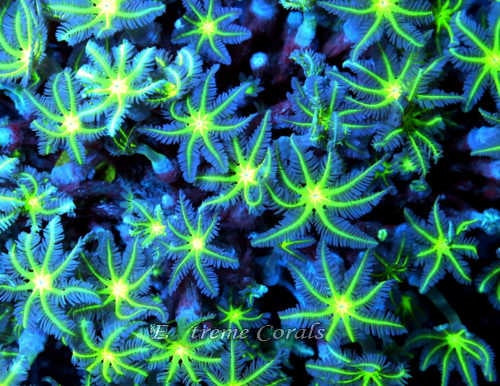
A comprehensive Clove Polyp guide from Extreme Corals covering Clove Polyp care, lighting, flow, placement, feeding, water parameters, spreading, growth control, and soft coral reef tank tips.
Shop Clove Polyps and learn complete Clove Polyp care, including lighting, flow, placement, feeding, water parameters, spreading, growth control and soft coral reef tank tips.
by Scott Shiles • May 01, 2026
Clove Polyps are one of the most useful soft corals for reef keepers who want movement, color, fast coverage, and a natural reef look without the difficulty of high-end SPS or delicate LPS corals. When healthy, Clove Polyps open into small flower-like polyps that wave in the current and create a soft, living carpet across rock, rubble, or isolated coral islands. They can be beginner friendly, but they are not a coral to place carelessly because they can spread quickly once they settle in.
Here at Extreme Corals, we have seen Clove Polyps do extremely well in reef tanks when they are placed with a plan. In our experience, the best results come from moderate lighting, moderate indirect flow, stable water, and smart placement that gives the coral room to grow without letting it take over areas meant for slower-growing corals. Clove Polyps can be beautiful, hardy, and rewarding, but they should be treated as a fast-growing soft coral that needs growth control from the start.
This complete Clove Polyp care and buying guide covers lighting, flow, placement, water parameters, feeding, growth control, spreading, fragging, common problems, compatibility, beginner care, and how to use Clove Polyps in a reef tank without creating long-term placement issues. If you are shopping for colorful soft corals, browse our soft corals for sale, new arrival coral frags, new arrival corals, and Scott's Handpicked Corals.
What Are Clove Polyps?
Clove Polyps are soft corals commonly associated with Clavularia-style corals in the reef aquarium hobby. They grow from a mat-like base and produce individual polyps that open like small flowers. Their waving motion, bright centers, contrasting tips, and ability to spread across hard surfaces make them popular in soft coral tanks, mixed reefs, nano reefs, and beginner reef aquariums.
Clove Polyps are not stony corals. They do not build a large calcium carbonate skeleton like LPS or SPS corals. Instead, they spread across rock, plugs, rubble, and other hard surfaces as the colony grows. That growth habit is part of their appeal, but it is also why placement matters.
Clove Polyps are popular because they offer:
- Flower-like polyps with natural movement
- Good color under reef lighting
- Beginner-friendly soft coral care
- Fast coverage on rock or rubble
- Strong visual texture in soft coral gardens
- Good use in nano reefs and mixed reef tanks
- Lower calcium and alkalinity demand than stony corals
A healthy Clove Polyp colony should open regularly, show clean tissue, respond well to moderate flow, and gradually spread across the surface where it is attached.
Why Reef Keepers Like Clove Polyps
Clove Polyps give reef tanks a soft, natural look. A colony can add movement without needing the same care level as Torch Corals, Hammer Corals, Acropora, or other more demanding corals. They are especially useful for reef keepers who want motion and color in areas where a stony coral may not be the best fit.
In our experience, Clove Polyps are attractive to customers because they can:
- Open into a colorful flower-like colony
- Add motion to the lower or middle reef structure
- Grow well in established beginner systems
- Fill empty rock areas naturally
- Work well with many other soft corals
- Create a more mature reef look over time
The key is to use them intentionally. Clove Polyps are not the coral to place directly on your main rockwork if you do not want them spreading. They are best used where growth is part of the plan.
Are Clove Polyps Beginner Friendly?
Yes, Clove Polyps can be beginner friendly, but only when the reef keeper understands their growth habit. They are usually more forgiving than many stony corals and can adapt well to stable reef tanks. However, beginner friendly does not mean no planning. A fast-growing coral can become a problem if it spreads into areas where you do not want it.
Clove Polyps are beginner friendly because they usually tolerate:
- Moderate lighting
- Moderate indirect flow
- Normal mixed reef nutrient levels
- Soft coral-style reef systems
- Established nano reef tanks
- Basic coral feeding and maintenance routines
They still need stable salinity, temperature, alkalinity, and clean reef water. A new reef keeper should not use hardiness as an excuse to skip testing or maintenance.
Best Water Parameters for Clove Polyps
Clove Polyps are generally forgiving compared with many SPS and delicate LPS corals, but stable water still matters. They are soft corals, so they do not consume calcium and alkalinity at the same level as fast-growing stony corals, but they still benefit from balanced reef chemistry.
| Parameter | Recommended Range for Clove Polyps |
|---|---|
| Temperature | 76-80°F |
| Salinity | 1.024-1.026 specific gravity |
| pH | 8.1-8.4 |
| Alkalinity | 8-10 dKH |
| Calcium | 400-450 ppm |
| Magnesium | 1250-1350 ppm |
| Nitrate | 2-15 ppm for many soft coral and mixed reef systems |
| Phosphate | 0.03-0.10 ppm in many balanced soft coral systems |
In our experience, Clove Polyps usually do not need ultra-low nutrient water. Like many soft corals, they often look better in clean but not stripped reef tanks. Zero nitrate and zero phosphate can leave some soft corals looking less full, less open, or less vibrant. For more help, read our reef tank water parameters guide and our guide to nitrates in reef tanks.
Lighting Requirements for Clove Polyps
Clove Polyps generally do well under moderate reef lighting. They are photosynthetic, which means they use light through their symbiotic algae to help produce energy. They do not usually require the intense lighting of many SPS corals, but they need enough light to open well, hold color, and grow.
Good lighting for Clove Polyps should be:
- Moderate and consistent
- Appropriate for soft coral growth
- Introduced gradually if the coral is new
- Strong enough to support color without bleaching
- Adjusted based on the coral’s response
Signs Clove Polyps may be getting too much light include:
- Polyps staying closed during peak lighting
- Faded or pale color
- Tissue looking stressed or reduced
- Better opening in shaded periods
Signs Clove Polyps may need more light include:
- Slow growth despite stable water
- Dull coloration
- Polyps stretching or opening weakly
- Reduced colony fullness over time
Do not move Clove Polyps from low light to very strong light suddenly. Even hardy soft corals can react poorly to fast lighting changes. For more lighting help, read our reef tank lighting guide.
Best Water Flow for Clove Polyps
Clove Polyps usually prefer moderate indirect flow. The polyps should move naturally in the current, but they should not be blasted so hard that they stay closed or bend violently in one direction. Proper flow helps keep the colony clean and encourages a natural waving appearance.
Good Clove Polyp flow should:
- Move the polyps gently
- Keep debris from settling on the mat
- Support gas exchange
- Bring dissolved nutrients and fine foods past the colony
- Avoid harsh direct powerhead output
Too much direct flow can cause:
- Closed polyps
- Tissue irritation
- Poor extension
- Detached or damaged growth edges
Too little flow can cause:
- Detritus buildup
- Algae growing around the colony
- Reduced polyp movement
- Less healthy expansion
In our experience, Clove Polyps look best when they sway instead of whip. If the colony is closed on the side facing a pump, the flow may be too direct. If debris collects on the mat, the flow may be too weak. Our water flow and coral health guide goes deeper into this topic.
Best Placement for Clove Polyps
Placement is the most important long-term decision with Clove Polyps. They can spread across hard surfaces, which is great if you want coverage and movement, but frustrating if they grow into areas planned for slower-growing corals.
Good Clove Polyp placement options include:
- Isolated rock islands
- Rubble pieces
- Lower to middle rock zones
- Soft coral gardens
- Nano reef focal areas
- Dedicated growth zones where spreading is acceptable
Avoid placing Clove Polyps:
- Directly on main rockwork if you do not want spreading
- Beside expensive slow-growing corals
- Where they can grow into SPS bases
- Near fleshy LPS corals that may be irritated by contact
- In stagnant areas where detritus collects
- Under extreme light without acclimation
For many reef tanks, the best approach is to place Clove Polyps on an isolated rock or rubble island. That lets you enjoy the coral’s beauty while controlling where it spreads. For broader placement planning, read our coral placement guide.
Do Clove Polyps Spread Quickly?
Yes, Clove Polyps can spread quickly once they are happy. They grow by extending their mat over nearby hard surfaces and producing more polyps. In the right conditions, this growth can create a beautiful soft coral carpet. In the wrong location, it can become a management problem.
Clove Polyp growth is usually encouraged by:
- Stable water parameters
- Moderate lighting
- Moderate indirect flow
- Available rock or rubble surface
- Measurable nutrients
- Low irritation from neighboring corals
If you want fast coverage, this growth is a benefit. If you want a controlled mixed reef with expensive LPS and SPS pieces, place Clove Polyps where spreading can be managed.
How to Control Clove Polyp Growth
Growth control should be planned before the coral spreads. It is much easier to control Clove Polyps on a separate rock than to remove them from a large connected reef structure later.
Ways to control Clove Polyp growth include:
- Place them on isolated rock islands.
- Use rubble pieces that can be removed and trimmed.
- Keep them away from your main aquascape if needed.
- Leave a sand gap around the colony.
- Trim or frag growth before it reaches unwanted areas.
- Avoid placing them beside slow-growing premium corals.
Do not wait until Clove Polyps are growing through a prized coral area before acting. If the colony is getting close to a boundary, trim it early.
Feeding Clove Polyps
Clove Polyps are photosynthetic and can do well from light, fish waste, dissolved nutrients, and stable reef conditions. They may also benefit from occasional fine coral foods, but they do not require heavy target feeding like some LPS corals.
Feeding options may include:
- Fine particle coral foods
- Phytoplankton-style foods when appropriate
- Small suspended zooplankton foods
- Dissolved nutrients from regular fish feeding
- Light broadcast feeding in soft coral systems
Feed lightly. Heavy feeding can raise nutrients, fuel algae, and irritate the colony. In many reef tanks, consistent fish feeding and stable nutrients are enough for Clove Polyps to grow well.
Clove Polyps in Soft Coral Tanks
Clove Polyps are excellent candidates for soft coral tanks because they add movement and texture without needing stony coral-level mineral demand. They pair well with many soft coral-style systems, especially when growth is planned carefully.
They can work well with:
- Zoanthid gardens
- Mushroom coral zones
- Leather corals
- Ricordea mushrooms
- Other soft coral islands
- Beginner-friendly mixed reefs
Soft coral tanks can be beautiful when they are not treated as random coral collections. Build zones, leave space, and plan where each coral can spread. Browse our Zoanthids, Ricordea mushrooms, and soft corals if you are building a soft coral-focused reef.
Clove Polyps in Mixed Reef Tanks
Clove Polyps can be kept in mixed reef tanks, but they should not be placed where they can overgrow slower or more valuable corals. In a mixed reef, the issue is usually not that Clove Polyps are too difficult. The issue is that they may grow into spaces meant for LPS, SPS, chalices, or Zoanthid collections.
In mixed reefs, Clove Polyps do best when:
- They are placed on isolated rockwork.
- They are kept away from SPS bases.
- They are not allowed to grow into fleshy LPS corals.
- They have moderate light and flow.
- Their growth is trimmed before it becomes a problem.
A controlled Clove Polyp colony can be a great accent in a mixed reef. An uncontrolled colony on the main rock structure can become a headache.
Are Clove Polyps Aggressive?
Clove Polyps are not usually aggressive in the same way Torch Corals, chalices, Galaxea, or some other stinging corals can be. Their main form of competition is spreading. They can grow over available surfaces and crowd nearby corals if left unchecked.
Clove Polyps may compete by:
- Spreading across rock toward other corals
- Shading small neighboring polyps
- Occupying space before slower corals can grow
- Irritating corals through contact or crowding
They should still be given space. A coral does not need long sweeper tentacles to become a placement problem. Growth competition matters.
How to Choose Healthy Clove Polyps Online
When buying Clove Polyps online, look for healthy extension, clean tissue, and a colony that appears stable. Since Clove Polyps can close from handling or shipping, a temporarily closed colony is not always a disaster, but repeated closed or melting tissue is a warning sign.
Look for:
- Open or partially open polyps in listing photos
- Clean mat tissue
- No slimy decay
- No heavy algae growing through the colony
- Good color under reef lighting
- Secure attachment to plug, rubble, or rock
- No obvious pest anemones or nuisance algae
Be cautious with:
- Colonies that appear melted
- Heavy algae choking the mat
- Polyps closed in every image without explanation
- Loose tissue peeling away
- Damaged or decaying plug surfaces
At Extreme Corals, we want customers to choose corals that have a real chance to thrive, not just corals that look good for a few minutes under bright lighting.
Acclimating Clove Polyps
Clove Polyps may close after shipping, dipping, or moving to a new tank. That is normal. The goal is to provide stable conditions and let them reopen without constantly moving them around.
Good acclimation practices include:
- Temperature acclimate before transfer.
- Inspect the plug or rock for pests.
- Dip when appropriate and follow product directions.
- Start in moderate light.
- Use moderate indirect flow.
- Place the colony where spreading is acceptable.
- Avoid moving it repeatedly unless placement is clearly wrong.
Once placed correctly, give Clove Polyps time. Some colonies open quickly, while others may take a few days to settle after shipping or dipping.
Common Clove Polyp Problems
Clove Polyps are hardy, but they can still struggle if placement, flow, lighting, nutrients, or pests are wrong.
Clove Polyps Not Opening
Clove Polyps may stay closed because of shipping stress, dipping stress, too much direct flow, poor lighting, pests, algae irritation, salinity swings, or unstable water parameters. Check recent changes first.
Clove Polyps Melting
Melting or slimy decay is more serious. It may come from poor shipping recovery, bacterial issues, damaged tissue, unstable water, or algae choking the colony. Remove decaying material carefully and improve stability.
Algae Growing Through Clove Polyps
Algae can irritate the mat and prevent polyps from opening. Improve nutrient balance, increase appropriate flow, use cleanup crew support, and manually remove algae carefully when possible.
Clove Polyps Spreading Too Much
If Clove Polyps spread into unwanted areas, trim the colony, remove the rock if possible, or isolate future growth with rubble and sand gaps. Growth control is much easier when planned early.
Color Fading
Color fading may be caused by lighting that is too strong or too weak, nutrient imbalance, or stress from recent changes. Adjust slowly and watch the coral response.
Fragging Clove Polyps
Clove Polyps can often be fragged by cutting or peeling sections of the mat from rock, plug, or rubble and attaching them to a new surface. They are usually easier to propagate than many stony corals, but clean handling still matters.
Basic Clove Polyp fragging tips include:
- Frag only healthy colonies.
- Use clean tools.
- Cut or separate a section of the mat carefully.
- Attach to rubble or a plug when possible.
- Use gentle to moderate flow while healing.
- Avoid burying living tissue in glue.
Clove Polyps can also spread naturally onto nearby rubble, which is often the easiest way to create new frags without stressing the colony too much. For more propagation guidance, read our coral fragging guide.
Best Tank Setup for Clove Polyps
The best Clove Polyp setup is a stable reef tank with moderate lighting, moderate indirect flow, measurable nutrients, and a placement plan. They do especially well in soft coral tanks, beginner-friendly reefs, and controlled mixed reef areas.
A good Clove Polyp tank setup includes:
- Stable salinity and temperature
- Moderate reef lighting
- Moderate indirect water movement
- Measurable nitrate and phosphate
- Good detritus control
- Rock or rubble placement that allows growth control
- Regular observation and trimming when needed
When placed correctly, Clove Polyps can be a beautiful low-stress coral that adds motion and life to the aquarium.
Our Practical Clove Polyp Advice at Extreme Corals
Clove Polyps are one of those corals where success is less about difficulty and more about planning. They are not usually hard to keep, but they can be hard to control if placed carelessly.
Our practical Clove Polyp rules are:
- Use isolated rock or rubble if you want growth control.
- Give them moderate light, not extreme light.
- Use moderate indirect flow.
- Keep nutrients measurable but controlled.
- Do not let algae grow into the colony.
- Do not place them beside slow-growing premium corals.
- Trim growth early before it spreads too far.
- Buy healthy, clean colonies with good tissue.
When used correctly, Clove Polyps can be one of the most rewarding soft corals in a reef tank. They bring movement, color, and easy growth while still giving the reef keeper flexibility to shape the display.
Related Soft Coral Guides and Categories
If you are researching Clove Polyps or building a soft coral reef, these related guides and coral categories can help:
- Soft Corals for Sale - Browse soft corals for reef tanks.
- Zoanthids - Add colorful polyps to your reef aquarium.
- Ricordea Mushrooms - Explore colorful mushroom corals for lower-light areas.
- Rhodactis vs Discosoma Mushroom Guide - Compare popular mushroom coral types.
- Coral Placement Guide - Plan coral placement by light, flow, spacing, and growth.
- Reef Tank Lighting Guide - Understand lighting and coral response.
- Water Flow and Coral Health - Learn how flow affects coral tissue and growth.
- New Arrival Corals - See recently added corals for your reef tank.
Shop Clove Polyps and Soft Corals at Extreme Corals
Clove Polyps are a great choice for reef keepers who want a colorful, fast-growing soft coral with natural movement and beginner-friendly care. They are especially useful in soft coral gardens, nano reefs, mixed reef accents, and isolated growth zones where their spreading habit can be enjoyed instead of fought.
Browse our soft corals for sale, new arrival coral frags, new arrival corals, Zoanthids, Ricordea mushrooms, and Scott's Handpicked Corals at ExtremeCorals.com to find healthy corals for your reef aquarium.
Frequently Asked Questions About Clove Polyps
Are Clove Polyps beginner friendly?
Yes, Clove Polyps are generally beginner friendly in stable reef tanks. They are hardy soft corals, but they should be placed carefully because they can spread quickly.
Do Clove Polyps spread fast?
Clove Polyps can spread quickly once established. They should be placed on isolated rocks, rubble, or dedicated soft coral zones if you want to control their growth.
What lighting do Clove Polyps need?
Clove Polyps usually do well under moderate reef lighting. They do not need extreme SPS-level light, but they need enough consistent light to open, hold color, and grow.
What flow is best for Clove Polyps?
Clove Polyps usually prefer moderate indirect flow. The polyps should sway naturally without being blasted directly by a powerhead.
Do Clove Polyps need feeding?
Clove Polyps are photosynthetic and can do well from light, fish feeding, and dissolved nutrients. They may benefit from occasional fine coral foods, but heavy target feeding is not necessary.
Where should I place Clove Polyps?
Place Clove Polyps in a moderate light and moderate flow area, preferably on an isolated rock or rubble piece where their spreading growth can be controlled.
Why are my Clove Polyps not opening?
Clove Polyps may stay closed because of shipping stress, dipping stress, too much flow, poor lighting, pests, algae irritation, salinity swings, or unstable water parameters.
Can Clove Polyps take over a reef tank?
Clove Polyps can spread across connected rockwork if they are happy. They are best controlled by using isolated rocks, sand gaps, rubble islands, and trimming when needed.
Can Clove Polyps grow near Zoanthids or mushrooms?
Clove Polyps can grow in the same general soft coral system as Zoanthids and mushrooms, but each coral should have enough space so faster growth does not crowd the others.
Are Clove Polyps aggressive?
Clove Polyps are not usually aggressive like stinging LPS corals, but they can compete by spreading across rockwork and crowding nearby corals.
About the Author
Scott Shiles is the owner of ExtremeCorals.com, which he has operated for over 25 years and is recognized as one of the early dedicated live coral websites on the internet. A lifelong reef keeper since 1984, Scott has decades of hands-on experience maintaining marine aquariums and previously owned and operated a brick and mortar aquarium retail store for 10 years, including five years alongside Extreme Corals. He holds a degree in Marine Biology and has personally selected and sold hundreds of thousands of live corals. An avid scuba diver who has explored reef systems around the world, Scott shares practical coral care and husbandry knowledge based on real world reef experience.
overall rating:
my rating:
log in to rate
Please log in to leave a comment.
For more information visit: additional resources