My Cart: 0 item(s)

Extreme Corals News and Updates
Rhodactis Mushroom Care Guide: Lighting, Flow, Placement, Feeding and Growth Tips
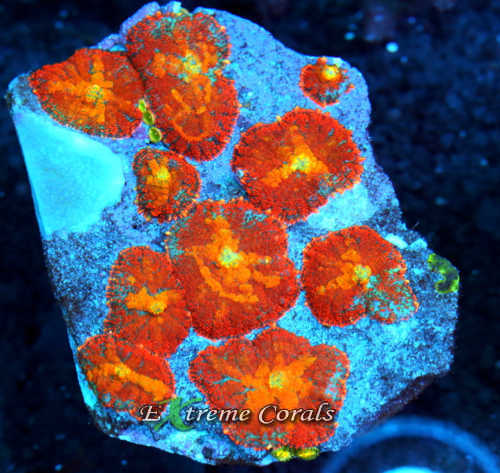
A comprehensive Extreme Corals guide to Rhodactis mushroom care, including lighting, flow, placement, water parameters, feeding, growth, detachment, compatibility, fragging, common problems and mushroom coral buying tips.
Learn Rhodactis mushroom care for reef tanks, including lighting, flow, placement, feeding, water parameters, growth, detachment, compatibility and mushroom coral care tips.
by Scott Shiles • May 01, 2026
Rhodactis mushrooms are some of the most popular mushroom corals in reef aquariums because they combine intense color, bold texture, forgiving care, and strong visual impact in lower-light areas of the tank. They are soft corals that can look simple from a distance, but a good Rhodactis mushroom can become one of the most eye-catching pieces in a reef. Their colors, surface texture, inflation, growth form, and lower-maintenance care make them especially valuable for reef keepers who want a beautiful coral without building an SPS-dominant system.
Here at Extreme Corals, we have selected, photographed, shipped, and sold a tremendous number of mushroom corals over the years, and in our experience, Rhodactis mushrooms are one of the best corals for adding color and fullness to reef tanks that have lower to moderate lighting and gentler flow. They are usually more forgiving than many stony corals, but they still deserve proper placement, stable water, careful acclimation, and enough space to expand. When Rhodactis are treated like living coral instead of decoration, they can settle in, inflate, color up, and become excellent long-term reef pieces.
This complete Rhodactis mushroom care guide covers lighting, flow, placement, water parameters, feeding, growth, propagation, handling, compatibility, common problems, detachment, shrinking, color changes, and how to choose a healthy Rhodactis mushroom online. If you are shopping for colorful mushroom corals, browse our mushroom corals for sale, soft corals for sale, and new arrival corals.
What Are Rhodactis Mushrooms?
Rhodactis mushrooms are soft corals in the mushroom coral group. They are known for their textured surface, broad oral disc, vivid coloration, and relatively adaptable care needs. In reef aquariums, they may appear in greens, blues, oranges, reds, purples, teals, metallic shades, and mixed color patterns depending on the specimen and lighting.
Compared with flatter Discosoma mushrooms, Rhodactis often have a thicker, more textured look. Some pieces show bubbly texture, ridges, wrinkles, or raised surface details that make them look more dimensional under reef lighting. This is one reason they sell so well. They can provide the visual weight of a showpiece coral while still fitting into lower-energy sections of a reef tank.
A healthy Rhodactis mushroom should usually show:
- Full tissue expansion when settled
- Good color for that specimen
- A secure attachment to rock, rubble, or a plug
- No torn or melting tissue
- No severe bleaching
- No constant folding, shrinking, or detachment
- A stable response to light and flow
Rhodactis mushrooms are often called beginner-friendly, but that does not mean they should be ignored. They do best when the reef keeper understands their lower to moderate light preference, gentle flow needs, and sensitivity to repeated disturbance.
Why Rhodactis Mushrooms Are So Popular
Rhodactis mushrooms are popular because they solve a real problem in reef aquariums. Not every part of a reef tank is ideal for SPS corals or high-light LPS corals. Lower areas, shaded shelves, gentle-flow zones, and mixed reef corners often need corals that can look great without extreme lighting or strong water movement. Rhodactis mushrooms fit that role beautifully.
Reef keepers like Rhodactis mushrooms because they offer:
- Bright color under reef lighting
- Unique texture compared with flatter mushrooms
- More forgiving care than many SPS corals
- Good use of lower-light reef zones
- Attractive growth in mushroom gardens
- Compatibility with many mixed reef aquariums
- Strong visual impact without aggressive skeleton growth
In our experience, Rhodactis mushrooms are especially valuable for customers who want a coral that looks colorful and interesting without requiring high PAR, aggressive dosing, or intense flow. They are not maintenance-free, but they are very rewarding when placed correctly.
Rhodactis vs Discosoma vs Ricordea Mushrooms
Rhodactis, Discosoma, and Ricordea are all mushroom corals, but they do not always look or behave the same way. Understanding the differences helps reef keepers choose the right mushroom coral for their tank.
| Mushroom Type | General Appearance | Care Personality |
|---|---|---|
| Rhodactis | Textured, thicker, often bumpy or ridged surface | Low to moderate light, gentle to moderate indirect flow, good for bold texture |
| Discosoma | Flatter, smoother, often broad and simple in shape | Often very forgiving, good for lower light and easy mushroom gardens |
| Ricordea | Small round bubbles or bead-like texture | Moderate care, colorful, often prized for bright patterns |
Rhodactis mushrooms are often the choice when a reef keeper wants a mushroom that looks fuller and more dramatic than a standard smooth mushroom. Some collector Rhodactis types can also become very impressive centerpiece soft corals.
Are Rhodactis Mushrooms Beginner Friendly?
Rhodactis mushrooms are often good corals for newer reef keepers, but they still need stable conditions. They are usually more forgiving than many LPS and SPS corals because they do not build a calcium carbonate skeleton, do not require intense lighting, and can tolerate a wider range of nutrient conditions. However, they can still shrink, detach, bleach, melt, or fail if the tank is unstable.
Rhodactis mushrooms become easier when:
- The tank is fully cycled and stable.
- Salinity does not swing.
- Lighting is low to moderate.
- Flow is not blasting the tissue.
- The mushroom is not moved constantly.
- Nitrate and phosphate are measurable but controlled.
- The coral has room away from aggressive neighbors.
For a new reef keeper, Rhodactis can be a strong choice once the aquarium is stable. They are not a good choice for a tank that is still cycling, experiencing ammonia, swinging salinity, or going through constant lighting changes.
Best Tank Setup for Rhodactis Mushrooms
Rhodactis mushrooms do not require an advanced reef tank, but they do better in systems that are stable, mature enough, and not overly sterile. They often do well in mixed reefs, soft coral tanks, mushroom gardens, nano reefs, and lower areas of larger aquariums.
A good Rhodactis mushroom setup includes:
- Stable salinity and temperature
- Low to moderate lighting
- Low to moderate indirect flow
- Rock, rubble, or a plug for attachment
- Measurable nutrients
- Enough spacing from aggressive corals
- No fish or invertebrates constantly disturbing the tissue
Rhodactis mushrooms are especially useful in areas where SPS corals would not be ideal. A lower rock shelf, mushroom island, shaded transition zone, or side area with gentle movement can be perfect.
Rhodactis Mushroom Lighting Requirements
Rhodactis mushrooms usually do best under low to moderate reef lighting. Many specimens are comfortable in roughly 75-150 PAR, depending on the coral, tank conditions, and acclimation. They can sometimes adapt outside that range, but they should not be blasted with intense light suddenly.
Good lighting habits for Rhodactis include:
- Start new mushrooms in lower to moderate light.
- Avoid placing them directly under intense LED peaks.
- Increase light slowly only if the coral is stable.
- Watch for shrinking, fading, bleaching, or detachment.
- Use acclimation mode when changing lights or intensity.
Many reef keepers assume colorful corals need stronger light. Rhodactis often prove the opposite. Color and expansion can be better when they are not stressed by excessive intensity. Read our best reef tank lighting guide for more help with coral placement by light level.
Signs Rhodactis Mushrooms Are Getting Too Much Light
Too much light can stress Rhodactis mushrooms. This is especially common when a new mushroom is placed too high in the tank or when LED intensity is increased quickly.
Signs of too much light may include:
- Shrinking during the brightest part of the day
- Color fading or bleaching
- Mushroom pulling tight against the rock
- Detachment from the plug or rock
- Better expansion in shaded periods
- Slow decline after a lighting upgrade
If a Rhodactis looks stressed under high light, move it lower or reduce intensity gradually. Do not move it every few hours. Choose a calmer lower-light zone and give it time to respond.
Water Flow for Rhodactis Mushrooms
Rhodactis mushrooms usually prefer low to moderate indirect flow. They need enough water movement to keep debris from settling on their tissue, but they do not want direct blasting from a powerhead. Strong direct flow can keep them contracted, cause them to stretch awkwardly, or make them detach.
Good Rhodactis flow should be:
- Gentle to moderate
- Indirect rather than direct
- Enough to prevent detritus buildup
- Not strong enough to fold or peel the mushroom
- Stable enough that the coral can settle and attach
Too little flow can allow detritus to collect around the mushroom, which may irritate tissue. Too much flow can damage tissue or prevent attachment. The best flow is gentle movement across the area without forcing the mushroom to constantly fight the current. Read our water flow and coral health guide for more placement help.
Best Placement for Rhodactis Mushrooms
Placement is one of the biggest keys to Rhodactis success. These mushrooms often do best in lower to middle areas of the reef tank where light is moderate and flow is gentle. They can be placed on rock, rubble, frag plugs, or dedicated mushroom islands depending on your aquascape.
Good placement options include:
- Lower rock shelves
- Middle-low reef zones
- Mushroom islands
- Rubble areas where they can attach and spread
- Gentle-flow corners of a mixed reef
- Shaded transition zones away from intense light
Avoid placing Rhodactis mushrooms:
- Directly under intense lighting without acclimation
- In front of a strong powerhead
- Where sand is constantly blown onto the tissue
- Against aggressive LPS corals
- Where they will be trampled by urchins, crabs, or large snails
- On main rockwork if you do not want mushrooms spreading there
Many reef keepers prefer mushroom islands because they allow Rhodactis to grow naturally while making it easier to manage spread. For more planning help, read our coral placement guide.
Water Parameters for Rhodactis Mushrooms
Rhodactis mushrooms are forgiving compared with many stony corals, but stable water still matters. They often tolerate slightly higher nutrients better than many SPS corals, but they do not do well with ammonia, major salinity swings, or neglected water quality.
| Parameter | Recommended Range for Rhodactis Mushrooms |
|---|---|
| Temperature | 76-80°F |
| Salinity | 1.024-1.026 specific gravity |
| pH | 8.0-8.4 |
| Alkalinity | 7-10 dKH, kept stable |
| Nitrate | 2-15 ppm in many mixed reef systems |
| Phosphate | 0.03-0.10 ppm in many mixed reef systems |
| Ammonia | 0 ppm in established reef tanks |
Do not treat these ranges as a reason to ignore testing. Rhodactis mushrooms are hardy, but they still react to instability. If a mushroom shrinks, detaches, or loses color, check salinity, temperature, alkalinity, nitrate, phosphate, lighting, and flow before assuming the coral is simply unhappy. For more detail, read our reef tank water parameters guide.
Do Rhodactis Mushrooms Need Feeding?
Rhodactis mushrooms are photosynthetic, but they can also benefit from occasional feeding. They receive energy from light through their symbiotic algae, but they may respond well to small foods, dissolved organics, and nutrient availability in the water.
Possible Rhodactis feeding options include:
- Fine coral foods
- Small meaty particles
- Zooplankton-style foods
- Phytoplankton-style foods when appropriate
- Fish-fed nutrient systems
Many Rhodactis mushrooms do not need heavy target feeding. In a reef tank with fish and measurable nutrients, they may do well with little direct feeding. In very clean systems, occasional light feeding can help support fullness and growth.
How Often Should You Feed Rhodactis Mushrooms?
Some Rhodactis mushrooms may benefit from light feeding once or twice per week, but feeding should be based on coral response and tank nutrient levels. If nitrate and phosphate are already high, heavy feeding can make algae problems worse. If the tank is very low nutrient and the mushroom looks thin or slow-growing, light supplemental feeding may help.
Good feeding habits include:
- Use small food particles.
- Feed only when the mushroom responds well.
- Avoid large food chunks that rot if rejected.
- Do not bury the coral in food.
- Watch nitrate and phosphate after increasing feeding.
- Protect food from shrimp or fish if target feeding.
Feeding should support the coral, not pollute the tank.
Growth and Spread of Rhodactis Mushrooms
When Rhodactis mushrooms are settled, they can grow steadily and may eventually multiply. Growth speed depends on lighting, nutrients, flow, water stability, feeding, and the specific variety. Some grow slowly and remain prized single pieces. Others can spread across rubble or nearby rock over time.
Healthy Rhodactis growth may include:
- Larger tissue expansion
- Improved fullness
- More vivid color after acclimation
- New baby mushrooms near the original
- Division or spreading across nearby rock
If you want a mushroom garden, place Rhodactis where they can grow without creating problems. If you want strict control, use an isolated rock or rubble piece away from the main aquascape.
Compatibility and Coral Aggression
Rhodactis mushrooms are usually manageable in mixed reefs, but they should not be crowded. They can irritate nearby corals by contact, overgrowth, chemical competition, or local aggression. They may also be damaged by more aggressive LPS corals.
Give Rhodactis mushrooms space from:
- Torch Corals
- Hammer Corals
- Frogspawn Corals
- Chalice corals
- Galaxea
- Favia and Favites
- Fast-spreading soft corals if crowding becomes an issue
Rhodactis may look harmless, but coral spacing still matters. A mushroom that grows too close to another coral can create irritation. A nearby aggressive LPS coral can also sting or damage the mushroom.
Fish and Invertebrate Compatibility
Rhodactis mushrooms are usually compatible with peaceful reef-safe fish and invertebrates. The biggest concern is not usually fish eating them, but animals disturbing them, stepping on them, stealing food, or knocking them loose before they attach securely.
Good tankmates include:
- Peaceful reef-safe fish
- Small gobies and blennies that do not bury them
- Reef-safe shrimp with caution during feeding
- Snails that do not constantly bulldoze loose mushrooms
- Cleanup crew animals that help manage algae without damaging tissue
Use caution with large urchins, large hermit crabs, digging fish, aggressive fish, or animals that may repeatedly move loose rubble. If a Rhodactis keeps getting knocked around, it may fail to attach and decline.
Handling and Fragging Rhodactis Mushrooms
Rhodactis mushrooms have soft tissue and should be handled gently. Never crush the mushroom, scrape it across rough rock, or force it off a surface unless you understand the risk. Tissue tears can lead to stress, infection, melting, or detachment.
Good handling practices include:
- Handle the plug, rubble, or rock whenever possible.
- Avoid touching the oral disc unnecessarily.
- Keep the mushroom wet during handling.
- Use clean tools if cutting or removing a mushroom.
- Place loose mushrooms in a low-flow container with rubble to attach.
- Monitor fresh cuts or stressed tissue closely.
Rhodactis can be propagated, but it should be done carefully. Fresh mushroom frags may slime, shrink, detach, or heal slowly. If you are new to coral propagation, read our coral fragging guide before attempting mushroom fragging.
Why Rhodactis Mushrooms Detach
Detachment is one of the most common mushroom coral problems. A Rhodactis may let go of a rock or plug when it is stressed, unhappy with placement, irritated by flow, or reacting to sudden lighting changes. Sometimes a detached mushroom can reattach elsewhere, but repeated detachment means something needs attention.
Common causes of Rhodactis detachment include:
- Too much direct flow
- Sudden lighting increase
- Excessive light intensity
- Unstable salinity
- Poor water quality
- Rough handling
- Being knocked loose by snails, crabs, urchins, or fish
- Unsuitable attachment surface
If a mushroom detaches, place it in a low-flow area with small rubble pieces so it can reattach. Do not glue soft mushroom tissue directly with excessive glue. The coral needs a stable, gentle place to settle.
Common Rhodactis Mushroom Problems
Rhodactis mushrooms are hardy, but they still show clear signs when something is wrong. Always check the full system before making major changes.
Rhodactis Mushroom Shrinking
Shrinking can be caused by too much light, too much flow, unstable salinity, poor nutrients, irritation from nearby corals, pests, or repeated movement. Check recent changes first.
Rhodactis Losing Color
Color loss may come from lighting stress, nutrient imbalance, bleaching, or poor acclimation. A mushroom moved suddenly from low light to high light can fade quickly.
Rhodactis Melting or Turning Mushy
Melting is serious and may be caused by severe stress, damage, infection, poor water quality, or rough handling. Remove decaying tissue if needed and prevent it from spreading irritation in a small system.
Rhodactis Not Attaching
A mushroom may fail to attach if flow is too strong, the surface is unsuitable, or it is repeatedly disturbed. Use a low-flow container, rubble cup, or protected area until it grips a surface.
Rhodactis Covered With Detritus
Detritus settling on the mushroom means flow may be too weak or poorly directed. Increase gentle indirect movement around the coral without blasting it.
How to Choose a Healthy Rhodactis Mushroom Online
When buying Rhodactis mushrooms online, look beyond color. The best specimen should show healthy tissue, good attachment, and no obvious damage. A bright mushroom that is torn, melting, or badly stressed is not a better buy than a healthy, stable piece with strong tissue.
Look for:
- Full tissue expansion
- Good attachment to plug, rubble, or rock
- No obvious tears through the oral disc
- No melting or stringy decay
- Good color without severe bleaching
- A shape that looks settled rather than collapsed
Be cautious with:
- Loose mushrooms tumbling around
- Freshly cut pieces with heavy damage
- Severely bleached specimens
- Mushrooms with decaying edges
- Pieces that are constantly folded or deflated
At Extreme Corals, we know mushrooms are important reef corals because customers want color, variety, and success. A healthy Rhodactis mushroom should be both beautiful and realistic for the customer to keep long term.
Our Practical Rhodactis Mushroom Advice at Extreme Corals
At Extreme Corals, our practical advice is simple: start Rhodactis mushrooms in lower to moderate light, use gentle indirect flow, avoid constant movement, and keep salinity stable. Do not try to force them into high-light SPS zones just because they are colorful. Rhodactis often look better when they are allowed to settle in a calmer part of the reef.
Our Rhodactis care rules are:
- Use low to moderate lighting.
- Avoid direct powerhead flow.
- Give the mushroom a stable attachment surface.
- Do not move it repeatedly unless placement is clearly wrong.
- Keep salinity stable.
- Keep nitrate and phosphate measurable but controlled.
- Feed lightly only if the coral responds well.
- Give space from aggressive corals.
- Use mushroom islands if you want better growth control.
When Rhodactis mushrooms are comfortable, they usually tell you by expanding fully, holding color, and staying attached. That is the look we want customers to achieve.
Related Mushroom Coral and Soft Coral Guides
If you are interested in Rhodactis mushrooms, these related guides and coral categories can help:
- Mushroom Corals for Sale - Browse Rhodactis, Ricordea, and other mushroom corals.
- Soft Corals for Sale - Explore soft corals for mixed reef aquariums.
- Rhodactis vs Discosoma Mushroom Coral Guide - Compare popular mushroom coral types.
- Bounce Mushroom Care Guide - Learn care for another collector mushroom type.
- Zoanthid Care Guide - Compare another colorful lower-maintenance coral group.
- Best Reef Tank Lighting Guide - Match mushroom placement to lighting.
- Water Flow and Coral Health - Improve flow without damaging soft coral tissue.
- Coral Placement Guide - Plan coral spacing, light, flow, and growth.
Shop Rhodactis Mushrooms at Extreme Corals
Rhodactis mushrooms are excellent choices for reef keepers who want colorful, textured, lower-light corals with strong visual impact. They are especially useful in mixed reefs, mushroom gardens, nano reefs, and lower-energy areas where SPS or high-light LPS corals may not be the best fit.
Browse our mushroom corals for sale, soft corals, new arrival corals, new coral frags, and Scott's Handpicked Corals at ExtremeCorals.com to find colorful WYSIWYG corals for your reef aquarium.
Frequently Asked Questions About Rhodactis Mushroom Care
Are Rhodactis mushrooms easy to care for?
Rhodactis mushrooms are generally easier than many LPS and SPS corals, but they still need stable salinity, low to moderate lighting, gentle indirect flow, and enough space from aggressive corals.
What lighting do Rhodactis mushrooms need?
Rhodactis mushrooms usually do best in low to moderate lighting. Many specimens do well around 75-150 PAR, but they should be acclimated slowly and protected from sudden high-light exposure.
What flow is best for Rhodactis mushrooms?
Rhodactis mushrooms usually prefer low to moderate indirect flow. They need enough movement to keep debris away, but direct blasting flow can cause shrinking, tissue stress, or detachment.
Where should I place Rhodactis mushrooms?
Rhodactis mushrooms are often best placed in lower to middle areas of the tank, on rock, rubble, plugs, or mushroom islands where lighting is moderate and flow is gentle.
Do Rhodactis mushrooms need feeding?
Rhodactis mushrooms are photosynthetic but can benefit from occasional light feeding. Small particle foods or nutrient availability can support growth, but heavy feeding can raise nitrate and phosphate.
Why is my Rhodactis mushroom shrinking?
A Rhodactis mushroom may shrink because of too much light, too much direct flow, salinity swings, poor water quality, nearby coral irritation, pests, or repeated movement.
Why did my Rhodactis mushroom detach?
Rhodactis mushrooms may detach when stressed by strong flow, sudden lighting changes, unstable water, rough handling, or repeated disturbance. Place loose mushrooms in a protected low-flow rubble area so they can reattach.
Can Rhodactis mushrooms spread?
Yes, healthy Rhodactis mushrooms can grow and multiply over time. If you want control, place them on isolated rock or a mushroom island away from the main aquascape.
Can Rhodactis mushrooms touch other corals?
Rhodactis mushrooms should be given space from other corals. They can irritate nearby corals, and aggressive LPS corals can also sting or damage the mushroom.
Are Rhodactis mushrooms good for nano reefs?
Rhodactis mushrooms can be good nano reef corals if the tank is stable, lighting is moderate, flow is gentle, and salinity does not swing from evaporation.
About the Author
Scott Shiles is the owner of ExtremeCorals.com, which he has operated for over 25 years and is recognized as one of the early dedicated live coral websites on the internet. A lifelong reef keeper since 1984, Scott has decades of hands-on experience maintaining marine aquariums and previously owned and operated a brick and mortar aquarium retail store for 10 years, including five years alongside Extreme Corals. He holds a degree in Marine Biology and has personally selected and sold hundreds of thousands of live corals. An avid scuba diver who has explored reef systems around the world, Scott shares practical coral care and husbandry knowledge based on real world reef experience.
overall rating:
my rating:
log in to rate
Please log in to leave a comment.
For more information visit: additional resources