My Cart: 0 item(s)

Extreme Corals News and Updates
Rhodactis vs Discosoma Mushrooms: The Complete Coral Collector Comparison Guide
.png "Extreme Corals Rhodactis vs Discosoma Mushrooms: The Complete Coral Collector Comparison Guide")
A comprehensive mushroom coral comparison from Extreme Corals covering Rhodactis, Discosoma, bounce mushrooms, Jawbreaker-style mushrooms, lighting, flow, placement, feeding, growth and collector types.
Compare Rhodactis mushrooms and Discosoma mushrooms, including bounce mushrooms, Jawbreaker-style mushrooms, lighting, flow, placement, feeding, growth and collector types.
by Scott Shiles • May 15, 2026
Rhodactis mushrooms and Discosoma mushrooms are two of the most popular mushroom coral groups in the reef aquarium hobby, but they are not the same coral from a collector, care, growth, or placement standpoint. Both can bring intense color, lower-light success, and natural soft coral-style texture to a reef tank, but they often behave differently once they settle into the aquarium. Understanding those differences helps you buy better mushrooms, place them correctly, control growth, and build a more valuable mushroom coral collection.
Here at Extreme Corals, we have sold and handled countless mushroom corals over the years, and we have seen how quickly hobbyists fall in love with them. Rhodactis mushrooms can become centerpiece collector pieces with heavy texture, bubbles, bounce formations, hairy surfaces, and bold color patterns. Discosoma mushrooms can be incredible for color, spread, lower-light zones, and classic mushroom gardens. Both have a place in a reef tank, but the best choice depends on your system and your goals.
This original coral comparison guide breaks down Rhodactis mushrooms vs Discosoma mushrooms in detail, including appearance, texture, growth, lighting, flow, placement, feeding, collector value, bounce mushrooms, hairy mushrooms, Jawbreaker-style mushrooms, common color morphs, pests, propagation, and long-term growth control. If you are shopping for mushroom corals, browse our Rhodactis mushrooms, Discosoma mushrooms, Ricordea mushrooms, and new arrival corals.
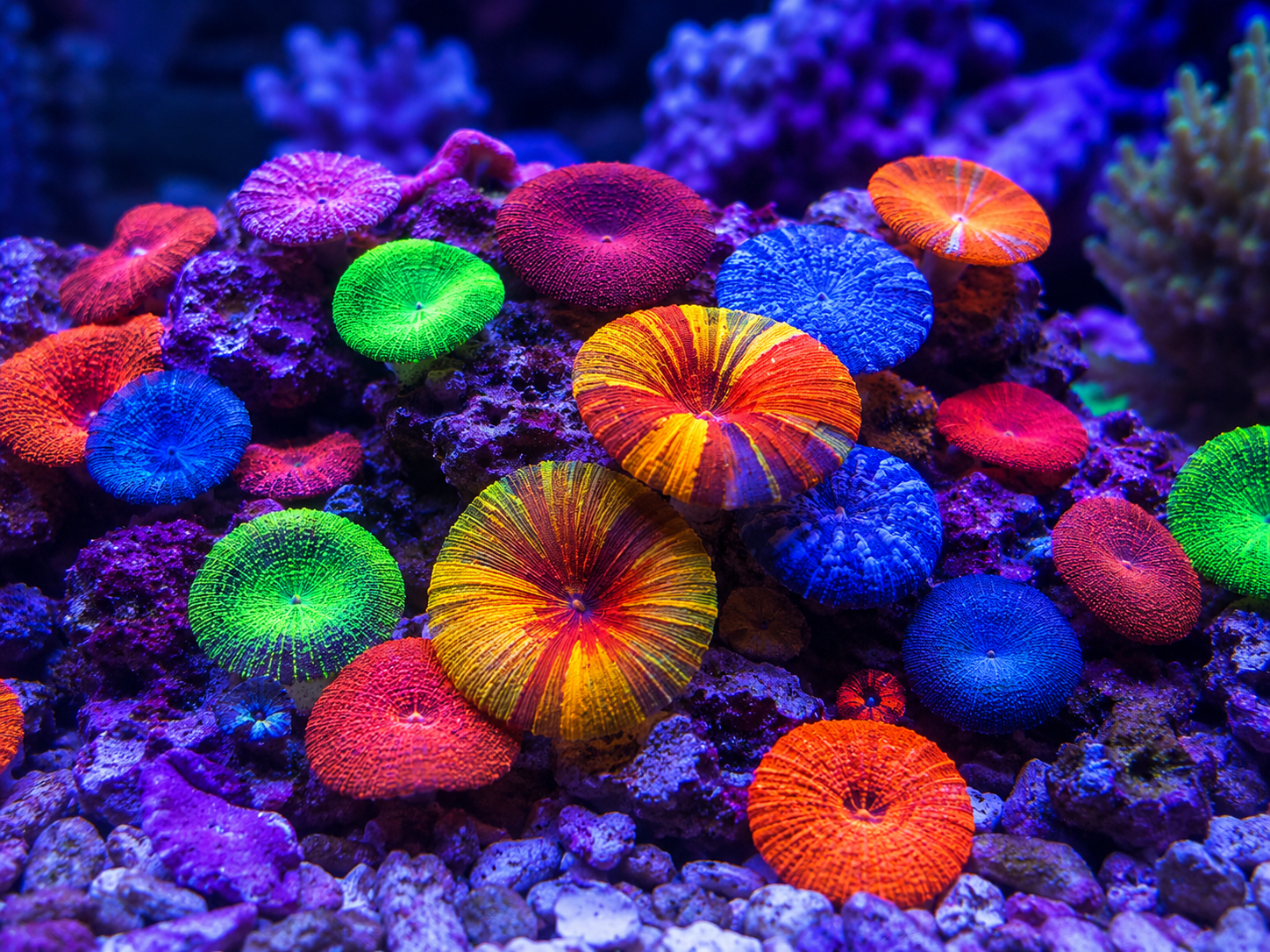
What Are Mushroom Corals?
Mushroom corals are corallimorphs, a group of soft-bodied reef animals that often look like flattened disks, cups, bubbles, or textured mats attached to rock or rubble. They do not build large calcium carbonate skeletons like hard corals. Instead, they attach to hard surfaces and expand their fleshy tissue under reef lighting.
In the aquarium hobby, mushroom corals are loved because they offer:
- Strong color under blue reef lighting
- Lower to moderate lighting requirements
- Good tolerance for stable nutrient-rich reef systems
- Interesting texture and shape variety
- Natural spreading or splitting over time
- Collector-level value in rare varieties
- Excellent use in mushroom gardens and lower reef zones
The most commonly discussed mushroom coral groups include Rhodactis, Discosoma, Ricordea, and collector bounce mushrooms. This article focuses mainly on Rhodactis and Discosoma because they are two of the most important and commonly collected mushroom groups.
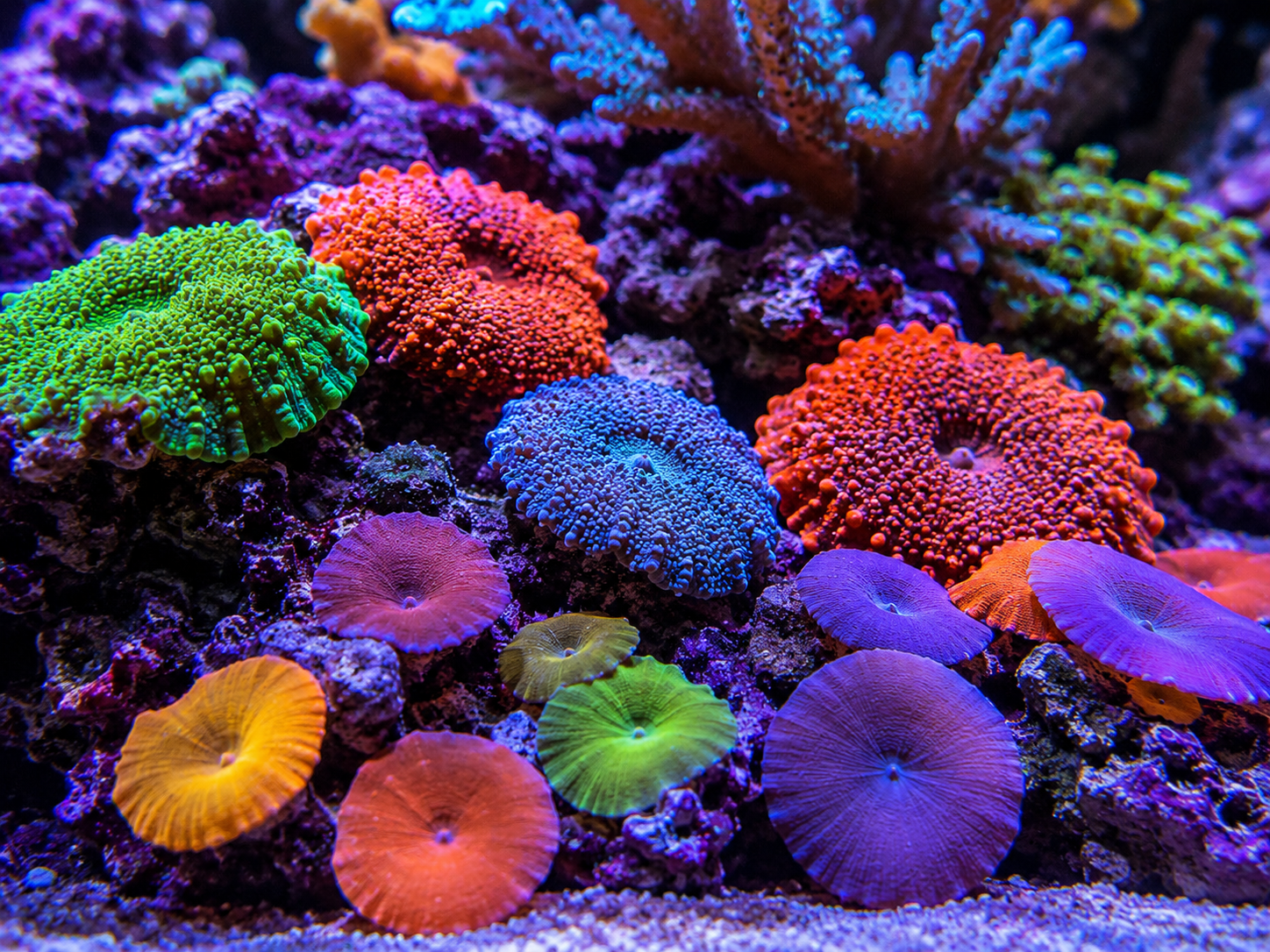
Rhodactis vs Discosoma: The Short Comparison
If you want the quick version, Rhodactis mushrooms are usually more textured, thicker, and more dramatic, while Discosoma mushrooms are usually smoother, flatter, and often better for classic mushroom garden growth. Rhodactis often attracts collectors because of bubble, bounce, hairy, metallic, and unusual color formations. Discosoma often appeals to reef keepers who want easier spreading color, classic mushroom shapes, and famous morphs such as Jawbreaker-style mushrooms.
| Feature | Rhodactis Mushrooms | Discosoma Mushrooms |
|---|---|---|
| Texture | Often bumpy, hairy, bubbly, ridged, or thick | Often smoother, flatter, or lightly textured |
| Collector Appeal | Very high for bounce, hairy, metallic, and rare morphs | Very high for Jawbreaker, striped, spotted, and rare color morphs |
| Lighting | Low to moderate; some collector pieces prefer gentle acclimation | Low to moderate; many do well in lower-light zones |
| Flow | Low to moderate indirect flow | Low to moderate indirect flow |
| Growth | Can spread, split, or enlarge; some grow slower | Often spreads more readily once settled |
| Placement | Rubble islands, lower rockwork, collector mushroom zones | Mushroom gardens, lower rockwork, isolated rocks, rubble zones |
| Main Risk | Too much light, too much flow, collector-piece damage | Unwanted spread, detachment, melting from stress |
Both groups can be hardy in stable reef tanks, but neither should be treated like a throwaway coral. The nicer the mushroom, the more important it becomes to protect it from harsh lighting, strong flow, pests, rough handling, and uncontrolled spreading neighbors.
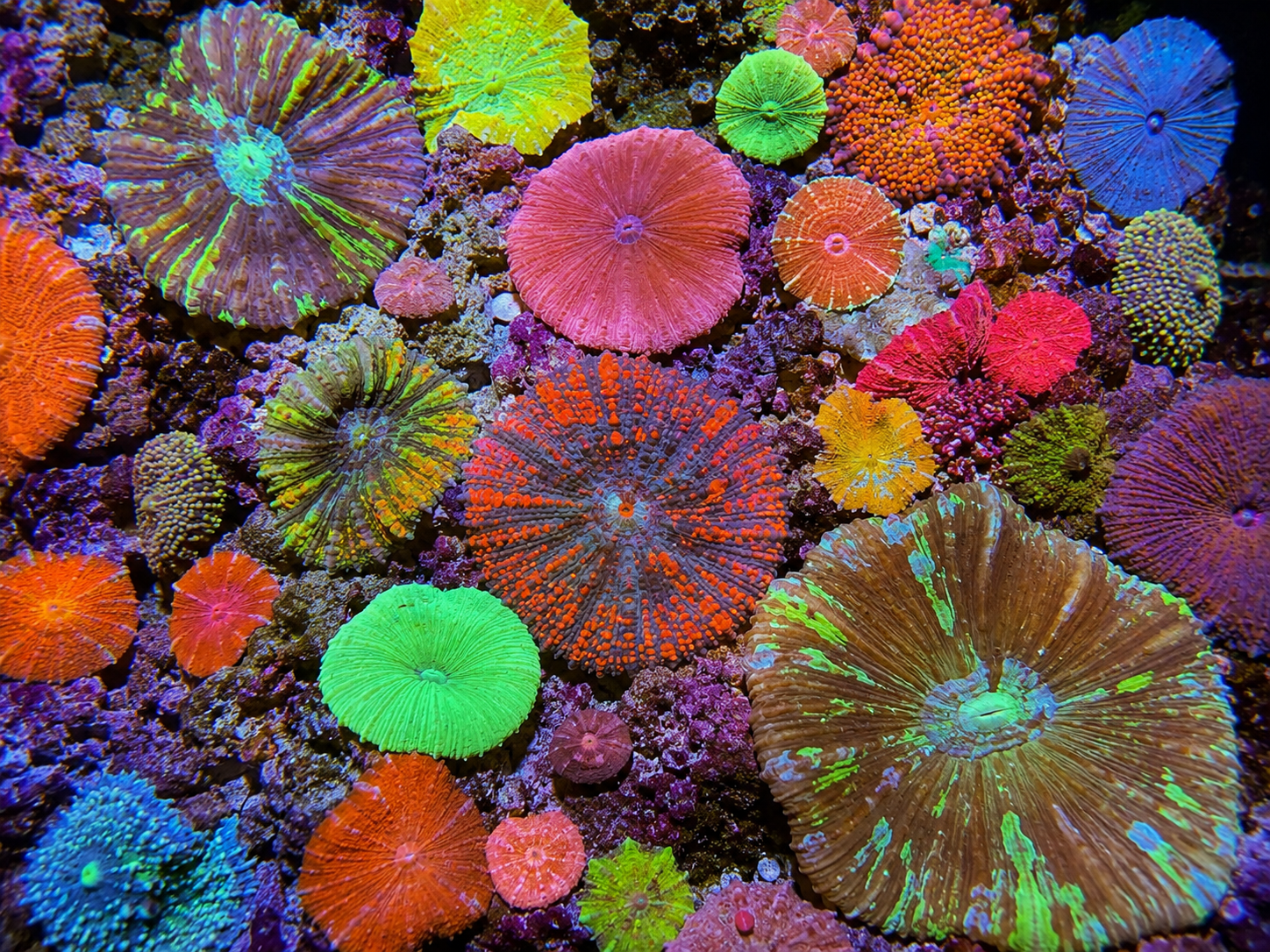
What Are Rhodactis Mushrooms?
Rhodactis mushrooms are thick, textured mushroom corals known for their bumpy surfaces, ridges, bubbles, hairy texture, and dramatic collector forms. Some Rhodactis mushrooms stay relatively simple and affordable, while others become high-value collector pieces because of their unusual patterns, enlarged vesicles, color contrast, or bounce formations.
In our experience, Rhodactis mushrooms are often the mushrooms that make reef keepers stop and look closer. Their texture gives them depth. Under blue lighting, many Rhodactis mushrooms show metallic greens, oranges, reds, purples, blues, yellows, and unusual combinations that can look very different from smoother Discosoma mushrooms.
Rhodactis mushrooms are popular because they can offer:
- Heavy texture and raised surface patterns
- Hairy or fuzzy-looking tissue
- Bubble or bounce formations in collector types
- Strong fluorescence under reef lighting
- Centerpiece appeal on rubble or lower rockwork
- Excellent collector value in rare morphs
Many hobbyists collect Rhodactis mushrooms the same way they collect rare Zoanthids or premium LPS corals. The exact pattern, bubble formation, color, size, and lineage can all influence value.
_1779386555.png)
What Are Discosoma Mushrooms?
Discosoma mushrooms are classic mushroom corals with soft, disk-like bodies that are often smoother and flatter than Rhodactis. They can be solid-colored, striped, spotted, marbled, speckled, metallic, or multi-colored. Many Discosoma mushrooms are forgiving, colorful, and excellent for mushroom gardens or lower-light reef zones.
Discosoma mushrooms are often a great choice for reef keepers who want color and spreading growth without the higher price tag of many collector Rhodactis or bounce mushrooms. That said, some Discosoma morphs are extremely collectible, especially famous color-shifting and multi-color types.
Discosoma mushrooms are popular because they can offer:
- Classic rounded mushroom shape
- Smooth or lightly textured tissue
- Strong lower-light tolerance
- Good beginner-to-intermediate care potential
- Natural spreading growth
- Famous collector morphs such as Jawbreaker-style mushrooms
If you want a colorful mushroom garden with steady spread, Discosoma mushrooms are often one of the best places to start.
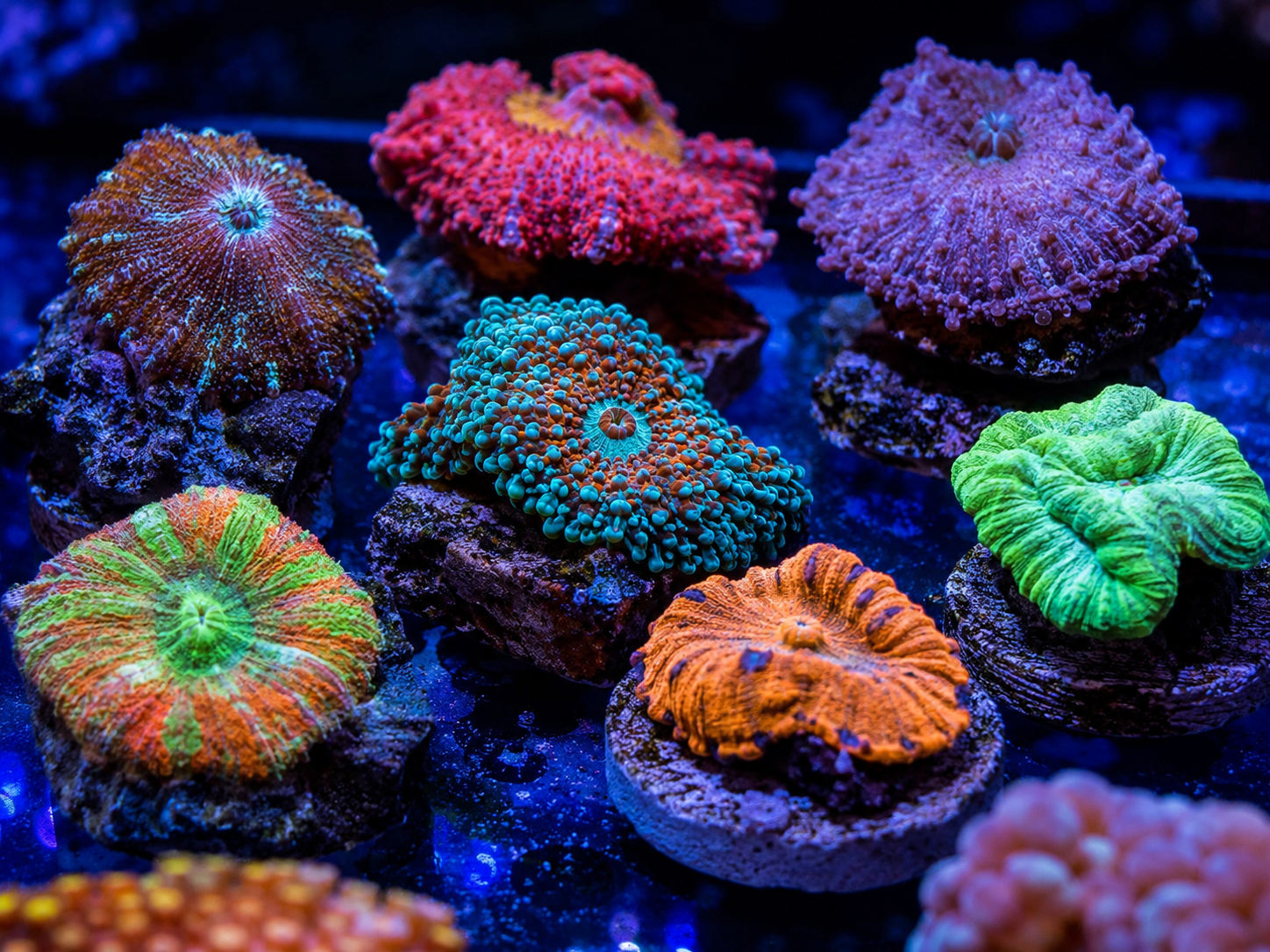
Rhodactis Mushroom Types Collected in the Hobby
Rhodactis mushrooms come in many forms, and the hobby names can vary by vendor, collector, and color pattern. The most important thing is to understand the major visual types instead of buying only by name.
Hairy Rhodactis Mushrooms
Hairy Rhodactis mushrooms have a fuzzy or tentacled texture that gives them a wild, natural appearance. They can be green, brown, metallic, orange, blue, or mixed-color depending on the specimen. These can get large, so placement should account for future expansion.
Bounce Rhodactis Mushrooms
Bounce mushrooms are among the most famous collector mushrooms. Many of the best-known bounce mushrooms are Rhodactis types that develop enlarged bubble-like vesicles across the surface. Those bubbles can be orange, yellow, green, red, blue, or multi-colored depending on the morph.
Metallic Rhodactis Mushrooms
Metallic Rhodactis mushrooms show reflective or glowing color under reef lighting. Green metallic Rhodactis, blue metallic Rhodactis, orange metallic Rhodactis, and mixed metallic varieties can be excellent mid-level collector pieces.
Tie-Dye and Multi-Color Rhodactis
Some Rhodactis mushrooms show blended colors, marbling, streaks, or irregular patterning that make every mushroom look different. These are often sold as tie-dye, rainbow, ultra, or multi-color Rhodactis depending on appearance.
Bullseye and Ring Pattern Rhodactis
Some Rhodactis mushrooms develop ringed centers, contrasting mouths, or circular color patterns. These can be excellent for collectors who like mushrooms with defined structure and symmetry.
Giant Rhodactis Mushrooms
Some Rhodactis mushrooms can grow very large compared with smaller collector mushrooms. These can make dramatic lower-rock or mushroom garden pieces, but they should be given room because they can shade or irritate nearby corals as they expand.
_1779386537.png)
Discosoma Mushroom Types Collected in the Hobby
Discosoma mushrooms are collected in many colors and patterns, from affordable classics to high-end named morphs. They often spread well once established, which makes them attractive for reef keepers building mushroom gardens.
Solid Color Discosoma Mushrooms
Solid red, blue, green, purple, orange, and brown Discosoma mushrooms are common entry points into mushroom collecting. Even simple color morphs can look excellent when grouped together on a mushroom island.
Striped Discosoma Mushrooms
Striped Discosoma mushrooms show lines or radial patterns across the disk. These can add texture and contrast to a mushroom garden, especially when mixed with solid-color mushrooms.
Spotted and Speckled Discosoma
Spotted Discosoma mushrooms can show dots, speckles, or irregular markings. Some become more interesting as they grow and develop additional patterning under stable aquarium conditions.
Jawbreaker-Style Discosoma Mushrooms
Jawbreaker mushrooms are one of the most famous collector-style Discosoma types. They are known for yellow, orange, red, green, and sometimes purple color development. Many start with one dominant color and develop more color as they mature, which is part of their appeal.
Marbled and Multi-Color Discosoma
Some Discosoma mushrooms show marbling, streaking, or multi-color patches. These can be especially attractive because each mushroom may develop a unique pattern over time.
Blue, Red and Green Classic Discosoma
Classic blue, red, and green Discosoma mushrooms remain popular because they are colorful, relatively forgiving, and useful for filling lower-light reef zones. They may not always have the collector price of rare morphs, but they are still valuable for creating a mature reef look.
What Are Bounce Mushrooms?
Bounce mushrooms are mushroom corals that develop enlarged bubble-like vesicles on the surface. Many famous bounce mushrooms are Rhodactis mushrooms, although the word “bounce” is often used broadly in the hobby for mushrooms with bubble formations. The bubbles are what create the high-end collector look.
Collectors value bounce mushrooms based on:
- Bubble size
- Bubble color
- Number of bubbles
- Base color
- Contrast under blue lighting
- Overall health and size
- Lineage or hobby name when known
In our experience, bounce mushrooms should be treated carefully. They often do best in low to moderate light, gentle indirect flow, and stable nutrients. Too much light or harsh flow can cause shrinking, loss of fullness, or stress. Expensive bounce mushrooms should be placed like collector corals, not tossed randomly into high-energy rockwork.
_1779386513.png)
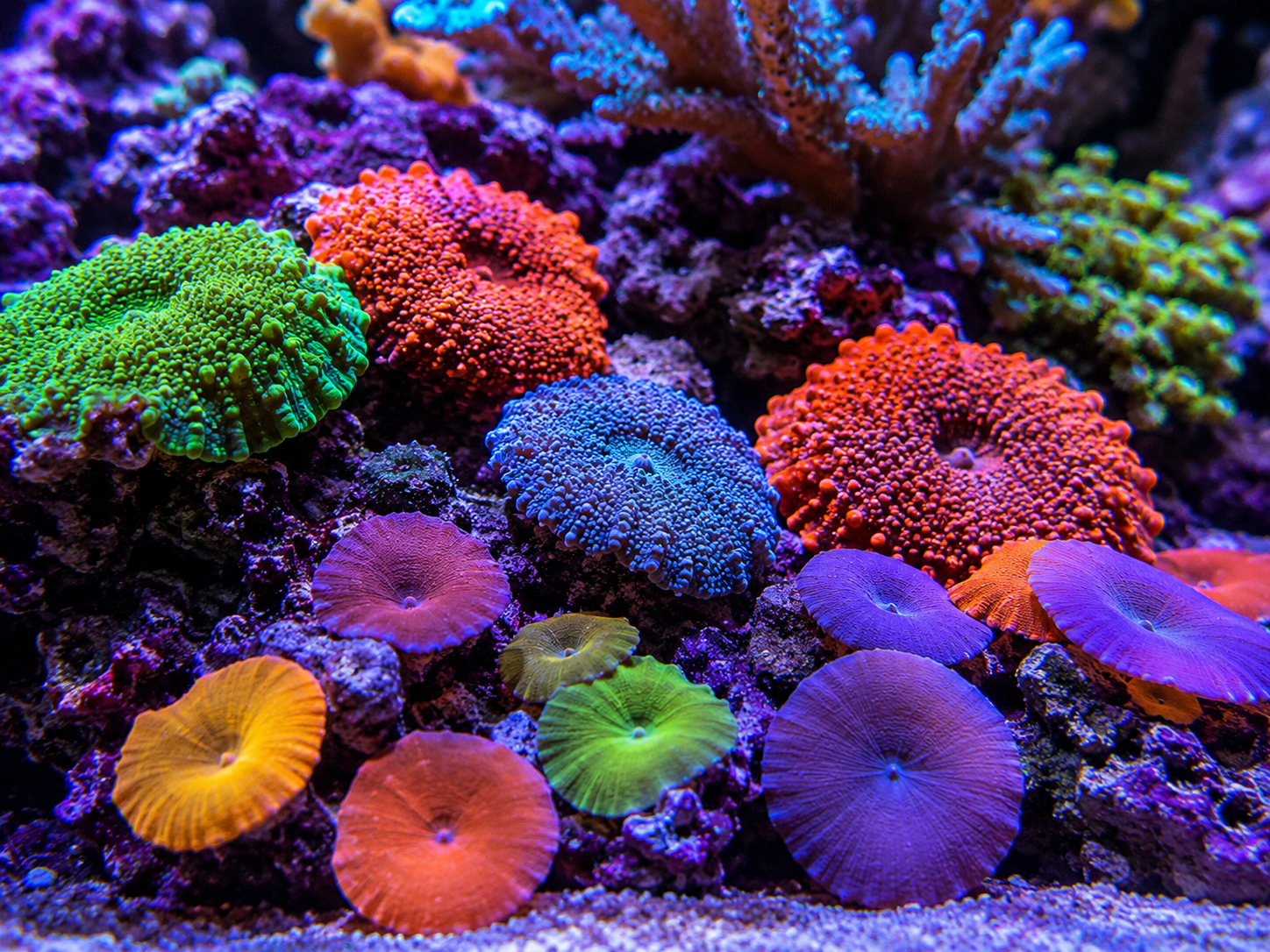
Rhodactis vs Discosoma Appearance
Appearance is the easiest way most hobbyists separate Rhodactis from Discosoma. Rhodactis usually looks thicker, more textured, and more three-dimensional. Discosoma usually looks smoother, flatter, and more disk-like. There are exceptions, but this is a useful starting point.
Rhodactis often shows:
- Bumpy or raised texture
- Hairy or fuzzy surfaces
- Bubble or bounce formations
- Thicker tissue
- More dramatic collector shapes
Discosoma often shows:
- Smoother disk-like tissue
- Flatter growth form
- Stripes, spots, marbling, or solid colors
- Classic mushroom garden appearance
- Natural spreading across rock or rubble
If you are shopping online, clear photos matter. Browse exact pieces when possible, and look at the mushroom’s surface, mouth, edge, color, and attachment point before buying.
Lighting for Rhodactis and Discosoma Mushrooms
Both Rhodactis and Discosoma mushrooms usually prefer low to moderate lighting. They are not high-light SPS corals, and many mushroom problems come from placing them too high under strong LEDs. A practical starting range is often around 50-100 PAR for many mushroom corals, with careful adjustment based on the specimen.
Rhodactis mushrooms, especially bounce or collector types, often need gentle light acclimation. Discosoma mushrooms are also commonly lower-light tolerant and may shrink, bleach, detach, or fade if moved into strong light too quickly.
Signs mushroom corals may be getting too much light include:
- Shrinking during peak lighting
- Faded or pale color
- Bleaching
- Detaching from the rock
- Moving or stretching away from the light
- Better expansion in shaded periods
Signs mushrooms may need better light include:
- Dull color over time
- Excessive stretching
- Slow growth despite stable nutrients
- Poor expansion in otherwise stable conditions
In our experience, most mushroom corals should be started lower and moved slowly if needed. For more lighting help, read our reef tank lighting guide.
Water Flow for Rhodactis and Discosoma Mushrooms
Both Rhodactis and Discosoma mushrooms prefer low to moderate indirect flow. They need enough water movement to prevent detritus buildup, but not enough direct current to make them fold, curl, detach, or stay closed.
Good mushroom coral flow should:
- Move gently around the mushroom
- Keep debris from settling on the tissue
- Allow the mushroom to stay open and relaxed
- Avoid direct powerhead blasts
- Support oxygen exchange and waste removal
Rhodactis mushrooms can sometimes tolerate slightly more flow than very delicate Discosoma, depending on the specimen, but direct flow is still a common mistake. Discosoma mushrooms are especially likely to detach if they are irritated by strong current.
If a mushroom is repeatedly letting go of the rock, flow is one of the first things to check. For more help, review our water flow and coral health guide.
Best Placement for Rhodactis Mushrooms
Rhodactis mushrooms are often best placed on lower rockwork, rubble islands, mushroom shelves, or dedicated collector zones where they receive low to moderate light and gentle indirect flow. High-value Rhodactis mushrooms should be placed where they can be observed easily and protected from aggressive neighbors.
Good Rhodactis placement options include:
- Lower rock shelves
- Rubble pieces in a mushroom garden
- Dedicated collector mushroom islands
- Low to moderate light zones
- Areas away from aggressive LPS corals
Because Rhodactis mushrooms can expand and some can grow large, do not place them where they will crowd expensive SPS, chalices, or fleshy LPS corals. Give them their own area and let them become a feature.
_1779386473.png)
Best Placement for Discosoma Mushrooms
Discosoma mushrooms are excellent for lower rockwork, rubble zones, shaded ledges, and mushroom gardens. Because many Discosoma mushrooms spread readily, placement should be planned from the start.
Good Discosoma placement options include:
- Isolated mushroom rocks
- Lower rockwork
- Rubble zones
- Partially shaded ledges
- Soft coral garden areas
If you place Discosoma directly on your main rock structure, be prepared for possible spreading. That can be great if you want a mushroom-covered area, but frustrating if they begin growing into premium coral space. For growth control, use rubble islands or isolated rocks.
Water Parameters for Rhodactis and Discosoma Mushrooms
Rhodactis and Discosoma mushrooms are usually more forgiving than many SPS and delicate LPS corals, but stable water still matters. Sudden salinity swings, temperature changes, nutrient crashes, and poor water quality can cause shrinking, detachment, melting, or color loss.
| Parameter | Recommended Range for Mushroom Corals |
|---|---|
| Temperature | 76-80°F |
| Salinity | 1.024-1.026 specific gravity |
| pH | 8.1-8.4 |
| Alkalinity | 8-10 dKH |
| Calcium | 400-450 ppm |
| Magnesium | 1250-1350 ppm |
| Nitrate | 5-15 ppm for many mushroom-focused systems |
| Phosphate | 0.03-0.10 ppm in many balanced mushroom systems |
In our experience, many mushroom corals look better in clean but not stripped reef water. Ultra-low nutrients can cause some mushrooms to shrink or lose fullness. Excessive nutrients can create algae problems around the colony. Balance is the goal.
For more chemistry help, read our reef tank water parameters guide and our guide to nitrates in reef tanks.
Feeding Rhodactis and Discosoma Mushrooms
Rhodactis and Discosoma mushrooms are photosynthetic, but they can also benefit from dissolved nutrients and fine foods in the water. Some larger Rhodactis mushrooms may capture small meaty foods, while many Discosoma mushrooms do fine with fish feeding and light broadcast foods.
Good feeding options may include:
- Fine coral foods
- Small suspended particle foods
- Zooplankton-based foods
- Phytoplankton-style foods when appropriate
- Small meaty foods for larger Rhodactis specimens
- Nutrients from normal fish feeding
Do not overfeed mushrooms. Too much food can fuel algae, irritate tissue, and create nutrient problems. A stable feeding routine and measurable nutrients are often better than heavy direct feeding.
Growth and Spread: Rhodactis vs Discosoma
Discosoma mushrooms often spread more readily across rockwork than many collector Rhodactis mushrooms, although this depends on the exact specimen. Discosoma may divide, detach, leave tissue behind, or produce baby mushrooms near the parent. Rhodactis can also split and spread, but some high-end Rhodactis and bounce mushrooms may grow more slowly.
Healthy mushroom growth may include:
- New baby mushrooms near the parent
- Gradual spreading across rubble
- Splitting or natural division
- Improved expansion and color
- Attachment to nearby rock pieces
Growth is good when it happens where you want it. Growth becomes a problem when mushrooms invade space meant for slower-growing corals. Use isolated rockwork if you want control.
Collector Value: Why Some Mushrooms Are Expensive
Mushroom coral pricing can vary dramatically. Some common Discosoma mushrooms are affordable, while rare Rhodactis bounce mushrooms or high-end Jawbreaker-style Discosoma mushrooms can be expensive collector pieces.
Collector value is influenced by:
- Color intensity
- Pattern uniqueness
- Bubble or bounce formation
- Rarity in the hobby
- Growth speed
- Size of the mushroom
- Lineage or hobby name
- Overall health and presentation
Expensive mushrooms should be treated like premium corals. Give them a stable zone, protect them from pests and aggression, and avoid experimenting with harsh light or flow.
How to Choose a Healthy Rhodactis or Discosoma Mushroom
When buying mushroom corals online, health matters more than name alone. A famous morph that is shrinking, melting, or badly detached is not a better purchase than a healthy mushroom that fits your tank.
Look for:
- Open, relaxed tissue
- Good color for that morph
- No melting or slimy decay
- Firm attachment when possible
- No obvious pest anemones or nuisance algae
- No torn or shredded tissue
- Clear photos of the actual mushroom
Be cautious with:
- Mushrooms that look melted or stringy
- Severe bleaching
- Loose mushrooms with damaged tissue
- Heavy algae growing into the tissue
- Specimens that are closed in every photo
- Overly fresh cuts that have not healed
At Extreme Corals, we always want customers to choose mushrooms that have the best chance to thrive, not just the most dramatic name.
Acclimation and Quarantine for Mushroom Corals
Mushroom corals can be hardy, but they should still be acclimated carefully. Shipping, dips, salinity differences, and sudden lighting changes can cause stress.
Good acclimation practices include:
- Temperature acclimate before transfer.
- Inspect tissue, plug, rubble, and rock carefully.
- Use coral dips only when appropriate and follow directions.
- Start new mushrooms in low to moderate light.
- Use gentle indirect flow.
- Keep loose mushrooms in a low-flow rubble container until attached.
- Avoid moving collector mushrooms repeatedly.
Quarantine is especially helpful for mushroom rocks because pests, algae, and hitchhikers can hide in the rock or plug. Read our coral quarantine guide for a full process.
Common Problems With Rhodactis and Discosoma Mushrooms
Mushroom Shrinking
Shrinking may be caused by too much light, too much flow, unstable salinity, pests, recent handling, nutrient starvation, or irritation from nearby corals.
Mushroom Detaching
Detachment often happens when mushrooms dislike the placement, especially if flow is too strong or lighting is too intense. Place loose mushrooms in a low-flow container with rubble so they can reattach naturally.
Mushroom Melting
Melting is a serious stress response that may come from shipping stress, bacterial issues, poor acclimation, unstable water, or tissue damage. Remove decaying tissue carefully and improve stability.
Loss of Bounce or Bubble Formation
Some bounce mushrooms may show different bubble development depending on light, nutrients, flow, growth stage, and the individual coral. Avoid harsh changes when trying to improve bubble formation.
Algae Around the Mushroom
Algae can irritate mushroom tissue and compete for space. Improve nutrient balance, use appropriate cleanup crew support, and carefully prevent algae from growing over the mushroom.
Pests and Hitchhikers
Flatworms, nudibranchs, pest anemones, vermetid snails, and nuisance algae can irritate mushrooms. If a mushroom declines without an obvious light or flow cause, review our coral pests and predators guide.
Propagation and Fragging Mushroom Corals
Rhodactis and Discosoma mushrooms can often be propagated, but expensive collector mushrooms should be handled carefully. Mushrooms can split naturally, leave tissue behind, or be cut by experienced hobbyists. Loose pieces can attach to rubble in low-flow containers.
Propagation methods include:
- Natural splitting
- Collecting baby mushrooms from rubble
- Cutting healthy mushrooms with clean tools
- Using rubble trays for loose mushrooms
- Allowing tissue remnants to develop naturally
Never cut a stressed, melting, or newly shipped mushroom. Let it settle first. For more general propagation guidance, review our coral fragging guide.
Best Tank Style for Rhodactis Mushrooms
Rhodactis mushrooms work well in collector mushroom tanks, mixed reefs, lower-light LPS systems, and dedicated mushroom gardens. They are especially useful when you want a coral that has more visual thickness and texture than standard smooth mushrooms.
Rhodactis is a good choice if you want:
- Collector mushroom pieces
- Bubble or bounce formations
- Hairy or heavily textured mushrooms
- Centerpiece mushroom corals
- Slower, more controlled mushroom collecting
_1779386412.png)
Best Tank Style for Discosoma Mushrooms
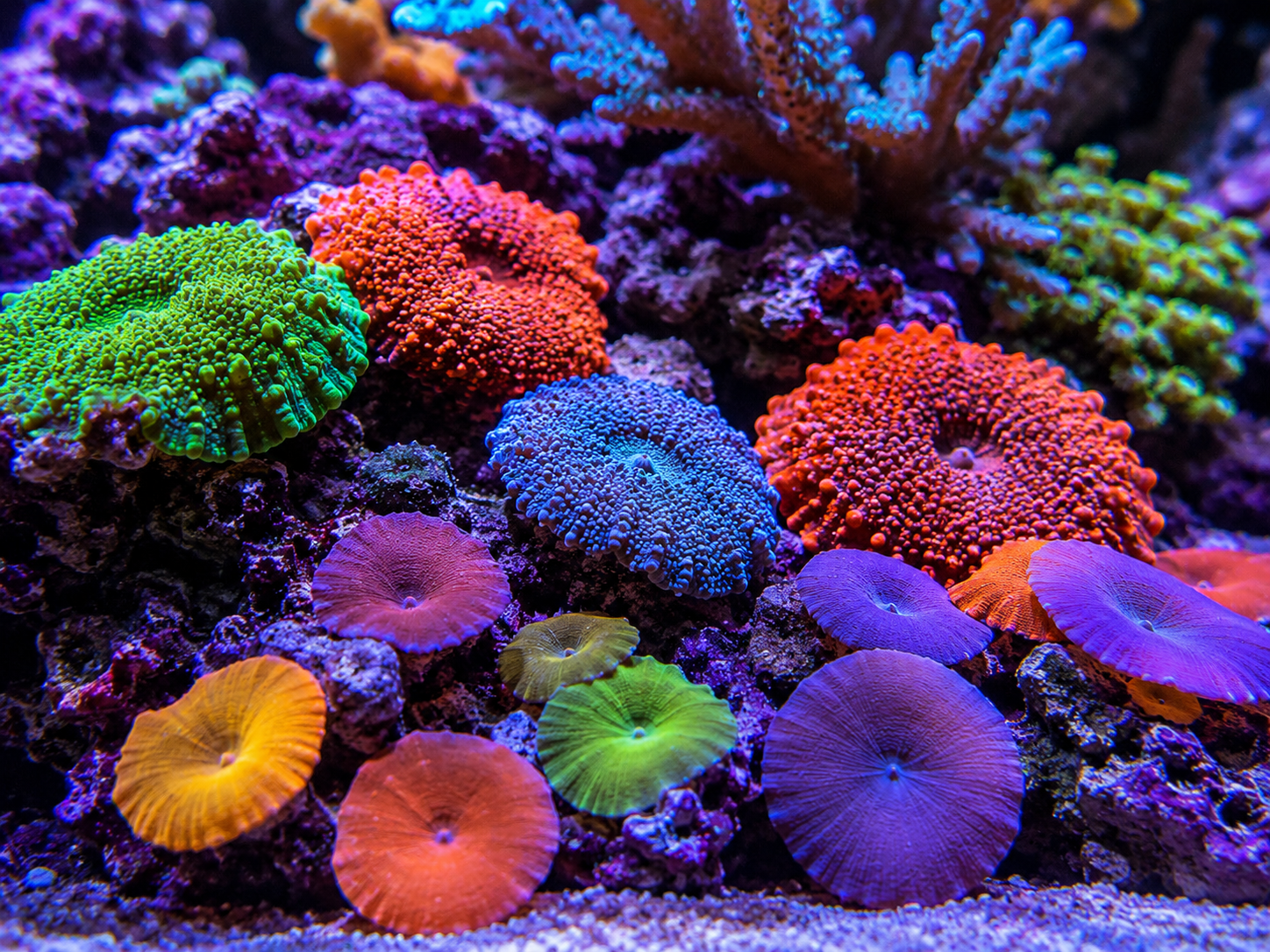
Discosoma mushrooms are excellent for classic mushroom gardens, beginner soft coral-style tanks, nano reefs, and lower-light zones. They are especially useful when you want color and natural spread without the price of many high-end collector Rhodactis mushrooms.
Discosoma is a good choice if you want:
- Classic mushroom garden growth
- Lower-light color
- Beginner-friendly mushroom options
- Rubble island spread
- Jawbreaker-style collector possibilities
Can Rhodactis and Discosoma Be Kept Together?
Yes, Rhodactis and Discosoma mushrooms can usually be kept in the same reef tank and even in the same mushroom garden if spacing and growth are managed. The main concern is not usually aggressive stinging like some LPS corals. The main concern is crowding, shading, overgrowth, and one mushroom type spreading into another’s space.
Tips for keeping them together:
- Use rubble islands for growth control.
- Leave space between expensive collector mushrooms.
- Keep fast-spreading Discosoma away from high-value Rhodactis.
- Use lower to moderate light for both groups.
- Avoid strong direct flow.
- Watch for mushrooms growing over each other.
A mixed mushroom garden can be one of the most colorful areas in a reef tank when planned correctly.
Rhodactis vs Discosoma: Which One Should You Buy?
Choose Rhodactis if you want texture, collector value, bounce potential, hairy forms, and dramatic centerpiece mushrooms. Choose Discosoma if you want classic mushroom color, easier spreading growth, lower-light coverage, and famous smooth-disk collector morphs such as Jawbreaker-style mushrooms.
For many reef keepers, the best answer is both. A strong mushroom collection can include Rhodactis for texture and collector appeal, Discosoma for color and spread, and Ricordea for bubble-like surface detail and bright contrast.
Before buying, ask:
- Do I want a collector mushroom or a spreading mushroom garden?
- Do I have a lower-light area ready?
- Can I provide gentle indirect flow?
- Do I want growth control with rubble islands?
- Is the mushroom healthy, attached, and free of obvious damage?
- Will this mushroom have room as it grows?
Related Mushroom Corals and Reef Guides
If you are comparing Rhodactis and Discosoma mushrooms, these related coral categories and guides can help you build a better mushroom coral collection:
- Rhodactis Mushrooms - Browse available Rhodactis mushrooms and collector mushroom corals.
- Discosoma Mushrooms - Shop classic Discosoma mushroom corals for reef tanks.
- Ricordea Mushrooms - Compare another popular mushroom coral group.
- Discosoma Mushroom Care Guide - Learn detailed Discosoma care, placement, and growth control.
- Ricordea Coral Care Guide - Compare Ricordea care with Rhodactis and Discosoma.
- Bounce Mushroom Coral Care Guide - Learn care for collector bounce mushrooms.
- Coral Placement Guide - Plan mushroom placement, light, flow, and spacing.
- New Arrival Corals - See recently added corals and mushroom pieces.
Shop Rhodactis, Discosoma and Mushroom Corals
Rhodactis and Discosoma mushrooms are both worth collecting, but they serve different roles in a reef tank. Rhodactis mushrooms bring texture, bounce potential, hairy forms, and collector appeal. Discosoma mushrooms bring classic mushroom color, smoother shapes, lower-light growth, and excellent mushroom garden potential.
Browse Rhodactis mushrooms, Discosoma mushrooms, Ricordea mushrooms, soft corals, and new arrival corals at ExtremeCorals.com to find healthy mushroom corals that fit your reef tank.
Frequently Asked Questions About Rhodactis and Discosoma Mushrooms
What is the difference between Rhodactis and Discosoma mushrooms?
Rhodactis mushrooms are usually thicker, more textured, bumpy, hairy, or bubbly, while Discosoma mushrooms are often smoother, flatter, and more disk-like. Both are popular mushroom corals but have different collector appeal and growth behavior.
Are Rhodactis mushrooms harder to keep than Discosoma mushrooms?
Both can be hardy in stable reef tanks, but high-end Rhodactis and bounce mushrooms should be handled more carefully because of their collector value and sensitivity to harsh light or flow.
Are Jawbreaker mushrooms Rhodactis or Discosoma?
Jawbreaker-style mushrooms are generally associated with Discosoma mushrooms in the reef aquarium hobby. They are known for yellow, orange, red, green, and sometimes purple color development.
Are bounce mushrooms Rhodactis?
Many famous bounce mushrooms are Rhodactis mushrooms, although the hobby sometimes uses the word bounce broadly for mushrooms with enlarged bubble-like vesicles.
How much light do Rhodactis and Discosoma mushrooms need?
Most Rhodactis and Discosoma mushrooms do best under low to moderate lighting, often around 50-100 PAR as a starting point. Strong lighting should be introduced slowly.
What flow is best for mushroom corals?
Mushroom corals usually prefer low to moderate indirect flow. Strong direct flow can cause shrinking, curling, detachment, or poor expansion.
Can Rhodactis and Discosoma mushrooms grow together?
Yes, they can grow together in the same reef tank, but spacing and growth control matter. Fast-spreading mushrooms should be kept away from expensive collector pieces.
Do Rhodactis and Discosoma mushrooms need feeding?
They are photosynthetic and often do well from light, dissolved nutrients, and normal fish feeding. Some larger Rhodactis may accept small foods, but heavy feeding is usually unnecessary.
Why did my mushroom coral detach?
Mushrooms may detach if flow is too strong, light is too intense, the surface is unstable, or the coral is stressed. Loose mushrooms can be placed in a low-flow rubble container to reattach.
Which mushroom coral is best for beginners?
Many classic Discosoma mushrooms are excellent beginner mushroom corals because they are colorful, forgiving, and often adapt well to lower-light reef zones. Rhodactis can also be beginner friendly when not treated harshly.
About the Author
Scott Shiles is the owner of ExtremeCorals.com, which he has operated for over 25 years and is recognized as one of the early dedicated live coral websites on the internet. A lifelong reef keeper since 1984, Scott has decades of hands-on experience maintaining marine aquariums and previously owned and operated a brick and mortar aquarium retail store for 10 years, including five years alongside Extreme Corals. He holds a degree in Marine Biology and has personally selected and sold hundreds of thousands of live corals. An avid scuba diver who has explored reef systems around the world, Scott shares practical coral care and husbandry knowledge based on real world reef experience.
overall rating:
my rating:
log in to rate
Please log in to leave a comment.
For more information visit: additional resources