My Cart: 0 item(s)

Extreme Corals News and Updates
Hammer Coral Care Guide: How We Keep Euphyllia Healthy, Growing and Fully Extended
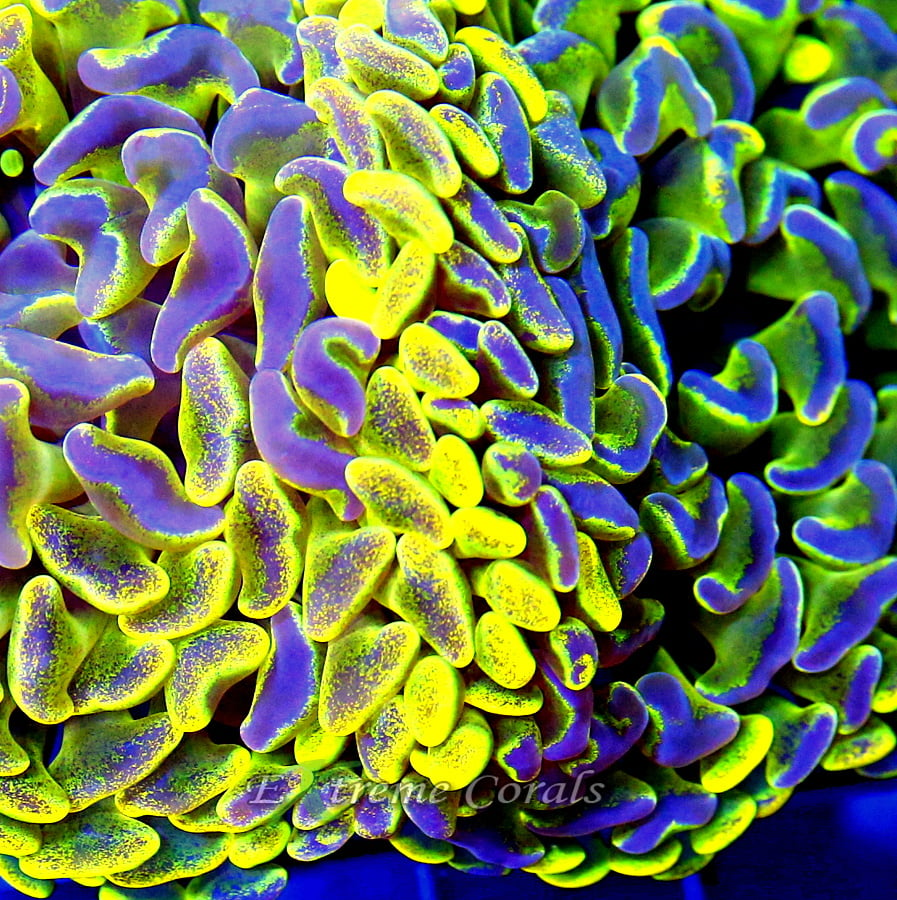
A comprehensive, experience-based Hammer Coral care guide from Extreme Corals covering lighting, flow, placement, water parameters, feeding, branching vs wall hammers, aggression, growth and common problems.
Learn Hammer Coral care from Extreme Corals, including Euphyllia lighting, flow, placement, feeding, water parameters, branching vs wall hammers, pests, aggression and growth.
by Scott Shiles • May 13, 2026
Looking to add a Hammer Coral to your reef tank? Hammer Corals are one of the most important and popular LPS corals we sell at Extreme Corals because they offer exactly what many reef keepers want: movement, color, size, personality, and long-term growth without the extreme difficulty of many SPS corals. Browse our Hammer Corals and other LPS corals for sale to find healthy WYSIWYG pieces for your reef tank.
Hammer Coral care is not difficult once you understand what this coral is asking for: stable water, moderate light, moderate indirect flow, and enough space to expand. In our experience at Extreme Corals, most Hammer Coral problems do not come from the coral being “hard.” They come from placement mistakes, direct powerhead flow, unstable alkalinity, shipping stress, coral aggression, or putting a fresh Hammer Coral under lighting that is too strong too quickly.
Here at Extreme Corals, we have personally selected and sold a tremendous number of Euphyllia-style corals over the years, including Hammer Corals, Frogspawn Corals, Torch Corals, and related LPS corals. Hammer Coral remains one of the best choices for reef keepers who want a coral that looks alive in the tank. The flowing tentacles move with the current, the heads can multiply over time, and a healthy colony can become one of the main visual anchors in a mixed reef aquarium.
This complete Hammer Coral care guide covers lighting, flow, placement, water parameters, feeding, branching vs wall Hammer Corals, coral aggression, growth, fragging, pests, disease, acclimation, how to choose a healthy specimen, and how to avoid the most common mistakes. If you are building a reef around LPS corals, you may also want to read our coral care guide, coral placement guide, and coral aggression guide.
What Is Hammer Coral?
Hammer Coral is a large polyp stony coral best known for its hammer-shaped, anchor-shaped, or T-shaped tentacle tips. In the reef aquarium hobby, Hammer Corals are usually associated with Euphyllia ancora and Euphyllia parancora, although coral taxonomy has shifted over time and some Euphyllia-style corals have been reclassified by scientists.
For practical reef keeping, most hobbyists still use the name Hammer Coral because the appearance is easy to recognize. The coral has a hard calcium carbonate skeleton and soft fleshy polyps that extend during the day. When healthy, the tentacles sway gently in the current, giving the coral the movement that makes Euphyllia corals so popular.
Hammer Coral is popular because it offers:
- Excellent movement in reef tank flow
- Bright green, gold, purple, teal, and bi-color varieties
- More forgiving care than many demanding SPS corals
- Strong centerpiece potential in mixed reef tanks
- Branching varieties that can grow into impressive colonies
- A classic LPS coral look that customers ask for again and again
In our experience, Hammer Coral is one of the best “next step” corals after a reef keeper has learned the basics with soft corals, mushrooms, and beginner LPS corals. It is not fragile when conditions are stable, but it does require respect for flow, spacing, and alkalinity stability.
Why Hammer Coral Is One of the Most Important LPS Corals
Hammer Coral has earned its place as a reef tank favorite because it checks so many boxes. It is colorful, expressive, fairly adaptable, and impressive as it grows. A single healthy frag can become a larger colony over time, and a mature Hammer Coral can completely change the look of a reef tank.
Here at Extreme Corals, we consider Hammer Coral an important coral because it appeals to both newer and experienced reef keepers. Beginners like that it is not as demanding as Acropora. Experienced reef keepers like that high-quality Hammer Corals can add movement, color contrast, and a large-polyp focal point to an established reef.
Hammer Coral works especially well in:
- Mixed reef aquariums
- LPS coral gardens
- Reef tanks that need more movement
- Lower to middle aquascape zones
- Displays built around Euphyllia corals
- Customer tanks that already maintain stable alkalinity and salinity
The reason we take Hammer Coral seriously is simple: it is often a customer’s first true showpiece LPS coral. When it does well, it builds confidence and makes the reef tank look more mature. When it struggles, the cause is usually something that could have been prevented with better placement or stability.
Hammer Coral Appearance and Color Varieties
Hammer Corals are available in several colors and growth forms. The most common varieties include green, neon green, gold, purple-tip, teal, and bi-color Hammer Corals. Some pieces show bright contrasting tips, while others have more uniform color across the tentacles.
Common Hammer Coral traits include:
- Hammer-shaped or anchor-shaped tentacle tips
- Flowing polyp movement during the day
- Branching or wall-style skeleton growth
- Bright fluorescence under blue reef lighting
- Moderate expansion when comfortable
- Clear stress response when flow, light, or water chemistry is wrong
Color is important, but tissue health matters more. A healthy Hammer Coral should have fleshy tissue extending over the skeleton, no brown jelly, no exposed sharp skeleton cutting into tissue, no spreading recession, and no obvious pest irritation.
Branching Hammer Coral vs Wall Hammer Coral
One of the most important things to understand before buying a Hammer Coral is the difference between branching Hammer Coral and wall Hammer Coral. They may look similar when expanded, but they behave differently in reef tanks.
Branching Hammer Coral
Branching Hammer Coral grows separate heads on branching skeletons. In our experience, this is usually the better choice for most reef keepers, especially customers who are newer to Euphyllia corals. Branching Hammer Corals are easier to place, easier to frag, easier to inspect, and often recover better if one head is damaged because the other heads may remain healthy.
Branching Hammer Coral advantages include:
- Easier to frag as the colony grows
- Better recovery potential if one head is damaged
- More manageable colony structure
- Good choice for many mixed reef tanks
- Usually more beginner-friendly than wall varieties
Wall Hammer Coral
Wall Hammer Coral grows as a continuous line of tissue over a wall-like skeleton. These pieces can be beautiful and dramatic, but they are often more sensitive to damage, shipping stress, and tissue recession. If recession starts on one part of a wall Hammer Coral, it can sometimes spread along the continuous tissue more easily than it would in a branching colony.
Wall Hammer Coral considerations include:
- Can create a dramatic large-polyp display
- More difficult to frag safely
- More sensitive to tissue damage
- Needs very careful placement and flow
- Best for reef keepers with stable systems and LPS experience
For most customers, I would rather see a healthy branching Hammer Coral placed correctly than a wall Hammer Coral forced into a tank that is not ready for it. Both can be beautiful, but branching types are generally more forgiving.
Best Water Parameters for Hammer Coral
Hammer Corals thrive when water chemistry is stable. They are not as demanding as many SPS corals, but they are very sensitive to sudden swings, especially alkalinity and salinity swings. A Hammer Coral can look great one week and then retract badly after a sharp alkalinity change.
| Parameter | Recommended Range |
|---|---|
| Temperature | 76-80°F |
| Salinity | 1.024-1.026 specific gravity |
| pH | 8.1-8.4 |
| Alkalinity | 8-10 dKH |
| Calcium | 400-450 ppm |
| Magnesium | 1250-1350 ppm |
| Nitrate | 2-10 ppm |
| Phosphate | 0.03-0.07 ppm |
In our experience, stability beats perfection. A Hammer Coral kept at a steady alkalinity of 8.5 dKH will usually do better than one bounced between 7.5 and 10.5 because the hobbyist keeps trying to chase numbers. The coral wants consistency.
Important water quality notes for Hammer Coral:
- Alkalinity stability matters most. Sudden alkalinity swings are one of the most common causes of Euphyllia stress.
- Salinity should not drift. Use a reliable refractometer and an automatic top-off system if possible.
- Do not strip nutrients to zero. Hammer Corals usually look better in clean but not sterile water.
- Magnesium supports stability. Low magnesium can make calcium and alkalinity harder to maintain.
- Temperature spikes can trigger stress. Keep the tank stable during seasonal changes.
For a deeper explanation of reef chemistry, read our reef tank water parameters guide.
Lighting Requirements for Hammer Coral
Hammer Corals usually prefer moderate reef lighting. They do not need the high intensity often used for Acropora and other SPS corals. In many reef tanks, a practical starting range is around 75-150 PAR, depending on the coral’s previous lighting, tank depth, fixture type, and overall health.
One of the biggest mistakes we see is placing a new Hammer Coral too high under strong LED lighting. The coral may look bright at first, but over time it can become pale, retracted, or stressed. Hammer Corals are photosynthetic, but more light is not always better.
Signs a Hammer Coral may be getting too much light include:
- Faded or washed-out color
- Shorter tentacle extension during peak lighting
- Bleaching or pale tissue
- Tissue pulling tight against the skeleton
- Better expansion in shaded periods
Signs a Hammer Coral may need more suitable light include:
- Dull color over time
- Reduced growth despite stable parameters
- Stretching toward the light
- Poor daytime fullness in an otherwise healthy tank
Here at Extreme Corals, we prefer to see customers start new Hammer Corals in moderate light and then adjust slowly. A coral can usually adapt upward if done carefully, but a coral shocked by strong lighting can decline quickly. For more help with PAR, spectrum, and acclimation, read our reef tank lighting guide.
Water Flow for Hammer Coral
Flow is one of the most important parts of Hammer Coral care. The right flow makes the tentacles sway gently and naturally. The wrong flow can keep the coral closed, tear tissue, expose skeleton, or cause long-term recession.
Hammer Corals need moderate indirect flow. The tentacles should move back and forth in a soft rhythmic motion. They should not be pinned in one direction, whipped violently, or blasted by a direct powerhead stream.
Good Hammer Coral flow should:
- Create gentle, natural tentacle movement
- Prevent detritus from settling between heads
- Support gas exchange and waste removal
- Allow full polyp extension
- Avoid direct pump output
Too much flow can cause:
- Torn tissue near the skeleton
- Short, tight, or retracted polyps
- One-sided recession facing the pump
- Failure to fully extend
- Long-term irritation
Too little flow can cause:
- Detritus buildup between heads
- Reduced oxygen exchange
- Film or debris collecting on tissue
- Poor overall extension
In our experience, if a Hammer Coral is not opening, flow is one of the first things to check. Many customers assume lighting or chemistry is the problem, but the coral may simply be getting blasted from one direction. For more flow help, read our water flow and coral health guide.
Best Placement for Hammer Coral
Placement is critical for Hammer Coral success. A Hammer Coral should be placed where it gets moderate light, moderate indirect flow, room to expand, and enough distance from aggressive neighbors. It should not be wedged tightly into rockwork where the tissue rubs against stone or neighboring coral skeletons.
Good Hammer Coral placement options include:
- Middle to lower rockwork
- LPS coral zones with moderate lighting
- Areas with indirect, swaying flow
- Stable shelves where the skeleton is secure
- Open areas with room for expansion and growth
Avoid placing Hammer Coral:
- Directly in front of a powerhead
- At the very top of the tank under intense light
- Against sharp rock where tissue can scrape
- Too close to Torch Corals, chalices, Galaxea, or aggressive brain corals
- In sand where the flesh can be irritated or buried
Here at Extreme Corals, we usually advise customers to place Hammer Coral where the tentacles can open naturally without being forced. The coral should look relaxed. If it looks like it is fighting the flow or shrinking from the light, the placement needs adjustment.
For a full strategy on light, flow, spacing, and aggression, review our coral placement guide.
Hammer Coral Aggression and Sweeper Tentacles
Hammer Coral is not as aggressive as many Torch Corals, but it can still sting nearby corals. It can extend sweeper tentacles, especially at night, and those tentacles can irritate or damage neighboring corals if spacing is too tight.
Hammer Coral aggression matters because:
- Its tentacles can contact nearby corals after dark
- Neighboring corals can sting it back
- Crowded placement increases stress
- Sting damage can lead to tissue recession
- Small frags need room to become larger colonies
A common mistake is placing a small Hammer Coral frag close to other corals because it looks harmless at first. Six months later, the coral has grown, the tentacles reach farther, and the aquascape is suddenly too crowded.
Leave space around Hammer Corals. If you are building a Euphyllia garden, remember that Hammer and Frogspawn Corals are often more compatible with each other than Torch Corals are, but even then, spacing and observation matter. For a deeper explanation, read our coral aggression guide.
Can Hammer Coral Touch Frogspawn or Torch Coral?
Hammer Corals and Frogspawn Corals are often kept near each other because they are closely related and usually more tolerant of each other than many unrelated corals. However, “usually tolerated” does not mean guaranteed. Different specimens can react differently, especially if flow pushes them into constant contact.
Torch Corals are a different story. Torches are often more aggressive and can damage Hammer Corals if placed too close. I generally recommend giving Torch Corals more space and not assuming they can safely touch Hammer or Frogspawn Corals.
Practical Euphyllia spacing advice:
- Hammer and Frogspawn may be placed near each other with caution.
- Torch Corals should usually be given more separation.
- Watch the tank after lights out for sweeper extension.
- Do not let flow force corals to rub constantly.
- Leave room for future growth, not just current frag size.
If you enjoy Euphyllia corals, compare this guide with our Frogspawn Coral care guide and Torch Coral care guide.
Feeding Hammer Coral
Hammer Corals are photosynthetic and get much of their energy from zooxanthellae inside their tissue, but they can benefit from occasional feeding. Feeding is not mandatory in every tank, but it can support growth, tissue fullness, and recovery when done correctly.
Good foods for Hammer Coral include:
- Mysis shrimp
- Small LPS coral pellets
- Finely chopped marine shrimp
- Small meaty reef foods
- Zooplankton-based coral foods
Feed small portions. Large food pieces can be rejected or sit on the coral too long. Heavy feeding can also raise nutrients and create algae or bacterial issues. For most reef tanks, one light feeding per week, or occasional feeding when the coral shows a feeding response, is enough.
In our experience, feeding can help, but it does not replace stable water, correct light, and proper flow. A poorly placed Hammer Coral will not be fixed by feeding more. Fix placement and stability first.
Hammer Coral Growth Rate
Branching Hammer Corals can grow steadily under stable reef conditions. New heads form gradually, and over time a single frag can become a larger colony. Growth rate depends on lighting, flow, alkalinity stability, nutrients, feeding, and the health of the original coral.
Signs of healthy Hammer Coral growth include:
- New heads forming at the base or branch tips
- Consistent polyp extension
- Flesh staying full around the skeleton
- Stable or improving color
- Gradual increase in colony size
Hammer Coral growth is not instant. Some pieces settle quickly, while others take time before showing new heads. A coral that is open, colorful, and stable is already showing success even before obvious new growth appears.
How to Frag Hammer Coral
Branching Hammer Corals can often be fragged when the colony has enough branch length and healthy tissue. Wall Hammer Corals are much harder to frag and are not recommended for casual fragging because the continuous tissue is easier to damage.
Basic branching Hammer Coral fragging principles include:
- Only frag healthy, established colonies.
- Cut the hard skeleton below the living tissue.
- Never cut through inflated flesh.
- Use clean coral-cutting tools.
- Give fresh frags gentle flow and stable water.
- Watch for tissue damage or brown jelly after cutting.
If you are new to fragging, do not start with an expensive showpiece Hammer Coral. Practice careful technique and understand coral anatomy first. You can review our coral fragging guide before cutting any valuable Euphyllia coral.
How to Choose a Healthy Hammer Coral Online
When shopping for Hammer Coral online, clear photos and tissue health matter. The best Hammer Coral is not just the brightest piece. It is the coral with healthy tissue, good extension, clean skeleton, and no signs of disease or recession.
Look for:
- Full, extended polyps
- Good tissue coverage over the skeleton
- No brown jelly or slimy decay
- No exposed skeleton cutting into flesh
- Stable color without severe bleaching
- No obvious pests or algae around the base
- Clean branching structure if buying a branching Hammer Coral
Be cautious with:
- Heads that are tightly retracted in every photo
- Tissue recession at the base
- Brown jelly or cloudy tissue
- Fresh cuts too close to living tissue
- Bleached or washed-out specimens
- Damaged wall Hammer Corals
At Extreme Corals, WYSIWYG selection matters because you want to know the actual coral you are buying. For the best results, choose a coral that looks healthy and also fits your tank conditions.
Acclimation and Quarantine for Hammer Coral
New Hammer Corals should be acclimated carefully. Shipping, temperature changes, dips, and lighting differences can all stress Euphyllia corals. A coral that looked great before shipping may need time to reopen after arrival.
Good acclimation practices include:
- Temperature acclimate the coral before transfer.
- Inspect the skeleton and tissue for damage.
- Check for pests, algae, or recession around the base.
- Use coral dips only when appropriate and follow directions exactly.
- Start in moderate or slightly lower light.
- Use gentle to moderate indirect flow.
- Avoid moving the coral repeatedly once placed.
Quarantine is a smart practice, especially for valuable LPS corals. It allows you to observe tissue health, pest issues, and recovery after shipping before the coral enters the main display. For a complete process, review our coral quarantine guide.
Common Hammer Coral Problems
Most Hammer Coral problems are fixable if they are caught early. The key is to look at the coral and then work backward through recent changes in lighting, flow, water chemistry, placement, and neighboring corals.
Hammer Coral Not Opening
A Hammer Coral that will not open may be reacting to too much flow, too little flow, excessive light, unstable alkalinity, salinity swings, pests, fish irritation, or nearby coral aggression. In our experience, direct flow and recent parameter swings are two of the first things to check.
Tissue Recession
Tissue recession may appear as flesh pulling away from the skeleton. Common causes include alkalinity swings, direct flow, shipping damage, stings from nearby corals, pest irritation, or tissue rubbing against rock. Once recession starts, stable conditions and reduced irritation are critical.
Brown Jelly Disease
Brown jelly disease is one of the most serious Euphyllia problems. It appears as brown, slimy, decaying tissue and can move quickly. If suspected, isolate the coral if possible, improve water quality, increase appropriate indirect flow, remove decaying tissue carefully, and consider a coral dip when appropriate. Do not ignore brown jelly.
Bleaching or Faded Color
Bleaching or fading is often connected to excessive light, heat stress, nutrient issues, or rapid changes. If a Hammer Coral fades after being placed high in the tank, reduce light exposure gradually and allow time for recovery.
Torn Tissue
Torn tissue often comes from direct flow, rough handling, fish damage, or the coral rubbing against rock. Hammer Coral flesh is delicate where it meets the skeleton. Preventing tissue tears is much easier than recovering from them.
Pests and Irritation
Flatworms, pest algae, vermetid snails, and other hitchhikers can irritate Hammer Coral. Inspect the skeleton, base, and nearby rock. If a coral declines without an obvious light, flow, or chemistry issue, review our coral pests and predators guide.
Fish and Invertebrates That May Bother Hammer Coral
Hammer Coral is usually safe with many peaceful reef fish, but some fish and invertebrates can irritate it. A coral that closes repeatedly may be responding to a fish nipping, a shrimp stealing food, or a crab walking across the tissue.
Use caution with:
- Some angelfish
- Some butterflyfish
- Large crabs
- Shrimp that aggressively steal food
- Fish that perch directly on the coral
- Sand-moving animals that bury lower-placed corals
Good tank mates often include clownfish, gobies, blennies, peaceful wrasses, reef-safe snails, and many typical community reef fish. Always observe behavior, because individual animals can behave differently.
Hammer Coral in Mixed Reef Tanks
Hammer Coral can be excellent in mixed reef tanks because it fills the visual gap between soft corals and SPS corals. It brings movement and size without needing the extreme light and flow of many SPS systems.
In mixed reefs, Hammer Coral does best when:
- It is not placed in high-flow SPS zones.
- It is not shaded by fast-growing colonies.
- It has room away from aggressive LPS corals.
- It receives moderate light instead of intense top-level lighting.
- It is monitored as it grows and expands.
A healthy Hammer Coral can be a major centerpiece, but it should be placed as a living coral that will grow, not as a small decoration that stays the same size forever.
Maintenance Tips for Long-Term Hammer Coral Success
Hammer Coral care is mostly about consistency. Once the coral is in the right spot, avoid unnecessary changes. Constantly moving it from place to place can create more stress than the original issue.
Long-term care tips include:
- Keep salinity stable with reliable top-off habits.
- Test alkalinity regularly and avoid sharp swings.
- Clean pumps so flow patterns do not change unexpectedly.
- Keep moderate nutrients instead of stripping the tank too clean.
- Give the coral room for sweepers and future growth.
- Inspect for recession before it becomes severe.
- Feed lightly if the coral accepts food.
- Watch the tank after lights out occasionally for aggression.
In our experience, the best Hammer Coral tanks are not the ones being constantly adjusted. They are the tanks where the keeper has a routine, tests consistently, and makes slow corrections before problems become major.
Signs of a Healthy Hammer Coral
A healthy Hammer Coral should look full, extended, and stable. It should not look pinched, torn, pale, or slimy. It may retract at night or during maintenance, but it should reopen when conditions return to normal.
Healthy signs include:
- Full daytime polyp extension
- Gentle swaying movement in indirect flow
- Stable coloration
- Flesh covering the skeleton properly
- No brown jelly or slimy decay
- No spreading tissue recession
- New head development over time
If your Hammer Coral looks inflated, colorful, and relaxed most days, it is probably happy. If it stays closed, fades, tears, or recedes, the tank is giving you a warning sign.
Related Corals You May Also Like
If you like Hammer Corals, these related coral categories and care guides can help you build a stronger LPS reef:
- LPS Corals - Browse large polyp stony corals for reef aquariums.
- Frogspawn Coral Care Guide - Learn care for another flowing Euphyllia coral.
- Torch Coral Care Guide - Compare one of the most popular but more aggressive Euphyllia-style corals.
- Euphyllia Coral Care Guide - Understand the larger Euphyllia group.
- Coral Aggression Guide - Plan spacing for sweepers and stinging corals.
- Coral Placement Guide - Place corals based on light, flow, spacing, and growth.
- Reef Tank Lighting Guide - Understand PAR, spectrum, and light acclimation.
- New Arrival Corals - See recently added corals for your reef tank.
Shop Hammer Corals and LPS Corals
Hammer Coral is one of the best LPS corals for reef keepers who want movement, color, and long-term growth in a stable reef aquarium. With moderate lighting, moderate indirect flow, stable alkalinity, careful placement, and enough spacing, a Hammer Coral can become one of the most rewarding corals in the tank.
Browse our Hammer Corals and LPS corals for sale, explore new arrival corals, and check Scott's Handpicked Corals at ExtremeCorals.com to find healthy corals that fit your reef tank.
Frequently Asked Questions About Hammer Coral Care
Are Hammer Corals good for beginners?
Hammer Corals can be good beginner LPS corals once the reef tank is stable. They are easier than many SPS corals, but they still need stable alkalinity, moderate lighting, indirect flow, and proper spacing.
How much light does Hammer Coral need?
Hammer Coral usually does best under moderate reef lighting, often around 75-150 PAR depending on the tank and the coral’s previous conditions. Avoid placing new Hammer Corals under intense light too quickly.
What flow is best for Hammer Coral?
Hammer Coral needs moderate indirect flow that makes the tentacles sway gently. Strong direct flow can tear tissue or keep the coral closed.
Where should I place Hammer Coral?
Hammer Coral is usually best placed in the middle to lower areas of the tank where it receives moderate light, indirect flow, and enough room to expand without touching neighboring corals.
Do Hammer Corals need feeding?
Hammer Corals are photosynthetic and do not require heavy feeding, but occasional small feedings of mysis shrimp, small LPS pellets, or finely chopped marine foods can support growth and tissue fullness.
Why is my Hammer Coral not opening?
A Hammer Coral may stay closed because of too much direct flow, excessive light, alkalinity swings, salinity instability, pests, fish irritation, shipping stress, or nearby coral aggression.
Can Hammer Coral touch Frogspawn Coral?
Hammer and Frogspawn Corals are often more compatible with each other than Torch Corals are, but contact is not guaranteed safe. Give them space and watch for irritation.
Can Hammer Coral sting other corals?
Yes, Hammer Coral can sting nearby corals with its tentacles and sweepers. Leave space around it, especially in crowded mixed reef tanks.
What is the difference between branching and wall Hammer Coral?
Branching Hammer Coral grows separate heads on branching skeletons and is usually easier to frag and manage. Wall Hammer Coral grows as continuous tissue over a wall-like skeleton and is often more sensitive to damage.
How fast does Hammer Coral grow?
Branching Hammer Corals can grow steadily in stable reef tanks. Growth depends on lighting, flow, alkalinity stability, nutrients, feeding, and the health of the original coral.
About the Author
Scott Shiles is the owner of ExtremeCorals.com, which he has operated for over 25 years and is recognized as one of the early dedicated live coral websites on the internet. A lifelong reef keeper since 1984, Scott has decades of hands-on experience maintaining marine aquariums and previously owned and operated a brick and mortar aquarium retail store for 10 years, including five years alongside Extreme Corals. He holds a degree in Marine Biology and has personally selected and sold hundreds of thousands of live corals. An avid scuba diver who has explored reef systems around the world, Scott shares practical coral care and husbandry knowledge based on real world reef experience.
overall rating:
my rating:
log in to rate
Please log in to leave a comment.
For more information visit: additional resources