My Cart: 0 item(s)

Extreme Corals News and Updates
Reef Tank Technology Guide: Smart Tools That Improve Coral Care, Stability and Growth
Learn how modern reef tank technology can support coral health, including LED lighting, automated testing, smart controllers, dosing systems, feeders, skimmers and flow pumps.
Learn how reef tank technology improves coral care with LED lighting, automated water testing, smart controllers, dosing, feeders, skimmers and flow pumps.
by Scott Shiles • May 01, 2026
Reef tank technology has changed the way hobbyists care for corals. Modern reef keepers now have access to controllable LED lighting, automated water testing, dosing systems, smart aquarium controllers, efficient protein skimmers, automatic feeders, and programmable flow pumps that make it easier to maintain stable coral conditions.
Technology does not replace reef keeping knowledge, but it can make good husbandry more consistent. Corals still need stable water chemistry, proper lighting, correct flow, compatible placement, careful feeding, and regular observation. The best tools help support those basics instead of distracting from them.
At Extreme Corals, we see the best results when reef keepers combine smart equipment with coral-specific care. This guide explains reef tank technology for coral care, including advanced LED lighting, automated testing, smart controllers, dosing, skimmers, feeders, flow pumps, and how to choose tools that actually improve coral health. For a stronger foundation, you can also review our coral care guide, reef tank lighting guide, and reef tank water parameters guide.
Why Reef Tank Technology Matters for Coral Care
Corals thrive when conditions remain stable. That sounds simple, but reef aquariums are constantly changing. Evaporation affects salinity. Coral growth consumes alkalinity, calcium, and magnesium. Feeding changes nutrients. Pumps collect debris. Lighting settings influence coral color and stress. Small changes can add up quickly if they are not monitored.
The right reef tank technology can help with:
- Consistency: Automating repeated tasks like top-off, dosing, lighting schedules, and feeding.
- Monitoring: Tracking temperature, pH, alkalinity, salinity, and other important parameters.
- Early warning: Alerting the hobbyist before a small problem becomes a coral health issue.
- Precision: Making small, controlled adjustments instead of large manual swings.
- Efficiency: Helping reef keepers maintain better systems with less guesswork.
The goal is not to automate away responsibility. The goal is to make the reef tank more stable and give the hobbyist better information.
Advanced LED Reef Lighting Systems
Lighting is one of the most important parts of coral care because it affects photosynthesis, coloration, growth, and placement. Modern LED reef lights allow hobbyists to control spectrum, intensity, ramp schedules, and viewing appearance much more precisely than older lighting options.
Useful LED lighting features include:
- Adjustable blue, violet, white, and full-spectrum channels
- Programmable sunrise and sunset ramps
- PAR-friendly intensity control
- App-based scheduling
- Better energy efficiency than many older lighting systems
- Repeatable settings for coral acclimation
Advanced reef lights can be powerful, but power must be used carefully. Too much light too quickly can bleach corals, especially fleshy LPS corals and lower-light soft corals. New corals should be acclimated gradually, especially when moving from lower lighting into stronger LED systems.
For more detail on PAR, spectrum, coral placement, and light acclimation, read our reef tank lighting guide.
Automated Water Testing and Monitoring
Automated water testing has become one of the most useful areas of reef tank technology because water chemistry stability is central to coral health. Manual testing is still valuable, but automated systems can help identify trends that might be missed between test days.
Automated testing and monitoring may help track:
- Temperature
- pH
- Salinity
- Alkalinity
- Calcium
- Magnesium
- Nitrate and phosphate, depending on the system
The biggest benefit is trend awareness. A single alkalinity test tells you one moment in time. Repeated monitoring can reveal whether alkalinity is slowly dropping, whether dosing demand is increasing, or whether a parameter is swinging more than expected.
This is especially helpful in coral-heavy systems with growing SPS corals, fast-growing LPS colonies, or tanks where alkalinity consumption changes as corals mature.
Dosing Systems for Reef Tank Stability
Dosing pumps help maintain stable alkalinity, calcium, magnesium, and other reef additives by delivering small amounts on a consistent schedule. This is usually better than making large manual corrections after parameters have already drifted.
Dosing systems are useful for:
- Maintaining alkalinity in growing coral systems
- Keeping calcium and magnesium in balance
- Reducing large parameter swings
- Supporting predictable coral growth
- Improving consistency in tanks with high coral demand
Dosing should always be based on testing. Adding supplements without tracking consumption can create instability. A dosing system is only as good as the testing and calibration behind it.
For many reef tanks, stable alkalinity is more important than chasing a specific “perfect” number. Corals usually respond better to consistency than constant adjustment.
Smart Aquarium Controllers
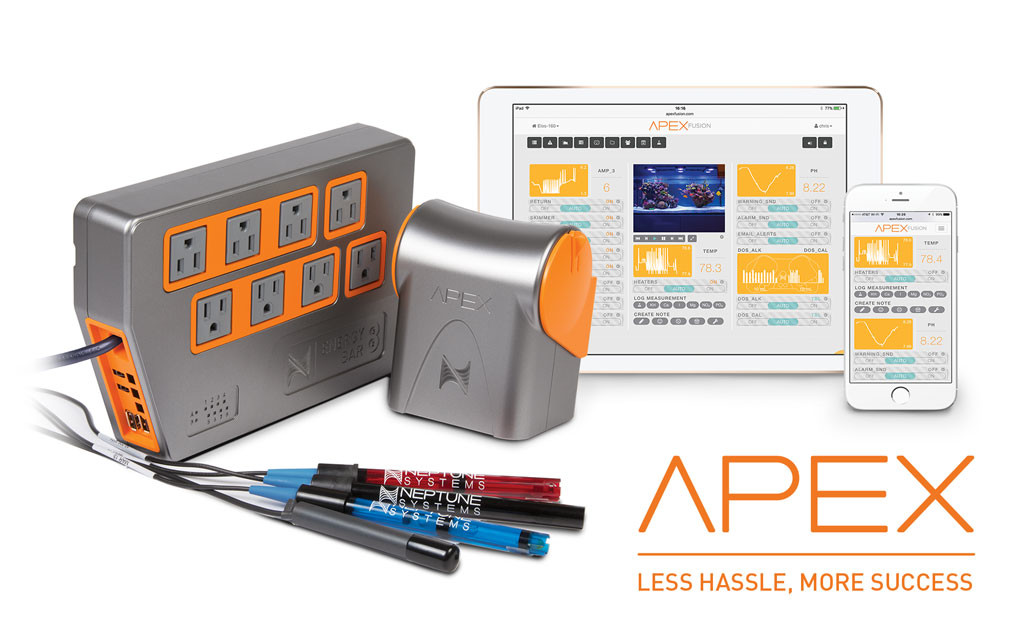
Smart aquarium controllers can connect multiple pieces of reef equipment into one monitoring and control system. Depending on the setup, they may manage heaters, lighting, pumps, dosing systems, alarms, leak detection, pH monitoring, salinity monitoring, and other functions.
Useful controller features include:
- Temperature monitoring and heater control
- Remote alerts for equipment or parameter issues
- Lighting and pump schedule coordination
- Dosing system integration
- pH, ORP, or salinity monitoring
- Backup and safety programming
The strongest benefit of a controller is early warning. A stuck heater, failed return pump, dosing mistake, or sudden temperature change can harm corals quickly. A well-configured controller can help catch problems sooner.
Controllers are not a substitute for looking at the tank. Coral tissue, polyp extension, feeding response, and color still tell you things that probes cannot. Technology and observation work best together.
Protein Skimmers and Nutrient Control
Protein skimmers remove dissolved organic waste before it breaks down into nitrate, phosphate, and other compounds. A good skimmer can help maintain water quality, improve oxygen exchange, and support a cleaner reef environment.
Modern skimmers may offer:
- More efficient bubble production
- Quieter operation
- Improved adjustment control
- Energy-efficient pumps
- More consistent waste removal
A skimmer is especially useful in coral-heavy tanks, systems with heavy fish feeding, and mixed reefs that need nutrient control. It should not be used as an excuse to overfeed, but it can be a major support tool for long-term stability.
The best reef tanks usually balance nutrient import and export. Corals need some nutrients, but excess waste can fuel algae and irritation. The goal is clean, stable water, not sterile water.
Automatic Top-Off Systems
An automatic top-off system, often called an ATO, replaces evaporated freshwater and helps keep salinity stable. This is one of the most important pieces of reef tank technology because salinity swings can stress corals quickly.
ATO systems help:
- Prevent daily salinity swings
- Reduce manual top-off mistakes
- Improve stability in nano and larger tanks
- Support healthier coral tissue and polyp extension
- Make travel and daily maintenance easier
Even simple ATO systems can make a major difference. In smaller aquariums, evaporation can change salinity quickly, so a reliable top-off system is especially helpful.
Automatic Coral Feeders and Controlled Feeding
Automatic feeding tools can help reef keepers deliver small, consistent amounts of food to fish and, in some systems, corals. Controlled feeding is helpful because corals benefit from nutrition, but excess feeding can raise nutrients and create water quality problems.
Automatic feeding may help with:
- Consistent fish feeding
- Small, repeatable food portions
- Feeding while away from home
- Supporting coral nutrition indirectly through fish waste
- Reducing missed feedings
Some fleshy LPS corals respond well to careful target feeding, including Acanthophyllia, Trachyphyllia, and Lobophyllia. Automatic feeders can support overall tank feeding routines, but direct coral feeding should still be watched carefully so food is not wasted or left to decay.
Programmable Flow Pumps
Water flow is essential for coral health because it delivers oxygen and nutrients, removes waste, supports gas exchange, prevents detritus buildup, and helps corals extend naturally. Modern flow pumps allow reef keepers to create more natural, varied movement than a single fixed stream.
Programmable flow pumps can help create:
- Randomized flow patterns
- Gentle lagoon-style movement
- Stronger SPS-style turbulence
- Day and night flow schedules
- Reduced dead spots behind rockwork
- Better movement for coral extension and feeding response
Different corals need different flow. Many SPS corals like strong indirect flow. Euphyllia corals such as Hammer Coral, Frogspawn Coral, and Torch Coral usually prefer moderate indirect movement. Fleshy sandbed LPS corals often need gentler flow.
For placement and flow planning, review our water flow and coral health guide.
Technology for Nano Reef Tanks
Nano reef tanks can benefit greatly from technology because small water volume changes faster than large systems. A salinity swing, temperature change, overfeeding event, or dosing mistake can affect a small tank quickly.
Useful nano reef technology includes:
- Reliable ATO systems
- Compact controllable lighting
- Small adjustable flow pumps
- Temperature controllers
- Simple dosing pumps for mature coral-heavy nano tanks
- Monitoring tools for salinity and temperature
Technology can make nano reefs more stable, but it does not make them maintenance-free. Smaller tanks still require careful stocking, light feeding, regular testing, and patient coral selection.
Technology Does Not Replace Coral Observation
The most advanced system still needs a reef keeper who watches the corals. Sensors can report numbers, but corals show their condition through behavior and tissue health.
Watch for:
- Polyp extension
- Tissue inflation or contraction
- Color changes
- Feeding response
- Recession or exposed skeleton
- Sweeper tentacles and coral aggression
- Algae growing near damaged tissue
A coral may show stress before a test kit reveals the reason. Technology gives data, but observation gives context.
Common Reef Technology Mistakes to Avoid
Changing Settings Too Often
Smart lights, pumps, and controllers make it easy to adjust everything. Constant changes can stress corals. Make slow, deliberate adjustments and watch coral response over time.
Dosing Without Testing
Dosing systems should be based on real consumption. Do not add alkalinity, calcium, magnesium, trace elements, or nutrients blindly.
Using Strong Lights Without Acclimation
Modern LEDs can be powerful. New corals should be acclimated gradually to avoid bleaching or tissue stress.
Blasting Corals With Too Much Flow
Programmable pumps are useful, but direct blasting can damage fleshy coral tissue. Aim for indirect movement matched to the coral type.
Ignoring Maintenance on Automated Equipment
Automation still needs cleaning, calibration, tubing checks, reservoir checks, probe care, and regular inspection. A neglected automated system can fail quietly.
Buying Technology Before Understanding the Problem
Not every reef problem needs a new device. Sometimes the real fix is better placement, more consistent testing, improved water changes, or choosing corals suited to the tank.
Which Reef Tank Technology Should You Buy First?
The best upgrade depends on your tank’s current weak point. A new reef keeper does not need every advanced tool at once. Start with equipment that improves stability and prevents the most common problems.
A practical upgrade order often looks like this:
- Reliable heater and temperature control: Temperature swings can harm corals quickly.
- Automatic top-off system: Salinity stability is critical.
- Quality reef lighting: Match coral needs and tank depth.
- Good flow pumps: Create proper indirect water movement.
- Accurate test kits or monitors: Track alkalinity, calcium, magnesium, nitrate, phosphate, salinity, and pH.
- Dosing system: Add once coral demand becomes consistent enough to require it.
- Controller: Add for monitoring, alerts, safety, and system integration.
A stable basic reef with good habits will outperform an overcomplicated reef with poor understanding. Buy technology that supports the way your corals actually need to live.
Related Corals and Reef Tank Topics You May Also Like
If you are upgrading your reef tank technology, these related guides can help you use equipment in ways that actually improve coral health:
- Coral Care Guide - Build a stronger foundation for coral health, placement, and water quality.
- Reef Tank Lighting Guide - Understand PAR, spectrum, lighting schedules, and coral acclimation.
- Reef Tank Water Parameters Guide - Learn the core numbers that support coral growth.
- Water Flow and Coral Health - Improve flow patterns, coral extension, and waste removal.
- Coral Placement Guide - Place corals based on light, flow, spacing, and aggression.
- Coral Care Myths - Avoid common advice that causes coral problems.
- New Arrival Corals - Browse recently added corals for your reef tank.
- Scott's Handpicked Corals - Explore standout corals selected for color and quality.
Shop Corals for a Smarter Reef Tank
The best reef tank technology helps keep conditions stable so corals can grow, color up, and remain healthy long term. Whether you use a simple setup or a fully automated system, the goal is the same: stable water, proper lighting, correct flow, thoughtful placement, and healthy corals matched to your tank.
Browse new arrival corals, LPS corals, SPS corals, soft corals, and Zoanthids at ExtremeCorals.com to find corals that fit your reef tank, equipment, and experience level.
Frequently Asked Questions About Reef Tank Technology
Does reef tank technology make coral care easier?
Yes, reef tank technology can make coral care more consistent by helping control lighting, flow, dosing, temperature, salinity, and monitoring. It still requires good husbandry and observation.
What reef tank technology should beginners buy first?
A reliable heater, automatic top-off system, quality reef lighting, good flow pumps, and accurate test kits are usually more important than advanced automation at the beginning.
Are automated water testers worth it?
Automated water testers can be very useful in coral-heavy systems because they show trends and help catch parameter swings earlier. Manual testing is still important for verification.
Do I need a smart aquarium controller?
A smart controller is not required, but it can improve safety and consistency by monitoring equipment, sending alerts, and coordinating lights, pumps, heaters, and dosing systems.
Can LED lights bleach corals?
Yes. Modern LED reef lights can be powerful. Corals should be acclimated gradually, and lighting should be matched to the coral’s needs, previous conditions, and placement.
Do automatic feeders help corals?
Automatic feeders can help maintain consistent fish feeding and nutrient input. Some coral feeding still requires careful observation, especially for fleshy LPS corals.
Are programmable flow pumps important?
Programmable flow pumps are useful because they create more natural, indirect movement and help reduce dead spots. Flow should still be matched to each coral type.
Can automation replace reef tank maintenance?
No. Automation supports reef tank maintenance but does not replace cleaning, testing, calibration, water changes, coral observation, or good placement decisions.
About the Author
Scott Shiles is the owner of ExtremeCorals.com, which he has operated for over 25 years and is recognized as one of the early dedicated live coral websites on the internet. A lifelong reef keeper since 1984, Scott has decades of hands-on experience maintaining marine aquariums and previously owned and operated a brick and mortar aquarium retail store for 10 years, including five years alongside Extreme Corals. He holds a degree in Marine Biology and has personally selected and sold hundreds of thousands of live corals. An avid scuba diver who has explored reef systems around the world, Scott shares practical coral care and husbandry knowledge based on real world reef experience.
overall rating:
my rating:
log in to rate
Please log in to leave a comment.
For more information visit: additional resources