My Cart: 0 item(s)

Extreme Corals News and Updates
Best Summer Corals for Reef Tanks: Hardy Coral Choices and Heat-Safety Tips
Learn the best corals to add during summer, including mushrooms, zoanthids, Candy Cane corals, Ricordea, Green Star Polyps and practical reef tank cooling tips.
Discover the best summer corals for reef tanks and learn heat-safety tips for keeping corals healthy during hot weather, temperature swings and power outages.
by Scott Shiles • May 12, 2026
Summer can be a great time to add color to a reef tank, but it is also one of the seasons when stability matters most. Higher room temperatures, stronger sunlight through windows, power outages, and extra evaporation can all affect salinity, oxygen, nutrients, and coral health. Choosing hardy corals and preparing your aquarium for heat can make summer reef keeping much safer.
The best summer corals are usually adaptable, hardy, and able to handle normal reef tank conditions without demanding extreme lighting, ultra-low nutrients, or advanced SPS-style stability. That does not mean corals should be exposed to high temperatures or major parameter swings. It means choosing corals that are more forgiving while keeping the aquarium stable.
At Extreme Corals, summer coral planning means matching coral choices to realistic tank conditions. Hardy soft corals, colorful zoanthids, adaptable mushroom corals, and beginner-friendly LPS corals can all work well when temperature, flow, oxygen, and salinity are kept under control. This guide explains the best corals to add in summer and how to protect your reef tank during hot weather.
Why Summer Coral Planning Matters
Summer heat can affect reef aquariums in several ways. Warm water holds less oxygen, evaporation can raise salinity, cooling equipment may work harder, and power outages can quickly reduce water movement and gas exchange. Corals that looked healthy in spring can become stressed if the tank temperature rises too far or fluctuates too often.
Common summer reef tank risks include:
- Temperature spikes above the normal reef range
- Rapid salinity changes from evaporation
- Lower oxygen levels in warm water
- Power outages from storms or grid strain
- Extra algae growth from heat, nutrients, and lighting changes
- Shipping stress if corals are exposed to extreme heat during transit
The goal is not to avoid buying corals in summer. The goal is to choose appropriate corals, monitor the tank closely, and have a plan for keeping the system stable.
Best Water Conditions for Summer Coral Health
During summer, stable water conditions are more important than chasing perfect numbers. Corals usually handle a steady reef tank better than a tank that is constantly being corrected after swings.
| Parameter | Recommended Summer Range |
|---|---|
| Temperature | 76-80°F, with minimal daily swing |
| Salinity | 1.024-1.026 specific gravity |
| pH | 8.1-8.4 |
| Alkalinity | 8-10 dKH |
| Calcium | 400-450 ppm |
| Magnesium | 1250-1350 ppm |
| Nitrate | 5-15 ppm for many mixed reefs |
| Phosphate | 0.03-0.10 ppm for many mixed reefs |
If your aquarium regularly climbs above 80°F, focus on cooling, airflow, surface agitation, and room temperature before adding sensitive corals. For coral-specific husbandry, browse the Extreme Corals care guide library.
1. Mushroom Corals
Mushroom corals are among the best summer coral choices because they are hardy, colorful, and comfortable in lower to moderate lighting. Many mushrooms tolerate normal beginner reef tank conditions better than more sensitive stony corals, making them useful for reef keepers who want summer color without pushing the system too hard.
Mushrooms are good summer corals because they:
- Usually prefer low to moderate light
- Do not require intense flow
- Can handle balanced measurable nutrients
- Add color in lower areas of the tank
- Work well in nano reefs and soft coral displays
Place mushroom corals in lower-flow, lower-light areas where they can expand without being blasted by pumps. Browse mushroom corals if you want hardy summer-friendly color for lower areas of the reef.
2. Ricordea Mushrooms
Ricordea mushrooms are excellent summer choices for reef keepers who want bright fluorescence, texture, and lower-maintenance care. They usually prefer moderate or lower lighting, gentle to moderate flow, and stable water quality.
Ricordea can be especially useful in summer because they do not need extreme lighting to look colorful. This matters when you are trying to reduce heat from lighting schedules or avoid stressing corals with high-intensity settings.
Good Ricordea care includes:
- Lower to moderate lighting
- Gentle to moderate indirect flow
- Stable salinity
- Clean but not stripped nutrients
- Careful placement away from aggressive LPS corals
For reef keepers building a colorful mushroom garden, Ricordia mushrooms can be a strong summer addition.
3. Jawbreaker Mushrooms
Jawbreaker Mushrooms are collector-favorite mushroom corals known for orange, red, yellow, and sometimes green or purple patterning. They are usually slower growers, which makes them easier to manage than fast-spreading corals.
Jawbreakers can be good summer corals because they:
- Prefer lower to moderate light
- Do not need heavy feeding
- Can be kept on rubble or isolated rock
- Add premium color without requiring high PAR
- Usually grow slowly and stay manageable
Keep Jawbreaker Mushrooms in protected areas with gentle flow. Avoid strong direct current and intense light, especially when the coral is newly added or recovering from shipping.
4. Zoanthids
Zoanthids are one of the most popular coral groups for adding summer color because they are adaptable, colorful, and available in many patterns. They can grow into bright zoa gardens and are often more forgiving than many advanced LPS or SPS corals.
Zoanthids are good summer choices because they:
- Come in many bright color morphs
- Usually adapt to moderate lighting
- Can grow into attractive colonies
- Handle balanced nutrients well
- Work in nano reefs, mixed reefs, and zoa gardens
Zoanthids still need stable salinity, good flow, and pest prevention. During summer, make sure evaporation is controlled so salinity does not creep upward. For more help, review our zoanthid coral care guide or browse zoanthids for sale.
5. Green Star Polyps
Green Star Polyps, often called GSP, are hardy soft corals known for bright green color and strong movement. They are adaptable and can be a good choice for reef keepers who want a coral that responds well to moderate light and good flow.
Green Star Polyps are good summer corals because they:
- Are hardy in stable reef tanks
- Add strong movement under reef flow
- Grow quickly once established
- Can handle a range of lighting and flow
- Create a bright green mat over rock or back walls
The main caution is growth control. Green Star Polyps can spread quickly and overtake neighboring corals if placed directly on the main aquascape. Use an isolated rock or back wall placement if you want easier control.
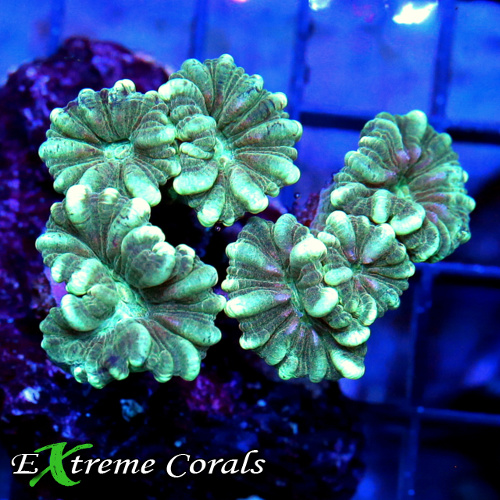
6. Candy Cane Coral
Candy Cane Coral, also called Caulastrea, is one of the better beginner-friendly LPS corals for stable reef tanks. It has fleshy heads, visible feeding response, and moderate care requirements.
Candy Cane Coral can be a good summer LPS choice because it:
- Usually does well under moderate lighting
- Has manageable flow requirements
- Can grow new heads over time
- Responds well to occasional target feeding
- Is generally easier than many delicate LPS corals
Place Candy Cane Coral in moderate indirect flow and avoid high heat, direct pump blasts, or aggressive neighboring corals. If you are choosing summer LPS pieces, browse LPS corals with spacing and stability in mind.
7. Toadstool Leather Corals
Toadstool Leather corals are hardy soft corals that can become impressive centerpieces. They usually tolerate normal reef conditions well, provided they have moderate lighting, good indirect flow, and enough room for growth.
Toadstool Leathers are useful summer corals because they:
- Are hardy once established
- Add height and structure
- Can handle moderate lighting
- Benefit from good flow and oxygenation
- Are generally forgiving compared with many advanced corals
During summer, good flow is especially important because Toadstool Leathers periodically shed a waxy layer. Proper water movement helps them clear that film and stay healthy. You can learn more in our Toadstool Leather coral care guide.
Corals to Be More Careful With During Summer
Some corals can be kept successfully in summer, but they leave less room for error when heat, oxygen, shipping stress, or parameter swings occur. These corals are better added when the reef tank is stable and cooling is reliable.
Use extra caution with:
- Freshly imported or recently stressed corals
- High-end fleshy LPS corals in unstable tanks
- SPS corals if alkalinity, temperature, or nutrients swing
- Corals being shipped during extreme heat without careful delivery planning
- Any coral that requires a very narrow temperature or nutrient range
This does not mean you cannot keep SPS or rare LPS corals in summer. It means the tank should be stable, the shipping window should be safe, and you should have a plan for heat and power interruptions. If you are comparing coral groups, read our LPS vs SPS coral care guide.
How to Keep Your Reef Tank Cool in Summer
Keeping the reef tank cool is not only about comfort. Heat stress can reduce oxygen levels, increase coral stress, and make existing water quality problems worse. Summer preparation should start before the hottest days arrive.
Monitor Temperature Daily
Use a reliable thermometer or controller and watch the tank at different times of day. The warmest temperature is often reached after lights have been on for several hours or when the room gets hot in the afternoon.
Increase Surface Agitation
Warm water holds less oxygen, so surface agitation becomes more important. Aim powerheads toward the surface enough to create gas exchange without splashing saltwater everywhere. Good flow also helps protect corals from stagnant pockets.
Use Fans Carefully
A clip-on fan or sump fan can cool a reef tank through evaporation. This can be very effective, but evaporation will increase, so an auto top-off system or careful freshwater replacement becomes important for salinity stability.
Adjust Lighting Schedule if Needed
If lights add heat to the tank, consider reducing the peak intensity slightly, shortening the peak window, or running lights during cooler parts of the day. Avoid sudden large lighting changes because corals can stress from abrupt shifts.
Consider a Chiller for High-Value Systems
A chiller may be worth considering for larger aquariums, high-value coral collections, or rooms that get hot every summer. Chillers add cost and heat to the room, but they can provide important stability when fans are not enough.
Plan for Summer Power Outages
Power outages are one of the biggest reef tank risks during summer. Without pumps, heaters, chillers, skimmers, and surface agitation, oxygen can drop quickly and temperature can climb.
A summer outage plan should include:
- Battery-powered air pumps
- Battery backup for a circulation pump
- A generator for longer outages if possible
- Frozen water bottles for emergency cooling, used carefully
- Extra RO/DI water for top-off
- A thermometer that is easy to check quickly
During an outage, oxygen and water movement usually become urgent priorities. Even a battery air pump can help protect livestock while power is out.
Summer Coral Shipping and Delivery Tips
If you order corals during summer, delivery planning matters. Heat exposure on a truck, doorstep, or sorting facility can stress corals before they ever reach your tank.
Better summer shipping habits include:
- Choose delivery days when someone can receive the package immediately.
- Avoid letting coral boxes sit outside in the sun.
- Track the shipment closely.
- Acclimate carefully after arrival.
- Inspect corals before placement.
- Start new corals in moderate or lower light.
When possible, arrange delivery for a day when you can unpack the corals quickly and place them into stable conditions.
Common Summer Coral Stress Signs
Corals often show stress before they decline seriously. During summer, watch the tank closely so you can respond before a minor problem becomes a major loss.
Summer stress signs include:
- Corals staying closed longer than normal
- Faded or pale coloration
- Bleaching after temperature or light spikes
- Tissue recession on LPS corals
- Mushrooms detaching or shrinking
- Zoanthids staying closed
- Excess slime or bacterial film
- Fish breathing heavily near the surface
If several corals look stressed at once, test temperature, salinity, alkalinity, nitrate, phosphate, and oxygen-related conditions such as surface movement first. If only one coral is affected, inspect for local irritation, pests, algae, or placement issues. Our coral pests and predators guide can help when damage appears localized.
Related Corals You May Also Like
If you are building a summer-friendly reef tank, these coral categories and care guides can help you choose hardy corals that match your system:
- Mushroom Corals - Browse hardy colorful corals for lower-light reef zones.
- Ricordia Mushrooms - Explore fluorescent mushrooms for soft coral gardens.
- Zoanthids - Shop colorful polyps for zoa gardens and mixed reefs.
- Soft Corals - Choose hardy soft corals with movement and texture.
- LPS Corals - Browse beginner-to-intermediate LPS corals for stable reef tanks.
- Best Beginner Corals - Compare easy coral choices for new reef tanks.
- Reef Tank Equipment Guide - Review tools that support summer stability.
- Coral Care Guides - Browse care resources for soft corals, LPS, SPS, mushrooms, and zoanthids.
Shop Summer-Friendly Corals
Summer can be a rewarding time to add corals when you choose hardy species and keep the tank stable. Mushrooms, Ricordea, zoanthids, Green Star Polyps, Toadstool Leathers, and beginner-friendly LPS corals can all add color and movement while giving reef keepers a more forgiving path during hot weather.
Browse new arrival corals, mushroom corals, zoanthids, soft corals, and Scott's Handpicked Corals at ExtremeCorals.com to find healthy corals for your reef tank.
Frequently Asked Questions About Summer Corals
What are the best corals to add in summer?
Good summer coral choices include mushroom corals, Ricordea, Jawbreaker Mushrooms, zoanthids, Green Star Polyps, Toadstool Leathers, and beginner-friendly LPS corals such as Candy Cane Coral.
What reef tank temperature is best in summer?
Many reef tanks do well around 76-80°F with minimal daily swing. Avoid high temperature spikes and sudden changes because heat stress can lead to bleaching, poor oxygen levels, and coral decline.
Can corals survive summer heat?
Corals can do well in summer if temperature, oxygen, salinity, flow, and nutrients remain stable. Problems usually happen when tanks overheat or swing quickly.
Are mushrooms good summer corals?
Yes, mushroom corals are often good summer choices because they are hardy, colorful, and usually comfortable in lower to moderate lighting and gentler flow.
Are zoanthids good during summer?
Yes, zoanthids can be good summer corals in stable reef tanks. Keep salinity steady, provide moderate indirect flow, and inspect for pests if polyps stay closed.
How do I cool a reef tank during summer?
Use fans, surface agitation, stable room temperature, an auto top-off system, adjusted lighting schedules, and a chiller if needed for larger or high-value systems.
What should I do during a summer power outage?
Prioritize oxygen and water movement with a battery air pump, battery-backed circulation pump, or generator. Monitor temperature closely and avoid sudden emergency corrections.
Should I avoid buying corals in summer?
You do not need to avoid buying corals in summer, but delivery timing, heat exposure, acclimation, and tank stability become more important during hot weather.
About the Author
Scott Shiles is the owner of ExtremeCorals.com, which he has operated for over 25 years and is recognized as one of the early dedicated live coral websites on the internet. A lifelong reef keeper since 1984, Scott has decades of hands-on experience maintaining marine aquariums and previously owned and operated a brick and mortar aquarium retail store for 10 years, including five years alongside Extreme Corals. He holds a degree in Marine Biology and has personally selected and sold hundreds of thousands of live corals. An avid scuba diver who has explored reef systems around the world, Scott shares practical coral care and husbandry knowledge based on real world reef experience.
overall rating:
my rating:
log in to rate
Please log in to leave a comment.
For more information visit: additional resources